Contents
Analysis
A dichotomy of sets via typical differentiability
- Part of:
-
- Published online by Cambridge University Press:
- 04 November 2020, e41
-
- Article
-
- You have access
- Open access
- Export citation
-
We obtain a criterion for an analytic subset of a Euclidean space to contain points of differentiability of a typical Lipschitz function: namely, that it cannot be covered by countably many sets, each of which is closed and purely unrectifiable (has a zero-length intersection with every
 $C^1$ curve). Surprisingly, we establish that any set failing this criterion witnesses the opposite extreme of typical behaviour: in any such coverable set, a typical Lipschitz function is everywhere severely non-differentiable.

Discrete Mathematics
The bandwidth theorem for locally dense graphs
- Part of:
-
- Published online by Cambridge University Press:
- 04 November 2020, e42
-
- Article
-
- You have access
- Open access
- Export citation
-
The bandwidth theorem of Böttcher, Schacht, and Taraz [Proof of the bandwidth conjecture of Bollobás and Komlós, Mathematische Annalen, 2009] gives a condition on the minimum degree of an n-vertex graph G that ensures G contains every r-chromatic graph H on n vertices of bounded degree and of bandwidth
 $o(n)$, thereby proving a conjecture of Bollobás and Komlós [The Blow-up Lemma, Combinatorics, Probability, and Computing, 1999]. In this paper, we prove a version of the bandwidth theorem for locally dense graphs. Indeed, we prove that every locally dense n-vertex graph G with
 $\delta (G)> (1/2+o(1))n$ contains as a subgraph any given (spanning) H with bounded maximum degree and sublinear bandwidth.

Algebra
Semisimplification for subgroups of reductive algebraic groups
- Part of:
-
- Published online by Cambridge University Press:
- 09 November 2020, e43
-
- Article
-
- You have access
- Open access
- Export citation
-
Let G be a reductive algebraic group—possibly non-connected—over a field k, and let H be a subgroup of G. If
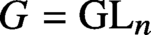 $G= {GL }_n$, then there is a degeneration process for obtaining from H a completely reducible subgroup
 $H'$ of G; one takes a limit of H along a cocharacter of G in an appropriate sense. We generalise this idea to arbitrary reductive G using the notion of G-complete reducibility and results from geometric invariant theory over non-algebraically closed fields due to the authors and Herpel. Our construction produces a G-completely reducible subgroup
 $H'$ of G, unique up to
 $G(k)$-conjugacy, which we call a k-semisimplification of H. This gives a single unifying construction that extends various special cases in the literature (in particular, it agrees with the usual notion for
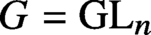 $G= GL _n$ and with Serre’s ‘G-analogue’ of semisimplification for subgroups of
 $G(k)$ from [19]). We also show that under some extra hypotheses, one can pick
 $H'$ in a more canonical way using the Tits Centre Conjecture for spherical buildings and/or the theory of optimal destabilising cocharacters introduced by Hesselink, Kempf, and Rousseau.


Number Theory
Bounds for twisted symmetric square L-functions via half-integral weight periods
- Part of:
-
- Published online by Cambridge University Press:
- 09 November 2020, e44
-
- Article
-
- You have access
- Open access
- Export citation
-
We establish the first moment bound
$$\begin{align*}\sum_{\varphi} L(\varphi \otimes \varphi \otimes \Psi, \tfrac{1}{2}) \ll_\varepsilon p^{5/4+\varepsilon} \end{align*}$$for triple product L-functions, where
 $\Psi $ is a fixed Hecke–Maass form on
 $\operatorname {\mathrm {SL}}_2(\mathbb {Z})$ and
 $\varphi $ runs over the Hecke–Maass newforms on
 $\Gamma _0(p)$ of bounded eigenvalue. The proof is via the theta correspondence and analysis of periods of half-integral weight modular forms. This estimate is not expected to be optimal, but the exponent
 $5/4$ is the strongest obtained to date for a moment problem of this shape. We show that the expected upper bound follows if one assumes the Ramanujan conjecture in both the integral and half-integral weight cases.
Under the triple product formula, our result may be understood as a strong level aspect form of quantum ergodicity: for a large prime p, all but very few Hecke–Maass newforms on
 $\Gamma _0(p) \backslash \mathbb {H}$ of bounded eigenvalue have very uniformly distributed mass after pushforward to
 $\operatorname {\mathrm {SL}}_2(\mathbb {Z}) \backslash \mathbb {H}$.
Our main result turns out to be closely related to estimates such as
$$\begin{align*}\sum_{|n| < p} L(\Psi \otimes \chi_{n p},\tfrac{1}{2}) \ll p, \end{align*}$$where the sum is over those n for which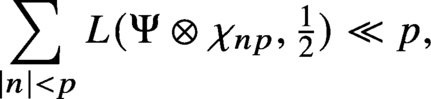
 $n p$ is a fundamental discriminant and
 $\chi _{n p}$ denotes the corresponding quadratic character. Such estimates improve upon bounds of Duke–Iwaniec.


Algebraic and Complex Geometry
The construction problem for Hodge numbers modulo an integer in positive characteristic
- Part of:
-
- Published online by Cambridge University Press:
- 09 November 2020, e45
-
- Article
-
- You have access
- Open access
- Export citation
-
Let k be an algebraically closed field of positive characteristic. For any integer
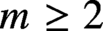 $m\ge 2$, we show that the Hodge numbers of a smooth projective k-variety can take on any combination of values modulo m, subject only to Serre duality. In particular, there are no non-trivial polynomial relations between the Hodge numbers.
Probability
Non-existence of bi-infinite geodesics in the exponential corner growth model
- Part of:
-
- Published online by Cambridge University Press:
- 16 November 2020, e46
-
- Article
-
- You have access
- Open access
- Export citation
Applied Analysis
Product formalisms for measures on spaces with binary tree structures: representation, visualization, and multiscale noise
- Part of:
-
- Published online by Cambridge University Press:
- 13 November 2020, e47
-
- Article
-
- You have access
- Open access
- Export citation
Differential Equations
Solving the 4NLS with white noise initial data
- Part of:
-
- Published online by Cambridge University Press:
- 18 November 2020, e48
-
- Article
-
- You have access
- Open access
- Export citation
Analysis
Lattice isomorphisms between projection lattices of von Neumann algebras
- Part of:
-
- Published online by Cambridge University Press:
- 13 November 2020, e49
-
- Article
-
- You have access
- Open access
- Export citation
-
Generalizing von Neumann’s result on type II
 $_1$ von Neumann algebras, I characterise lattice isomorphisms between projection lattices of arbitrary von Neumann algebras by means of ring isomorphisms between the algebras of locally measurable operators. Moreover, I give a complete description of ring isomorphisms of locally measurable operator algebras when the von Neumann algebras are without type II direct summands.

Number Theory
Generic Newton points and the Newton poset in Iwahori-double cosets
- Part of:
-
- Published online by Cambridge University Press:
- 13 November 2020, e50
-
- Article
-
- You have access
- Open access
- Export citation
Foundations
The Brouwer invariance theorems in reverse mathematics
- Part of:
-
- Published online by Cambridge University Press:
- 13 November 2020, e51
-
- Article
-
- You have access
- Open access
- Export citation
-
In [12], John Stillwell wrote, ‘finding the exact strength of the Brouwer invariance theorems seems to me one of the most interesting open problems in reverse mathematics.’ In this article, we solve Stillwell’s problem by showing that (some forms of) the Brouwer invariance theorems are equivalent to the weak König’s lemma over the base system
 ${\sf RCA}_0$. In particular, there exists an explicit algorithm which, whenever the weak König’s lemma is false, constructs a topological embedding of
 $\mathbb {R}^4$ into
 $\mathbb {R}^3$.


Topology
Motivic Steenrod operations in characteristic p
- Part of:
-
- Published online by Cambridge University Press:
- 13 November 2020, e52
-
- Article
-
- You have access
- Open access
- Export citation
-
For a prime p and a field k of characteristic
 $p,$ we define Steenrod operations
 $P^{n}_{k}$ on motivic cohomology with
 $\mathbb {F}_{p}$-coefficients of smooth varieties defined over the base field
 $k.$ We show that
 $P^{n}_{k}$ is the pth power on
 $H^{2n,n}(-,\mathbb {F}_{p}) \cong CH^{n}(-)/p$ and prove an instability result for the operations. Restricted to mod p Chow groups, we show that the operations satisfy the expected Adem relations and Cartan formula. Using these new operations, we remove previous restrictions on the characteristic of the base field for Rost’s degree formula. Over a base field of characteristic
 $2,$ we obtain new results on quadratic forms.


Algebraic and Complex Geometry
RC-positive metrics on rationally connected manifolds
- Part of:
-
- Published online by Cambridge University Press:
- 16 November 2020, e53
-
- Article
-
- You have access
- Open access
- Export citation
-
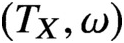
In this paper, we prove that if a compact Kähler manifold X has a smooth Hermitian metric
 $\omega $ such that
 $(T_X,\omega )$ is uniformly RC-positive, then X is projective and rationally connected. Conversely, we show that, if a projective manifold X is rationally connected, then there exists a uniformly RC-positive complex Finsler metric on
 $T_X$.


Algebra
Profinite invariants of arithmetic groups
- Part of:
-
- Published online by Cambridge University Press:
- 13 November 2020, e54
-
- Article
-
- You have access
- Open access
- Export citation
-
We prove that the sign of the Euler characteristic of arithmetic groups with the congruence subgroup property is determined by the profinite completion. In contrast, we construct examples showing that this is not true for the Euler characteristic itself and that the sign of the Euler characteristic is not profinite among general residually finite groups of type F. Our methods imply similar results for
 $\ell^2$-torsion as well as a strong profiniteness statement for Novikov–Shubin invariants.

Boolean lattices in finite alternating and symmetric groups
- Part of:
-
- Published online by Cambridge University Press:
- 13 November 2020, e55
-
- Article
-
- You have access
- Open access
- Export citation
-
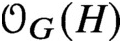
Given a group G and a subgroup H, we let
 $\mathcal {O}_G(H)$ denote the lattice of subgroups of G containing H. This article provides a classification of the subgroups H of G such that
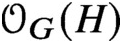 $\mathcal {O}_{G}(H)$ is Boolean of rank at least
 $3$ when G is a finite alternating or symmetric group. Besides some sporadic examples and some twisted versions, there are two different types of such lattices. One type arises by taking stabilisers of chains of regular partitions, and the other arises by taking stabilisers of chains of regular product structures. As an application, we prove in this case a conjecture on Boolean overgroup lattices related to the dual Ore’s theorem and to a problem of Kenneth Brown.

A maximally-graded invertible cubic threefold that does not admit a full exceptional collection of line bundles
-
- Published online by Cambridge University Press:
- 16 November 2020, e56
-
- Article
-
- You have access
- Open access
- Export citation
Analysis
Noncommutative strong maximals and almost uniform convergence in several directions
- Part of:
-
- Published online by Cambridge University Press:
- 20 November 2020, e57
-
- Article
-
- You have access
- Open access
- Export citation
-
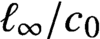
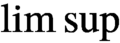
Our first result is a noncommutative form of the Jessen-Marcinkiewicz-Zygmund theorem for the maximal limit of multiparametric martingales or ergodic means. It implies bilateral almost uniform convergence (a noncommutative analogue of almost everywhere convergence) with initial data in the expected Orlicz spaces. A key ingredient is the introduction of the
 $L_p$-norm of the
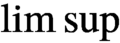 $\limsup $ of a sequence of operators as a localized version of a
 $\ell _\infty /c_0$-valued
 $L_p$-space. In particular, our main result gives a strong
 $L_1$-estimate for the
 $\limsup $—as opposed to the usual weak
 $L_{1,\infty }$-estimate for the
 $\mathop {\mathrm {sup}}\limits $—with interesting consequences for the free group algebra.
Let
 $\mathcal{L} \mathbf{F} _2$ denote the free group algebra with
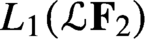
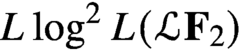
 $2$ generators, and consider the free Poisson semigroup generated by the usual length function. It is an open problem to determine the largest class inside
 $L_1(\mathcal{L} \mathbf{F} _2)$ for which the free Poisson semigroup converges to the initial data. Currently, the best known result is
 $L \log ^2 L(\mathcal{L} \mathbf{F} _2)$. We improve this result by adding to it the operators in
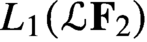 $L_1(\mathcal{L} \mathbf{F} _2)$ spanned by words without signs changes. Contrary to other related results in the literature, this set grows exponentially with length. The proof relies on our estimates for the noncommutative
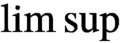 $\limsup $ together with new transference techniques.
We also establish a noncommutative form of Córdoba/Feffermann/Guzmán inequality for the strong maximal: more precisely, a weak
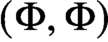 $(\Phi ,\Phi )$ inequality—as opposed to weak
 $(\Phi ,1)$—for noncommutative multiparametric martingales and
 $\Phi (s) = s (1 + \log _+ s)^{2 + \varepsilon }$. This logarithmic power is an
 $\varepsilon $-perturbation of the expected optimal one. The proof combines a refinement of Cuculescu’s construction with a quantum probabilistic interpretation of M. de Guzmán’s original argument. The commutative form of our argument gives the simplest known proof of this classical inequality. A few interesting consequences are derived for Cuculescu’s projections.


Differential Geometry and Geometric Analysis
Tropically constructed Lagrangians in mirror quintic threefolds
- Part of:
-
- Published online by Cambridge University Press:
- 20 November 2020, e58
-
- Article
-
- You have access
- Open access
- Export citation
-
We use tropical curves and toric degeneration techniques to construct closed embedded Lagrangian rational homology spheres in a lot of Calabi-Yau threefolds. The homology spheres are mirror dual to the holomorphic curves contributing to the Gromov-Witten (GW) invariants. In view of Joyce’s conjecture, these Lagrangians are expected to have special Lagrangian representatives and hence solve a special Lagrangian enumerative problem in Calabi-Yau threefolds.
We apply this construction to the tropical curves obtained from the 2,875 lines on the quintic Calabi-Yau threefold. Each admissible tropical curve gives a Lagrangian rational homology sphere in the corresponding mirror quintic threefold and the Joyce’s weight of each of these Lagrangians equals the multiplicity of the corresponding tropical curve.
As applications, we show that disjoint curves give pairwise homologous but non-Hamiltonian isotopic Lagrangians and we check in an example that
 $>300$ mutually disjoint curves (and hence Lagrangians) arise. Dehn twists along these Lagrangians generate an abelian subgroup of the symplectic mapping class group with that rank.
Number Theory
Corrigendum: Abelian n-division fields of elliptic curves and Brauer groups of product Kummer & abelian surfaces
-
- Published online by Cambridge University Press:
- 30 November 2020, e60
-
- Article
-
- You have access
- Open access
- Export citation
Mathematical Physics
Localizing virtual structure sheaves for almost perfect obstruction theories
- Part of:
-
- Published online by Cambridge University Press:
- 07 December 2020, e61
-
- Article
-
- You have access
- Open access
- Export citation
-
Almost perfect obstruction theories were introduced in an earlier paper by the authors as the appropriate notion in order to define virtual structure sheaves and K-theoretic invariants for many moduli stacks of interest, including K-theoretic Donaldson-Thomas invariants of sheaves and complexes on Calabi-Yau threefolds. The construction of virtual structure sheaves is based on the K-theory and Gysin maps of sheaf stacks.
In this paper, we generalize the virtual torus localization and cosection localization formulas and their combination to the setting of almost perfect obstruction theory. To this end, we further investigate the K-theory of sheaf stacks and its functoriality properties. As applications of the localization formulas, we establish a K-theoretic wall-crossing formula for simple
 $\mathbb{C} ^\ast $-wall crossings and define K-theoretic invariants refining the Jiang-Thomas virtual signed Euler characteristics.
