Contents
Discrete Mathematics
Dynamics of plane partitions: Proof of the Cameron–Fon-Der-Flaass conjecture
- Part of:
-
- Published online by Cambridge University Press:
- 07 December 2020, 62
-
- Article
-
- You have access
- Open access
- Export citation
-
One of the oldest outstanding problems in dynamical algebraic combinatorics is the following conjecture of P. Cameron and D. Fon-Der-Flaass (1995): consider a plane partition P in an
 $a \times b \times c$ box
 ${\sf B}$. Let
 $\Psi (P)$ denote the smallest plane partition containing the minimal elements of
 ${\sf B} - P$. Then if
 $p= a+b+c-1$ is prime, Cameron and Fon-Der-Flaass conjectured that the cardinality of the
 $\Psi $-orbit of P is always a multiple of p.
This conjecture was established for
 $p \gg 0$ by Cameron and Fon-Der-Flaass (1995) and for slightly smaller values of p in work of K. Dilks, J. Striker and the second author (2017). Our main theorem specializes to prove this conjecture in full generality.


Probability
One-sided reflected Brownian motions and the KPZ fixed point
- Part of:
-
- Published online by Cambridge University Press:
- 09 December 2020, e63
-
- Article
-
- You have access
- Open access
- Export citation
Topology
The cohomology of Torelli groups is algebraic
- Part of:
-
- Published online by Cambridge University Press:
- 16 December 2020, e64
-
- Article
-
- You have access
- Open access
- Export citation
-
The Torelli group of
 $W_g = \#^g S^n \times S^n$ is the group of diffeomorphisms of
 $W_g$ fixing a disc that act trivially on
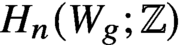 $H_n(W_g;\mathbb{Z} )$. The rational cohomology groups of the Torelli group are representations of an arithmetic subgroup of
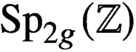 $\text{Sp}_{2g}(\mathbb{Z} )$ or
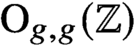 $\text{O}_{g,g}(\mathbb{Z} )$. In this article we prove that for
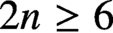 $2n \geq 6$ and
 $g \geq 2$, they are in fact algebraic representations. Combined with previous work, this determines the rational cohomology of the Torelli group in a stable range. We further prove that the classifying space of the Torelli group is nilpotent.

