We partner with a secure submission system to handle manuscript submissions.
Please note:
Click Proceed to submission system to continue to our partner's website.
 $\Delta_1$ GAMES
We isolate two abstract determinacy theorems for games of length  $\omega_1$ from work of Neeman and use them to conclude, from large-cardinal assumptions and an iterability hypothesis in the region of measurable Woodin cardinals that
(1) if the Continuum Hypothesis holds, then all games of length  $\omega_1$ which are provably
 $\Delta_1$-definable from a universally Baire parameter (in first-order or
 $\Omega $-logic) are determined;
(2) all games of length  $\omega_1$ with payoff constructible relative to the play are determined; and
(3) if the Continuum Hypothesis holds, then there is a model of  ${\mathsf{ZFC}}$ containing all reals in which all games of length
 $\omega_1$ definable from real and ordinal parameters are determined.
For a set x, let  ${\cal S}\left( x \right)$ be the set of all permutations of x. We prove in ZF (without the axiom of choice) several results concerning this notion, among which are the following:
(1) For all sets x such that  ${\cal S}\left( x \right)$ is Dedekind infinite,
 $\left| {{{\cal S}_{{\rm{fin}}}}\left( x \right)} \right| < \left| {{\cal S}\left( x \right)} \right|$ and there are no finite-to-one functions from
 ${\cal S}\left( x \right)$ into
 ${{\cal S}_{{\rm{fin}}}}\left( x \right)$, where
 ${{\cal S}_{{\rm{fin}}}}\left( x \right)$ denotes the set of all permutations of x which move only finitely many elements.
(2) For all sets x such that  ${\cal S}\left( x \right)$ is Dedekind infinite,
 $\left| {{\rm{seq}}\left( x \right)} \right| < \left| {{\cal S}\left( x \right)} \right|$ and there are no finite-to-one functions from
 ${\cal S}\left( x \right)$ into seq (x), where seq (x) denotes the set of all finite sequences of elements of x.
(3) For all infinite sets x such that there exists a permutation of x without fixed points, there are no finite-to-one functions from  ${\cal S}\left( x \right)$ into x.
(4) For all sets x,  $|{[x]^2}| < \left| {{\cal S}\left( x \right)} \right|$.
If  ${\mathfrak {F}}$ is a type-definable family of commensurable subsets, subgroups or subvector spaces in a metric structure, then there is an invariant subset, subgroup or subvector space commensurable with
 ${\mathfrak {F}}$. This in particular applies to type-definable or hyper-definable objects in a classical first-order structure.
We obtain modal completeness of the interpretability logics IL $\!\!\textsf {P}_{\textsf {0}}$ and IL
 $\textsf {P}_{\textsf {0}}$ and IL
 $\textbf {IL}\textsf {W}^\ast = \textbf {IL}\textsf {WM}_{\textsf {0}}$.
Given a regular cardinal  $\kappa $ such that
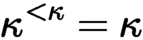 $\kappa ^{<\kappa }=\kappa $ (or any regular
 $\kappa $ if the Generalized Continuum Hypothesis holds), we study a class of toposes with enough points, the
 $\kappa $-separable toposes. These are equivalent to sheaf toposes over a site with
 $\kappa $-small limits that has at most
 $\kappa $ many objects and morphisms, the (basis for the) topology being generated by at most
 $\kappa $ many covering families, and that satisfy a further exactness property T. We prove that these toposes have enough
 $\kappa $-points, that is, points whose inverse image preserve all
 $\kappa $-small limits. This generalizes the separable toposes of Makkai and Reyes, that are a particular case when
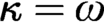 $\kappa =\omega $, when property T is trivially satisfied. This result is essentially a completeness theorem for a certain infinitary logic that we call
 $\kappa $-geometric, where conjunctions of less than
 $\kappa $ formulas and existential quantification on less than
 $\kappa $ many variables is allowed. We prove that
 $\kappa $-geometric theories have a
 $\kappa $-classifying topos having property T, the universal property being that models of the theory in a Grothendieck topos with property T correspond to
 $\kappa $-geometric morphisms (geometric morphisms the inverse image of which preserves all
 $\kappa $-small limits) into that topos. Moreover, we prove that
 $\kappa $-separable toposes occur as the
 $\kappa $-classifying toposes of
 $\kappa $-geometric theories of at most
 $\kappa $ many axioms in canonical form, and that every such
 $\kappa $-classifying topos is
 $\kappa $-separable. Finally, we consider the case when
 $\kappa $ is weakly compact and study the
 $\kappa $-classifying topos of a
 $\kappa $-coherent theory (with at most
 $\kappa $ many axioms), that is, a theory where only disjunction of less than
 $\kappa $ formulas are allowed, obtaining a version of Deligne’s theorem for
 $\kappa $-coherent toposes from which we can derive, among other things, Karp’s completeness theorem for infinitary classical logic.
For a set x, let  ${\cal S}\left( x \right)$ be the set of all permutations of x. We prove by the method of permutation models that the following statements are consistent with ZF:
(1) There is an infinite set x such that  $|\wp \left( x \right)| < |{\cal S}\left( x \right)| < |se{q^{1 - 1}}\left( x \right)| < |seq\left( x \right)|$, where
 $\wp \left( x \right)$ is the power set of x, seq (x) is the set of all finite sequences of elements of x, and seq1-1 (x) is the set of all finite sequences of elements of x without repetition.
(2) There is a Dedekind infinite set x such that  $|{\cal S}\left( x \right)| < |{[x]^3}|$ and such that there exists a surjection from x onto
 ${\cal S}\left( x \right)$.
(3) There is an infinite set x such that there is a finite-to-one function from  ${\cal S}\left( x \right)$ into x.
We study large cardinal properties associated with Ramseyness in which homogeneous sets are demanded to satisfy various transfinite degrees of indescribability. Sharpe and Welch [25], and independently Bagaria [1], extended the notion of  $\Pi ^1_n$-indescribability where
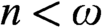 $n<\omega $ to that of
 $\Pi ^1_\xi $-indescribability where
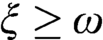 $\xi \geq \omega $. By iterating Feng’s Ramsey operator [12] on the various
 $\Pi ^1_\xi $-indescribability ideals, we obtain new large cardinal hierarchies and corresponding nonlinear increasing hierarchies of normal ideals. We provide a complete account of the containment relationships between the resulting ideals and show that the corresponding large cardinal properties yield a strict linear refinement of Feng’s original Ramsey hierarchy. We isolate Ramsey properties which provide strictly increasing hierarchies between Feng’s
 $\Pi _\alpha $-Ramsey and
 $\Pi _{\alpha +1}$-Ramsey cardinals for all odd
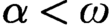 $\alpha <\omega $ and for all
 $\omega \leq \alpha <\kappa $. We also show that, given any ordinals
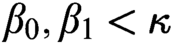 $\beta _0,\beta _1<\kappa $ the increasing chains of ideals obtained by iterating the Ramsey operator on the
 $\Pi ^1_{\beta _0}$-indescribability ideal and the
 $\Pi ^1_{\beta _1}$-indescribability ideal respectively, are eventually equal; moreover, we identify the least degree of Ramseyness at which this equality occurs. As an application of our results we show that one can characterize our new large cardinal notions and the corresponding ideals in terms of generic elementary embeddings; as a special case this yields generic embedding characterizations of
 $\Pi ^1_\xi $-indescribability and Ramseyness.
We investigate the strength of a randomness notion  ${\cal R}$ as a set-existence principle in second-order arithmetic: for each Z there is an X that is
 ${\cal R}$-random relative to Z. We show that the equivalence between 2-randomness and being infinitely often C-incompressible is provable in
 $RC{A_0}$. We verify that
 $RC{A_0}$ proves the basic implications among randomness notions: 2-random
 $\Rightarrow$ weakly 2-random
 $\Rightarrow$ Martin-Löf random
 $\Rightarrow$ computably random
 $\Rightarrow$ Schnorr random. Also, over
 $RC{A_0}$ the existence of computable randoms is equivalent to the existence of Schnorr randoms. We show that the existence of balanced randoms is equivalent to the existence of Martin-Löf randoms, and we describe a sense in which this result is nearly optimal.
In this note we give a simplified ordinal analysis of first-order reflection. An ordinal notation system  $OT$ is introduced based on
 $\psi $-functions. Provable
 $\Sigma _{1}$-sentences on
 $L_{\omega _{1}^{CK}}$ are bounded through cut-elimination on operator controlled derivations.
Consider a definably complete uniformly locally o-minimal expansion of the second kind of a densely linearly ordered abelian group. Let 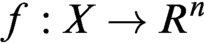 $f:X \rightarrow R^n$ be a definable map, where X is a definable set and R is the universe of the structure. We demonstrate the inequality
 $\dim (f(X)) \leq \dim (X)$ in this paper. As a corollary, we get that the set of the points at which f is discontinuous is of dimension smaller than
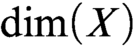 $\dim (X)$. We also show that the structure is definably Baire in the course of the proof of the inequality.
For a given inner model N of ZFC, one can consider the relativized version of Berkeley cardinals in the context of ZFC, and ask if there can exist an “N-Berkeley cardinal.” In this article we provide a positive answer to this question. Indeed, under the assumption of a supercompact cardinal  $\delta $, we show that there exists a ZFC inner model N such that there is a cardinal which is N-Berkeley, even in a strong sense. Further, the involved model N is a weak extender model of
 $\delta $ is supercompact. Finally, we prove that the strong version of N-Berkeley cardinals turns out to be inconsistent whenever N satisfies closure under
 $\omega $-sequences.
We prove that the Wadge order on the Borel subsets of the Scott domain is not a well-quasi-order, and that this feature even occurs among the sets of Borel rank at most 2. For this purpose, a specific class of countable 2-colored posets  $\mathbb{P}_{emb} $ equipped with the order induced by homomorphisms is embedded into the Wadge order on the
 $\Delta _2^0 $-degrees of the Scott domain. We then show that
 $\mathbb{P}_{emb} $ admits both infinite strictly decreasing chains and infinite antichains with respect to this notion of comparison, which therefore transfers to the Wadge order on the
 $\Delta _2^0 $-degrees of the Scott domain.
We study computable Polish spaces and Polish groups up to homeomorphism. We prove a natural effective analogy of Stone duality, and we also develop an effective definability technique which works up to homeomorphism. As an application, we show that there is a  $\Delta ^0_2$ Polish space not homeomorphic to a computable one. We apply our techniques to build, for any computable ordinal
 $\alpha $, an effectively closed set not homeomorphic to any
 $0^{(\alpha )}$-computable Polish space; this answers a question of Nies. We also prove analogous results for compact Polish groups and locally path-connected spaces.
Let L be a computable vocabulary, let XL be the space of L-structures with universe ω and let  $f:{2^\omega } \to {X_L}$ be a hyperarithmetic function such that for all
 $x,y \in {2^\omega }$, if
 $x{ \equiv _h}y$ then
 $f\left( x \right) \cong f\left( y \right)$. One of the following two properties must hold. (1) The Scott rank of f (0) is
 $\omega _1^{CK} + 1$. (2) For all
 $x \in {2^\omega },f\left( x \right) \cong f\left( 0 \right)$.
We investigate relationships between versions of derivability conditions for provability predicates. We show several implications and non-implications between the conditions, and we discuss unprovability of consistency statements induced by derivability conditions. First, we classify already known versions of the second incompleteness theorem, and exhibit some new sets of conditions which are sufficient for unprovability of Hilbert–Bernays’ consistency statement. Secondly, we improve Buchholz’s schematic proof of provable  $\Sigma_1$-completeness. Then among other things, we show that Hilbert–Bernays’ conditions and Löb’s conditions are mutually incomparable. We also show that neither Hilbert–Bernays’ conditions nor Löb’s conditions accomplish Gödel’s original statement of the second incompleteness theorem.