Contents
Research Article
Circular inclusion in an infinite elastic medium with a circular inhomogeneity
-
- Published online by Cambridge University Press:
- 24 October 2008, pp. 113-127
-
- Article
-
- You have access
- Export citation
Factorizations of the residual likelihood criterion in discriminant analysis
-
- Published online by Cambridge University Press:
- 24 October 2008, pp. 743-752
-
- Article
-
- You have access
- Export citation
A note on the monomer dimer problem
-
- Published online by Cambridge University Press:
- 24 October 2008, pp. 503-505
-
- Article
-
- You have access
- Export citation
Overstability in the magnetohydrodynamic Bénard problem at large Hartmann numbers
-
- Published online by Cambridge University Press:
- 24 October 2008, pp. 287-299
-
- Article
-
- You have access
- Export citation
A note on the temperature distribution in a channel bounded by two co-axial cylinders
-
- Published online by Cambridge University Press:
- 24 October 2008, pp. 301-302
-
- Article
-
- You have access
- Export citation
-
If we neglect the viscous dissipation, the temperature distribution in an incompressible fluid flowing in the annulus between two coaxial cylinders with radii r1 and r2 (> r1) is determined by the equation

Initial conditions

Boundary conditions

where ∂Q/∂t is a function of time alone representing the rate of heat generation per unit volume per unit time in the fluid.


Note on the scattering of water waves by a vertical barrier
-
- Published online by Cambridge University Press:
- 24 October 2008, pp. 507-509
-
- Article
-
- You have access
- Export citation
Front matter
PSP volume 62 issue 1 Cover and Front matter
-
- Published online by Cambridge University Press:
- 24 October 2008, pp. f1-f4
-
- Article
-
- You have access
- Export citation
Research Article
On the direct solution of certain half-plane mixed boundary-value problems
-
- Published online by Cambridge University Press:
- 24 October 2008, pp. 753-759
-
- Article
-
- You have access
- Export citation
Two-dimensional elastic inclusion problems
-
- Published online by Cambridge University Press:
- 24 October 2008, pp. 303-311
-
- Article
-
- You have access
- Export citation
-
A system of equations is derived for determining the elastic fields in an inclusion and its surrounding finite matrix when the inclusion suffers a physical change and, if not constrained by the matrix, would undergo a deformation
 . A method for obtaining the exact solution of these equations, when the matrix and inclusion have the same elastic constants, is described and the particular problem of the square inclusion in an infinite matrix solved.
 . A method for obtaining the exact solution of these equations, when the matrix and inclusion have the same elastic constants, is described and the particular problem of the square inclusion in an infinite matrix solved.
The integration of generalized hypergeometric functions
-
- Published online by Cambridge University Press:
- 24 October 2008, pp. 761-764
-
- Article
-
- You have access
- Export citation
-
In the usual notation for generalized hypergeometric functions we let
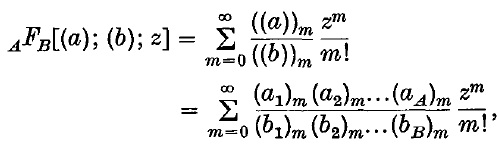
where

and (a) denotes the sequence of parameters

Throughout the present paper we shall suppose that there are A of the a parameters, Bof the b parameters, and so on. Thus ((a))m is to be interpreted as
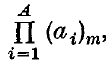
and similar interpretations hold for ((b))m, etc.

Solutions of unsteady compressible boundary-layer equations
-
- Published online by Cambridge University Press:
- 24 October 2008, pp. 511-518
-
- Article
-
- You have access
- Export citation
Back matter
PSP volume 62 issue 1 Cover and Back matter
-
- Published online by Cambridge University Press:
- 24 October 2008, pp. b1-b2
-
- Article
-
- You have access
- Export citation
Research Article
The two-dimensional jet
-
- Published online by Cambridge University Press:
- 24 October 2008, pp. 519-521
-
- Article
-
- You have access
- Export citation
A boundary-layer theory for plates with initial stress
-
- Published online by Cambridge University Press:
- 24 October 2008, pp. 313-327
-
- Article
-
- You have access
- Export citation
A hypergeometric transformation associated with the Appell function F4
-
- Published online by Cambridge University Press:
- 24 October 2008, pp. 765-767
-
- Article
-
- You have access
- Export citation
-
Recently in these proceedings (see (5), p. 175) by applying Goldstein's form of Parseval's relation ((4), p. 105) to the operational pairs ((3), p. 284)
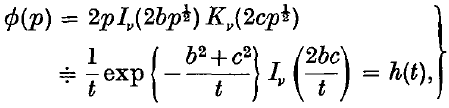
where R[(b ± c)2] > 0 and ((3), p. 293)

where R(½ − λ + μ) > 0, it was proved that if

then

provided R(½ − λ + μ + ν) > 0 and R[(b ± c)2] > R(a), 0.

The transverse flexure of uniformly loaded curvilinear and rectilinear polygonal plates
-
- Published online by Cambridge University Press:
- 24 October 2008, pp. 523-540
-
- Article
-
- You have access
- Export citation
-
Complex variable methods are applied to derive exact solutions in closed forms for the small deflexions of uniformly loaded thin isotropic plates bounded by regular curvilinear polygonal contours having n sides. The supported boundary is either clamped or has equal boundary cross-couples. For rectilinear edges the latter conditions agree with those for a simply supported boundary. The plates taken in the z-plane are conformally mapped on the unit circle in the ζ-plane by the general mapping function

Lower bound energy calculations for

-
- Published online by Cambridge University Press:
- 24 October 2008, pp. 769-776
-
- Article
-
- You have access
- Export citation
-
Two different calculations are made of lower bounds for the electronic energy of
. In the first the method of truncated Hamiltonians due to Bazley and Fox is adapted in such a way that the nuclear charge rather than the energy becomes the eigenvalue. Lower bounds are calculated for the energies of the six lowest σg and six lowest σu states, as well as of the three lowest of both πg and πu symmetries. This approach gives better convergence than when the energy is used as eigenvalue. In the second calculation the method of Temple and Kato is shown to give a satisfactory value for the energy of the ground state, provided that some necessary knowledge of the energy of the first-excited state is available.

Laminar boundary layers in oscillatory flow along an infinite flat plate with variable suction
-
- Published online by Cambridge University Press:
- 24 October 2008, pp. 329-337
-
- Article
-
- You have access
- Export citation
Transverse surface waves in magneto-elasticity
-
- Published online by Cambridge University Press:
- 24 October 2008, pp. 541-545
-
- Article
-
- You have access
- Export citation
Screening constants for relativistic wave functions
-
- Published online by Cambridge University Press:
- 24 October 2008, pp. 777-782
-
- Article
-
- You have access
- Export citation