We partner with a secure submission system to handle manuscript submissions.
Please note:
You will need an account for the submission system, which is separate to your Cambridge Core account. For login and submission support, please visit the
submission and support pages.
Please review this journal's author instructions, particularly the
preparing your materials
page, before submitting your manuscript.
Click Proceed to submission system to continue to our partner's website.
To save this undefined to your undefined account, please select one or more formats and confirm that you agree to abide by our usage policies. If this is the first time you used this feature, you will be asked to authorise Cambridge Core to connect with your undefined account.
Find out more about saving content to .
To send this article to your Kindle, first ensure no-reply@cambridge.org is added to your Approved Personal Document E-mail List under your Personal Document Settings on the Manage Your Content and Devices page of your Amazon account. Then enter the ‘name’ part of your Kindle email address below. Find out more about sending to your Kindle.
Find out more about saving to your Kindle.
Note you can select to save to either the @free.kindle.com or @kindle.com variations. ‘@free.kindle.com’ emails are free but can only be saved to your device when it is connected to wi-fi. ‘@kindle.com’ emails can be delivered even when you are not connected to wi-fi, but note that service fees apply.
Global public health agencies have recommended stronger regulation of food marketing to protect children’s diets. This study assessed commercial foods for infants and toddlers available in Australian supermarkets for compliance with the World Health Organization (WHO) Regional Office for Europe’s Nutrient and Promotion Profile Model: supporting appropriate promotion of food products for infants and young children 6–36 months in the WHO European Region (NPPM).
Design:
Dietitians assessed a sample of commercial foods for infants and toddlers against the composition, labelling and promotion requirements of the NPPM.
Setting:
Australia.
Participants:
Commercial foods for infants and toddlers (n 45) available in two major Australian supermarkets, purposely sampled across product categories and brands.
Results:
Fewer than one quarter (23 %) of the assessed products met all nutrient content requirements of the NPPM. No products met all of the labelling or promotional requirements. All products included at least one promotional marketing claim that was not permitted under the NPPM.
Conclusions:
The NPPM is useful to assess and monitor the nutritional composition and prevalence of marketing claims on commercial foods for infants and toddlers. Findings of noncompliance with the NPPM recommendations indicate an urgent need for stronger government regulation of the composition, labelling and marketing of commercial foods for infants and toddlers in Australia.
To assess changes in caregiver practices for young children after integrating the Responsive Care and Early Learning (RCEL) Addendum package into nutrition services after 10 months of implementation.
Design:
We measured changes in RCEL practices through a pre- and post-intervention assessment comprising a household survey and observations. To implement the intervention, we trained health service staff and community volunteers to deliver RCEL counselling to caregivers of children 0–23 months of age through existing community and facility-level platforms.
Setting:
Jalal-Abad and Batken regions in the Kyrgyz Republic.
Participants:
Caregivers of children aged 0–23 months at baseline.
Results:
We found statistically significant increases in RCEL practices, availability of early learning opportunities in the home, decreases in parenting stress and improvements in complementary feeding practices after the intervention implementation period.
Conclusions:
Findings show that delivery of RCEL counselling using the RCEL Addendum was associated with improved responsive care practices and early learning opportunities. We also found that integration of RCEL with infant and young child feeding counselling did not disrupt nutrition service delivery or negatively affect complementary feeding outcomes, but rather suggest synergistic benefits. Given the importance of providing holistic care to support optimal early childhood development, these findings provide new evidence on how to strengthen the delivery of nurturing care services in the Kyrgyz Republic.
Nutrition labelling is mandatory on food products in retail stores, but compliance in the rapidly expanding online setting remains unclear. We assessed mandatory and voluntary labelling information across major U.S. online retailers.
Design:
Between January and August 2022, we evaluated a representative basket of sixty food and beverage items across eight product categories of ten major retailers. We evaluated online presence, accessibility and legibility of four mandatory elements – Nutrition Facts, ingredients, allergen statements and percent juice for fruit drinks – and presence of seven voluntary elements – nutrient content claims, health/qualified health claims, ingredient claims, structure–function claims, additive claims, front-of-package nutrient profiling symbols and other marketing claims.
Setting:
Major online food retailers in the USA.
Participants:
N/A.
Results:
On average, each mandatory element was present, accessible and legible for only 35·1 % of items, varying modestly by element (from 38·3 % for ingredients lists to 31·5 % for Nutrition Facts) but widely by retailer (6·6–86·3 %). Voluntary elements were present for 45·8 % of items, ranging from 83·7 % for marketing claims to 2·0 % for structure–function claims. Findings were generally consistent across the eight product categories. Voluntary elements were more frequently present than accessible and legible mandatory elements for six of ten retailers and seven of eight product categories.
Conclusions:
Mandatory nutrition label elements are not commonly present, accessible and legible in online retail settings and are less consistently present than marketing elements. Coordinated industry and regulatory actions may be needed to ensure consumers can access mandatory nutrition information to make healthy and safe food choices online.
In the Netherlands, reformulation strategies have been established for several years, whereas Nutri-Score was implemented in 2024. Besides being a helpful tool for consumers to make healthier food choices, Nutri-Score also aims to stimulate food reformulation by food manufacturers. The present study investigates whether changes in food composition could have led to different calculated Nutri-Score classifications.
Design:
Food compositions and Nutri-Score classifications were calculated using the updated Nutri-Score algorithm. Food groups with the largest change in the distribution of Nutri-Score classifications were analysed in-depth by plotting frequency distributions and calculating median contents for nutrient contents that relatively changed the most in 2020.
Setting:
Food composition data were available from the Dutch Branded Food database in 2018 (n 38 295) and 2020 (n 48 091).
Participants:
Not applicable.
Results:
In general, median nutrient contents and calculated Nutri-Score classifications were similar for 2018 and 2020. The median sugar and SFA contents were lower for some food groups (e.g. breakfast cereals, meat preserves, sweets and sweet goods) in 2020 compared to 2018. The median SFA content for meat preserves and sweets and sweet goods was relatively low in Nutri-Score classification A ascending towards higher median content in Nutri-Score classification E.
Conclusions:
Although food reformulation was not substantial in the Dutch food retail supply in 2018 and 2020, some differences in Nutri-Score classifications were observed. When implemented, Nutri-Score may encourage food manufacturers to increase their reformulation efforts. Repeated monitoring of food compositions and Nutri-Score classifications is recommended to establish reformulation efforts by food manufacturers.
To examine the association between red and processed meat consumption and total food expenditures in US households and explore whether households could reduce food costs by substituting these meats with other protein sources such as poultry, seafood, eggs and plant proteins.
Design:
Cross-sectional study using data from the National Household Food Acquisition and Purchase Survey (FoodAPS). Using adult male equivalents (AME) for standardisation, we categorised red and processed meat purchases into quintiles. We used generalised linear models to explore the association between red or processed meat consumption and food expenditures and the cost effect of substituting meat with other proteins.
Setting:
United States.
Participants:
Data from 4739 households with valid acquisition information from FoodAPS, a stratified multistage probability sample of US households.
Results:
Higher red and processed meat consumption were both significantly associated with higher total weekly food expenditures, particularly among households with low income. Substituting red or processed meat with poultry, eggs or plant proteins did not significantly affect overall food expenditures, whereas replacing meat with seafood, especially varieties high in n-3 fatty acids, led to increased costs.
Conclusions:
Reducing red and processed meat consumption could offer savings for households, particularly those with low income. Although substitutions with seafood high in n-3 could increase expenses, alternative protein sources like poultry and plant proteins may serve as cost-neutral replacements. Public health strategies should emphasise dietary shifts’ economic, health and environmental benefits and aim to make nutritious yet affordable protein sources more accessible.
To evaluate nudge strategies that increase the consumption of plant-based foods, defined as vegetarian or vegan food items, compared with meat-based options in post-secondary dining hall settings.
Design:
A pilot study.
Setting:
This study took place in the University of British Columbia Vancouver Campus’s Gather Dining Hall (GDH) over a 6-week intervention period and two control periods. The intervention incorporated several nudges (proportion increases, item placement, taste-focused labelling, Chef’s featured special verbal prompts, social media and promotional posters) into the menu and dining hall area with the goal of increasing the purchases of plant-based items. Sales data from meals that were purchased during the intervention period were compared with sales data from the two control periods.
Participants:
Students and staff who purchased meals in the GDH.
Results:
The proportion of plant-based items sold significantly increased during the intervention period (56·7 %; P < 0·01) compared with the last 6 weeks of term one (53·6 %) and the first 6 weeks of term two (53·4 %). The proportion of plant-based ‘main’ menu items was significantly higher in the intervention period (46·4; P < 0·01) when compared with the last 6 weeks of term one (40·9 %) and the first 6 weeks of term two (41·7 %).
Conclusions:
The combination of nudges was effective at significantly increasing the selection of plant-based options over meat-based options in a post-secondary dining hall setting.
To assess associations between self-reported advertising exposure to foods high in fats, salt and sugar and household purchases of energy, nutrients and specific product categories.
Design:
A cross-sectional design was used. Advertising exposure data were gathered using a questionnaire administered to the main shopper of each household, and purchase data from supermarkets and other stores for these households were accessed for a 4-week period during February 2019.
Setting:
Households in London and the North of England.
Participants:
Representative households (N 1289) from the Kantar Fast Moving Consumer Goods Panel. Main shoppers were predominantly female (71 %), with a mean age of 54 years (±13).
Results:
Linear regression models identified that exposure to foods high in fats, salt and sugar advertising through traditional mediums (including broadcast and print), but not digital, transport, recreational or functional mediums, was associated with greater purchases of energy (9779 kcal; 95 % CI 3515, 16 043), protein (416 g; 95 % CI 161, 671), carbohydrate (1164 g; 95 % CI 368, 1886) and sugar (514 g; 95 % CI 187, 841). Generalised linear models showed that individuals who reported exposure to sugary drink advertising were more likely to purchase sugary drinks (1·16; 95 % CI 2·94, 4·99) but did not purchase more energy or nutrients from sugary drinks. There was no evidence of associations between exposure to advertising for sugary cereals or sweet snacks and purchases from these categories.
Conclusions:
There was a strong influence of traditional advertising and sugar-sweetened beverage advertising on household food and drink purchases, thus supporting the need for advertising restrictions across traditional formats and for sugary drinks specifically.
The objective of this study was to explore adolescent dietary practices, related norms and acceptable communication platforms in northern Nigeria to inform future nutrition project design.
Design:
This was a qualitative formative research study. We used purposive sampling and conducted thirty focus group discussions with male and female adolescents aged 10–14 and 15–19 years (n 180) and six with adult influencers (n 36). We also administered a 24-h dietary recall with the adolescents using the Diet Quality Questionnaire.
Setting:
The study was conducted in urban and rural areas in three states in northern Nigeria.
Results:
Adolescents reported consuming six nutritious food groups the previous day on average. However, there was a wide disparity and only half consumed all five recommended food groups. Adolescents’ food choices were influenced by perceptions of the functional and physical benefits of nutritious foods and preferences for satisfying foods. Diverse foods were available in the food environment, but affordability constrained access to nutritious foods. Limited access to income and gender norms constrained adolescent agency over food choice. Girls, particularly those who were pregnant, had less agency related to food than boys. Adolescents thought that peers should be reached through group discussions, radio and phones, among other communication platforms.
Conclusions:
Adolescents consumed relatively diverse diets. Adolescent food choice was influenced by their embodied experience and knowledge related to nutrition and taste, home food environment and circumscribed agency. Opportunities exist to support healthy diets for adolescents by strengthening adolescents’ embodied knowledge, food environments and social support.
China has been undergoing a rapid nutrition transition in the past few decades. This review aims to characterise commonly reported dietary patterns in Chinese populations and their associations with health outcomes.
Design:
We searched PubMed, Embase and CNKI from inception to June 2020 to identify observational studies reporting dietary patterns or the associations between dietary patterns and health outcomes. Information regarding dietary patterns, their association with health outcomes and other related items was collected.
Setting:
Chinese population and Chinese immigrants.
Participants:
Not applicable.
Results:
Results from 130 studies with over 900 000 participants were included. Six dietary patterns were identified: traditional whole-grain diet (Traditional WG), traditional non-whole-grain diet (Traditional NWG), plant-based diet (Plant-based), animal food diet (Animal-food), Western energy-dense diet (Western) and other unclassified diets (Unclassified). The Plant-based diet was associated with a reduced risk of CVD and cancer from prospective studies, reduced risk of diabetes, hypertension, cognitive impairment and depressive symptoms from all study designs. The Traditional WG diet was associated with a reduced risk of diabetes and hypertension. Animal-food diet is associated with a range of metabolic diseases, and Western diet was associated with increased risks of obesity and depressive symptoms.
Conclusion:
Multiple dietary patterns identified reflect the diversity and transitioning of the Chinese diet. A healthy Chinese diet, comprising both the Traditional WG and Plant-based diets, was associated with reduced risks of specific undesirable health outcomes. Promoting this healthy diet will improve public health among the Chinese populations.
To conduct a systematic review of the published peer-reviewed articles on the biochemical assessment of nutritional status of South African infants, children and adolescents in 1997–2022.
Design:
Online databases (Pubmed, CINAHL, EbscoHost and SAePublications) were used to identify thirty-nine papers.
Setting:
South Africa, 1997–2022.
Participants:
Infants, children and adolescents.
Results:
Vitamin A deficiency prevalence was 35–67 % before 2001 and mostly below 16 % after 2008. Anaemia ranged from 5·4 to 75·0 %, with 36–54 % of infants below 1 year being anaemic. Among 0- to 6-year-olds, iron deficiency (ID) was 7·2–39·4 % in rural and 16–41·9 % in urban areas. Zn deficiency remained high, especially among 0- to 6-year-olds, at 39–48 %. Iodine insufficiency (UIC < 100 µg/l) was between 0 and 28·8 %, with excessive levels in two areas. Vitamin D deficiency was 5 % for 11- to 17-year-olds in one urban study but 33–87 % in under 10-week-old infants. The 2005 national survey reported sufficient folate status among 0- to 6-year-olds, and vitamin B12 deficiency was 0–21 %. Low-grade inflammation was between 5 % and 42 % depending on the biomarker and cut-offs.
Conclusions:
Vitamin A status may have improved meaningfully during the last 25 years in South Africa to below 16 %, and iodine and folate deficiency appears to be low particularly among 0- to 6-year-olds. However, confirmation is needed by a national survey. Anaemia, Fe and Zn deficiencies still pose severe problems, especially among 0- to 6-year-olds. Sufficient data on vitamin D and B12 status are lacking.
To compare nutritional value and aspects with environmental impact of high-protein (HP) and ‘normal-protein’ (NP) ultra-processed foods (UPF).
Design:
299 HP and 286 NP products were evaluated regarding aspects of nutritional value, energy density, Nutri-Score, number of additives as well as hyper-palatability and price. Environmental impact of HP UPF was addressed by analysing protein sources and the use of environmentally persistent non-nutritive artificial sweeteners.
Setting:
Cross-sectional market analysis in German supermarkets and online shops.
Participants:
299 HP and 286 NP UPF products.
Results:
HP compared to NP UPF had a lower energy density, a lower content of sugar, total and saturated fat, whereas fibre and protein content (62·2 % animal protein) were higher (all P < 0·001). HP products therefore had a higher prevalence of Nutri-Score A (67·2 % v. 21·7 %) and a lower prevalence of Nutri-Score E (0·3 % v. 11·2 %) labelling (both P < 0·001). By contrast, salt content and the number of additives (environmentally persistent sweeteners, sugar alcohols, flavourings) were higher in HP compared to NP UPF (P < 0·001). When compared to HP products, twice as many NP were identified as hyper-palatable (82·5 % v. 40·5 %; P < 0·001). The price of HP was on average 132 % higher compared to NP UPF (P < 0·001).
Conclusions:
While major adverse aspects of UPF regarding nutritional profile and hyper-palatability are less pronounced in HP compared to NP products, higher salt content, increased number of additives and negative environmental effects from frequent use of animal protein and environmentally persistent sweeteners are major drawbacks of HP UPF.
Healthy dietary patterns have been linked to lower levels of chronic inflammation. The present study aimed to investigate the associations between food group intakes and high-sensitivity C-reactive protein (hsCRP) among community-dwelling adults.
Design:
Cross-sectional.
Setting:
Three areas in Japan (Shiga, Fukuoka, or Kyushu and Okinawa).
Participants:
The present analysis included 13 648 participants (5126 males and 8522 females; age range, 35–69 years) who had been enrolled in the baseline survey of the Japan Multi-Institutional Collaborative Cohort Study. Food group intakes were estimated using a FFQ. Multiple linear regression was used to examine associations between the quartiles of each energy-adjusted food group intake and log-transformed hsCRP.
Results:
The following concentration ratios of hsCRP after comparing the highest and lowest quartiles of food group intake were significant: in males, 1·12 (95 % CI 1·02, 1·22) for processed meat, 1·13 (95 % CI 1·03, 1·24) for fish and 0·83 (95 % CI 0·76, 0·90) for nuts; in females, 0·89 (95 % CI 0·81, 0·97) for bread, 1·11 (95 % CI 1·03, 1·19) for processed meat, 0·86 (95 % CI 0·80, 0·92) for vegetables, 1·19 (95 % CI 1·11, 1·29) for fruit, 0·90 (95 % CI 0·84, 0·97) for nuts and 0·88 (95 % CI 0·82, 0·95) for green tea.
Conclusions:
Processed meat and nut intakes were associated with higher and lower hsCRP levels, respectively, in both sexes. However, for several food groups, including fish and fruit, previous findings from dietary pattern analyses were not supported by the present analyses at the food group level.
This review aimed to (i) synthesise evidence of the impact of publicly procured school meals programmes on nutritional outcomes of children/adolescents (5–18 years) in sub-Saharan Africa and (ii) identify challenges and facilitators to implementing effective school meals programmes.
Design:
Mixed-methods systematic review (n 7 databases). Nutritional outcomes assessed were anthropometrics (underweight, stunting, wasting, overweight/obesity), micronutrient deficiencies, food consumed and food environment. Qualitative findings were coded using a nine-step school food system framework: production of food, wholesale and trading, transportation and storage, processing and distribution, food preparation, distribution to students, student stakeholders, community involvement and infrastructure support.
Setting:
Sub-Saharan Africa.
Participants:
Children/adolescents (5–18 years), parents, school personnel and government officials.
Results:
Thirty-three studies (twenty-six qualitative, seven quantitative) from nine sub-Saharan African countries were included. Six studies found a positive impact of publicly procured school meals programmes on nutritional outcomes (wasting (n 1), stunting (n 3), underweight (n 1), vitamin A intake (n 1) and dietary diversity (n 1)). Fifty-three implementation challenges were identified, particularly during food preparation (e.g. training, payment), distribution to students (e.g. meal quantity/quality/diversity, utensils) and infrastructure support (e.g. funding, monitoring, coordination). Implementation facilitators were identified (n 37) across processing and distribution (e.g. programme coordination), student stakeholders (e.g. food preferences, reduced stigma) and community involvement (e.g. engagement, positive perceptions). Included policy recommendations targeted wholesale and trading, food preparation, student stakeholders and infrastructure support in nine, fifteen and twenty-five studies, respectively.
Conclusions:
As many challenges remain, strengthening implementation (and therefore the nutritional impact) of school meals programmes in sub-Saharan Africa requires bold commitment and improved coordination at multiple levels of governance.
To evaluate the impact of a counselling programme to strengthen the health and nutrition behaviours of caregivers of children under 2 and the sustainability of that impact through reduced intervention intensity one year later.
Design:
The programme trained community- and facility-based health staff to provide nutrition counselling. We conducted an impact evaluation with a modified stepped-wedge design using difference-in-differences analysis to compare indicator changes in an intervention group to a comparison group (midterm survey) and then a full intervention group to a light intervention group (final survey).
Setting:
Batken and Jalal-Abad oblasts, the Kyrgyz Republic, 2020–2023.
Participants:
Caregivers of children under 2 provided 6253 responses in three telephone surveys.
Results:
We observed statistically significant differences between the intervention and comparison groups at midterm for the percentage of children consuming vitamin A-rich foods; an increase in the intervention group (58–62 %) and a decrease in the comparison group (61–57 %). We observed similar results with exclusive breastfeeding (51–55 % in the intervention group and 48–40 % in the comparison group). There were also positive differences in other health and nutrition indicators. With the final survey results, in general, we observed statistically significant differences indicating a bigger change in full intervention areas compared to light intervention areas. We observed small negative changes in many indicators in light intervention areas.
Conclusions:
This evaluation highlights the importance of continued support for local interventions, particularly counselling programmes, to foster optimal nutrition behaviours.
The COVID-19 pandemic led to greater food insecurity across the world, and government and charitable organisations did not always respond quickly enough or adequately to meet food needs. Mutual aid (MA) – neighbours helping neighbours to meet survival needs – mobilised residents to share food, often through outdoor food cabinets and refrigerators. This study aims to understand how MA food sharing was implemented, including food availability, acceptability, accessibility and impact on food access.
Design:
This case study describes one MA food sharing system by triangulating data from flyers, notes from nineteen volunteer meetings, six cabinet host interviews, data extracted from 1387 social media posts and 356 photographs, and 111 resident surveys.
Setting:
Tompkins County, NY, USA (total population about 100 000).
Results:
We estimated high availability of food: approximately 250 000 food servings were shared monthly, mostly carbohydrates. Most residents obtaining food found it acceptable, including satisfaction with food safety and cleanliness, food quantity, and ease of travel to the cabinets but were less satisfied with food variety. MA food sharing was accessible to food-insecure, unemployed and disabled residents, but not other priority populations. About two-thirds of residents reported improved food access. Volunteers exhibited tenacity and ingenuity in meeting operational challenges which included trash and vandalism, winter weather and unusable food contributions while foregrounding residents’ safety and privacy as shared values and navigating conflicting views about fairness.
Conclusions:
In times of crisis, MA can improve food access through free food sharing cabinets, but barriers include unacceptable food contributions and outdoor conditions.
The aim of this study is to conduct a comparative analysis across nations to: (1) identify the determinants influencing knowledge and attitudes related to sodium (Na) intake and (2) to analyse the association between knowledge and attitudes related to Na intake.
Design:
We utilised a secondary data from a cross-sectional study that was conducted across seven nations. Structural equation modelling (SEM) was utilised to assess the impact of socio-economic and health-related predictors on knowledge and attitudes pertaining to Na intake and further to investigate the relationship between knowledge and attitude.
Setting:
Indonesia, Brazil, Thailand, Japan, France, the UK and the USA.
Participants:
7090 participants aged 15 years and above were included in the study.
Results:
SEM analysis showed a strong association between knowledge about Na intake and related attitude across all countries, particularly in the UK (2·65, 95 % CI 1·48–3·82), France (2·62, 1·45–3·79) and the USA (1·97, 1·21–2·73). In Brazil, Japan and France, individuals or family members having certain health conditions such as raised blood pressure, heart diseases, strokes or other diseases exhibited a positive attitude towards reducing Na intake. Conversely, socio-economic factors like education and income demonstrated the complexity of influences on knowledge and attitudes about Na intake.
Conclusion:
The study underscores the need for tailored public health interventions to reduce excessive Na consumption, considering the diverse cultural, social and economic factors. It highlights the complex determinants of knowledge and attitudes towards Na intake, calling for further research in varied populations.
Behaviour Change Communication (BCC) intervention programmes often lack documentation of successful processes. This manuscript aims to describe the development of Program Impact Pathway (PIP) using Theory of Change (ToC) approach for a mHealth BCC intervention titled ‘Mobile Solutions Aiding Knowledge for Health Improvement (M-SAKHI)’ aimed at reducing stunting in infants at 18 months of age.
Design:
The PIP was developed using ToC to design the intervention and plan its implementation. Literature review and data from previous pilots helped to identify health service gaps that needed to be addressed by the PIP of this intervention.
Setting:
M-SAKHI was implemented in 244 villages under governance of forty primary health centres of Nagpur and Bhandara districts of eastern Maharashtra in central India.
Participants:
The study investigators and the public health stakeholders participated in developing the PIP. M-SAKHI evaluation study recruited 2501 pregnant women who were followed up through delivery until their infants were 18 months old.
Results:
The PIP was developed, and it identified the following pathways for the final impact: (1) improving maternal and infant nutrition, (2) early recognition of maternal and infant danger signs, (3) improving access and utilisation to healthcare services, (4) improving hygiene, sanitation and immunisation practices, and (5) improving implementation and service delivery of community health workers through their training, monitoring and supervision in real time.
Conclusion:
This paper will illustrate the significance of development of PIP for M-SAKHI. It can aid other community-based programmes to design their PIP for nutrition-based BCC interventions.
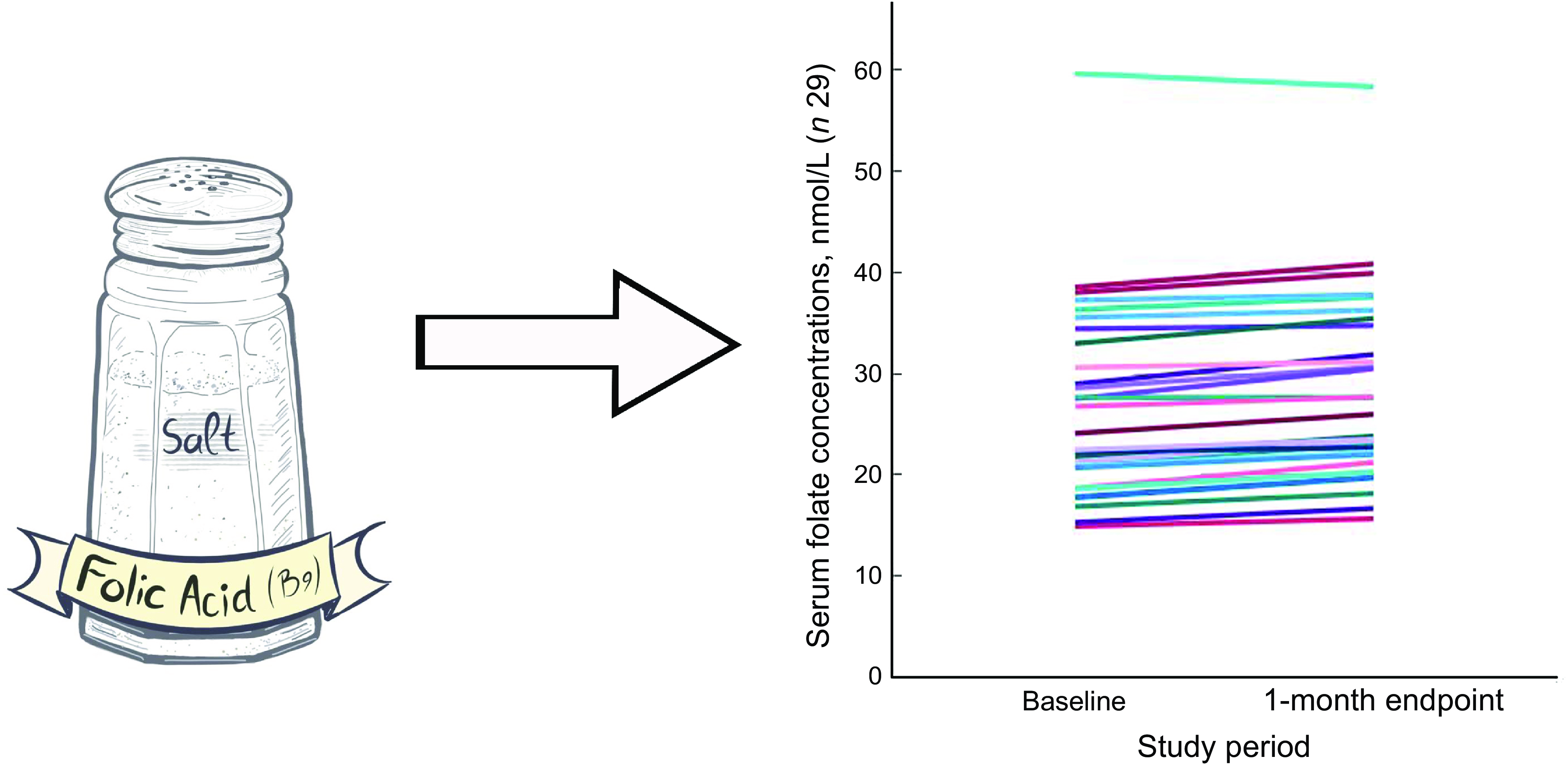
Mandatory folic acid fortification of enriched grains has reduced neural tube defect prevalence in several countries. We examined salt as an additional vehicle for folic acid fortification. The primary objective was to examine the change in serum folate concentration after 1 month of consumption of fortified iodised salt with folic acid (FISFA) among women of reproductive age. The secondary objectives were to examine (1) the feasibility of implementing FISFA intervention and (2) the acceptability of FISFA.
Design:
We conducted a pre–post intervention study (January–April 2023). Participants received a FISFA saltshaker with the study salt (1 g of sodium chloride salt fortified with 100 mcg of folic acid) to use instead of regular table salt for 1 month. Serum folate was measured using the Elecsys Folate-III immunoassay method at baseline and 1-month endpoint. Change in serum folate was assessed using a two-tailed Wilcoxon signed rank test for paired samples.
Setting:
Metropolitan city, Southern USA.
Participants:
Non-pregnant, 18–40-year-old women who lived alone/with a partner.
Results:
Thirty-two eligible women consented to participate, including eleven non-Hispanic-White, eleven non-Hispanic-Black and ten Hispanic. Post-intervention, there was a significant increase in median serum folate concentration of 1·40 nmol/l (IQR 0·74–2·05; P < 0·001) from 24·08 nmol/l to 25·96 nmol/l in an analytical sample of n 29. An increase was seen in 28/29 (93 %) participants. Feasibility: 100 % study consent and compliance. FISFA acceptability: 25 d average use; 1·28 g average daily intake; 96·7 % and 90 % reported taste and colour of FISFA as highly acceptable, respectively.
Conclusions:
FISFA is an effective approach to increasing serum folate concentrations among women of reproductive age. Findings should be replicated in a larger study.
This study aimed to evaluate the association between vegetable intake and major depressive disorder (MDD) through cross-sectional analysis and bidirectional two-sample Mendelian randomisation (MR).
Design:
Cross-sectional analysis was conducted on National Health and Nutrition Examination Survey (NHANES) data from 2005 to 2018 and the corresponding Food Patterns Equivalents Database (FPED). Genome-wide association study (GWAS) data were obtained from UK Biobank and Psychiatric Genomics Consortium (PGC) dataset. Logistic regression analysis was performed after calculating the weights of the samples. Inverse variance weighted, MR-Egger and weighted median methods were used to evaluate the causal effects.
Setting:
A Patient Health Questionnaire-9 score ≥ 10 was considered to indicate MDD. Low vegetable intake was defined as < 2 cups of vegetables per day.
Participants:
30 861 U.S. adults from NHANES. The GWAS data sample size related to vegetable intake were comprised 448 651 and 435 435 cases respectively, while the GWAS data sample size associated with MDD encompassed 500 199 cases.
Results:
There were 23 249 (75·33 %) participants with low vegetable intake. The relationship between vegetable intake and MDD was nonlinear. In the multivariate model adjusted for sex, age, education, marital status, poverty income ratio, ethnicity and BMI, participants with low vegetable intake were associated with an increased risk of MDD (OR = 1·53, 95 % CI (1·32, 1·77), P < 0·001). Bidirectional MR showed no causal effects between vegetable intake and MDD.
Conclusions:
Cross-sectional analysis identified a significant relationship between vegetable intake and MDD, whereas the results from bidirectional two-sample MR did not support a causal role.