





No CrossRef data available.
Article contents
The blind men and the elephant: What is missing cognitively in the study of cumulative technological evolution
Published online by Cambridge University Press: 10 August 2020
Abstract
I describe and explain (1) evidence regarding a key role for autism spectrum cognition in human technology; (2) tradeoffs of autistic cognition with social skills; and (3) a model of how cumulative technological culture evolves. This model involves positive feedback whereby increased technical complexity selects for enhanced social learning of mechanistic concepts and skills, leading to further advances in technology.
Information
- Type
- Open Peer Commentary
- Information
- Copyright
- Copyright © The Author(s), 2020. Published by Cambridge University Press
References
Abu-Akel, A. M., Wood, S. J., Hansen, P. C. & Apperly, I. A. (2015) Perspective-taking abilities in the balance between autism tendencies and psychosis proneness. Proceedings of the Royal Society B: Biological Sciences 282(1808):20150563. Available at: https://doi.org/10.1098/rspb.2015.0563.CrossRefGoogle ScholarPubMed
Baron-Cohen, S. (1993) Are children with autism acultural? Behavioral and Brain Sciences 16(3):512–13. Available at: https://doi.org/10.1017/S0140525X00031253.CrossRefGoogle Scholar
Baron-Cohen, S. (2000) Autism: Deficits in folk psychology exist alongside superiority in folk physics. In: Understanding other minds: Perspectives from developmental cognitive neuroscience, eds. Baron-Cohen, S., Tager-Flusberg, H. & Cohen, D. J., pp. 73–82. Oxford University Press.Google Scholar
Baron-Cohen, S. (1998) Does autism occur more often in families of physicists, engineers, and mathematicians? Autism 2(3):296–301. Available at: https://doi.org/10.1177/1362361398023008.CrossRefGoogle Scholar
Baron-Cohen, S., Lombardo, M. V., Auyeung, B., Ashwin, E., Chakrabarti, B. & Knickmeyer, R. (2011) Why are autism spectrum conditions more prevalent in males? PLoS Biology 9:e1001081. Available at: https://doi.org/10.1371/journal.pbio.1001081.CrossRefGoogle ScholarPubMed
Baron-Cohen, S., Wheelwright, S., Burtenshaw, A. & Hobson, E. (2007) Mathematical talent is linked to autism. Human Nature 18:125–31. Available at: https://doi.org/10.1007/s12110-007-9014-0.CrossRefGoogle ScholarPubMed
Baron-Cohen, S., Wheelwright, S., Spong, A., Scahill, V. & Lawson, J. (2001) Are intuitive physics and intuitive psychology independent? A test with children with Asperger Syndrome. Journal of Developmental and Learning Disorders 5(1):47–78.Google Scholar
Baron-Cohen, S., Wheelwright, S., Stott, C., Bolton, P. & Goodyer, I. (1997) Is there a link between engineering and autism? Autism 1:101–109. Available at: https://doi.org/10.1177/1362361397011010.CrossRefGoogle Scholar
Binnie, L. & Williams, J. (2003) Intuitive psychology and physics among children with autism and typically developing children. Autism 7(2):173–93. Available at: https://doi.org/10.1177/1362361303007002005.CrossRefGoogle ScholarPubMed
Campbell, B. C. & Wang, S. S. H. (2012) Familial linkage between neuropsychiatric disorders and intellectual interests. PLoS One 7:e30405. Available at: https://doi.org/10.1371/journal.pone.0030405.CrossRefGoogle ScholarPubMed
Charman, T. (2003) Why is joint attention a pivotal skill in autism? Philosophical Transactions of the Royal Society of London. Series B: Biological Sciences 358(1430):315–24. Available at: https://doi.org/10.1098/rstb.2002.1199.CrossRefGoogle ScholarPubMed
Colombi, C., Liebal, K., Tomasello, M., Young, G., Warneken, F. & Rogers, S. J. (2009) Examining correlates of cooperation in autism: Imitation, joint attention, and understanding intentions. Autism 13(2):143–63. Available at: https://doi.org/10.1177/1362361308098514.CrossRefGoogle ScholarPubMed
Crespi, B., Leach, E., Dinsdale, N., Mokkonen, M. & Hurd, P. (2016) Imagination in human social cognition, autism, and psychotic-affective conditions. Cognition 150:181–99. Available at: https://doi.org/10.1016/j.cognition.2016.02.001.CrossRefGoogle ScholarPubMed
Crespi, B. J. (2004) Vicious circles: Positive feedback in major evolutionary and ecological transitions. Trends in Ecology & Evolution 19(12):627–33. Available at: https://doi.org/10.1016/j.tree.2004.10.001.CrossRefGoogle ScholarPubMed
Crespi, B. J. (2016) Autism as a disorder of high intelligence. Frontiers in Neuroscience 10:300. Available at: https://doi.org/10.3389/fnins.2016.00300.CrossRefGoogle ScholarPubMed
Crespi, B. J. & Go, M. C. (2015) Diametrical diseases reflect evolutionary-genetic tradeoffs: Evidence from psychiatry, neurology, rheumatology, oncology and immunology. Evolution, Medicine, and Public Health 2015(1):216–53. Available at: https://doi.org/10.1093/emph/eov021.Google Scholar
Happé, F. & Frith, U., eds. (2010) Autism and talent, 364(1522). Oxford University Press.Google Scholar
Hayashi, M., Kato, M., Igarashi, K. & Kashima, H. (2008) Superior fluid intelligence in children with Asperger's disorder. Brain and Cognition 66(3):306–310. Available at: https://doi.org/10.1016/j.bandc.2007.09.008.CrossRefGoogle ScholarPubMed
Jack, A. I., Dawson, A. J., Begany, K. L., Leckie, R. L., Barry, K. P., Ciccia, A. H. & Snyder, A. Z. (2013) fMRI reveals reciprocal inhibition between social and physical cognitive domains. NeuroImage 66:385–401. Available at: https://doi.org/10.1016/j.neuroimage.2012.10.061.CrossRefGoogle ScholarPubMed
Jack, A. I. & Gabriel, J. (2013) Individual and gender differences demonstrate a trade-off between empathetic concern and physical reasoning abilities. Department of Cognitive Science, Case Western University. Available at: http://tonyjack.org/files/2013%20April%20Poster%20IRI-EC%20vs.%20IPT.pdf.Google Scholar
Kyaga, S., Lichtenstein, P., Boman, M., Hultman, C., Långström, N. & Landén, M. (2011) Creativity and mental disorder: Family study of 300 000 people with severe mental disorder. The British Journal of Psychiatry: The Journal of Mental Science 199:373–79. Available at: https://doi.org/10.1192/bjp.bp.110.085316.CrossRefGoogle ScholarPubMed
Musgrave, S., Lonsdorf, E., Morgan, D., Prestipino, M., Bernstein-Kurtycz, L., Mundry, R. & Sanz, C. (2020) Teaching varies with task complexity in wild chimpanzees. Proceedings of the National Academy of Sciences of the United States of America 117(2):969–76. doi: 10.1073/pnas.1907476116.CrossRefGoogle ScholarPubMed
Nettle, D. (2006) Schizotypy and mental health amongst poets, visual artists, and mathematicians. Journal of Research in Personality 40:876–90. Available at: https://doi.org/10.1016/j.jrp.2005.09.004.CrossRefGoogle Scholar
Osiurak, F., De Oliveira, E., Navarro, J. & Reynaud, E. (2020a) The castaway island: Distinct roles of theory of mind and technical reasoning in cumulative technological culture. Journal of Experimental Psychology: General 149(1):58–66. Available at: https://doi.org/10.1037/xge0000614.CrossRefGoogle Scholar
Roelfsema, M. T., Hoekstra, R. A., Allison, C., Wheelwright, S., Brayne, C., Matthews, F. E., et al. (2012) Are autism spectrum conditions more prevalent in an information-technology region? A school-based study of three regions in the Netherlands. Journal of Autism and Developmental Disorders 42:734–39. Available at: https://doi.org/10.1007/s10803-011-1302-1.CrossRefGoogle Scholar
Rutherford, M. D. & Subiaul, F. (2016) Children with autism spectrum disorder have an exceptional explanatory drive. Autism 20(6):744–53. Available at: https://doi.org/10.1177/1362361315605973.CrossRefGoogle ScholarPubMed
Spek, A. A. & Velderman, E. (2013) Examining the relationship between autism spectrum disorders and technical professions in high functioning adults. Research in Autism Spectrum Disorders 7:606–12. Available at: https://doi.org/10.1016/j.rasd.2013.02.002.CrossRefGoogle Scholar
Wei, X., Jennifer, W. Y., Shattuck, P., McCracken, M. & Blackorby, J. (2013) Science, technology, engineering, and mathematics (STEM) participation among college students with an autism spectrum disorder. Journal of Autism and Developmental Disorders 43:1539–46. Available at: https://doi.org/10.1007/s10803-012-1700-z.CrossRefGoogle ScholarPubMed
Whiten, A. (2020) Wild chimpanzees scaffold youngsters’ learning in a high-tech community. Proceedings of the National Academy of Sciences 117(2):802–804. Available at: https://doi.org/10.1073/pnas.1920430117.CrossRefGoogle Scholar
Windham, G. C., Fessel, K. & Grether, J. K. (2009) Autism spectrum disorders in relation to parental occupation in technical fields. Autism Research 2:183–91. Available at: https://doi.org/10.1002/aur.84.CrossRefGoogle ScholarPubMed
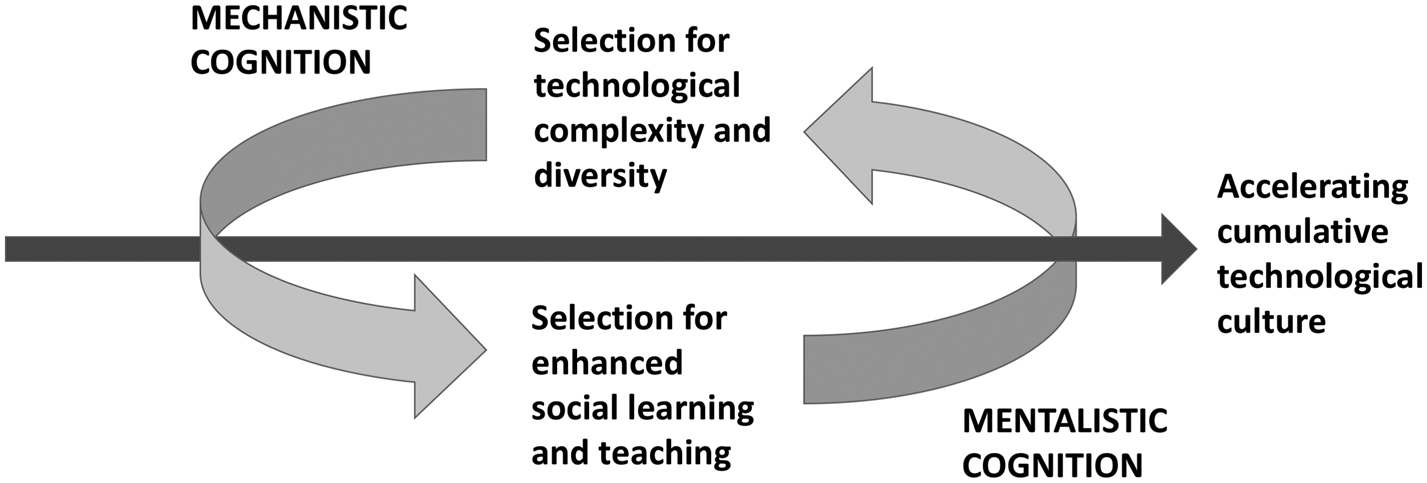
Figure 1. Model for the cognitive evolution of cumulative technological culture.
Target article
Related commentaries (26)
A cognitive developmental approach is essential to understanding cumulative technological culture
 You have
Access
For a person on the autism spectrum, our elephantine world is populated by sensations, systems, and objects, including other humans considered as mechanistic “things” rather than animate, mindful subjects. For a person on the psychotic spectrum, by contrast, lifeless things become animated with human thoughts and intentions, whereas other humans induce paranoia through mentalistic imagining run amok. Both of these conditions represent extremes. But of what?
I argue here that the evolution of human cumulative technological culture has been driven by synergism of asocial, mechanistic, systemizing cognition, epitomized by autism spectrum traits, with social, mentalizing, imaginative cognition, epitomized in the extreme by psychosis. This argument represents an extension, elaboration, and constructive criticism of Osiurak and Reynaud's (O&R's) suggestion that human technical-reasoning skills have been crucial for cumulative technological culture.
I first describe the evidence that autism spectrum cognition is associated with engineering, physics, and mathematics, whereas psychotic spectrum cognition is associated with social imagination, the arts, and the humanities. In this context, I also explain how and why traits on these two spectra tend to trade off with one another, such that enhanced skills in one domain involve reduced abilities in the other. Second, I present a model whereby synergism between mentalistic and mechanistic cognition and skills drives technological complexification though positive feedback.
Evidence for positive associations of the autism spectrum with STEM disciplines comes from several independent lines of inquiry. Epidemiological studies have thus shown that persons with professions in, or persons who plan to enter, STEM areas show relatively high rates of autism among their relatives, compared to controls (Baron-Cohen Reference Baron-Cohen1998; Baron-Cohen et al. Reference Baron-Cohen, Wheelwright, Stott, Bolton and Goodyer1997; Reference Baron-Cohen, Wheelwright, Burtenshaw and Hobson2007; Campbell & Wang Reference Campbell and Wang2012; Roelfsema et al. Reference Roelfsema, Hoekstra, Allison, Wheelwright, Brayne and Matthews2012; Spek & Velderman Reference Spek and Velderman2013; Wei et al. Reference Wei, Jennifer, Shattuck, McCracken and Blackorby2013; Windham et al. Reference Windham, Fessel and Grether2009). By contrast, psychotic-affective disorders are linked with professions and abilities in the arts and humanities (Kyaga et al. Reference Kyaga, Lichtenstein, Boman, Hultman, Långström and Landén2011; Nettle Reference Nettle2006; review in Crespi et al. Reference Crespi, Leach, Dinsdale, Mokkonen and Hurd2016).
Physical-engineering reasoning abilities, which align with O&R's conception of technical skills, have been quantified using the Intuitive Physics Test (Baron-Cohen et al. Reference Baron-Cohen, Wheelwright, Spong, Scahill and Lawson2001). Scores on this task are higher among individuals with ASD than in controls (Baron-Cohen et al. Reference Baron-Cohen, Wheelwright, Spong, Scahill and Lawson2001; Binnie & Williams Reference Binnie and Williams2003; Jack & Gabriel Reference Jack and Gabriel2013), and such individuals also show stronger “explanatory drive” regarding physical systems than do controls (Rutherford & Subiaul Reference Rutherford and Subiaul2016).
These findings, coupled with relatively high fluid (compared to crystallized) intelligence (Hayashi et al. Reference Hayashi, Kato, Igarashi and Kashima2008) and high “systemizing” cognition (Baron-Cohen et al. Reference Baron-Cohen, Lombardo, Auyeung, Ashwin, Chakrabarti and Knickmeyer2011) in autism, positive genetic correlations of autism risk with general intelligence (reviewed in Crespi Reference Crespi2016), and the mechanistic nature of autistic savant skills (Happé & Frith Reference Happé and Frith2010), indicate that “high-functioning” autism spectrum cognition is closely aligned with human technical abilities. Indeed, autism is the only psychiatric-psychological condition and variation to do so, to my knowledge. So might individuals or groups with relatively more autism-related traits have driven cumulative human technological change?
Probably not, because technical expertise usually comes with costs in social skills that would stymie social transmission. Indeed, “folk physics” shows clear evidence of tradeoffs with “folk psychology” (Baron-Cohen Reference Baron-Cohen, Baron-Cohen, Tager-Flusberg and Cohen2000; Baron-Cohen et al. Reference Baron-Cohen, Wheelwright, Spong, Scahill and Lawson2001), technical and visual-spatial skills trade off with social abilities more generally in autistic as well as non-autistic individuals (Crespi & Go Reference Crespi and Go2015, Table 1), and autism is well known to engender reductions in ability and/or motivation to imitate, emulate, innovate, engage in joint attention, and, most broadly, enculturate (e.g., Baron-Cohen Reference Baron-Cohen1993; Charman Reference Charman2003; Colombi et al. Reference Colombi, Liebal, Tomasello, Young, Warneken and Rogers2009). The existence of such tradeoffs vitiates the direct connection of technical reasoning with imitation and innovation posited by O&R as key to their model. The neurological sources of mechanistic–mentalistic tradeoffs appear to stem in part from the anticorrelated nature of activation of the task-negative, default, social, “imagination” brain activation mode with the task-positive, problem-solving, mechanistic, “intelligence-associated” mode, such that these two systems are incompatible (Jack et al. Reference Jack, Dawson, Begany, Leckie, Barry, Ciccia and Snyder2013), and individuals (and the two sexes; Baron-Cohen et al. Reference Baron-Cohen, Lombardo, Auyeung, Ashwin, Chakrabarti and Knickmeyer2011) specialize in one cognitive domain at each point in time. Cognitive tradeoffs are, crucially, missing from O&R's conceptual scheme. How might they be incorporated?
Synergism between technical and social abilities provides a useful model for the evolution of cumulative technological culture. By this paradigm (Fig. 1), mechanistic and mentalistic abilities complement one another within humans and in human groups of sizes from two to many. Increases in human technical skills, as may follow from greater fluid intelligence, complexify and diversify human technology. These changes, in turn, generate natural selection for better social-learning and social-communication abilities, to transfer the improved technology via teaching. Enhanced social learning, and enhanced technology development, can thus coevolve via a positive feedback loop, through synergisms between mechanistic and mentalistic thought. Conceptually comparable positive feedbacks have been proposed to explain many of the other major transitions in ecology, evolution, and behavior (Crespi Reference Crespi2004).
Model for the cognitive evolution of cumulative technological culture.
The synergism model is supported by: (1) a recent study showing that social learning in young chimpanzees is more highly scaffolded and structured in a more-technologically advanced chimp population (Musgrave et al. Reference Musgrave, Lonsdorf, Morgan, Prestipino, Bernstein-Kurtycz, Mundry and Sanz2020; Whiten Reference Whiten2020); (2) the human micro-society studies that show enhancement of technology transfer when technical and theory of mind skills are combined (e.g., Osiurak et al. Reference Osiurak, De Oliveira, Navarro and Reynaud2020a); (3) a body of work showing that combinations of autistic-like and schizophrenia-like traits can optimize task performance (e.g., Abu-Akel et al. Reference Abu-Akel, Wood, Hansen and Apperly2015); and (4) recent cases of technological change in human societies, such as the synergism between Steve Wozniak, who showed many Asperger-like traits (Wozniak Reference Wozniak2007) and Steve Jobs, who has been ascribed a suite of borderline and narcissistic traits, as well as a tendency toward “reality distortion” more generally (Isaacson Reference Isaacson2011).
This model should motivate micro-society work that tests for effects of variation within groups in mechanistic (and autistic) and mentalistic (and positively schizotypal) cognition and skills in the origin and cultural evolution of technology. Such analyses should also provide novel insights into the nature of cognitive tradeoffs, their roles in psychiatric conditions, and their impacts on how humans have evolved to reach pinnacles of both technology and the arts.
Financial support
This work was supported by the Natural Sciences and Engineering Research Council of Canada (2019-04208).
Conflict of interest
None.