



He who knows only his own side of the case, knows little of that.
— John Stuart Mill, On Liberty (Reference Mill1859/1989, p. 38)1. Introduction
In the last few years, social psychology has faced a series of challenges to the validity of its research, including a few high-profile replication failures, a handful of fraud cases, and several articles on questionable research practices and inflated effect sizes (John et al. Reference John, Lowenstein and Prelec2012; Simmons et al. Reference Simmons, Nelson and Simonsohn2011). In response, the Society for Personality and Social Psychology (SPSP) convened a Task Force on Publication and Research Practices which provided a set of statistical, methodological, and practical recommendations intended to both limit integrity failures and broadly increase the robustness and validity of social psychology (Funder et al. Reference Funder, Levine, Mackie, Morf, Sansone, Vazire and West2014, p. 18). In this article, we suggest that one largely overlooked cause of failure is a lack of political diversity. We review evidence suggesting that political diversity and dissent would improve the reliability and validity of social psychological science.
We are not the first to make this point. Tetlock (Reference Tetlock1994) identified ways in which moral-political values led to unjustified conclusions about nuclear deterrence and prejudice, and Redding (Reference Redding2001) showed how the lack of political diversity across psychology's subfields threatens the validity of the conclusions of psychological science. Unfortunately, these concerns have gone largely unheeded. As we shall show, the reasons for concern are even greater now than when Tetlock and Redding published their critiques.
This article makes five distinct contributions to the scientific literature, each corresponding to a separate section of the paper. Section 2 shows that although psychology once had considerable political diversity, the trend over the last four decades has been toward political homogeneity. Section 3 identifies three risk points where the lack of political diversity can undermine the validity of scientific research claims. Section 4 draws on findings from organizational psychology to show how increasing political diversity can improve social psychological science. Section 5 examines possible sources of political homogeneity in social psychology today, including differences between liberals and non-liberals in ability and interest, hostility toward non-liberal views, and discrimination against non-liberals. In section 6, we offer recommendations for how social psychologists can increase political diversity within their own ranks and reduce the harmful effects of political homogeneity on their research.
Some comments on terminology are needed before we begin. First, we use the term “social psychology” to also include personality psychology because the two fields are closely intertwined and because it is awkward to refer repeatedly to “social and personality psychological science.” We focus on social psychology because it is the subfield of psychology that most directly examines ideologically controversial topics, and is thus most in need of political diversity. Second, we focus on conservatives as an under-represented group because the data on the prevalence in psychology of different ideological groups is best for the liberal-conservative contrast – and the departure from the proportion of liberals and conservatives in the U.S. population is so dramatic. However, we argue that the field needs more non-liberals however they specifically self-identify (e.g., libertarian, moderate). Third, it is important to recognize that conservatism is not monolithic – indeed, self-identified conservatives may be more diverse in their political beliefs than are liberals (Feldman & Johnston Reference Feldman and Johnston2014; Klein & Stern Reference Klein and Stern2005; Stenner Reference Stenner2009). Fourth, we note for the curious reader that the collaborators on this article include one liberal, one centrist, two libertarians, one whose politics defy a simple left/right categorization, and one neo-positivist contrarian who favors a don't-ask-don't-tell policy in which scholarship should be judged on its merits. None identifies as conservative or Republican.
A final preparatory comment we must make is that the lack of political diversity is not a threat to the validity of specific studies in many and perhaps most areas of research in social psychology. The lack of diversity causes problems for the scientific process primarily in areas related to the political concerns of the Left – areas such as race, gender, stereotyping, environmentalism, power, and inequality – as well as in areas where conservatives themselves are studied, such as in moral and political psychology. And even in those areas, we are not suggesting that most of the studies are flawed or erroneous. Rather, we argue that the collective efforts of researchers in politically charged areas may fail to converge upon the truth when there are few or no non-liberal researchers to raise questions and frame hypotheses in alternative ways. We do not intend this article to be an attack on social psychology – a field that has a long track record of producing research that is vital to understanding and improving the human condition (see examples in Zimbardo Reference Zimbardo2004). We are proud to be social psychologists, and we believe that our field can – and will – embrace some relatively simple methods of using diversity to improve itself as a science.
2. Psychology is less politically diverse than ever
There are many academic fields in which surveys find self-identified conservatives to be about as numerous as self-identified liberals: typically business, computer science, engineering, health sciences, and technical/vocational fields (Gross & Simmons Reference Gross and Simmons2007; Zipp & Fenwick Reference Zipp and Fenwick2006).Footnote 2 In the social sciences and humanities, however, there is a stronger imbalance. For instance, recent surveys find that 58–66% of social science professors in the United States identify as liberals, while only 5–8% identify as conservatives, and that self-identified Democrats outnumber Republicans by ratios of at least 8 to 1 (Gross & Simmons Reference Gross and Simmons2007; Klein & Stern Reference Klein, Stern, Maranto, Redding and Hess2009; Rothman & Lichter Reference Rothman, Lichter, Maranto, Redding and Hess2008). A similar situation is found in the humanities where surveys find that 52–77% of humanities professors identify as liberals, while only 4–8% identify as conservatives, and that self-identified Democrats outnumber Republicans by ratios of at least 5:1 (Gross & Simmons Reference Gross and Simmons2007; Rothman & Lichter Reference Rothman, Lichter, Maranto, Redding and Hess2008). In psychology, the imbalance is slightly stronger: 84% identify as liberal, whereas only 8% identify as conservative. That is a ratio of 10.5 to 1. In the United States as a whole, the ratio of liberals to conservatives is roughly 1 to 2 (Gallup poll 2010; see Saad Reference Saad2010).
Has academic psychology always tilted so far left? The existing data are imperfect, as the only data we could find that date back beyond a few decades examined party identification (Democrat vs. Republican; McClintock et al. Reference McClintock, Spaulding and Turner1965), not ideological self-placement. Before the 1980s, party identification did not correlate with the left-right dimension as strongly as it does today (Barber & McCarty Reference Barber, McCarty, Mansbridge and Martin2013). There used to be substantial minorities of liberal Republicans and conservative Democrats. Nonetheless, since the early 20th century, the Democratic Party has been the Left-leaning party and the Republican Party has been the Right-leaning party (Levendusky Reference Levendusky2009). In Figure 1, we have plotted all available data points on the political identity of psychologists at American colleges and universities, including both party identification (diamonds) and liberal-conservative identification (circles). Both sets of measures show a strong leftward movement. Psychology professors were as likely to report voting Republican as Democrat in presidential contests in the 1920s. From the 1930s through1960, they were more likely to report voting for Democrats, but substantial minorities voted for Wilkie, Eisenhower, and Nixon (in 1960). By 2006, however, the ratio of Democrats to Republicans had climbed to more than 11:1 (Gross & Simmons Reference Gross and Simmons2007; Rothman & Lichter Reference Rothman, Lichter, Maranto, Redding and Hess2008).
The political party and ideological sympathies of academic psychologists have shifted leftward over time. Circles show ratios of self-reports of liberal vs. conservative. Diamonds show ratios of self-reports of party preference or voting (Democrat vs. Republican). Data for 1924–60 is reported in McClintock et al. (Reference McClintock, Spaulding and Turner1965). Open diamonds are participants' recollections of whom they voted for; gray diamonds are self-reported party identification at time of the survey. Data for 1999 is reported in Rothman et al. (Reference Rothman, Lichter and Nevitte2005). Data from 2006 is reported in Gross and Simmons (Reference Gross and Simmons2007). The right-most circle is from Inbar and Lammers (Reference Inbar and Lammers2012) and is the ratio of self-identified liberal/conservative social psychologists.

Is social psychology less politically diverse than academic psychology as a whole? There has never been an extensive or representative survey of the political attitudes of social psychologists, but we do have two imperfect sources of evidence. One of the largest gatherings of social psychologists is the presidential symposium at SPSP's annual meeting. At the 2011 meeting in San Antonio, Texas, Jonathan Haidt asked the roughly 1,000 attendees to identify themselves politically with a show of hands. He counted the exact number of hands raised for the options “conservative or on the right” (3 hands), “moderate or centrist” (20 hands), and “libertarian” (12 hands). For the option “liberal or on the left,” it was not possible to count, but he estimated that approximately 80% of the audience raised a hand (i.e., roughly 800 liberals). The corresponding liberal-conservative ratio of 267:1 is surely an overestimate; in this non-anonymous survey, many conservatives may have been reluctant to raise their hands. But if conservatives were disproportionately reluctant to self-identify, it illustrates the problem we are raising.
The other piece of evidence we have comes from an anonymous Internet survey conducted by Inbar and Lammers (Reference Inbar and Lammers2012), who set out to test Haidt's claim that there were hardly any conservatives in social psychology. They sent an e-mail invitation to the entire SPSP discussion list, from which 292Footnote 3 individuals participated. Inbar and Lammers found that 85% of these respondents declared themselves liberal, 9% moderate, and only 6% conservativeFootnote 4 (a ratio of 14:1). Furthermore, the trend toward political homogeneity seems to be continuing: whereas 10% of faculty respondents self-identified as conservative, only 2% of graduate students and postdocs did so (Inbar 2013, personal communication). This pattern is consistent with the broader trends throughout psychology illustrated in Figure 1: The field is shifting leftward, the ratio of liberals to conservatives is now greater than 10:1, and there are hardly any conservative students in the pipeline.
3. Three ways that the lack of diversity undermines social psychology
If left unchecked, an academic field can become a cohesive moral community, creating a shared reality (Hardin & Higgins Reference Hardin, Higgins, Sorrentino and Higgins1996) that subsequently blinds its members to morally or ideologically undesirable hypotheses and unanswered but important scientific questions (Haidt Reference Haidt2012). The sociologist Christian Smith (Reference Smith2003) has studied such moral communities within the academy and has identified a set of moral narratives that link researchers' conceptions of history to their conceptions of their research. Smith describes the Left-leaning field of sociology as sharing what he calls the “liberal progress narrative”:
Once upon a time, the vast majority of human persons suffered in societies and social institutions that were unjust, unhealthy, repressive, and oppressive. These traditional societies were reprehensible because of their deep-rooted inequality, exploitation, and irrational traditionalism. . . . But the noble human aspiration for autonomy, equality, and prosperity struggled mightily against the forces of misery and oppression, and eventually succeeded in establishing modern, liberal, democratic . . . welfare societies. While modern social conditions hold the potential to maximize the individual freedom and pleasure of all, there is much work to be done to dismantle the powerful vestiges of inequality, exploitation, and repression. This struggle for the good society in which individuals are equal and free to pursue their self-defined happiness is the one mission truly worth dedicating one's life to achieving. (Smith Reference Smith2003, p. 82)
Although Smith wrote this narrative for sociology, it is a plausible shared narrative for social psychology – a field that has produced copious research on racism, sexism, stereotypes, and the baneful effects of power and obedience to authority. Given the political homogeneity demonstrated in section 1 of this target article, the field of social psychology is at risk of becoming a cohesive moral community. Might a shared moral-historical narrative in a politically homogeneous field undermine the self-correction processes on which good science depends? We think so, and present three risk points – three ways in which political homogeneity can threaten the validity of social psychological science – and examples from the extant literature illustrating each point.
3.1. Risk point 1: Liberal values and assumptions can become embedded into theory and method
Political values can become embedded into research questions in ways that make some constructs unobservable and unmeasurable, thereby invalidating attempts at hypothesis testing (Sniderman & Tetlock Reference Sniderman and Tetlock1986; Tetlock Reference Tetlock1994; Tetlock & Mitchell Reference Tetlock, Mitchell, Mellers and Baron1993). Values become embedded when value statements or ideological claims are wrongly treated as objective truth, and observed deviation from that truth is treated as error.
3.1.1. Example 1: Denial of environmental realities
Feygina et al. (Reference Feygina, Jost and Goldsmith2010) sought to explain the “denial of environmental realities” by using system justification theory (Jost & Banaji Reference Jost and Banaji1994). In operationalizing such denial, the authors assessed the four constructs listed below, with example items in parentheses:
-
Construct 1: Denial of the possibility of an ecological crisis. (“If things continue on their present course, we will soon experience a major environmental catastrophe,” reverse scored.)
-
Construct 2: Denial of limits to growth. (“The Earth has plenty of natural resources if we just learn how to develop them.”)
-
Construct 3: Denial of the need to abide by the constraints of nature. (“Humans will eventually learn enough about how nature works to be able to control it.”)
-
Construct 4: Denial of the danger of disrupting balance in nature. (“The balance of nature is strong enough to cope with the impacts of modern industrial nations.”)
The core problem with this research is that it misrepresents those who merely disagree with environmentalist values and slogans as being in “denial.” Indeed, the papers that Feygina et al. (Reference Feygina, Jost and Goldsmith2010) cited in support of their “denial” questions never used the terms “deny” or “denial” to describe these measures. Clark et al. (Reference Clark, Kotchen and Moore2003) referred to the items as assessing “attitudes,” and Dunlap et al. (Reference Dunlap, Van Liere, Mertig and Jones2000) characterized the items as tapping “primitive beliefs” (p. 439) about the environment.
The term “denial” implies that (1) the claim being denied is a “reality” – that is, a descriptive fact – and that (2) anyone who fails to endorse the pro-environmental side of these claims is engaged in a psychological process of denial. We next describe why both claims are false, and why the measures, however good they are at assessing attitudes or primitive beliefs, fail to assess denial.
Construct 1 refers to a “possibility” so that denial would be belief that an ecological crisis was impossible. This was not assessed, and the measure that supposedly tapped this construct refers to no descriptive fact. Without defining “soon” or “major” or “crisis,” it is impossible for this to be a fact. Without being a statement of an actual fact, disagreeing with the statement does not, indeed cannot, represent denial.
Similar problems plague Construct 2 and its measurement. Denial of the limits of growth could be measured by agreement with an alternative statement, such as “The Earth's natural resources are infinite.” Agreement could be considered a form of denial of the limits of growth. However, this was not assessed. Absent a definition of “plenty,” it is not clear how this item could be refuted or confirmed. If it cannot be refuted or confirmed, it cannot be a descriptive fact. If it is not a fact, it can be agreed or disagreed with, but there is no “denial.” Even strongly agreeing with this statement does not necessarily imply denying that there are limits to growth. “Plenty” does not imply “unlimited.” Moreover, the supposed reality being denied is, in fact, heavily disputed by scholars, and affirming the Earth's resources as plentiful for human needs, given human ingenuity, was a winning strategy in a famous scientific bet (Sabin Reference Sabin2013).
Construct 3 is an injunction that we need to abide by the constraints of nature. Again “constraints of nature” is a vague and undefined term. Further, the construct is not a descriptive fact – it is a philosophical/ideological prescription, and the item is a prophecy about the future, which can never be a fact. Thus, this construct might capture some attitude toward environmentalism, but it does not capture denial of anything. It would be just as unjustified to label those who disagree with the item as being in denial about human creativity, innovation, and intelligence.
Construct 4 is similarly problematic. “Balance in nature” is another vague term, and the item assessing this construct is another vague prediction. One can agree or disagree with the item. And such differences may indeed by psychologically important. Disagreement, however, is not the same construct as denial.
Whether some people deny actual environmental realities, and if so, why, remains an interesting and potentially scientifically tractable question. For example, one might assess “environmental denial” by showing people a time-lapse video taken over several years showing ocean levels rising over an island, and asking people if sea levels were rising. There would be a prima facie case for identifying those who answered “no” to such a question as “denying environmental realities.” However, Feygina et al. (Reference Feygina, Jost and Goldsmith2010) did not perform such studies. Instead, they simply measured support for primitive environmentalist beliefs and values, called low levels of such support denial, and regressed it on the system justification scores and other measures (a third, experimental study, did not assess denial). None of Feygina et al.'s measures refer to environmental realities. Thus, the studies were not capable of producing scientific evidence of denial of environmental realities.
Vague environmentalist philosophical slogans and values are unjustifiably converted to scientific truths even though no data could ever tell us whether humans should “abide by the constraints of nature.” It is not just that people have different environmental attitudes; the problem is the presumption that one set of attitudes is right and those who disagree are in denial. This conversion of a widely shared political ideology into “reality,” and its concomitant treatment of dissent as denial, testifies to the power of embedded values to distort science within a cohesive moral community.
3.1.2. Example 2: Ideology and unethical behavior
Son Hing et al. (Reference Son Hing, Bobocel, Zanna and McBride2007) found that: (1) people high in social dominance orientation (SDO) were more likely to make unethical decisions, (2) people high in right-wing authoritarianism (RWA) were more likely to go along with the unethical decisions of leaders, and (3) dyads with high SDO leaders and high RWA followers made more unethical decisions than did dyads with alternative arrangements (e.g., low SDO–low RWA dyads).
Yet, consider the decisions they defined as unethical: not formally taking a female colleague's side in her sexual harassment complaint against her subordinate (given little information about the case), and a worker placing the well-being of his or her company above unspecified harms to the environment attributed to the company's operations. Liberal values of feminism and environmentalism were embedded directly into the operationalization of ethics, even to the extent that participants were expected to endorse those values in vignettes that lacked the information one would need to make a considered judgment.
3.1.3. How to recognize and avoid embedded-value biases
The appearance of certain words that imply pernicious motives (e.g., deny, legitimize, rationalize, justify, defend, trivialize) may be particularly indicative of research tainted by embedded values. Such terms imply, for example, that the view being denied is objectively valid and the view being “justified” is objectively invalid. In some cases, this may be scientifically tenable, as when a researcher is interested in the denial of some objective fact. Rationalization can be empirically demonstrated, but doing so requires more than declaring some beliefs to be rationalizations, as in Napier and Jost (Reference Napier and Jost2008), where endorsement of the efficacy of hard work – on one item – was labeled rationalization of inequality.
Turnabout tests often constitute a simple tool for identifying and avoiding embedded-values bias (Tetlock Reference Tetlock1994). Imagine a counterfactual social psychology field in which conservative political views were treated as scientific facts and disagreements with conservative views treated as denial or error. In this field, scholars might regularly publish studies on “the denial of the benefits of free market capitalism” or “the denial of the benefits of a strong military” or “the denial of the benefits of church attendance.” Or they might publish studies showing that people low in RWA and SDO (i.e., liberals) are more unethical because they are more willing to disrespect authority, disregard private property, and restrict voluntary individual choice in the marketplace. Embedding any type of ideological values into measures is dangerous to science. Later in this article, we review evidence suggesting that this is much more likely to happen – and to go unchallenged by dissenters – in a politically homogeneous field.
3.2. Risk point 2: Researchers may concentrate on topics that validate the liberal progress narrative and avoid topics that contest that narrative
Since the Enlightenment, scientists have thought of themselves as spreading light and pushing back the darkness. The metaphor is apt, but in a politically homogeneous field, a larger-than-optimal number of scientists shine their flashlights on ideologically important regions of the terrain. Doing so leaves many areas unexplored. Even worse, some areas become walled off, and inquisitive researchers risk ostracism if they venture in (see Redding [2013] for a discussion of a recent example in sociology). Political homogeneity in social psychology can restrict the range of possible research programs or questions. It may also deprive us of tools and research findings we need to address pressing social issues. The two examples given below illustrate this threat.
3.2.1. Example 1: Stereotype accuracy
Since the 1930s, social psychologists have been proclaiming the inaccuracy of social stereotypes, despite lacking evidence of such inaccuracy. Evidence has seemed unnecessary because stereotypes have been, in effect, stereotyped as inherently nasty and inaccurate (for a review, see Jussim Reference Jussim2012b).
Some group stereotypes are indeed hopelessly crude and untestable. But some may rest on valid empiricism – and represent subjective estimates of population characteristics (e.g., the proportion of people who drop out of high school, are victims of crime, or endorse policies that support women at work; see Jussim [2012b] and Ryan [Reference Ryan, Stroebe and Hewstone2003] for reviews). In this context, it is not surprising that the rigorous empirical study of the accuracy of factual stereotypes was initiated by one of the very few self-avowed conservatives in social psychology – Clark McCauley (McCauley & Stitt Reference McCauley and Stitt1978). Since then, dozens of studies by independent researchers have yielded evidence that stereotype accuracy (of all sorts of stereotypes) is one of the most robust effects in all of social psychology (Jussim Reference Jussim2012b). Here is a clear example of the value of political diversity: A conservative social psychologist asked a question nobody else thought (or dared) to ask, and found results that continue to make many social psychologists uncomfortable. McCauley's willingness to put the assumption of stereotype inaccuracy to an empirical test led to the correction of one of social psychology's most long-standing errors.
3.2.2. Example 2: The scope and direction of prejudice
Prejudice and intolerance have long been considered the province of the political Right (e.g., Adorno et al. Reference Adorno, Frenkel-Brunswik, Levinson and Sanford1950; Duckitt Reference Duckitt2001; Lindner & Nosek Reference Lindner and Nosek2009). Indeed, since Allport (Reference Allport1954), social psychologists have suspected that there is a personality type associated with generalized prejudice toward a variety of social groups (Akrami et al. Reference Akrami, Ekehammar and Bergh2011), which they have linked to political conservatism (Roets & Van Hiel Reference Roets and Van Hiel2011). More recently, however, several scholars have noted that the groups typically considered targets of prejudice in such research programs are usually low status and often Left-leaning (e.g., African Americans and Communists; for more examples and further arguments, see Chambers et al. Reference Chambers, Schlenker and Collisson2013; Crawford & Pilanski Reference Crawford and Pilanski2014). Using research designs that include both Left-leaning and Right-leaning targets, and using nationally representative as well as student and community samples, these researchers have demonstrated that prejudice is potent on both the left and right. Conservatives are prejudiced against stereotypically Left-leaning targets (e.g., African Americans), whereas liberals are prejudiced against stereotypically Right-leaning targets (e.g., religious Christians; see Chambers et al. Reference Chambers, Schlenker and Collisson2013; Crawford & Pilanski Reference Crawford and Pilanski2014; Wetherell et al. Reference Wetherell, Brandt and Reyna2013).
Summarizing these recent findings, Brandt et al. (Reference Brandt, Reyna, Chambers, Crawford and Wetherell2014) put forward the ideological conflict hypothesis, which posits that people across the political spectrum are prejudiced against ideologically dissimilar others. Once again, the shared moral narrative of social psychology seems to have restricted the range of research: The investigation of prejudice was long limited to prejudice against the targets that liberals care most about. But the presence of a non-liberal researcher (John Chambers is a libertarian) contributed to his decision to use multiple targets, which might, over time, lead the entire field to a more nuanced view of the relationship between politics and prejudice.
3.2.3. How to avoid a narrow emphasis on topics that advance liberal narratives
When researchers primarily focus on addressing questions that advance liberal narratives, or systematically ignore research inconsistent with liberal narratives, the risk of political bias increases. Instead of assuming that stereotypes are inaccurate without citing evidence, ask, “How (in)accurate are stereotypes? What has empirical research found?” Instead of asking, “Why are conservatives so prejudiced and politically intolerant?” (Hodson & Busseri Reference Hodson and Busseri2012; Lindner & Nosek Reference Lindner and Nosek2009), ask, “Which groups are targets of prejudice and intolerance across the political spectrum, and why?” (Brandt et al. Reference Brandt, Reyna, Chambers, Crawford and Wetherell2014). One does not need to be politically conservative to ask the latter questions. Indeed, to our knowledge, at least, one of the authors of the ideological conflict hypothesis (Crawford) self-describes as liberal. Thus, simply having an ideology does not inevitably lead to biased research, even on politicized topics. Nonetheless, as we show later in this article, having a greater number of non-liberal scientists would likely reduce the time it takes for social psychology to correct long-standing errors on politicized topics.
3.3. Risk point 3: Negative attitudes regarding conservatives can produce a psychological science that mischaracterizes their traits and attributes
A long-standing view in social-political psychology is that the Right is more dogmatic and intolerant of ambiguity than the Left, a view Tetlock (Reference Tetlock1983) dubbed the rigidity-of-the-right hypothesis. Altemeyer (Reference Altemeyer1996; Reference Altemeyer1998) argued that a consequence of this asymmetry in rigidity is that those on the right (specifically, people high in RWA) should be more prone to making biased political judgment than those on the left. For example, Altemeyer (Reference Altemeyer1996) found that people high in RWA were biased in favor of Christian over Muslim mandatory school prayer in American and Arab public schools, respectively, whereas people low in RWA opposed mandatory school prayer regardless of the religious target group. On the basis of these and other results, Altemeyer characterized people high in RWA (who tend to be socially conservative) as hypocritical and rigid, and people low in RWA (who tend to be socially liberal) as consistent and fair-minded. Others have relied on this evidence to make similar arguments (e.g., Peterson et al. Reference Peterson, Duncan and Pang2002).
But had social psychologists studied a broad enough range of situations to justify these broad conclusions? Recent evidence suggests not. The ideologically objectionable premise model (IOPM; Crawford Reference Crawford2012) posits that people on the political left and right are equally likely to approach political judgments with their ideological blinders on. That said, they will do so only when the premise of a political judgment is ideologically acceptable. If it's objectionable, any preferences for one group over another will be short-circuited, and biases won't emerge. The IOPM thus allows for biases to emerge only among liberals, only among conservatives, or among both liberals and conservatives, depending on the situation. For example, reinterpreting Altemeyer's mandatory school prayer results, Crawford (Reference Crawford2012) argued that for people low in RWA who value individual freedom and autonomy, mandatory school prayer is objectionable; thus, the very nature of the judgment should shut off any biases in favor of one target over the other. However, for people high in RWA who value society-wide conformity to traditional morals and values, mandating school prayer is acceptable; this acceptable premise then allows for people high in RWA to express a bias in favor of Christian over Muslim school prayer. Crawford (Reference Crawford2012, Study 1) replaced mandatory prayer with voluntary prayer, which would be acceptable to both people high and low in RWA. In line with the IOPM, people high in RWA were still biased in favor of Christian over Muslim prayer, while people low in RWA now showed a bias in favor of Muslim over Christian voluntary prayer. Hypocrisy is therefore not necessarily a special province of the Right.
In another study, Crawford (Reference Crawford2012, Study 2) reasoned that the Left typically finds it acceptable to criticize and question authority. Therefore, a scenario involving a subordinate criticizing an authority figure would permit people low in RWA to punish a subordinate who criticizes an ideologically similar leader (e.g., President Barack Obama) more harshly than one who criticizes an ideologically dissimilar leader (e.g., President George W. Bush). However, such criticism of authority represents an objectionable premise for people high in RWA – thus, they should punish the subordinate equally, regardless of the leader's identity. Consistent with the IOPM, people low in RWA more harshly punished a military general who criticized Obama than one who criticized Bush, whereas people high in RWA punished the general equally regardless of the target leader's identity. Thus, this scenario shows the reversal of Altemeyer's findings – biases emerged among the Left, but not the Right. Results from seven scenarios have supported the ideologically objectionable premise model (see Crawford Reference Crawford2012; Crawford & Xhambazi Reference Crawford and Xhambazi2015) and indicate that biased political judgments are not predicted by ideological orientation (as per Altemeyer), but rather by the qualities of the judgment scenarios used in the research.
These examples illustrate the threats to truth-seeking that emerge when members of a politically homogeneous intellectual community are motivated to cast their perceived outgroup (i.e., the ones who violate the liberal progressive narrative) in a negative light. If there were more social psychologists who were motivated to question the design and interpretation of studies biased towards liberal values during peer review, or if there were more researchers running their own studies using different methods, social psychologists could be more confident in the validity of their characterizations of conservatives (and liberals).
Detecting and avoiding mischaracterizing the traits of conservatives. One red flag is the uniformity of the disparaging conclusions about conservatives. If empirical results consistently portray conservatives negatively and liberals positively, this may signal a problem of political bias. The potential for political bias is likely greatly reduced when researchers seek to explain the motivations, foibles, and strengths of liberals as well as conservatives. Several programs of research have found evidence of strengths and weaknesses among both liberals and conservatives, including moral foundations theory (e.g., Haidt Reference Haidt2012), the ideologically objectionable premise model (Crawford Reference Crawford2012; Crawford & Xhambazi Reference Crawford and Xhambazi2015), and the ideological conflict hypothesis (e.g., Brandt et al. Reference Brandt, Reyna, Chambers, Crawford and Wetherell2014; Crawford et al. Reference Crawford, Modri and Motyl2013; Munro et al. Reference Munro, Lasane and Leary2010). This evidence disconfirms the hypothesis that conservatives really do warrant relentless scientific condemnation. If one wishes to focus on just conservatives (or just liberals), understanding their weaknesses and strengths would seem to be more theoretically productive and less open to a charge of political bias.
We do not mean to suggest that liberals cannot do fair and unbiased work on charged topics. For example, a number of scholars are producing balanced work on people's reactions toward left-wing and right-wing authority figures (Frimer et al. Reference Frimer, Gaucher and Schaefer2014), value-based behavioral attributions across the political spectrum (Morgan et al. Reference Morgan, Mullen and Skitka2010), and people's beliefs about scientific consensus on hot-button political issues (Kahan et al. Reference Kahan, Jenkins-Smith and Braham2011), to name just a few. Nor do we mean to invalidate anyone's research program by pointing to specific problems in the examples we have discussed above. Indeed, we appreciate the even-handed approaches some of these authors have taken in other lines of their research (e.g., research on meritocracy and affirmative action support by Son Hing et al. Reference Son Hing, Bobocel and Zanna2002). These important lines of research indicate that the disconfirmation processes in our field are not entirely broken. However, if we look at the field as a whole and think of it as a complex system that depends on broad-ranging inquiry and institutionalized disconfirmation efforts, we are confident that the parameters are not set properly for the optimum discovery of truth. More political diversity would help the system discover more truth.
4. Why political diversity is likely to improve social psychological science
Diversity can be operationalized in many ways, including demographic diversity (e.g., ethnicity, race, and gender) and viewpoint diversity (e.g., variation in intellectual viewpoints or professional expertise). Research in organizational psychology suggest that: (a) the benefits of viewpoint diversity are more consistent and pronounced than those of demographic diversity (Menz Reference Menz2012; Williams & O'Reilly Reference Williams and O'Reilly1998); and (b) the benefits of viewpoint diversity are most pronounced when organizations are pursuing open-ended exploratory goals (e.g., scientific discovery) as opposed to exploitative goals (e.g., applying well-established routines to well-defined problems; Cannella et al. Reference Cannella, Park and Lee2008).
Seeking demographic diversity has many benefits (Crisp & Turner Reference Crisp and Turner2011), including combating effects of past and present discrimination, increasing tolerance, and, in academic contexts, creating bodies of faculty who will be more demographically appealing to students from diverse demographic backgrounds. However socially beneficial such effects may be, they have little direct relation to the conduct or validity of science. Viewpoint diversity may therefore be more valuable than demographic diversity if social psychology's core goal is to produce broadly valid and generalizable conclusions. (Of course, demographic diversity can bring viewpoint diversity, but if it is viewpoint diversity that is wanted, then it may be more effective to pursue it directly.) It is the lack of political viewpoint diversity that makes social psychology vulnerable to the three risks described in the previous section. Political diversity is likely to have a variety of positive effects by reducing the impact of two familiar mechanisms that we explore below: confirmation bias and groupthink/majority consensus.
4.1. Confirmation bias
People tend to search for evidence that will confirm their existing beliefs while also ignoring or downplaying disconfirming evidence. This confirmation bias (Nickerson Reference Nickerson1998) is widespread among both lay people and scientists (Ioannidis Reference Ioannidis2012). It is extremely difficult to avoid confirmation bias in everyday reasoning; for example, courses in critical thinking, temporarily suppress confirmation bias, but do not eliminate it (Lilienfeld et al. Reference Lilienfeld, Ammirati and Landfield2009). Even research communities of highly intelligent and well-meaning individuals can fall prey to confirmation bias, as IQ is positively correlated with the number of reasons people find to support their own side in an argument, and is uncorrelated with the (much lower) number of reasons people find to support the opposing argument (Perkins et al. Reference Perkins, Farady, Bushey, Perkins, Farady and Bushey1991).
Confirmation bias can become even stronger when people confront questions that trigger moral emotions and concerns about group identity (Haidt Reference Haidt2001; Reference Haidt2012). Further, group-polarization often exacerbates extremism in echo chambers (Lamm & Myers Reference Lamm and Myers1978). Indeed, people are far better at identifying the flaws in other people's evidence-gathering than in their own, especially if those other people have dissimilar beliefs (e.g., Mercier & Sperber Reference Mercier and Sperber2011; Sperber et al. Reference Sperber, Clément, Heintz, Mascaro, Mercier, Origgi and Wilson2010). Although such processes may be beneficial for communities whose goal is social cohesion (e.g., a religious or activist movement), they can be devastating for scientific communities by leading to widely accepted claims that reflect the scientific community's blind spots more than they reflect justified scientific conclusions (see, e.g., the three risk points discussed previously).
The peer-review process likely offers much less protection against error when the community of peers is politically homogeneous. Ideally, reviewers should scrutinize and criticize the methods of a paper equally closely regardless of whether or not they approve of the findings. Yet, confirmation biases would lead reviewers to work extra hard to find flaws with papers whose conclusions they dislike, and to be more permissive about methodological issues when they endorse the conclusions. This is exactly what has been found in experimental studies (Abramowitz et al. Reference Abramowitz, Gomes and Abramowitz1975; Ceci et al. Reference Ceci, Peters and Plotkin1985; both described below).
In this way, certain assumptions, theories, and findings can become the entrenched wisdom in a field, not because they are correct but because they have consistently undergone less critical scrutiny. When most people in a field share the same confirmation bias, that field is at a higher risk of reaching unjustified conclusions. The most obvious cure for this problem is to increase the viewpoint diversity of the field. Nobody has found a way to eradicate confirmation bias in individuals (Lilienfeld et al. Reference Lilienfeld, Ammirati and Landfield2009), but we can diversify the field to the point where individual viewpoint biases begin to cancel out each other.
4.2. Minority influence
Minority influence research has focused on the processes by which minorities influence majority members' (and thus the group's) reasoning (e.g., Crano Reference Crano2012; Moscovici & Personnaz Reference Moscovici and Personnaz1980). Majorities influence decision-making by producing conformity pressure that creates cohesion and community, but they do little to enhance judgmental depth or quality (Crisp & Turner Reference Crisp and Turner2011; Moscovici & Personnaz Reference Moscovici and Personnaz1980). They also risk creating the type of groupthink that has long been a target of criticism by social psychologists (e.g., Fiske et al. Reference Fiske, Harris and Cuddy2004; Janis Reference Janis1972).
In contrast, a dissenting minority can undermine group-cohesion norms (Crano Reference Crano2012). Such norms can become dysfunctional for scientific communities, especially when they lead those communities to sacrifice scientific skepticism for the sake of advancing a political agenda (for examples, see Eagly Reference Eagly1995; Jussim Reference Jussim2012a; Redding Reference Redding2001). For a scientific community, discord may be beneficial because it motivates majority members to think more deeply about the issues at stake (Crano Reference Crano2012). In scientific contexts, the evidence or logic provided by the minority may sometimes be so persuasive that it wins the majority. Alternatively, if the majority view was correct all along, then the validity and credibility of the majority view are strengthened by withstanding a forceful attempt at falsification by the minority (Popper Reference Popper1959; Reference Popper1968). The many benefits of these processes have been borne out by research on minority influence, which shows that the deeper thought produced by dissent can lead to higher-quality group decisions (Crisp & Turner Reference Crisp and Turner2011; Moscovici & Personnaz Reference Moscovici and Personnaz1980; Nemeth Reference Nemeth1995; Nemeth et al. Reference Nemeth, Brown and Rogers2001).
There is even evidence that politically diverse teams produce more creative solutions than do politically homogeneous teams on problems such as “how can a person of average talent achieve fame” and how to find funding for a partially-built church ineligible for bank loans (Triandis et al. Reference Triandis, Hall and Ewen1965). Pairs constituting one liberal and one conservative produced more creative solutions to these problems than did liberal-liberal or conservative-conservative pairings. There is abundant evidence that viewpoint diversity can and often does lead to novel solutions to a variety of problems (Crano Reference Crano2012; Mannix & Neale Reference Mannix and Neale2005). Indeed, some social scientists have gone so far as to portray the problem-solving benefits of diversity as a necessary logico-mathematical truth, not just a contingent empirical one (Page Reference Page2008 – although see Tetlock Reference Tetlock2007).
In sum, there are grounds for hypothesizing that increased political diversity would improve the quality of social psychological science because it would increase the degree of scientific dissent, especially on such politicized issues as inequality versus equity, the psychological characteristics of liberals and conservatives, and stereotypes, prejudice, and discrimination. Social psychologists have shown these effects in many settings. They could take advantage of them within their own ranks.
5. Why are there so few non-liberals in social psychology?
The question of why conservatives and other non-liberals are under-represented throughout the social sciences is complex (Klein & Stern Reference Klein and Stern2005), and the evidence does not point to a single answer. To understand why conservatives are so vastly under-represented in social psychology, we consider five explanations that have frequently been offered to account for a lack of diversity not just in social psychology, but in other contexts (e.g., the under-representation of women and ethnic minorities in science, technology, engineering, and mathematics [STEM] fields; see Susan Pinker Reference Pinker2008).
5.1. Differences in ability
Gilbert (Reference Gilbert2011) observed that, “One well-chewed possibility is that liberals are more likely to want to become professors. For example, liberals may be more interested in new ideas, more willing to work for peanuts, or just more intelligent.” The evidence does not support this view. Before we dig into it, we should note that a serious claim that intelligence differences explain the scarcity of non-liberals would make sense only if there were sizeable and consistent intelligence differences – for this claim, a five-point difference on mean SAT scores simply won't do. Notably, the data do not yield a consistent liberal advantage, even a small one. Some researchers have found a modest negative correlation between IQ and conservatism (Heaven et al. Reference Heaven, Ciarrochi and Leeson2011; Hodson & Busseri Reference Hodson and Busseri2012). However, others have found either no relationship (i.e., between political orientation and SAT-Math scores; Kemmelmeier Reference Kemmelmeier2008), or a curvilinear relationship; specifically, Kemmelmeier (Reference Kemmelmeier2008) found that while conservatism generally correlated with lower SAT-Verbal scores, extreme conservatism predicted higher SAT-Verbal scores.
Second, the observed relationship between intelligence and conservatism largely depends on how conservatism is operationalized. Social conservatism correlates with lower cognitive ability test scores, but economic conservatism correlates with higher scores (Iyer et al. Reference Iyer, Koleva, Graham, Ditto and Haidt2012; Kemmelmeier Reference Kemmelmeier2008). Similarly, Feldman and Johnston (Reference Feldman and Johnston2014) have found in multiple nationally representative samples that social conservatism negatively predicted educational attainment, whereas economic conservatism positively predicted educational attainment. Together, these results likely explain why both Heaven et al. (Reference Heaven, Ciarrochi and Leeson2011) and Hodson and Busseri (Reference Hodson and Busseri2012) have found a negative correlation between IQ and conservatism – because “conservatism” was operationalized as right-wing authoritarianism, which is more strongly related to social than economic conservatism (Van Hiel et al. Reference Van Hiel, Pandelaere and Duriez2004). In fact, Carl (Reference Carl2014) found that Republicans have higher mean verbal intelligence (up to 5.48 IQ points equivalent, when covariates are excluded), and this effect is driven by economic conservatism (which, as a European, he called economic liberalism, because of its emphasis on free markets). Carl suggests that libertarian Republicans overpower the negative correlation between social conservatism and verbal intelligence, so as to yield the aggregate mean advantage for Republicans. Moreover, the largest political effect in Kemmelmeier's (Reference Kemmelmeier2008) study was the positive correlation between anti-regulation views and SAT-V scores, where β = .117, p<.001 (by comparison, the regression coefficient for conservatism was β = −.088, p<.01, and, for being African American, β = −.169, p<.001).
In summary, substantial evidence suggests that the most reliable relationships between political orientation and intelligence are the positive correlations of both social liberalism and economic conservatism with verbal intelligence, while no consistent correlations emerge between political views and mathematical intelligence. This pattern is incompatible with the hypothesis that research psychologists are overwhelmingly left-liberal because liberals are smarter than conservatives.
5.2. The effects of education on political ideology
Another explanation for the disproportionate number of liberals in academia is that education per se causes students to become more liberal. For example, many may view education as “enlightening” and believe that an enlightened view comports with liberal politics. There is little evidence that education causes students to become more liberal. Instead, several longitudinal studies following tens of thousands of college students for many years have concluded that political socialization in college occurs primarily as a function of one's peers, not education per se (Astin Reference Astin1993; Dey Reference Dey1997). These studies show that students become more liberal if they are around liberal peers, and more conservative if around conservative peers. Even the classic Bennington Study (Newcomb Reference Newcomb1943) concluded that it was conformity to liberal norms, more than education per se, that led students to become more liberal. Thus, reference-group norms, more than educational enlightenment, lead people to become more liberal in college.
5.3. Differences in interest
Even if differences in intelligence are small or nonexistent, might liberals simply find a career in social psychology (or the academy more broadly) more appealing? Yes, for several reasons. The Big Five personality trait that correlates most strongly with political liberalism is openness to experience (r = .32 in Jost et al.'s [2003] meta-analysis), and people high in that trait are more likely to pursue careers that will let them indulge their curiosity and desire to learn, such as a career in the academy (McCrae Reference McCrae1996). An academic career requires a Ph.D., and liberals enter (and graduate) college more interested in pursuing doctorate degrees than do conservatives (Woessner & Kelly-Woessner Reference Woessner, Kelly-Woessner, Maranto, Redding and Hess2009). Furthermore, the personal and intellectual priorities of liberals may predispose them to an academic career: Relative to conservatives, they are less interested in financial success and more interested in writing original works and making a theoretical contribution to science (Woessner & Kelly-Woessner Reference Woessner, Kelly-Woessner, Maranto, Redding and Hess2009).
Such intrinsic variations in interest may be amplified by a “birds of a feather” effect. “Similarity attracts” is one of the most well-established findings in social psychology (Byrne Reference Byrne1969). As a field begins to lean a certain way, the field will likely become increasingly attractive to people suited to that leaning. Over time, the group itself may become characterized by its group members. Professors and scientists may come to be seen as liberal just as nurses are typically thought of as being female. Once that happens, conservatives may disproportionately self-select out of joining the dissimilar group, based on a realistic perception that they “do not fit well.” Gross (Reference Gross2013) draws on interviews with and surveys of social science academics to argue that this sort of self-selection is the main reason why the professoriate has grown more liberal in recent decades.
Self-selection clearly plays a role. But it would be ironic if an epistemic community resonated to empirical arguments that appear to exonerate the community of prejudice – when that same community roundly rejects those same arguments when invoked by other institutions to explain the under-representation of women or ethnic minorities (e.g., in STEM disciplines or other elite professions). Gross (Reference Gross2013) relies heavily on self-reports of members of the target group suspected of prejudice. But cognitive psychologists and legal scholars such as Greenwald and Krieger (Reference Greenwald and Krieger2006), and Kang and Banaji (Reference Kang and Banaji2006), argue that this type of evidence is insensitive to unconscious prejudices which, they insist, are pervasive when carefully assessed in controlled lab environments. And organizational sociologists such as Reskin (Reference Reskin2012) and Bielby (Reference Bielby2013) argue that structural impediments to advancement – impediments to which individual employers tend to be oblivious – can also bias labor markets against target groups. In our view, it is disturbing when the thresholds of proof that behavioral and social scientists use in evaluating claims of prejudice hinge on “whose ox is being gored” (Tetlock & Mitchell Reference Tetlock and Mitchell2009). The credibility of the scientific community is at stake. We should not expect to emerge with our collective reputations intact if we ground accusations of prejudice against outsiders in empirical arguments that we dismiss as inapplicable to ourselves – a failure of the turnabout test that outsiders are likely to find particularly galling.
That said, dispositional differences between liberals and conservatives in personality traits and values, combined with the “birds of a feather” effect, surely explain some portion of the under-representation of conservatives in the social sciences in general, and in social psychology in particular. In theory, these effects could explain the entire imbalance because there is no clear stopping point for the purifying processes that Gross (Reference Gross2013) describes. If this were the whole story, it would not undercut our epistemic arguments about the need for political diversity. Diversity would still improve the quality of social psychological science, but it would weaken the moral arguments. In a free society, people with different preferences may congregate in different occupations.
But what if self-selection is not the entire explanation? What if discouragement and discrimination are meted out to conservatives by the liberal majority? In that case, there would be additional reasons to take corrective action.
5.4. Hostile climate
Might self-selection be amplified by an accurate perception among conservative students that they are not welcome in the social psychology community? Consider the narrative of conservatives that can be formed from some recent conclusions in social psychological research: Compared to liberals, conservatives are less intelligent (Hodson & Busseri Reference Hodson and Busseri2012) and less cognitively complex (Jost et al. Reference Jost, Glaser, Kruglanski and Sulloway2003). They are more rigid, dogmatic, and inflexible (Jost et al. Reference Jost, Glaser, Kruglanski and Sulloway2003). Their lower IQ explains their racism and sexism (Deary et al. Reference Deary, Batty and Gale2008), and their endorsement of inequality explains why they are happier than liberals (Napier & Jost Reference Napier and Jost2008). They are hyper-responsive to threatening and negative stimuli (Hibbing et al. Reference Hibbing, Smith and Alford2014; Oxley et al. Reference Oxley, Smith, Alford, Hibbing, Miller, Scalora, Hatemi and Hibbing2008), and they adopt their political beliefs in part to assuage their fears and anxieties (Jost et al. Reference Jost, Glaser, Kruglanski and Sulloway2003). These conclusions do not remain confined to academic journals; they are widely reported in the press and in popular books about why conservatives deny science (e.g., Mooney Reference Mooney2012a; Tuschman Reference Tuschman2013).
As conservative undergraduates encounter the research literature in their social psychology classes, might they recognize cues that the field regards them and their beliefs as defective? And what happens if they do attend graduate school and take part in conferences, classes, and social events in which almost everyone else is liberal? We ourselves have often heard jokes and disparaging comments made by social psychologists about conservatives, not just in informal settings but even from the podium at conferences and lectures. The few conservatives who have enrolled in graduate programs hear these comments, too, and some of them wrote to Haidt, in the months after his 2011 remarks at the SPSP convention, to describe the hostility and ridicule that force them to stay “in the closet” about their political beliefs – or to leave the field entirely. Haidt (Reference Haidt2011) put excerpts from these emails onlineFootnote 5 (in anonymous form); representative of them is this one from a former graduate student in a top 10 Ph.D. program shared this account:
I can't begin to tell you how difficult it was for me in graduate school because I am not a liberal Democrat. As one example, following Bush's defeat of Kerry, one of my professors would email me every time a soldier's death in Iraq made the headlines; he would call me out, publicly blaming me for not supporting Kerry in the election. I was a reasonably successful graduate student, but the political ecology became too uncomfortable for me. Instead of seeking the professorship that I once worked toward, I am now leaving academia for a job in industry.
Evidence of a hostile climate is not just anecdotal. Inbar and Lammers (Reference Inbar and Lammers2012) asked members of the SPSP discussion list, “Do you feel that there is a hostile climate towards your political beliefs in your field?” Of 17 conservatives, 14 (82%) responded “yes” (i.e., a response at or above the midpoint of the scale, where the midpoint was labeled “somewhat” and the top point “very much”), with half of those responding “very much.” In contrast, only 18 of 266 liberals (7%) responded “yes,” with only two of those responding “very much.” Interestingly, 18 of 25 moderates (72%) responded “yes,” with one responding “very much.” This surprising result suggests that the hostile climate may adversely affect not only conservatives, but anyone who is not liberal or whose values do not align with the liberal progress narrative.
5.5. Discrimination
The literature on political prejudice demonstrates that strongly identified partisans show little compunction about expressing their overt hostility toward the other side (e.g., Chambers et al. Reference Chambers, Schlenker and Collisson2013; Crawford & Pilanski Reference Crawford and Pilanski2014; Haidt Reference Haidt2012). Partisans routinely believe that their hostility towards opposing groups is justified because of the threat posed to their values by dissimilar others (for a review, see Brandt et al. Reference Brandt, Reyna, Chambers, Crawford and Wetherell2014). Social psychologists are unlikely to be immune to such psychological processes. Indeed, ample evidence using multiple methods demonstrates that social psychologists do in fact act in discriminatory ways toward non-liberal colleagues and their research.
Experimental field research has demonstrated bias against studies that contradict the liberal progress narrative. Abramowitz et al. (Reference Abramowitz, Gomes and Abramowitz1975) asked research psychologists to rate the suitability of a manuscript for publication. The methods and analyses were held identical for all reviewers; however, the result was experimentally varied between subjects to suggest either that a group of leftist political activists on a college campus were mentally healthier – or that they were less healthy – than a comparison group of non-activists. When the leftist activists were said to be healthier, the more liberal reviewers rated the manuscript as more publishable, and the statistical analyses as more adequate, than when the otherwise identical manuscript reported that the activists were less mentally healthy. The less liberal reviewers showed no such bias. (Abramowitz et al. did not identify any conservative reviewers.)
Ceci et al. (Reference Ceci, Peters and Plotkin1985) found a similar pattern. Research proposals hypothesizing either “reverse discrimination” (i.e., against White males) or conventional discrimination (i.e., against ethnic minorities) were submitted to 150 Internal Review Boards. Everything else about the proposals was held constant. The “reverse discrimination” proposals were approved less often than the conventional discrimination proposals.
In these two field studies,Footnote 6 the discrimination may well have been unconscious or unintentional. But Inbar and Lammers (Reference Inbar and Lammers2012) found that most social psychologists who responded to their survey were willing to explicitly state that they would discriminate against conservatives. Their survey posed the question: “If two job candidates (with equal qualifications) were to apply for an opening in your department, and you knew that one was politically quite conservative, do you think you would be inclined to vote for the more liberal one?” Of the 237 liberals, only 42 (18%) chose the lowest scale point, “not at all.” In other words, 82% admitted that they would be at least a little bit prejudiced against a conservative candidate, and 43% chose the midpoint (“somewhat”) or above. In contrast, the majority of moderates (67%) and conservatives (83%) chose the lowest scale point (“not at all”).
Inbar and Lammers (Reference Inbar and Lammers2012) assessed explicit willingness to discriminate in other ways as well, all of which told the same story: When reviewing a grant, 82% of liberals admitted at least a trace of bias, and 27% chose “somewhat” or above; when reviewing a paper, 78% admitted at least a trace of bias, and 21% chose “somewhat” or above; and when inviting participants to a symposium, 56% of liberals admitted at least a trace of bias, and 15% chose “somewhat” or above. The combination of basic research demonstrating high degrees of hostility towards opposing partisans, the field studies demonstrating discrimination against research projects that are unflattering to liberals and their views, and survey results of self-reported willingness to engage in political discrimination all point to the same conclusion: Political discrimination is a reality in social psychology. Conservative graduate students and assistant professors are behaving rationally when they keep their political identities hidden, and when they avoid voicing the dissenting opinions that could be of such great benefit to the field. Moderate and libertarian students may be suffering the same fate.
6. Recommendations
In the prior sections of this article, we reviewed evidence showing that: (1) social psychology is a politically homogeneous field, with a large majority of liberals and few non-liberals; (2) this lack of diversity can undermine the validity of social psychology research in surprising but often hidden ways; (3) increasing political diversity would improve the quality of social psychological science; and (4) the lack of diversity stems from a variety of processes, two of which (hostile climate and discrimination) are under the direct control of social psychologists.
If these four claims are true, what can be done to ameliorate the threats to good science posed by political homogeneity? We recommend solutions in three sets. First, we discuss what social psychologists can do as a field through their organizations and governance. Second, we discuss what professors can do as teachers and as members of academic departments. Third, we discuss what individuals can do to reduce bias in their own research, and in their evaluations of the research of others. This list is surely incomplete; we encourage others to offer additional ideas for solving our discipline's political diversity problem.
6.1. Organizational responses
Diversity is a well-established value throughout the academy, and it enjoys broad support in psychology. The American Psychological Association has been very thoughtful about how to promote diversity within the field, and it issued a major report in 2005. Its task force focused on diversity with regard to race, gender, sexual orientation, and disability, but most of the specific recommendations in the report are appropriate for promoting political diversity as well (American Psychological Association 2005). Below are five of the report's 45 recommendations, which we have edited only slightly:
-
1. Formulate and adopt an anti-discrimination policy resolution.
-
2. Implement a “climate study” regarding members' experiences, comfort/discomfort, and positive/negative attitudes/opinions/policies affecting or about members of politically diverse groups.
-
3. Expand the Publication and Communications Board's database of conservative, moderate, and libertarian researchers who have expertise to serve as ad hoc reviewers or on editorial boards.
-
4. Conduct a study of barriers/obstacles that non-liberal students face within training programs, with the intent that these data subsequently be used in establishing formal suggestions for enabling the training of non-liberal students.
-
5. Each organization should develop strategies to encourage and support research training programs and research conferences to attract, retain, and graduate conservative and other non-liberal doctoral students and early career professionals. Examples might include dissertation awards, travel funds for presentations and attendance at conferences, and other financial support targeted to graduate students.
We offer these five steps as examples of the sorts of things that our professional organizations have already done to encourage demographic diversity. More than perhaps any other scientific field, psychologists understand the benefits of diversity and how to attain them, and could easily apply these principles to increase political diversity.
6.2. Professorial responses
There are many steps that social psychologists who are also college professors can take to encourage non-liberal students to join the field, or to “come out of the closet”Footnote 7 if they are already in the field.
1. Raise consciousness, raise awareness. Professors can acknowledge openly that political homogeneity is a problem in the field, and can state openly that they would like this to change. They can talk about the issue, especially in graduate courses, in faculty meetings about hiring and promotion, at symposia, colloquia, and conferences, and informally among faculty.
2. Welcome feedback from non-liberals. Although conservative students are just as satisfied with their college majors as are liberal students (indicating no general difference in attitude toward education), they are considerably less satisfied than liberal students with their humanities and social science courses – that is, the courses in which the overwhelmingly left-wing politics of the faculty are most likely to manifest (Woessner & Kelly-Woessner Reference Woessner, Kelly-Woessner, Maranto, Redding and Hess2009). Liberal professors can make it clear that they are trying to do better, and that they would welcome emails or office visits – or even in-class challenges – from conservative and other non-liberal students. They could preface such a welcome with a discussion of the dangers of groupthink and the benefits for creativity and good thinking of viewpoint diversity.
3. Expand diversity statements. Professors can ask their departments to modify the language on their websites to include political diversity along with other kinds, in all statements encouraging members of under-represented groups to apply for admission. Even if it proves difficult to get programs to make such statements, individual faculty can do so on their personal Web pages. We realize that it may seem ironic to call for diversity initiatives aimed at non-liberals, since liberals have historically carried the banner of diversity as an ideal. However, our recommendations are not logically constrained by conservative doctrine, and we think adding more conservatives, libertarians, and people with less categorical perspectives – or no political identity at all – will strengthen our science.
6.3. Changes to research practices
There are several steps that researchers, journal editors, and reviewers can take to reduce the threats to scientific validity posed by political homogeneity. It is extremely difficult to spot bias in oneself (Pronin et al. Reference Pronin, Lin and Ross2002), but if researchers can get better at spotting political bias in one another, the quality of the research will still improve. Further, one potential consequence of such changes to our scientific practices could be an increase in the attractiveness of our discipline to non-liberals.
1. Be alert to double standards. As we have shown, findings that are at odds with liberal values are at risk of being judged more harshly than they deserve; findings that support liberal values are at risk of being waived through without sufficiently critical review. Therefore, whenever researchers review a manuscript or grant proposal that touches on ideologically charged topics, they should try a turnabout thought experiment in which one asks oneself and one's colleagues how they would react to researchers using the same standards of evidence and proof to argue for the mirror-image ideological conclusion (Tetlock Reference Tetlock1994).
2. Support adversarial collaborations. By encouraging people with different assumptions to collaborate, we can move toward a more complete science of human behavior (Diaconis Reference Diaconis1991). Adversarial collaboration is never easy (Mellers et al. Reference Mellers, Hertwig and Kahneman2001), and when there are high legal or policy stakes, it becomes even more difficult (see the responses to Tetlock & Mitchell Reference Tetlock and Mitchell2009). Nonetheless, the SPSP task force (Funder et al. Reference Funder, Levine, Mackie, Morf, Sansone, Vazire and West2014) recommended civil adversarial collaboration in cases where one team of researchers failed to replicate the findings of another team. We think such collaboration would be helpful in resolving political differences, too. (Of course, such collaborations presuppose that social psychologists can find non-liberal social psychologists with whom to collaborate.) An ideologically balanced science that routinely resorted to adversarial collaborations to resolve empirical disputes would bear a striking resemblance to Robert Merton's (Reference Merton and Merton1942/1973) ideal-type model of a self-correcting epistemic community, one organized around the norms of CUDOS. CUDOS is an acronym for Communism (data are public property), Universalism (apply the same standards of evidence and proof to claims, regardless of who is making them), Disinterestedness (vigilance against ideological and commercial temptations to distort the truth), and Organized Skepticism (creation of accountability systems dedicated to even-handed norm enforcement).
3. Practicing the virtues of CUDOS furthers a strong scientific culture. The recommendations by the SPSP's Task Force on Publication and Research Practices (Funder et al. Reference Funder, Levine, Mackie, Morf, Sansone, Vazire and West2014) emphasized the need to contribute to a scientific culture that emphasizes getting the science right. While the report primarily discusses statistics and methods, we have shown that validity also requires high-quality conceptual and review practices. We also need to establish norms concerning what we do when our scientific claims are shown to be wrong. Professors need to acknowledge erroneous claims and correct them to reflect new findings more accurately (one rare example is Klein [Reference Klein2011]). Dr. Bruce Alberts, former President of the National Academy of Sciences, made this a central point when he insisted that scientists “need to develop a value system where simply moving on from one's mistakes without publicly acknowledging them severely damages, rather than protects, a scientific reputation” (Alberts Reference Alberts2013).
7. Conclusion
Psychology was once dominated by behaviorists, who shared a limiting set of assumptions about what constituted psychology. They also controlled nearly all outlets for professional advancement and scientific communication, and they created a hostile climate toward more cognitively oriented psychologists. The stranglehold of behaviorism before the Cognitive Revolution was described by George Miller: “The power, the honors, the authority, the textbooks, the money, everything in psychology was owned by the behavioristic school . . . those of us who wanted to be scientific psychologists couldn't really oppose it. You just wouldn't get a job” (quoted in Baars Reference Baars1986, p. 203). Yet these differing perspectives and dissenting voices – often dismissed, denigrated, ignored, and relegated to second-class positions in their day – were crucial for progress in psychology. The same thing may be happening today to conservative and other non-liberal perspectives.
Others have sounded this alarm before (e.g., MacCoun Reference MacCoun1998; Redding Reference Redding2001; Tetlock Reference Tetlock1994). We have added to this small literature in three ways: (1) We have drawn on a larger set of studies to show that the under-representation of non-liberals is increasing (see Fig. 1); (2) we have identified specific risk points in the research process, and specific psychological mechanisms by which political diversity can improve social-psychological science (e.g., via minority influence, and by helping researchers to overcome the confirmation bias); and (3) we have drawn on a wealth of new data (e.g., Gross Reference Gross2013; Inbar & Lammers Reference Inbar and Lammers2012) to provide a more comprehensive analysis of the multiple causes of the underrepresentation of non-liberals in social psychology.
No changes were made in response to the previous alarms, but we believe that this time may be different. Social psychologists are in deep and productive discussions about how to address multiple threats to the integrity of their research and publication process. This may be a golden opportunity for the field to take seriously the threats caused by political homogeneity. We think the case for action is strong, and we have offered specific suggestions for ways that social psychology can increase its political diversity and minimize the effects of political bias on its science.
The case for action becomes even stronger when we consider how our research is funded. As the academy has become increasingly liberal, non-liberals have become increasingly distrustful. Gauchat (Reference Gauchat2012) found that American liberals and conservatives trusted science roughly equally from the 1970s through the early 1990s. But since the mid-1990s, conservatives' trust has gone down while liberals' trust has gone up. Reviewing the “science wars” of recent decades, Moreno (Reference Moreno2011, p. 18) concluded that “the problem [for evangelical Christians] is not mistrust of science so much as it is mistrust of scientists.” So if the academy is becoming steadily more liberal while American politics is becoming increasingly polarized (Abramowitz Reference Abramowitz2010), is it any wonder that some conservative Republican politicians want to cut funding for some social sciences? This has already happened to political science: The recently passed Coburn Amendment placed severe limits on political scientists' access to federal funding (American Psychological Association 2013). We aspire to prevent social psychology, or psychology more broadly, from being next. And we certainly could be: In March 2014, the U.S. House Science, Space, and Technology's Research Subcommittee introduced HR 4186, which proposed $150 million in cuts (a 42% decrease) in National Science Foundation funding to social and behavioral sciences. The SPSP's response was swift, encouraging members to contact their congressional representatives and encourage them to oppose this resolution. Such congressional actions should cause us to pause and consider whether perceptions of the social sciences' ideological lopsidedness have inspired such legislation.
We have focused on social (and personality) psychology, but the problems we describe occur in other areas of psychology (Redding Reference Redding2001), as well as in other social sciences (Gross Reference Gross2013; Redding Reference Redding2013). Fortunately, psychology is uniquely well-prepared to rise to the challenge. The five core values of the APA include “continual pursuit of excellence; knowledge and its application based upon methods of science; outstanding service to its members and to society; social justice, diversity, and inclusion; and ethical action in all that we do” (American Psychological Association 2009). If discrimination against non-liberals exists at even half the level described in section 4 of this target article, and if this discrimination damages the quality of some psychological research, then all five core values are being betrayed. Will psychologists tolerate and defend the status quo, or will psychology make the changes needed to realize its values and improve its science? Social psychology can and should lead the way.
ACKNOWLEDGMENTS
We thank Bill von Hippel, Michael Huemer, Jon Krosnick, Greg Mitchell, Richard Nisbett, and Bobbie Spellman for their comments on earlier drafts of this article, although they do not necessarily endorse the views expressed.
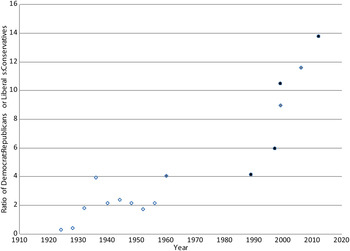



Target article
Political diversity will improve social psychological science1
Related commentaries (33)
A checklist to facilitate objective hypothesis testing in social psychology research
A conservative's social psychology
A predominance of self-identified Democrats is no evidence of a leftward bias
A “cohesive moral community” is already patrolling behavioral science1
Conservatism is not the missing viewpoint for true diversity
Diverse crowds using diverse methods improves the scientific dialectic
Diversity of depoliticization?
Increasing ideological tolerance in social psychology
Is liberal bias universal? An international perspective on social psychologists
Lack of political diversity and the framing of findings in personality and clinical psychology
Liberal bias and the five-factor model
Liberals and conservatives: Non-convertible currencies
Meta-ethical pluralism: A cautionary tale about cohesive moral communities
Method and matter in the social sciences: Umbilically tied to the Enlightenment
Mischaracterizing social psychology to support the laudable goal of increasing its political diversity
On the history of political diversity in social psychology
Political attitudes in social environments
Political bias is tenacious
Political bias, explanatory depth, and narratives of progress
Political diversity versus stimuli diversity: Alternative ways to improve social psychological science
Political homogeneity can nurture threats to research validity
Political orientations do not cancel out, and politics is not about truth
QTIPs: Questionable theoretical and interpretive practices in social psychology
Recognizing and coping with our own prejudices: Fighting liberal bias without conservative input
Should social psychologists create a disciplinary affirmative action program for political conservatives?
Sociopolitical insularity is psychology's Achilles heel
The psychology of psychology: A thought experiment
Too paranoid to see progress: Social psychology is probably liberal, but it doesn't believe in progress
Towards a de-biased social psychology: The effects of ideological perspective go beyond politics
Welcoming conservatives to the field
What kinds of conservatives does social psychology lack, and why?
When theory trumps ideology: Lessons from evolutionary psychology
“Wait – You're a conservative?” Political diversity and the dilemma of disclosure
Author response
It may be harder than we thought, but political diversity will (still) improve social psychological science1