Refine search
Actions for selected content:
63 results
On the quantitative simultaneous sign changes of Fourier coefficients attached to Hecke–Maass forms over certain quadratic forms
- Part of
-
- Journal:
- Canadian Mathematical Bulletin , First View
- Published online by Cambridge University Press:
- 26 June 2026, pp. 1-20
-
- Article
-
- You have access
- HTML
- Export citation
-
Let f and g be two distinct Hecke–Maass cusp forms of weight zero for the full modular group $SL(2,\mathbb {Z})$
 with Laplacian eigenvalues $\frac {1}{4}+t_{1}^{2}$
 and $\frac {1}{4}+t_{2}^{2}$
 , and denote by $\lambda _{f}(n)$
 and $\lambda _{g}(n)$
 the n-th normalized Fourier coefficients attached to f and g, respectively. In the present article, we establish a quantitative result regarding the sign changes of the sequence $\{\lambda _{f}(n)\lambda _{g}(n)\}_{n\geqslant 1}$
 in the interval $(x,2x]$
 , supported at a certain primitive integral binary quadratic form with fixed negative discriminant $D<0$
 , for sufficiently large x.


Shifted convolution sum for the coefficients of symmetric square L-function
- Part of
-
- Journal:
- Proceedings of the Royal Society of Edinburgh. Section A: Mathematics , First View
- Published online by Cambridge University Press:
- 06 May 2026, pp. 1-13
-
- Article
-
- You have access
- HTML
- Export citation
-
Let
 $f$ be a normalized primitive holomorphic cusp form of even integral weight for the full modular group
 $\Gamma=SL(2,\mathbb{Z})$. Denote by
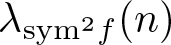 $\lambda_{\text{sym}^{2}f}(n)$ the
 $n$th normalized coefficient of the Dirichlet series expansion of the symmetric square
 $L$-function
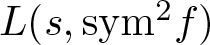 $L(s,\text{sym}^{2}f)$. In this paper, we are interested in the shifted convolution sum
 \begin{equation*}\sum_{h\leq H}\sum_{N \lt n\leq 2N}\lambda_{\textrm{sym}^{2}f}(n)\lambda_{\textrm{sym}^{2}f}(n+h).\end{equation*}
We establish a non-trivial bound for
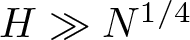 $H\gg N^{1/4}$.


A generalized
 $\mathrm{PGL}(2)$ Petersson/Bruggeman-Kuznetsov formula for analytic applications
- Part of
-
- Journal:
- Forum of Mathematics, Sigma / Volume 14 / 2026
- Published online by Cambridge University Press:
- 24 February 2026, e27
-
- Article
-
- You have access
- Open access
- HTML
- Export citation
-
We develop generalized Petersson/Bruggeman-Kuznetsov (PBK) formulas for specified local components at non-archimedean places. In fact, we introduce two hypotheses on non-archimedean test function pairs
 $f \leftrightarrow \pi (f)$, called geometric and spectral hypotheses, under which one obtains “nice” PBK formulas by the adelic relative trace function approach. Then, given a supercuspidal representation
 $\sigma $ of
 $\operatorname {\mathrm {PGL}}_2(\mathbb Q_p)$, we study extensively the case that
 $\pi (f)$ is a projection onto the line of the newform if
 $\pi $ is isomorphic to
 $\sigma $ or its unramified quadratic twist, and
 $\pi (f) = 0$ otherwise. As a first application, we prove an optimal large sieve inequality for families of automorphic representations that arise in our framework.


Some asymptotic formulas related to the Möbius function of higher order
- Part of
-
- Journal:
- Canadian Mathematical Bulletin , First View
- Published online by Cambridge University Press:
- 12 February 2026, pp. 1-16
-
- Article
-
- You have access
- HTML
- Export citation
-
In 1970, Apostol introduced the Möbius function of order k for an integer
 $k\ge 1$. In 2001, it was generalized by Bege to the Möbius function
 $\mu _{k,m}$ of two parameters for any integers
 $m\ge k\ge 1$. In this article, we will establish three kinds of asymptotic formulas related to
 $\mu _{k,m}$ for
 $m\ge k\ge 2$ in a unified elementary method. These formulas are related to the shifted convolution sums of Fourier coefficients of holomorphic cusp forms, Bergelson and Richter’s dynamical generalization of the prime number theorem, and the Titchmarsh divisor problem.


 $\Omega$-results for exponential sums related to Maass cusp forms for
 $\mathrm{SL}_3(\mathbb Z)$
- Part of
-
- Journal:
- Mathematical Proceedings of the Cambridge Philosophical Society / Volume 180 / Issue 3 / May 2026
- Published online by Cambridge University Press:
- 29 December 2025, pp. 531-584
- Print publication:
- May 2026
-
- Article
-
- You have access
- Open access
- HTML
- Export citation
-
We obtain
 $\Omega$-results for linear exponential sums with rational additive twists of small prime denominators weighted by Hecke eigenvalues of Maass cusp forms for the group
 $\mathrm{SL}_3(\mathbb Z)$. In particular, our
 $\Omega$-results match the expected conjectural upper bounds when the denominator of the twist is sufficiently small compared to the length of the sum. Non-trivial
 $\Omega$-results for sums over short segments are also obtained. Along the way we produce lower bounds for mean squares of the exponential sums in question and also improve the best known upper bound for these sums in some ranges of parameters.


Higher power sums of Fourier coefficients of symmetric square L-functions
- Part of
-
- Journal:
- Proceedings of the Edinburgh Mathematical Society / Volume 69 / Issue 2 / May 2026
- Published online by Cambridge University Press:
- 21 October 2025, pp. 500-521
-
- Article
-
- You have access
- HTML
- Export citation
-
Let f(z) be the normalized primitive holomorphic Hecke eigenforms of even integral weight k for the full modular group
 $SL(2,\mathbb{Z})$ and denote
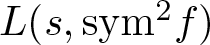 $L(s,\mathrm{sym}^{2}f)$ be the symmetric square L-function attached to f(z). Suppose that
 $\lambda_{\mathrm{sym}^{2}f}(n)$ be the
 $\mathrm{Fourier}$ coefficient of
 $L(s,\mathrm{sym}^{2}f)$. In this paper, we investigate the sum
 $\sum\limits_{n\leqslant x}\lambda^{j}_{\mathrm{sym}^{2}f }(n) $ for
 $j\geqslant 3$ and obtain some new results which improve on previous error estimates. We also consider the sum
 $\sum\limits_{n\leqslant x}\lambda^{j}_{f }(n^{2})$ and get some similar results.


Asymptotic formula for shifted convolution sums involving the coefficients of an L-function
- Part of
-
- Journal:
- Canadian Mathematical Bulletin / Volume 69 / Issue 1 / March 2026
- Published online by Cambridge University Press:
- 01 September 2025, pp. 236-255
- Print publication:
- March 2026
-
- Article
-
- You have access
- HTML
- Export citation
-
Let
 $f $ be a normalized Hecke eigenform of even weight
 $k \geq 2$ for
 $SL_2(\mathbb {Z})$. In this article, we establish an asymptotic formula for the shifted convolution sum of a general divisor function, where the sum involves the Fourier coefficients of a multi-folded L-function weighted with a kernel function.


Murmurations of modular forms and p-power coefficients
- Part of
-
- Journal:
- Mathematical Proceedings of the Cambridge Philosophical Society / Volume 180 / Issue 1 / January 2026
- Published online by Cambridge University Press:
- 26 August 2025, pp. 65-92
- Print publication:
- January 2026
-
- Article
-
- You have access
- Open access
- HTML
- Export citation
Quasi-polynomial representations of double affine Hecke algebras
- Part of
-
- Journal:
- Forum of Mathematics, Sigma / Volume 13 / 2025
- Published online by Cambridge University Press:
- 16 April 2025, e73
-
- Article
-
- You have access
- Open access
- HTML
- Export citation
-
We introduce an explicit family of representations of the double affine Hecke algebra
 $\mathbb {H}$ acting on spaces of quasi-polynomials, defined in terms of truncated Demazure-Lusztig type operators. We show that these quasi-polynomial representations provide concrete realisations of a natural family of cyclic Y-parabolically induced
 $\mathbb {H}$-representations. We recover Cherednik’s well-known polynomial representation as a special case.
The quasi-polynomial representation gives rise to a family of commuting operators acting on spaces of quasi-polynomials. These generalize the Cherednik operators, which are fundamental in the study of Macdonald polynomials. We provide a detailed study of their joint eigenfunctions, which may be regarded as quasi-polynomial, multi-parametric generalisations of nonsymmetric Macdonald polynomials. We also introduce generalizations of symmetric Macdonald polynomials, which are invariant under a multi-parametric generalization of the standard Weyl group action.
We connect our results to the representation theory of metaplectic covers of reductive groups over non-archimedean local fields. We introduce root system generalizations of the metaplectic polynomials from our previous work by taking a suitable restriction and reparametrization of the quasi-polynomial generalizations of Macdonald polynomials. We show that metaplectic Iwahori-Whittaker functions can be recovered by taking the Whittaker limit of these metaplectic polynomials.


Results on the non-vanishing of derivatives of L-functions of vector-valued modular forms
- Part of
-
- Journal:
- Proceedings of the Edinburgh Mathematical Society / Volume 68 / Issue 1 / February 2025
- Published online by Cambridge University Press:
- 21 November 2024, pp. 63-79
-
- Article
-
- You have access
- Open access
- HTML
- Export citation
On the sign changes of Dirichlet coefficients of triple product L-functions
- Part of
-
- Journal:
- Canadian Mathematical Bulletin / Volume 67 / Issue 4 / December 2024
- Published online by Cambridge University Press:
- 14 November 2024, pp. 1092-1106
- Print publication:
- December 2024
-
- Article
-
- You have access
- HTML
- Export citation
-
Let f and g be two distinct normalized primitive holomorphic cusp forms of even integral weight
 $k_{1}$ and
 $k_{2}$ for the full modular group
 $SL(2,\mathbb {Z})$, respectively. Suppose that
 $\lambda _{f\times f\times f}(n)$ and
 $\lambda _{g\times g\times g}(n)$ are the n-th Dirichlet coefficient of the triple product L-functions
 $L(s,f\times f\times f)$ and
 $L(s,g\times g\times g)$. In this paper, we consider the sign changes of the sequence
 $\{\lambda _{f\times f\times f}(n)\}_{n\geq 1}$ and
 $\{\lambda _{f\times f\times f}(n)\lambda _{g\times g\times g}(n)\}_{n\geq 1}$ in short intervals and establish quantitative results for the number of sign changes for
 $n \leq x$, which improve the previous results.


Summation formulae of multiplicative functions over arithmetic progressions and applications
- Part of
-
- Journal:
- Canadian Journal of Mathematics / Volume 77 / Issue 4 / August 2025
- Published online by Cambridge University Press:
- 12 April 2024, pp. 1243-1270
- Print publication:
- August 2025
-
- Article
-
- You have access
- HTML
- Export citation
Moments of the central L-values of the Asai lifts
- Part of
-
- Journal:
- Canadian Mathematical Bulletin / Volume 67 / Issue 3 / September 2024
- Published online by Cambridge University Press:
- 04 March 2024, pp. 796-804
- Print publication:
- September 2024
-
- Article
-
- You have access
- HTML
- Export citation
Modular forms of half-integral weight on exceptional groups
- Part of
-
- Journal:
- Compositio Mathematica / Volume 160 / Issue 3 / March 2024
- Published online by Cambridge University Press:
- 22 February 2024, pp. 657-707
- Print publication:
- March 2024
-
- Article
-
- You have access
- HTML
- Export citation
-
We define a notion of modular forms of half-integral weight on the quaternionic exceptional groups. We prove that they have a well-behaved notion of Fourier coefficients, which are complex numbers defined up to multiplication by
 ${\pm }1$. We analyze the minimal modular form
 $\Theta _{F_4}$ on the double cover of
 $F_4$, following Loke–Savin and Ginzburg. Using
 $\Theta _{F_4}$, we define a modular form of weight
 $\tfrac {1}{2}$ on (the double cover of)
 $G_2$. We prove that the Fourier coefficients of this modular form on
 $G_2$ see the
 $2$-torsion in the narrow class groups of totally real cubic fields.


CONGRUENCES FOR RANKS OF PARTITIONS
- Part of
-
- Journal:
- Bulletin of the Australian Mathematical Society / Volume 110 / Issue 2 / October 2024
- Published online by Cambridge University Press:
- 29 January 2024, pp. 280-290
- Print publication:
- October 2024
-
- Article
-
- You have access
- HTML
- Export citation
-
Ranks of partitions play an important role in the theory of partitions. They provide combinatorial interpretations for Ramanujan’s famous congruences for partition functions. We establish a family of congruences modulo powers of
 $5$ for ranks of partitions.

On the vanishing of the coefficients of CM eta quotients
- Part of
-
- Journal:
- Proceedings of the Edinburgh Mathematical Society / Volume 66 / Issue 4 / November 2023
- Published online by Cambridge University Press:
- 18 October 2023, pp. 1202-1216
-
- Article
-
- You have access
- HTML
- Export citation
-
This work characterizes the vanishing of the Fourier coefficients of all CM (Complex Multiplication) eta quotients. As consequences, we recover Serre’s characterization about that of
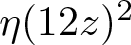 $\eta(12z)^{2}$ and recent results of Chang on the pth coefficients of
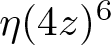 $\eta(4z)^{6}$ and
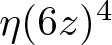 $\eta(6z)^{4}$. Moreover, we generalize the results on the cases of weight 1 to the setting of binary quadratic forms.
Equivalent criterion for the grand Riemann hypothesis associated with Maass cusp forms
- Part of
-
- Journal:
- Proceedings of the Royal Society of Edinburgh. Section A: Mathematics / Volume 154 / Issue 5 / October 2024
- Published online by Cambridge University Press:
- 19 July 2023, pp. 1348-1363
- Print publication:
- October 2024
-
- Article
-
- You have access
- HTML
- Export citation
-
In this article, we obtain transformation formulas analogous to the identity of Ramanujan, Hardy and Littlewood in the setting of primitive Maass cusp form over the congruence subgroup $\Gamma _0(N)$
 and also provide an equivalent criterion of the grand Riemann hypothesis for the $L$
 -function associated with the primitive Maass cusp form over $\Gamma _0(N)$
 .


Sign changes of fourier coefficients of holomorphic cusp forms at norm form arguments
- Part of
-
- Journal:
- Mathematical Proceedings of the Cambridge Philosophical Society / Volume 175 / Issue 3 / November 2023
- Published online by Cambridge University Press:
- 23 May 2023, pp. 539-567
- Print publication:
- November 2023
-
- Article
-
- You have access
- Open access
- HTML
- Export citation
-
Let f be a non-CM Hecke eigencusp form of level 1 and fixed weight, and let
 $\{\lambda_f(n)\}_n$ be its sequence of normalised Fourier coefficients. We show that if
 $K/ \mathbb{Q}$ is any number field, and
 $\mathcal{N}_K$ denotes the collection of integers representable as norms of integral ideals of K, then a positive proportion of the positive integers
 $n \in \mathcal{N}_K$ yield a sign change for the sequence
 $\{\lambda_f(n)\}_{n \in \mathcal{N}_K}$. More precisely, for a positive proportion of
 $n \in \mathcal{N}_K \cap [1,X]$ we have
 $\lambda_f(n)\lambda_f(n') < 0$, where n′ is the first element of
 $\mathcal{N}_K$ greater than n for which
 $\lambda_f(n') \neq 0$.
For example, for
 $K = \mathbb{Q}(i)$ and
 $\mathcal{N}_K = \{m^2+n^2 \;:\; m,n \in \mathbb{Z}\}$ the set of sums of two squares, we obtain
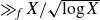 $\gg_f X/\sqrt{\log X}$ such sign changes, which is best possible (up to the implicit constant) and improves upon work of Banerjee and Pandey. Our proof relies on recent work of Matomäki and Radziwiłł on sparsely-supported multiplicative functions, together with some technical refinements of their results due to the author.
In a related vein, we also consider the question of sign changes along shifted sums of two squares, for which multiplicative techniques do not directly apply. Using estimates for shifted convolution sums among other techniques, we establish that for any fixed
 $a \neq 0$ there are
 $\gg_{f,\varepsilon} X^{1/2-\varepsilon}$ sign changes for
 $\lambda_f$ along the sequence of integers of the form
 $a + m^2 + n^2 \leq X$.


On generation of the coefficient field of a primitive Hilbert modular form by a single Fourier coefficient
- Part of
-
- Journal:
- Canadian Mathematical Bulletin / Volume 66 / Issue 2 / June 2023
- Published online by Cambridge University Press:
- 08 September 2022, pp. 587-598
- Print publication:
- June 2023
-
- Article
-
- You have access
- HTML
- Export citation
-
Let f be a primitive Hilbert modular form over F of weight k with coefficient field
 $E_f$, generated by the Fourier coefficients
 $C(\mathfrak {p}, f)$ for
 $\mathfrak {p} \in \mathrm {Spec}(\mathcal {O}_F)$. Under certain assumptions on the image of the residual Galois representations attached to f, we calculate the Dirichlet density of
 $\{\mathfrak {p} \in \mathrm {Spec}(\mathcal {O}_F)| E_f = \mathbb {Q}(C(\mathfrak {p}, f))\}$. For
 $k=2$, we show that those assumptions are satisfied when
 $[E_f:\mathbb {Q}] = [F:\mathbb {Q}]$ is an odd prime. We also study analogous results for
 $F_f$, the fixed field of
 $E_f$ by the set of all inner twists of f. Then, we provide some examples of f to support our results. Finally, we compute the density of
 $\{\mathfrak {p} \in \mathrm {Spec}(\mathcal {O}_F)| C(\mathfrak {p}, f) \in K\}$ for fields K with
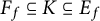 $F_f \subseteq K \subseteq E_f$.


Uniform bounds for norms of theta series and arithmetic applications
- Part of
-
- Journal:
- Mathematical Proceedings of the Cambridge Philosophical Society / Volume 173 / Issue 3 / November 2022
- Published online by Cambridge University Press:
- 28 February 2022, pp. 669-691
- Print publication:
- November 2022
-
- Article
-
- You have access
- HTML
- Export citation
-
We prove uniform bounds for the Petersson norm of the cuspidal part of the theta series. This gives an improved asymptotic formula for the number of representations by a quadratic form. As an application, we show that every integer
 $n \neq 0,4,7 \,(\textrm{mod}\ 8)$ is represented as
 $n= x_1^2 + x_2^2 + x_3^3$ for integers
 $x_1,x_2,x_3$ such that the product
 $x_1x_2x_3$ has at most 72 prime divisors.


