Refine search
Actions for selected content:
28 results
ALGEBRAIC INDEPENDENCE OF CERTAIN LIOUVILLE NUMBERS IN NON-ARCHIMEDEAN FIELDS
- Part of
-
- Journal:
- Bulletin of the Australian Mathematical Society , First View
- Published online by Cambridge University Press:
- 02 October 2026, pp. 1-12
-
- Article
-
- You have access
- HTML
- Export citation
SOME RESULTS ON NAIVE TRANSCENDENCE IN THE RING OF INTEGERS MODULO INFINITELY LARGE PRIMES
- Part of
-
- Journal:
- Journal of the Australian Mathematical Society , First View
- Published online by Cambridge University Press:
- 29 September 2026, pp. 1-21
-
- Article
-
- You have access
- HTML
- Export citation
-
This paper presents various transcendence results in the ring of integers modulo infinitely large primes $\mathcal {A}$
 . In the ring $\mathcal {A}$
 , one can consider two notions of transcendence. One is based on the notion of finite algebraic numbers introduced by Rosen, while the other is transcendence in the naive sense. It is known that transcendence in the latter sense automatically implies transcendence in the former sense. In this paper, we strengthen results due to Anzawa and Funakura and to Luca and Zudilin by removing some of their assumptions and, in some cases, upgrading them to statements of naive transcendence. We also present several examples of naive transcendental numbers that do not seem to have appeared previously in the literature. Although we are not able to establish naive transcendence for certain numbers, we prove the irrationality of numbers such as $\log _{\mathcal {A}}(2)$
 under the ABC conjecture.


On the $\mathcal {A}$
 -transcendence of a Champernowne-type constant
- Part of
-
- Journal:
- Canadian Mathematical Bulletin , First View
- Published online by Cambridge University Press:
- 22 September 2026, pp. 1-6
-
- Article
-
- You have access
- HTML
- Export citation
-
Let $p_n$
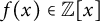
 denote the nth prime. We prove that, for every nonzero polynomial $f(x)\in \mathbb {Z}[x]$
 , there exist infinitely many positive integers n such that $p_n\nmid f(n)$
 .


A NOTE ON TOPOLOGICAL ASPECTS OF TRANSCENDENTAL SELF-POWERS
- Part of
-
- Journal:
- Bulletin of the Australian Mathematical Society , First View
- Published online by Cambridge University Press:
- 06 August 2026, pp. 1-6
-
- Article
-
- You have access
- Open access
- HTML
- Export citation
-
We study the self-power map $x \mapsto x^x$
 on $(0,\infty )$
 from a topological perspective. In particular, we show that the set of $x> 0$
 , for which $x^x$
 is a Liouville number, is topologically large, but metrically small.


Transcendence for Pisot morphic words over an algebraic base
- Part of
-
- Journal:
- Ergodic Theory and Dynamical Systems / Volume 46 / Issue 12 / December 2026
- Published online by Cambridge University Press:
- 10 July 2026, pp. 3025-3046
- Print publication:
- December 2026
-
- Article
-
- You have access
- Open access
- HTML
- Export citation
-
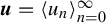
It is known that for a uniform morphic sequence $\boldsymbol u = \langle u_n\rangle _{n=0}^\infty $
 and an algebraic number $\beta $
 such that $|\beta |>1$
 , the number $[\![ \boldsymbol {u} ]\!] _\beta :=\sum _{n=0}^\infty ({u_n}/{\beta ^n})$
 either lies in $\mathbb Q(\beta )$
 or is transcendental. In this paper, we show a similar rational–transcendental dichotomy for sequences defined by irreducible Pisot morphisms on binary alphabets. Subject to the Pisot conjecture (an irreducible Pisot morphism has pure discrete spectrum), we generalise the latter result to arbitrary finite alphabets. In certain cases, we are able to show transcendence of $[\![ \boldsymbol {u}]\!] _{\beta }$
 outright. In particular, for $k\geq 2$
 , if $\boldsymbol u$
 is the k-Bonacci word, then $[\![ \boldsymbol {u}]\!] _{\beta }$
 is transcendental.


LIOUVILLE NUMBER GROUPS: STRUCTURE, CARDINALITY AND STRONG GENERATORS
- Part of
-
- Journal:
- Bulletin of the Australian Mathematical Society , First View
- Published online by Cambridge University Press:
- 24 June 2026, pp. 1-11
-
- Article
-
- You have access
- Open access
- HTML
- Export citation
-
We introduce and study Liouville number groups, namely additive subgroups of the real numbers in which every nonzero element is a Liouville number. Using continued-fraction methods and linear independence over the field of algebraic numbers, we establish the existence of large families of such groups with rich algebraic and topological structure. We prove that there exist $(2^{\mathfrak {c}}) $
 pairwise distinct Liouville number groups generated by strong Liouville numbers and that, among these, there are $(2^{\mathfrak {c}})$
 pairwise nonhomeomorphic groups. We further show that there exist continuum many countable Liouville number groups, each generated by countably many strong Liouville numbers and homeomorphic, as topological spaces, to the rational numbers. In addition, we prove that no subgroup of the real numbers is homeomorphic to the space of Liouville numbers, thereby highlighting a strong topological distinction between the space of Liouville numbers and Liouville number groups.


HODGE CYCLES AND QUADRATIC RELATIONS BETWEEN HOLOMORPHIC PERIODS ON CM ABELIAN VARIETIES
- Part of
-
- Journal:
- Journal of the Institute of Mathematics of Jussieu / Volume 25 / Issue 1 / January 2026
- Published online by Cambridge University Press:
- 19 September 2025, pp. 215-249
- Print publication:
- January 2026
-
- Article
-
- You have access
- Open access
- HTML
- Export citation
-
In this paper, we prove the following result advocating the importance of monomial quadratic relations between holomorphic CM periods. For any simple CM abelian variety A, we can construct a CM abelian variety B such that all non-trivial Hodge relations between the holomorphic periods of the product
 $A\times B$ are generated by monomial quadratic ones which are also explicit. Moreover, B splits over the Galois closure of the CM field associated with A.

IRRATIONALITY OF ZEROS OF POLYGAMMA FUNCTIONS
- Part of
-
- Journal:
- Bulletin of the Australian Mathematical Society / Volume 112 / Issue 3 / December 2025
- Published online by Cambridge University Press:
- 10 February 2025, pp. 430-440
- Print publication:
- December 2025
-
- Article
-
- You have access
- HTML
- Export citation
Attractors are not algebraic
- Part of
-
- Journal:
- Compositio Mathematica / Volume 160 / Issue 5 / May 2024
- Published online by Cambridge University Press:
- 18 April 2024, pp. 1073-1100
- Print publication:
- May 2024
-
- Article
-
- You have access
- Open access
- HTML
- Export citation
ON THE EXCEPTIONAL SET OF TRANSCENDENTAL ENTIRE FUNCTIONS IN SEVERAL VARIABLES
- Part of
-
- Journal:
- Bulletin of the Australian Mathematical Society / Volume 110 / Issue 1 / August 2024
- Published online by Cambridge University Press:
- 20 October 2023, pp. 64-71
- Print publication:
- August 2024
-
- Article
-
- You have access
- HTML
- Export citation
-
We prove that any subset of
 $\overline {\mathbb {Q}}^m$ (closed under complex conjugation and which contains the origin) is the exceptional set of uncountably many transcendental entire functions over
 $\mathbb {C}^m$ with rational coefficients. This result solves a several variables version of a question posed by Mahler for transcendental entire functions [Lectures on Transcendental Numbers, Lecture Notes in Mathematics, 546 (Springer-Verlag, Berlin, 1976)].


TRANSCENDENCE OF GENERALISED EULER–KRONECKER CONSTANTS
- Part of
-
- Journal:
- Bulletin of the Australian Mathematical Society / Volume 109 / Issue 3 / June 2024
- Published online by Cambridge University Press:
- 10 July 2023, pp. 464-470
- Print publication:
- June 2024
-
- Article
-
- You have access
- HTML
- Export citation
ERDŐS PROPERTIES OF SUBSETS OF THE MAHLER SET S
- Part of
-
- Journal:
- Bulletin of the Australian Mathematical Society / Volume 108 / Issue 3 / December 2023
- Published online by Cambridge University Press:
- 27 February 2023, pp. 504-510
- Print publication:
- December 2023
-
- Article
-
- You have access
- Open access
- HTML
- Export citation
-
Erdős proved that every real number is the sum of two Liouville numbers. A set W of complex numbers is said to have the Erdős property if every real number is the sum of two members of W. Mahler divided the set of all transcendental numbers into three disjoint classes S, T and U such that, in particular, any two complex numbers which are algebraically dependent lie in the same class. The set of Liouville numbers is a proper subset of the set U and has Lebesgue measure zero. It is proved here, using a theorem of Weil on locally compact groups, that if
 $m\in [0,\infty )$, then there exist
 $2^{\mathfrak {c}}$ dense subsets W of S each of Lebesgue measure m such that W has the Erdős property and no two of these W are homeomorphic. It is also proved that there are
 $2^{\mathfrak {c}}$ dense subsets W of S each of full Lebesgue measure, which have the Erdős property. Finally, it is proved that there are
 $2^{\mathfrak {c}}$ dense subsets W of S such that every complex number is the sum of two members of W and such that no two of these W are homeomorphic.


A NOTE ON AN ASYMPTOTIC VERSION OF A PROBLEM OF MAHLER
- Part of
-
- Journal:
- Bulletin of the Australian Mathematical Society / Volume 107 / Issue 3 / June 2023
- Published online by Cambridge University Press:
- 15 September 2022, pp. 398-402
- Print publication:
- June 2023
-
- Article
-
- You have access
- HTML
- Export citation
-
We prove that for any infinite sets of nonnegative integers
 $\mathcal {A}$ and
 $\mathcal {B}$, there exist transcendental analytic functions
 $f\in \mathbb {Z}\{z\}$ whose coefficients vanish for any indexes
 $n\not \in \mathcal {A}+\mathcal {B}$ and for which
 $f(z)$ is algebraic whenever z is algebraic and
 $|z|<1$. As a consequence, we provide an affirmative answer for an asymptotic version of Mahler’s problem A.


MAHLER’S AND KOKSMA’S CLASSIFICATIONS IN FIELDS OF POWER SERIES
- Part of
-
- Journal:
- Nagoya Mathematical Journal / Volume 246 / June 2022
- Published online by Cambridge University Press:
- 07 June 2021, pp. 355-371
-
- Article
-
- You have access
- HTML
- Export citation
-
Let q a prime power and
 ${\mathbb F}_q$ the finite field of q elements. We study the analogues of Mahler’s and Koksma’s classifications of complex numbers for power series in
 ${\mathbb F}_q((T^{-1}))$. Among other results, we establish that both classifications coincide, thereby answering a question of Ooto.


Linear Independence of Logarithms of Cyclotomic Numbers and a Conjecture of Livingston
- Part of
-
- Journal:
- Canadian Mathematical Bulletin / Volume 63 / Issue 1 / March 2020
- Published online by Cambridge University Press:
- 12 December 2019, pp. 31-45
- Print publication:
- March 2020
-
- Article
-
- You have access
- Export citation
-
In 1965, A. Livingston conjectured the
 $\overline{\mathbb{Q}}$-linear independence of logarithms of values of the sine function at rational arguments. In 2016, S. Pathak disproved the conjecture. In this article, we give a new proof of Livingston’s conjecture using some fundamental trigonometric identities. Moreover, we show that a stronger version of her theorem is true. In fact, we modify this conjecture by introducing a co-primality condition, and in that case we provide the necessary and sufficient conditions for the conjecture to be true. Finally, we identify a maximal linearly independent subset of the numbers considered in Livingston’s conjecture.

Zariski closures of images of algebraic subsets under the uniformization map on finite-volume quotients of the complex unit ball
- Part of
-
- Journal:
- Compositio Mathematica / Volume 155 / Issue 11 / November 2019
- Published online by Cambridge University Press:
- 19 September 2019, pp. 2129-2149
- Print publication:
- November 2019
-
- Article
-
- You have access
- HTML
- Export citation
-
We prove the analogue of the Ax–Lindemann–Weierstrass theorem for not necessarily arithmetic lattices of the automorphism group of the complex unit ball
 $\mathbb{B}^{n}$ using methods of several complex variables, algebraic geometry and Kähler geometry. Consider a torsion-free lattice
 $\unicode[STIX]{x1D6E4}\,\subset \,\text{Aut}(\mathbb{B}^{n})$ and the associated uniformization map
 $\unicode[STIX]{x1D70B}:\mathbb{B}^{n}\rightarrow \mathbb{B}^{n}/\unicode[STIX]{x1D6E4}=:X_{\unicode[STIX]{x1D6E4}}$. Given an algebraic subset
 $S\,\subset \,\mathbb{B}^{n}$ and writing
 $Z$ for the Zariski closure of
 $\unicode[STIX]{x1D70B}(S)$ in
 $X_{\unicode[STIX]{x1D6E4}}$ (which is equipped with a canonical quasi-projective structure), in some precise sense we realize
 $Z$ as a variety uniruled by images of algebraic subsets under the uniformization map, and study the asymptotic geometry of an irreducible component
 $\widetilde{Z}$ of
 $\unicode[STIX]{x1D70B}^{-1}(Z)$ as
 $\widetilde{Z}$ exits the boundary
 $\unicode[STIX]{x2202}\mathbb{B}^{n}$ by exploiting the strict pseudoconvexity of
 $\mathbb{B}^{n}$, culminating in the proof that
 $\widetilde{Z}\,\subset \,\mathbb{B}^{n}$ is totally geodesic. Our methodology sets the stage for tackling problems in functional transcendence theory for arbitrary lattices of
 $\text{ Aut}(\unicode[STIX]{x1D6FA})$ for (possibly reducible) bounded symmetric domains
 $\unicode[STIX]{x1D6FA}$.


Generalized Lambert series and arithmetic nature of odd zeta values
- Part of
-
- Journal:
- Proceedings of the Royal Society of Edinburgh. Section A: Mathematics / Volume 150 / Issue 2 / April 2020
- Published online by Cambridge University Press:
- 24 January 2019, pp. 741-769
- Print publication:
- April 2020
-
- Article
-
- You have access
- Export citation
-
It is pointed out that the generalized Lambert series
 $\sum\nolimits_{n = 1}^\infty {[(n^{N-2h})/(e^{n^Nx}-1)]} $ studied by Kanemitsu, Tanigawa and Yoshimoto can be found on page 332 of Ramanujan's Lost Notebook in a slightly more general form. We extend an important transformation of this series obtained by Kanemitsu, Tanigawa and Yoshimoto by removing restrictions on the parameters N and h that they impose. From our extension we deduce a beautiful new generalization of Ramanujan's famous formula for odd zeta values which, for N odd and m > 0, gives a relation between ζ(2m + 1) and ζ(2Nm + 1). A result complementary to the aforementioned generalization is obtained for any even N and m ∈ ℤ. It generalizes a transformation of Wigert and can be regarded as a formula for ζ(2m + 1 − 1/N). Applications of these transformations include a generalization of the transformation for the logarithm of Dedekind eta-function η(z), Zudilin- and Rivoal-type results on transcendence of certain values, and a transcendence criterion for Euler's constant γ.

GENERALIZED LAMBERT SERIES, RAABE’S COSINE TRANSFORM AND A GENERALIZATION OF RAMANUJAN’S FORMULA FOR
 $\unicode[STIX]{x1D701}(2m+1)$
- Part of
-
- Journal:
- Nagoya Mathematical Journal / Volume 239 / September 2020
- Published online by Cambridge University Press:
- 04 October 2018, pp. 232-293
-
- Article
-
- You have access
- HTML
- Export citation
-
A comprehensive study of the generalized Lambert series
 $\sum _{n=1}^{\infty }\frac{n^{N-2h}\text{exp}(-an^{N}x)}{1-\text{exp}(-n^{N}x)},0<a\leqslant 1,~x>0$,
 $N\in \mathbb{N}$ and
 $h\in \mathbb{Z}$, is undertaken. Several new transformations of this series are derived using a deep result on Raabe’s cosine transform that we obtain here. Three of these transformations lead to two-parameter generalizations of Ramanujan’s famous formula for
 $\unicode[STIX]{x1D701}(2m+1)$ for
 $m>0$, the transformation formula for the logarithm of the Dedekind eta function and Wigert’s formula for
 $\unicode[STIX]{x1D701}(1/N),N$ even. Numerous important special cases of our transformations are derived, for example, a result generalizing the modular relation between the Eisenstein series
 $E_{2}(z)$ and
 $E_{2}(-1/z)$. An identity relating
 $\unicode[STIX]{x1D701}(2N+1),\unicode[STIX]{x1D701}(4N+1),\ldots ,\unicode[STIX]{x1D701}(2Nm+1)$ is obtained for
 $N$ odd and
 $m\in \mathbb{N}$. In particular, this gives a beautiful relation between
 $\unicode[STIX]{x1D701}(3),\unicode[STIX]{x1D701}(5),\unicode[STIX]{x1D701}(7),\unicode[STIX]{x1D701}(9)$ and
 $\unicode[STIX]{x1D701}(11)$. New results involving infinite series of hyperbolic functions with
 $n^{2}$ in their arguments, which are analogous to those of Ramanujan and Klusch, are obtained.


TRANSCENDENTAL SUMS RELATED TO THE ZEROS OF ZETA FUNCTIONS
- Part of
-
- Journal:
- Mathematika / Volume 64 / Issue 3 / 2018
- Published online by Cambridge University Press:
- 01 August 2018, pp. 875-897
- Print publication:
- 2018
-
- Article
-
- You have access
- HTML
- Export citation
-
While the distribution of the non-trivial zeros of the Riemann zeta function constitutes a central theme in Mathematics, nothing is known about the algebraic nature of these non-trivial zeros. In this article, we study the transcendental nature of sums of the form
where the sum is over the non-trivial zeros $$\begin{eqnarray}\mathop{\sum }_{\unicode[STIX]{x1D70C}}R(\unicode[STIX]{x1D70C})x^{\unicode[STIX]{x1D70C}},\end{eqnarray}$$
 $\unicode[STIX]{x1D70C}$ of
 $\unicode[STIX]{x1D701}(s)$,
 $R(x)\in \overline{\mathbb{Q}}(x)$ is a rational function over algebraic numbers and
 $x>0$ is a real algebraic number. In particular, we show that the function has infinitely many zeros in
 $$\begin{eqnarray}f(x)=\mathop{\sum }_{\unicode[STIX]{x1D70C}}\frac{x^{\unicode[STIX]{x1D70C}}}{\unicode[STIX]{x1D70C}}\end{eqnarray}$$
 $(1,\infty )$, at most one of which is algebraic. The transcendence tools required for studying
 $f(x)$ in the range
 $x<1$ seem to be different from those in the range
 $x>1$. For
 $x<1$, we have the following non-vanishing theorem: If for an integer
 $d\geqslant 1$,
 $f(\unicode[STIX]{x1D70B}\sqrt{d}x)$ has a rational zero in
 $(0,1/\unicode[STIX]{x1D70B}\sqrt{d})$, then where
 $$\begin{eqnarray}L^{\prime }(1,\unicode[STIX]{x1D712}_{-d})\neq 0,\end{eqnarray}$$
 $\unicode[STIX]{x1D712}_{-d}$ is the quadratic character associated with the imaginary quadratic field
 $K:=\mathbb{Q}(\sqrt{-d})$. Finally, we consider analogous questions for elements in the Selberg class. Our proofs rest on results from analytic as well as transcendental number theory.


CONTINUED FRACTIONS FOR A CLASS OF TRIANGLE GROUPS
- Part of
-
- Journal:
- Journal of the Australian Mathematical Society / Volume 93 / Issue 1-2 / October 2012
- Published online by Cambridge University Press:
- 07 February 2013, pp. 21-42
-
- Article
-
- You have access
- Export citation
-
We give continued fraction algorithms for each conjugacy class of triangle Fuchsian group of signature
 $(3, n, \infty )$, with
 $n\geq 4$. In particular, we give an explicit form of the group that is a subgroup of the Hilbert modular group of its trace field and provide an interval map that is piecewise linear fractional, given in terms of group elements. Using natural extensions, we find an ergodic invariant measure for the interval map. We also study Diophantine properties of approximation in terms of the continued fractions and show that these continued fractions are appropriate to obtain transcendence results.


