Refine search
Actions for selected content:
40 results
Degree of the Gaussian graphical model of the cycle
- Part of
-
- Journal:
- Forum of Mathematics, Sigma / Volume 14 / 2026
- Published online by Cambridge University Press:
- 27 October 2026, e144
-
- Article
-
- You have access
- Open access
- HTML
- Export citation
Noether–Lefschetz theory and surfaces containing a multiple curve
- Part of
-
- Journal:
- Nagoya Mathematical Journal / Volume 261 / 2026
- Published online by Cambridge University Press:
- 19 October 2026, e54
-
- Article
-
- You have access
- Open access
- HTML
- Export citation
-
We show that if X is a regular complex projective threefold and Y is a very general surface of sufficiently high degree containing a thick infinitesimal neighborhood Z of a smooth curve C, then the restriction map $r: \textrm{Pic}\ X \to \textrm{Pic}\Y$
 is an isomorphism. Our proof uses Moishezon’s Noether–Lefschetz theorem and some general tools of Hartshorne and Polini. We give the complete picture for all d when $X = {\mathbb P}^3$
 , C is a line, and $m=2$
 , using a classification of Urabe to handle the difficult case of quartic surfaces.


Deligne’s weight spectral sequence and tautological cohomology of the moduli space of curves
- Part of
-
- Article
-
- You have access
- Open access
- HTML
- Export citation
Characteristic numbers and chromatic polynomial of a tensor
- Part of
-
- Journal:
- Forum of Mathematics, Sigma / Volume 14 / 2026
- Published online by Cambridge University Press:
- 20 July 2026, e108
-
- Article
-
- You have access
- Open access
- HTML
- Export citation
Addition–deletion of a smooth conic for free curves
- Part of
-
- Journal:
- Nagoya Mathematical Journal / Volume 261 / 2026
- Published online by Cambridge University Press:
- 02 March 2026, e20
-
- Article
-
- You have access
- Open access
- HTML
- Export citation
Zariski–Nagata theorems for singularities and the Uniform Izumi–Rees Property
- Part of
-
- Journal:
- Compositio Mathematica / Volume 162 / Issue 3 / March 2026
- Published online by Cambridge University Press:
- 22 June 2026, pp. 602-629
- Print publication:
- March 2026
-
- Article
-
- You have access
- Open access
- HTML
- Export citation
-
We introduce and explore the Uniform Izumi–Rees Property in Noetherian rings with applications to multiplicity theory and containment relationships among symbolic powers of ideals. As an application, we prove that if R is a normal domain essentially of finite type over a field, there exists a constant C such that for all prime ideals
 $\mathfrak{p}\subseteq \mathfrak{q}\in\mathrm{Spec}(R)$, if
 $\mathfrak{p}\subseteq \mathfrak{q}^{(t)}$, then for all
 $n\in\mathbb{N}$, there is a containment of symbolic powers
 $\mathfrak{p}^{(Cn)}\subseteq \mathfrak{q}^{(tn)}$.


Noether-Lefschetz cycles on the moduli space of abelian varieties
- Part of
-
- Journal:
- Forum of Mathematics, Pi / Volume 14 / 2026
- Published online by Cambridge University Press:
- 13 January 2026, e2
-
- Article
-
- You have access
- Open access
- HTML
- Export citation
-
The locus of nonsimple abelian varieties in the moduli space of principally polarized abelian varieties gives rise to Noether-Lefschetz cycles. We study their intersection theoretic properties using the tautological projection constructed in [4], and show that projection defines a homomorphism when restricted to cycles supported on that locus. Using Hecke correspondences and the pullback by Torelli we prove that
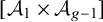 $[\mathcal {A}_1 \times \mathcal A_{g-1}]$ is not tautological in the sense of [38] for
 $g=12$ and
 $g\geq 16$ even. We also explore the connections between Noether-Lefschetz cycles and the Gromov-Witten theory of a moving elliptic curve.


Explicit formulas for the Grothendieck class of
 $\overline {\mathcal{M}}_{0,n}$
- Part of
-
- Article
-
- You have access
- Open access
- HTML
- Export citation
-
We obtain explicit expressions for the class in the Grothendieck group of varieties of the moduli space
 $\overline {\mathcal{M}}_{0,n}$. This information is equivalent to the Poincaré polynomial and yields explicit expressions for the Betti numbers of
 $\overline {\mathcal{M}}_{0,n}$ in terms of Stirling or Bernoulli numbers. The expressions are obtained by solving a differential equation characterizing the generating function for the Poincaré polynomials, determined by Manin in the 1990s and equivalent to Keel’s recursion for the Betti numbers of
 $\overline {\mathcal{M}}_{0,n}$. Our proof reduces the solution to two combinatorial identities, verified by applying Lagrange series. We also study generating functions for the individual Betti numbers. These functions are determined by a set of polynomials
 $p^{(k)}_m(z)$,
 $k\geqslant m$. These polynomials are conjecturally log-concave; we verify this conjecture for several infinite families, corresponding to generating functions for
 $2k$-Betti numbers of
 $\overline {\mathcal{M}}_{0,n}$ for all
 $k\leqslant 100$. Further, studying the polynomials
 $p^{(k)}_m(z)$, we prove that the generating function for the Grothendieck class can be written in terms of a series of rational functions in the principal branch of the Lambert W-function. We include an interpretation of the main result in terms of Stirling matrices and a discussion of the Euler characteristic of
 $\overline {\mathcal{M}}_{0,n}$.


Arithmetic Transfer for inner forms of
 $GL_{2n}$
- Part of
-
- Journal:
- Forum of Mathematics, Sigma / Volume 13 / 2025
- Published online by Cambridge University Press:
- 04 August 2025, e128
-
- Article
-
- You have access
- Open access
- HTML
- Export citation
-
We formulate Guo–Jacquet type fundamental lemma conjectures and arithmetic transfer conjectures for inner forms of
 $GL_{2n}$. Our main results confirm these conjectures for division algebras of invariant
 $1/4$ and
 $3/4$.


Kappa classes on KSBA spaces
- Part of
-
- Article
-
- You have access
- Open access
- HTML
- Export citation
-
We define kappa classes on moduli spaces of Kollár-Shepherd-Barron-Alexeev (KSBA)-stable varieties and pairs, generalizing the Miller–Morita–Mumford classes on moduli of curves, and computing them in some cases where the virtual fundamental class is known to exist, including Burniat and Campedelli surfaces. For Campedelli surfaces, an intermediate step is finding the Chow (same as cohomology) ring of the GIT quotient
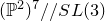 $(\mathbb {P}^2)^7//SL(3)$.
A new generic vanishing theorem on homogeneous varieties and the positivity conjecture for triple intersections of Schubert cells
- Part of
-
- Journal:
- Compositio Mathematica / Volume 161 / Issue 1 / January 2025
- Published online by Cambridge University Press:
- 10 March 2025, pp. 1-12
- Print publication:
- January 2025
-
- Article
-
- You have access
- HTML
- Export citation
-
In this paper we prove a new generic vanishing theorem for
 $X$ a complete homogeneous variety with respect to an action of a connected algebraic group. Let
 $A, B_0\subset X$ be locally closed affine subvarieties, and assume that
 $B_0$ is smooth and pure dimensional. Let
 ${\mathcal {P}}$ be a perverse sheaf on
 $A$ and let
 $B=g B_0$ be a generic translate of
 $B_0$. Then our theorem implies
 $(-1)^{\operatorname {codim} B}\chi (A\cap B, {\mathcal {P}}|_{A\cap B})\geq 0$. As an application, we prove in full generality a positivity conjecture about the signed Euler characteristic of generic triple intersections of Schubert cells. Such Euler characteristics are known to be the structure constants for the multiplication of the Segre–Schwartz–MacPherson classes of these Schubert cells.


Genus-zero r-spin theory
- Part of
-
- Article
-
- You have access
- Open access
- HTML
- Export citation
-
We provide an explicit formula for all primary genus-zero
 $r$-spin invariants. Our formula is piecewise polynomial in the monodromies at each marked point and in
 $r$. To deduce the structure of these invariants, we use a tropical realisation of the corresponding cohomological field theories. We observe that the collection of all Witten–Dijkgraaf–Verlinde–Verlinde (WDVV) relations is equivalent to the relations deduced from the fact that genus-zero tropical CohFT cycles are balanced.


Double Schubert polynomials do have saturated Newton polytopes
- Part of
-
- Journal:
- Forum of Mathematics, Sigma / Volume 11 / 2023
- Published online by Cambridge University Press:
- 03 November 2023, e100
-
- Article
-
- You have access
- Open access
- HTML
- Export citation
On the effective, nef, and semi-ample monoids of blowups of Hirzebruch surfaces at collinear points
- Part of
-
- Journal:
- Canadian Mathematical Bulletin / Volume 66 / Issue 4 / December 2023
- Published online by Cambridge University Press:
- 11 April 2023, pp. 1179-1193
- Print publication:
- December 2023
-
- Article
-
- You have access
- HTML
- Export citation
The Hodge bundle, the universal 0-section, and the log Chow ring of the moduli space of curves
- Part of
-
- Journal:
- Compositio Mathematica / Volume 159 / Issue 2 / February 2023
- Published online by Cambridge University Press:
- 14 February 2023, pp. 306-354
- Print publication:
- February 2023
-
- Article
-
- You have access
- Open access
- HTML
- Export citation
-
We bound from below the complexity of the top Chern class
 $\lambda _g$ of the Hodge bundle in the Chow ring of the moduli space of curves: no formulas for
 $\lambda _g$ in terms of classes of degrees 1 and 2 can exist. As a consequence of the Torelli map, the 0-section over the second Voronoi compactification of the moduli of principally polarized abelian varieties also cannot be expressed in terms of classes of degree 1 and 2. Along the way, we establish new cases of Pixton's conjecture for tautological relations. In the log Chow ring of the moduli space of curves, however, we prove
 $\lambda _g$ lies in the subalgebra generated by logarithmic boundary divisors. The proof is effective and uses Pixton's double ramification cycle formula together with a foundational study of the tautological ring defined by a normal crossings divisor. The results open the door to the search for simpler formulas for
 $\lambda _g$ on the moduli of curves after log blow-ups.


Derived categories of hyper-Kähler manifolds: extended Mukai vector and integral structure
- Part of
-
- Journal:
- Compositio Mathematica / Volume 159 / Issue 1 / January 2023
- Published online by Cambridge University Press:
- 31 January 2023, pp. 109-152
- Print publication:
- January 2023
-
- Article
-
- You have access
- Open access
- HTML
- Export citation
Absolute Poincaré duality in étale cohomology
- Part of
-
- Journal:
- Forum of Mathematics, Sigma / Volume 10 / 2022
- Published online by Cambridge University Press:
- 10 November 2022, e99
-
- Article
-
- You have access
- Open access
- HTML
- Export citation
Double nested Hilbert schemes and the local stable pairs theory of curves
- Part of
-
- Journal:
- Compositio Mathematica / Volume 158 / Issue 9 / September 2022
- Published online by Cambridge University Press:
- 11 October 2022, pp. 1799-1849
- Print publication:
- September 2022
-
- Article
-
- You have access
- Open access
- HTML
- Export citation
-
We propose a variation of the classical Hilbert scheme of points, the double nested Hilbert scheme of points, which parametrizes flags of zero-dimensional subschemes whose nesting is dictated by a Young diagram. Over a smooth quasi-projective curve, we compute the generating series of topological Euler characteristic of these spaces, by exploiting the combinatorics of reversed plane partitions. Moreover, we realize this moduli space as the zero locus of a section of a vector bundle over a smooth ambient space, which therefore admits a virtual fundamental class. We apply this construction to the stable pair theory of a local curve, that is the total space of the direct sum of two line bundles over a curve. We show that the invariants localize to virtual intersection numbers on double nested Hilbert scheme of points on the curve, and that the localized contributions to the invariants are controlled by three universal series for every Young diagram, which can be explicitly determined after the anti-diagonal restriction of the equivariant parameters. Under the anti-diagonal restriction, the invariants are matched with the Gromov–Witten invariants of local curves of Bryan–Pandharipande, as predicted by the Maulik–Nekrasov–Okounkov–Pandharipande (MNOP) correspondence. Finally, we discuss
 $K$-theoretic refinements à la Nekrasov–Okounkov.

The intersection theory of the moduli stack of vector bundles on
 $\mathbb {P}^1$
- Part of
-
- Journal:
- Canadian Mathematical Bulletin / Volume 66 / Issue 2 / June 2023
- Published online by Cambridge University Press:
- 07 July 2022, pp. 359-379
- Print publication:
- June 2023
-
- Article
-
- You have access
- HTML
- Export citation
-
We determine the integral Chow and cohomology rings of the moduli stack
 $\mathcal {B}_{r,d}$ of rank r, degree d vector bundles on
 $\mathbb {P}^1$-bundles. We work over a field k of arbitrary characteristic. We first show that the rational Chow ring
 $A_{\mathbb {Q}}^*(\mathcal {B}_{r,d})$ is a free
 $\mathbb {Q}$-algebra on
 $2r+1$ generators. The isomorphism class of this ring happens to be independent of d. Then, we prove that the integral Chow ring
 $A^*(\mathcal {B}_{r,d})$ is torsion-free and provide multiplicative generators for
 $A^*(\mathcal {B}_{r,d})$ as a subring of
 $A_{\mathbb {Q}}^*(\mathcal {B}_{r,d})$. From this description, we see that
 $A^*(\mathcal {B}_{r,d})$ is not finitely generated as a
 $\mathbb {Z}$-algebra. Finally, when
 $k = \mathbb {C}$, the cohomology ring of
 $\mathcal {B}_{r,d}$ is isomorphic to its Chow ring.


Chow rings of stacks of prestable curves I
- Part of
-
- Journal:
- Forum of Mathematics, Sigma / Volume 10 / 2022
- Published online by Cambridge University Press:
- 26 May 2022, e28
-
- Article
-
- You have access
- Open access
- HTML
- Export citation
-
We study the Chow ring of the moduli stack
 $\mathfrak {M}_{g,n}$ of prestable curves and define the notion of tautological classes on this stack. We extend formulas for intersection products and functoriality of tautological classes under natural morphisms from the case of the tautological ring of the moduli space
 $\overline {\mathcal {M}}_{g,n}$ of stable curves. This paper provides foundations for the paper [BS21].
In the appendix (jointly with J. Skowera), we develop the theory of a proper, but not necessary projective, pushforward of algebraic cycles. The proper pushforward is necessary for the construction of the tautological rings of
 $\mathfrak {M}_{g,n}$ and is important in its own right. We also develop operational Chow groups for algebraic stacks.


