Refine search
Actions for selected content:
21 results
Irrational components of the Hilbert scheme of points
- Part of
-
- Journal:
- Forum of Mathematics, Sigma / Volume 14 / 2026
- Published online by Cambridge University Press:
- 19 October 2026, e138
-
- Article
-
- You have access
- Open access
- HTML
- Export citation
-
We construct irrational irreducible components of the Hilbert scheme of points of affine space $\mathbb {A}^n$
 for $n \geq 12$
 . We start with irrational components of the Hilbert scheme of curves in $\mathbb {CP}^3$
 and use methods developed by Jelisiejew to relate these to irreducible components of the Hilbert schemes of points of $\mathbb {A}^n$
 . The result solves Problem XX of the Hilbert scheme of points problem list [J24].


ON THE RATIONALITY OF SOME REAL THREEFOLDS
- Part of
-
- Journal:
- Journal of the Institute of Mathematics of Jussieu / Volume 25 / Issue 3 / May 2026
- Published online by Cambridge University Press:
- 20 April 2026, pp. 1555-1577
- Print publication:
- May 2026
-
- Article
-
- You have access
- Open access
- HTML
- Export citation
On the rationality problem for low degree hypersurfaces
- Part of
-
- Journal:
- Forum of Mathematics, Pi / Volume 13 / 2025
- Published online by Cambridge University Press:
- 22 December 2025, e25
-
- Article
-
- You have access
- Open access
- HTML
- Export citation
-
We show that a very general hypersurface of degree
 $d \geq 4$ and dimension
 $N \leq (d+1)2^{d-4}$ over a field of characteristic
 $\neq 2$ does not admit a decomposition of the diagonal; hence, it is neither stably nor retract rational, nor
 $\mathbb {A}^1$-connected. Similar results hold in characteristic
 $2$ under a slightly weaker degree bound. This improves earlier results in [44] and [33].


Covering gonality of symmetric products of curves and Cayley–Bacharach condition on Grassmannians
- Part of
-
- Journal:
- Forum of Mathematics, Sigma / Volume 13 / 2025
- Published online by Cambridge University Press:
- 24 January 2025, e13
-
- Article
-
- You have access
- Open access
- HTML
- Export citation
-
Given an irreducible projective variety X, the covering gonality of X is the least gonality of an irreducible curve
 $E\subset X$ passing through a general point of X. In this paper, we study the covering gonality of the k-fold symmetric product
 $C^{(k)}$ of a smooth complex projective curve C of genus
 $g\geq k+1$. It follows from a previous work of the first author that the covering gonality of the second symmetric product of C equals the gonality of C. Using a similar approach, we prove the same for the
 $3$-fold and the
 $4$-fold symmetric product of C.
A crucial point in the proof is the study of the Cayley–Bacharach condition on Grassmannians. In particular, we describe the geometry of linear subspaces of
 $\mathbb {P}^n$ satisfying this condition, and we prove a result bounding the dimension of their linear span.


2 n2-inequality for cA1 points and applications to birational rigidity
- Part of
-
- Journal:
- Compositio Mathematica / Volume 160 / Issue 7 / July 2024
- Published online by Cambridge University Press:
- 29 May 2024, pp. 1551-1595
- Print publication:
- July 2024
-
- Article
-
- You have access
- Open access
- HTML
- Export citation
-
The
 $4 n^2$-inequality for smooth points plays an important role in the proofs of birational (super)rigidity. The main aim of this paper is to generalize such an inequality to terminal singular points of type
 $cA_1$, and obtain a
 $2 n^2$-inequality for
 $cA_1$ points. As applications, we prove birational (super)rigidity of sextic double solids, many other prime Fano 3-fold weighted complete intersections, and del Pezzo fibrations of degree
 $1$ over
 $\mathbb {P}^1$ satisfying the
 $K^2$-condition, all of which have at most terminal
 $cA_1$ singularities and terminal quotient singularities. These give first examples of birationally (super)rigid Fano 3-folds and del Pezzo fibrations admitting a
 $cA_1$ point which is not an ordinary double point.


Nonsolidity of uniruled varieties
- Part of
-
- Journal:
- Forum of Mathematics, Sigma / Volume 11 / 2023
- Published online by Cambridge University Press:
- 15 August 2023, e73
-
- Article
-
- You have access
- Open access
- HTML
- Export citation
Quartic and Quintic Hypersurfaces with Dense Rational Points
- Part of
-
- Journal:
- Forum of Mathematics, Sigma / Volume 11 / 2023
- Published online by Cambridge University Press:
- 27 June 2023, e55
-
- Article
-
- You have access
- Open access
- HTML
- Export citation
-
Let
 $X_4\subset \mathbb {P}^{n+1}$ be a quartic hypersurface of dimension
 $n\geq 4$ over an infinite field k. We show that if either
 $X_4$ contains a linear subspace
 $\Lambda $ of dimension
 $h\geq \max \{2,\dim (\Lambda \cap \operatorname {\mathrm {Sing}}(X_4))+2\}$ or has double points along a linear subspace of dimension
 $h\geq 3$, a smooth k-rational point and is otherwise general, then
 $X_4$ is unirational over k. This improves previous results by A. Predonzan and J. Harris, B. Mazur and R. Pandharipande for quartics. We also provide a density result for the k-rational points of quartic
 $3$-folds with a double plane over a number field, and several unirationality results for quintic hypersurfaces over a
 $C_r$ field.


RATIONALITY OVER NONCLOSED FIELDS OF FANO THREEFOLDS WITH HIGHER GEOMETRIC PICARD RANK
- Part of
-
- Journal:
- Journal of the Institute of Mathematics of Jussieu / Volume 23 / Issue 1 / January 2024
- Published online by Cambridge University Press:
- 05 August 2022, pp. 207-247
- Print publication:
- January 2024
-
- Article
-
- You have access
- HTML
- Export citation
-
We prove rationality criteria over nonclosed fields of characteristic
 $0$ for five out of six types of geometrically rational Fano threefolds of Picard number
 $1$ and geometric Picard number bigger than
 $1$. For the last type of such threefolds, we provide a unirationality criterion and construct examples of unirational but not stably rational varieties of this type.


RC-positive metrics on rationally connected manifolds
- Part of
-
- Journal:
- Forum of Mathematics, Sigma / Volume 8 / 2020
- Published online by Cambridge University Press:
- 16 November 2020, e53
-
- Article
-
- You have access
- Open access
- Export citation
-
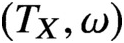
In this paper, we prove that if a compact Kähler manifold X has a smooth Hermitian metric
 $\omega $ such that
 $(T_X,\omega )$ is uniformly RC-positive, then X is projective and rationally connected. Conversely, we show that, if a projective manifold X is rationally connected, then there exists a uniformly RC-positive complex Finsler metric on
 $T_X$.


On a rationality problem for fields of cross-ratios II
- Part of
-
- Journal:
- Canadian Mathematical Bulletin / Volume 64 / Issue 3 / September 2021
- Published online by Cambridge University Press:
- 04 September 2020, pp. 667-677
- Print publication:
- September 2021
-
- Article
-
- You have access
- Export citation
-
Let k be a field,
 $x_1, \dots , x_n$ be independent variables and let
 $L_n = k(x_1, \dots , x_n)$. The symmetric group
 $\operatorname {\Sigma }_n$ acts on
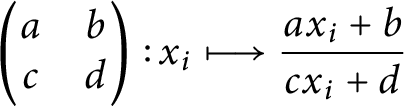
 $L_n$ by permuting the variables, and the projective linear group
 $\operatorname {PGL}_2$ acts by $$ \begin{align*} \begin{pmatrix} a & b \\ c & d \end{pmatrix}\, \colon x_i \longmapsto \frac{a x_i + b}{c x_i + d} \end{align*} $$for each
 $i = 1, \dots , n$. The fixed field
 $L_n^{\operatorname {PGL}_2}$ is called “the field of cross-ratios”. Given a subgroup
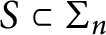 $S \subset \operatorname {\Sigma }_n$, H. Tsunogai asked whether
 $L_n^S$ rational over
 $K_n^S$. When
 $n \geqslant 5,$ the second author has shown that
 $L_n^S$ is rational over
 $K_n^S$ if and only if S has an orbit of odd order in
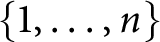 $\{ 1, \dots , n \}$. In this paper, we answer Tsunogai’s question for
 $n \leqslant 4$.


Retract Rationality and Algebraic Tori
- Part of
-
- Journal:
- Canadian Mathematical Bulletin / Volume 63 / Issue 1 / March 2020
- Published online by Cambridge University Press:
- 18 July 2019, pp. 173-186
- Print publication:
- March 2020
-
- Article
-
- You have access
- Export citation
-
For any prime number
 $p$ and field
 $k$, we characterize the
 $p$-retract rationality of an algebraic
 $k$-torus in terms of its character lattice. We show that a
 $k$-torus is retract rational if and only if it is
 $p$-retract rational for every prime
 $p$, and that the Noether problem for retract rationality for a group of multiplicative type
 $G$ has an affirmative answer for
 $G$ if and only if the Noether problem for
 $p$-retract rationality for
 $G$ has a positive answer for all
 $p$. For every finite set of primes
 $S$ we give examples of tori that are
 $p$-retract rational if and only if
 $p\notin S$.


Circle of Sarkisov Links on a Fano 3-Fold
- Part of
-
- Journal:
- Proceedings of the Edinburgh Mathematical Society / Volume 60 / Issue 1 / February 2017
- Published online by Cambridge University Press:
- 23 May 2016, pp. 1-16
-
- Article
-
- You have access
- Export citation
Graded rings of rank 2 Sarkisov links
-
- Journal:
- Nagoya Mathematical Journal / Volume 197 / March 2010
- Published online by Cambridge University Press:
- 11 January 2016, pp. 1-44
-
- Article
-
- You have access
- Export citation
Nonrational Weighted Hypersurfaces
-
- Journal:
- Nagoya Mathematical Journal / Volume 194 / 2009
- Published online by Cambridge University Press:
- 11 January 2016, pp. 1-32
-
- Article
-
- You have access
- Export citation
The rationality problem for norm one tori
-
- Journal:
- Nagoya Mathematical Journal / Volume 202 / June 2011
- Published online by Cambridge University Press:
- 11 January 2016, pp. 83-106
-
- Article
-
- You have access
- Export citation
Morphisms between Cremona groups, and characterization of rational varieties
- Part of
-
- Journal:
- Compositio Mathematica / Volume 150 / Issue 7 / July 2014
- Published online by Cambridge University Press:
- 25 June 2014, pp. 1107-1124
- Print publication:
- July 2014
-
- Article
-
- You have access
- Export citation
-
We classify all (abstract) homomorphisms from the group
 $\def \xmlpi #1{}\def \mathsfbi #1{\boldsymbol {\mathsf {#1}}}\let \le =\leqslant \let \leq =\leqslant \let \ge =\geqslant \let \geq =\geqslant \def \Pr {\mathit {Pr}}\def \Fr {\mathit {Fr}}\def \Rey {\mathit {Re}}{\sf PGL}_{r+1}(\mathbf{C})$ to the group
 ${\sf Bir}(M)$ of birational transformations of a complex projective variety
 $M$, provided that
 $r\geq \dim _\mathbf{C}(M)$. As a byproduct, we show that: (i)
 ${\sf Bir}(\mathbb{P}^n_\mathbf{C})$ is isomorphic, as an abstract group, to
 ${\sf Bir}(\mathbb{P}^m_\mathbf{C})$ if and only if
 $n=m$; and (ii)
 $M$ is rational if and only if
 ${\sf PGL}_{\dim (M)+1}(\mathbf{C})$ embeds as a subgroup of
 ${\sf Bir}(M)$.


Derived categories and rationality ofconic bundles
- Part of
-
- Journal:
- Compositio Mathematica / Volume 149 / Issue 11 / November 2013
- Published online by Cambridge University Press:
- 07 October 2013, pp. 1789-1817
- Print publication:
- November 2013
-
- Article
-
- You have access
- Export citation
Rationality of fields of invariants for some representations ofSL2 × SL2
- Part of
-
- Journal:
- Compositio Mathematica / Volume 149 / Issue 7 / July 2013
- Published online by Cambridge University Press:
- 22 May 2013, pp. 1225-1234
- Print publication:
- July 2013
-
- Article
-
- You have access
- Export citation
-
We prove that the quotient by
 ${\mathrm{SL} }_{2} \times {\mathrm{SL} }_{2} $ of the space of bidegree
 $(a, b)$ curves on
 ${ \mathbb{P} }^{1} \times { \mathbb{P} }^{1} $ is rational when
 $ab$ is even and
 $a\not = b$.


Is the function field of a reductive Lie algebra purely transcendental over the field of invariants for the adjoint action?
- Part of
-
- Journal:
- Compositio Mathematica / Volume 147 / Issue 2 / March 2011
- Published online by Cambridge University Press:
- 01 February 2011, pp. 428-466
- Print publication:
- March 2011
-
- Article
-
- You have access
- Export citation
Polarized endomorphisms of uniruled varieties. With an appendix by Y. Fujimoto and N. Nakayama
- Part of
-
- Journal:
- Compositio Mathematica / Volume 146 / Issue 1 / January 2010
- Published online by Cambridge University Press:
- 21 December 2009, pp. 145-168
- Print publication:
- January 2010
-
- Article
-
- You have access
- Export citation
