Refine search
Actions for selected content:
24 results
When do Ten Points Lie on a Quadric Surface?
- Part of
-
- Journal:
- Mathematical Proceedings of the Cambridge Philosophical Society , First View
- Published online by Cambridge University Press:
- 10 September 2026, pp. 1-17
-
- Article
-
- You have access
- Open access
- HTML
- Export citation
Scanning the moduli of smooth hypersurfaces
- Part of
-
- Journal:
- Forum of Mathematics, Sigma / Volume 14 / 2026
- Published online by Cambridge University Press:
- 09 March 2026, e43
-
- Article
-
- You have access
- Open access
- HTML
- Export citation
q-bic threefolds and their surface of lines
- Part of
-
- Journal:
- Nagoya Mathematical Journal / Volume 261 / 2026
- Published online by Cambridge University Press:
- 03 March 2026, e21
-
- Article
-
- You have access
- Open access
- HTML
- Export citation
-
For any power q of the positive ground field characteristic, a smooth q-bic threefold—the Fermat threefold of degree
 $q+1$, for example—has a smooth surface S of lines which behaves like the Fano surface of a smooth cubic threefold. I develop projective, moduli-theoretic, and degeneration techniques to study the geometry of S. Using, in addition, the modular representation theory of the finite unitary group and the geometric theory of filtrations, I compute the cohomology of the structure sheaf of S when q is prime.

On the rationality problem for low degree hypersurfaces
- Part of
-
- Journal:
- Forum of Mathematics, Pi / Volume 13 / 2025
- Published online by Cambridge University Press:
- 22 December 2025, e25
-
- Article
-
- You have access
- Open access
- HTML
- Export citation
-
We show that a very general hypersurface of degree
 $d \geq 4$ and dimension
 $N \leq (d+1)2^{d-4}$ over a field of characteristic
 $\neq 2$ does not admit a decomposition of the diagonal; hence, it is neither stably nor retract rational, nor
 $\mathbb {A}^1$-connected. Similar results hold in characteristic
 $2$ under a slightly weaker degree bound. This improves earlier results in [44] and [33].


On the irreducibility of Hessian loci of cubic hypersurfaces
- Part of
-
- Journal:
- Forum of Mathematics, Sigma / Volume 13 / 2025
- Published online by Cambridge University Press:
- 28 April 2025, e80
-
- Article
-
- You have access
- Open access
- HTML
- Export citation
-
We study the problem of the irreducibility of the Hessian variety
 ${\mathcal {H}}_f$ associated with a smooth cubic hypersurface
 $V(f)\subset {\mathbb {P}}^n$. We prove that when
 $n\leq 5$,
 ${\mathcal {H}}_f$ is normal and irreducible if and only if f is not of Thom-Sebastiani type (i.e., if one cannot separate its variables by changing coordinates). This also generalizes a result of Beniamino Segre dealing with the case of cubic surfaces. The geometric approach is based on the study of the singular locus of the Hessian variety and on infinitesimal computations arising from a particular description of these singularities.


Cohomological and motivic inclusion–exclusion
- Part of
-
- Journal:
- Compositio Mathematica / Volume 160 / Issue 9 / September 2024
- Published online by Cambridge University Press:
- 13 September 2024, pp. 2228-2283
- Print publication:
- September 2024
-
- Article
-
- You have access
- HTML
- Export citation
On the moduli of hypersurfaces in toric orbifolds
- Part of
-
- Journal:
- Proceedings of the Edinburgh Mathematical Society / Volume 67 / Issue 2 / May 2024
- Published online by Cambridge University Press:
- 14 March 2024, pp. 577-616
-
- Article
-
- You have access
- HTML
- Export citation
-
We construct and study the moduli of stable hypersurfaces in toric orbifolds. Let X be a projective toric orbifold and
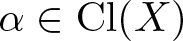 $\alpha \in \operatorname{Cl}(X)$ an ample class. The moduli space is constructed as a quotient of the linear system
 $|\alpha|$ by
 $G = \operatorname{Aut}(X)$. Since the group G is non-reductive in general, we use new techniques of non-reductive geometric invariant theory. Using the A-discriminant of Gelfand, Kapranov and Zelevinsky, we prove semistability for quasismooth hypersurfaces of toric orbifolds. Further, we prove the existence of a quasi-projective moduli space of quasismooth hypersurfaces in a weighted projective space when the weighted projective space satisfies a certain condition. We also discuss how to proceed when this condition is not satisfied. We prove that the automorphism group of a quasismooth hypersurface of weighted projective space is finite excluding some low degrees.


Toric degenerations of low-degree hypersurfaces
- Part of
-
- Journal:
- Canadian Mathematical Bulletin / Volume 66 / Issue 4 / December 2023
- Published online by Cambridge University Press:
- 20 April 2023, pp. 1231-1236
- Print publication:
- December 2023
-
- Article
-
- You have access
- HTML
- Export citation
-
We show that a sufficiently general hypersurface of degree d in
 $\mathbb {P}^n$ admits a toric Gröbner degeneration after linear change of coordinates if and only if
 $d\leq 2n-1$.


SMOOTHNESS IN PENCILS OF HYPERSURFACES OVER FINITE FIELDS
- Part of
-
- Journal:
- Bulletin of the Australian Mathematical Society / Volume 107 / Issue 1 / February 2023
- Published online by Cambridge University Press:
- 25 August 2022, pp. 85-94
- Print publication:
- February 2023
-
- Article
-
- You have access
- HTML
- Export citation
-
We study pencils of hypersurfaces over finite fields
 $\mathbb {F}_q$ such that each of the
 $q+1$ members defined over
 $\mathbb {F}_q$ is smooth.


Moduli of surfaces in
 ${{\mathbb {P}}}^{3}$
- Part of
-
- Journal:
- Compositio Mathematica / Volume 158 / Issue 6 / June 2022
- Published online by Cambridge University Press:
- 22 August 2022, pp. 1329-1374
- Print publication:
- June 2022
-
- Article
-
- You have access
- Open access
- HTML
- Export citation
-
The main goal of this paper is to construct a compactification of the moduli space of degree
 $d \geqslant 5$ surfaces in
 $\mathbb {P}^{3}_{{{\mathbb {C}}}}$, i.e. a parameter space whose interior points correspond to (equivalence classes of) smooth surfaces in
 $\mathbb {P}^{3}$ and whose boundary points correspond to degenerations of such surfaces. We consider a divisor
 $D$ on a Fano variety
 $Z$ as a pair
 $(Z, D)$ satisfying certain properties. We find a modular compactification of such pairs and, in the case of
 $Z = {{\mathbb {P}}}^{3}$ and
 $D$ a surface, use their properties to classify the pairs on the boundary of the moduli space.


Schiffer variations and the generic Torelli theorem for hypersurfaces
- Part of
-
- Journal:
- Compositio Mathematica / Volume 158 / Issue 1 / January 2022
- Published online by Cambridge University Press:
- 08 February 2022, pp. 89-122
- Print publication:
- January 2022
-
- Article
-
- You have access
- HTML
- Export citation
-
We prove the generic Torelli theorem for hypersurfaces in
 $\mathbb {P}^{n}$ of degree
 $d$ dividing
 $n+1$, for
 $d$ sufficiently large. Our proof involves the higher-order study of the variation of Hodge structure along particular one-parameter families of hypersurfaces that we call ‘Schiffer variations.’ We also analyze the case of degree
 $4$. Combined with Donagi's generic Torelli theorem and results of Cox and Green, this shows that the generic Torelli theorem for hypersurfaces holds with finitely many exceptions.


UNIRATIONALITY AND GEOMETRIC UNIRATIONALITY FOR HYPERSURFACES IN POSITIVE CHARACTERISTICS
- Part of
-
- Journal:
- Journal of the Institute of Mathematics of Jussieu / Volume 21 / Issue 5 / September 2022
- Published online by Cambridge University Press:
- 08 March 2021, pp. 1831-1847
- Print publication:
- September 2022
-
- Article
-
- You have access
- Export citation
-
Building on work of Segre and Kollár on cubic hypersurfaces, we construct over imperfect fields of characteristic
 $p\geq 3$ particular hypersurfaces of degree p, which show that geometrically rational schemes that are regular and whose rational points are Zariski dense are not necessarily unirational. A likewise behavior holds for certain cubic surfaces in characteristic
 $p=2$.


Rational lines on cubic hypersurfaces
- Part of
-
- Journal:
- Mathematical Proceedings of the Cambridge Philosophical Society / Volume 171 / Issue 1 / July 2021
- Published online by Cambridge University Press:
- 24 April 2020, pp. 99-112
- Print publication:
- July 2021
-
- Article
-
- You have access
- Open access
- Export citation
On Homogeneous Polynomials Determined by their Partial Derivatives
- Part of
-
- Journal:
- Canadian Mathematical Bulletin / Volume 63 / Issue 2 / June 2020
- Published online by Cambridge University Press:
- 06 December 2019, pp. 358-365
- Print publication:
- June 2020
-
- Article
-
- You have access
- Export citation
-
We prove that a generic homogeneous polynomial of degree
 $d$ is determined, up to a nonzero constant multiplicative factor, by the vector space spanned by its partial derivatives of order
 $k$ for
 $k\leqslant \frac{d}{2}-1$.


On Algebraic Surfaces Associated with Line Arrangements
- Part of
-
- Journal:
- Canadian Journal of Mathematics / Volume 71 / Issue 2 / April 2019
- Published online by Cambridge University Press:
- 07 January 2019, pp. 471-499
- Print publication:
- April 2019
-
- Article
-
- You have access
- Export citation
-
For a line arrangement
 ${\mathcal{A}}$ in the complex projective plane
 $\mathbb{P}^{2}$, we investigate the compactification
 $\overline{F}$ in
 $\mathbb{P}^{3}$ of the affine Milnor fiber
 $F$ and its minimal resolution
 $\tilde{F}$. We compute the Chern numbers of
 $\tilde{F}$ in terms of the combinatorics of the line arrangement
 ${\mathcal{A}}$. As applications of the computation of the Chern numbers, we show that the minimal resolution is never a quotient of a ball; in addition, we also prove that
 $\tilde{F}$ is of general type when the arrangement has only nodes or triple points as singularities. Finally, we compute all the Hodge numbers of some
 $\tilde{F}$ by using some knowledge about the Milnor fiber monodromy of the arrangement.


Twisted Alexander invariants of complex hypersurface complements
- Part of
-
- Journal:
- Proceedings of the Royal Society of Edinburgh. Section A: Mathematics / Volume 148 / Issue 5 / October 2018
- Published online by Cambridge University Press:
- 22 April 2018, pp. 1049-1073
- Print publication:
- October 2018
-
- Article
-
- You have access
- Export citation
A Module-theoretic Characterization of Algebraic Hypersurfaces
-
- Journal:
- Canadian Mathematical Bulletin / Volume 61 / Issue 1 / 01 March 2018
- Published online by Cambridge University Press:
- 20 November 2018, pp. 166-173
- Print publication:
- 01 March 2018
-
- Article
-
- You have access
- Export citation
-
In this note we prove the following surprising characterization: if
 $X\,\subset \,{{\mathbb{A}}^{n}}$ is an (embedded, non-empty, proper) algebraic variety deûned over a field
 $k$ of characteristic zero, then
 $X$ is a hypersurface if and only if the module
 ${{T}_{{{O}_{{{\mathbb{A}}^{n\,/k}}}}}}(X)$ of logarithmic vector fields of $X$ is a reflexive
 ${{O}_{{{\mathbb{A}}^{n}}}}$ -module. As a consequence of this result, we derive that if ${{T}_{{{O}_{{{\mathbb{A}}^{n\,/k}}}}}}(X)$ is a free ${{O}_{{{\mathbb{A}}^{n}}}}$ -module, which is shown to be equivalent to the freeness of the
 $t$ -th exterior power of ${{T}_{{{O}_{{{\mathbb{A}}^{n\,/k}}}}}}(X)$ for some (in fact, any)
 $t\,\le \,n$ , then necessarily $X$ is a Saito free divisor.


Measures of irrationality for hypersurfaces of large degree
- Part of
-
- Journal:
- Compositio Mathematica / Volume 153 / Issue 11 / November 2017
- Published online by Cambridge University Press:
- 04 September 2017, pp. 2368-2393
- Print publication:
- November 2017
-
- Article
-
- You have access
- HTML
- Export citation
-
We study various measures of irrationality for hypersurfaces of large degree in projective space and other varieties. These include the least degree of a rational covering of projective space, and the minimal gonality of a covering family of curves. The theme is that positivity properties of canonical bundles lead to lower bounds on these invariants. In particular, we prove that if
 $X\subseteq \mathbf{P}^{n+1}$ is a very general smooth hypersurface of dimension
 $n$ and degree
 $d\geqslant 2n+1$ , then any dominant rational mapping
 $f:X{\dashrightarrow}\mathbf{P}^{n}$ must have degree at least
 $d-1$ . We also propose a number of open problems, and we show how our methods lead to simple new proofs of results of Ran and Beheshti–Eisenbud concerning varieties of multi-secant lines.


AT MOST 64 LINES ON SMOOTH QUARTIC SURFACES (CHARACTERISTIC 2)
- Part of
-
- Journal:
- Nagoya Mathematical Journal / Volume 232 / December 2018
- Published online by Cambridge University Press:
- 31 May 2017, pp. 76-95
-
- Article
-
- You have access
- HTML
- Export citation
-
Let
 $k$ be a field of characteristic
 $2$. We give a geometric proof that there are no smooth quartic surfaces
 $S\subset \mathbb{P}_{k}^{3}$ with more than 64 lines (predating work of Degtyarev which improves this bound to 60). We also exhibit a smooth quartic containing 60 lines which thus attains the record in characteristic
 $2$.


Nonrational Weighted Hypersurfaces
-
- Journal:
- Nagoya Mathematical Journal / Volume 194 / 2009
- Published online by Cambridge University Press:
- 11 January 2016, pp. 1-32
-
- Article
-
- You have access
- Export citation
