Refine search
Actions for selected content:
82 results
Irreducible restrictions of spin representations of symmetric and alternating groups
- Part of
-
- Journal:
- Forum of Mathematics, Sigma / Volume 14 / 2026
- Published online by Cambridge University Press:
- 03 September 2026, e122
-
- Article
-
- You have access
- Open access
- HTML
- Export citation
-
Let ${\mathbb F}$
 be an algebraically closed field and $G$
 be an almost quasi-simple group. An important problem in representation theory is to classify the subgroups $H<G$
 and ${\mathbb F} G$
 -modules $L$
 such that the restriction $L{{\downarrow }}_H$
 is irreducible. This problem is a natural part of the program of describing maximal subgroups in finite classical groups. In this paper we investigate the case of the problem where $G$
 is the Schur’s double cover of an alternating or symmetric group.


Diagonal p-permutation functors in characteristic p
- Part of
-
- Journal:
- Nagoya Mathematical Journal / Volume 261 / 2026
- Published online by Cambridge University Press:
- 07 July 2026, e34
-
- Article
-
- You have access
- Open access
- HTML
- Export citation
-
Let p be a prime number. We consider diagonal p-permutation functors over a (commutative, unital) ring $\mathsf {R}$
 in which all prime numbers different from p are invertible. We first determine the finite groups G for which the associated essential algebra $\mathcal {E}_{\mathsf {R}}(G)$
 is non-zero: These are groups of the form $G=L\langle u\rangle $
 , where $(L,u)$
 is a $D^\Delta $
 -pair. When $\mathsf {R}$
 is an algebraically closed field $\mathbb {F}$
 of characteristic 0 or p, this yields a parameterization of the simple diagonal p-permutation functors over $\mathbb {F}$
 by triples $(L,u,W)$
 , where $(L,u)$
 is a $D^\Delta $
 -pair, and W is a simple $\mathbb {F}\mathrm {Out}(L,u)$
 -module. Finally, we describe the evaluations of the simple functor $\mathsf {S}_{L,u,W}$
 parameterized by the triple $(L,u,W)$
 . We show in particular that if G is a finite group and $\mathbb {F}$
 has characteristic p, the dimension of $\mathsf {S}_{L,1,\mathbb {F}}(G)$
 is equal to the number of conjugacy classes of p-regular elements of G with a defect group isomorphic to L.


INTEGRALITY OF AVERAGES OF ROOTS OF UNITY AND PERFECT ISOMETRIES
- Part of
-
- Journal:
- Bulletin of the Australian Mathematical Society / Volume 114 / Issue 3 / December 2026
- Published online by Cambridge University Press:
- 16 June 2026, pp. 483-488
- Print publication:
- December 2026
-
- Article
-
- You have access
- HTML
- Export citation
-
We establish a criterion for the integrality of averages of roots of unity and apply it to settle a conjecture regarding the linearity of functions on $\mathbb {Z}_n$
 . Specifically, we prove that for any modulus $n \ge 1$
 , if $f: \mathbb {Z}_n \to \mathbb {Z}_n$
 is a function whose averages $({1}{/n}) \sum _{x=0}^{n-1} \omega ^{f(x)+bx}$
 (where $\omega =e^{2\pi i/n}$
 ) are algebraic integers for all $b \in \mathbb {Z}_n$
 , then f is necessarily linear modulo n. This provides a short, elementary proof that works uniformly for all n and avoids the finite-field machinery used in previous partial results. Furthermore, when $n=p^r$
 , we use a local–global integrality argument to show that any normalised sum of $p^r$
 th roots of unity that is p-adically integral must be either $0$
 or a single root of unity. As an application, we completely characterise the perfect isometries of the cyclic group $C_{p^r}$
 ; they are precisely those induced by affine permutations $x \mapsto \alpha x + \beta $
 with $\gcd (\alpha , p^r)=1$
 .


Height zero characters and Galois automorphisms
- Part of
-
- Journal:
- Forum of Mathematics, Sigma / Volume 14 / 2026
- Published online by Cambridge University Press:
- 26 May 2026, e85
-
- Article
-
- You have access
- Open access
- HTML
- Export citation
KERNELS OF BRAUER CHARACTERS AND ISAACS’ PARTIAL CHARACTERS
- Part of
-
- Journal:
- Bulletin of the Australian Mathematical Society / Volume 114 / Issue 2 / October 2026
- Published online by Cambridge University Press:
- 30 March 2026, pp. 300-305
- Print publication:
- October 2026
-
- Article
-
- You have access
- Open access
- HTML
- Export citation
WEIGHT CONJECTURES FOR FUSION SYSTEMS ON AN EXTRASPECIAL GROUP
- Part of
-
- Journal:
- Journal of the Australian Mathematical Society / Volume 120 / Issue 3 / June 2026
- Published online by Cambridge University Press:
- 02 February 2026, pp. 373-393
-
- Article
-
- You have access
- Open access
- HTML
- Export citation
-
In a previous paper, we stated and motivated counting conjectures for fusion systems that are purely local analogues of several local-to-global conjectures in the modular representation theory of finite groups. Here, we verify some of these conjectures for fusion systems on an extraspecial group of order
 $p^3$, which contain among them the Ruiz–Viruel exotic fusion systems at the prime
 $7$. As a byproduct, we verify Robinson’s ordinary weight conjecture for principal p-blocks of almost simple groups G realizing such (nonconstrained) fusion systems.


Restriction problem for mod p representations of GL2 over a finite field
- Part of
-
- Journal:
- Canadian Mathematical Bulletin / Volume 69 / Issue 3 / September 2026
- Published online by Cambridge University Press:
- 07 January 2026, pp. 1054-1067
- Print publication:
- September 2026
-
- Article
-
- You have access
- HTML
- Export citation
-
Let ${\mathbb {F}_q}$
 be the finite field with $q = p^f$
 elements. We study the restriction of two classes of mod p representations of ${G_q} = \text {GL}_2({{\mathbb {F}_q}})$
 to ${G_p} = \text {GL}_2({\mathbb {F}_p})$
 . We first study the restrictions of principal series which are obtained by induction from a Borel subgroup ${B_q}$
 . We then analyze the restrictions of inductions from an anisotropic torus ${T_q}$
 which are related to cuspidal representations. Complete decompositions are given in both cases according to the parity of f. The proofs depend on writing down explicit orbit decompositions of ${G_p} \backslash {G_q} / H,$
 where $H = {B_q}$
 or ${T_q}$
 using the fact that ${G_q}/H$
 is an explicit orbit in a certain projective line, along with Mackey theory.


Inductive local-global conditions and generalised Harish-Chandra theory
- Part of
-
- Journal:
- Forum of Mathematics, Sigma / Volume 13 / 2025
- Published online by Cambridge University Press:
- 13 October 2025, e172
-
- Article
-
- You have access
- Open access
- HTML
- Export citation
THE p-RATIONALITY OF HEIGHT-ZERO CHARACTERS
- Part of
-
- Journal:
- Nagoya Mathematical Journal / Volume 261 / 2026
- Published online by Cambridge University Press:
- 14 August 2025, e7
-
- Article
-
- You have access
- Open access
- HTML
- Export citation
-
We propose and present evidence for a conjectural global-local phenomenon concerning the p-rationality of height-zero characters. Specifically, if
 $\chi $ is a height-zero character of a finite group G and D is a defect group of the p-block of G containing
 $\chi $, then the p-rationality of
 $\chi $ can be captured inside the normalizer
 ${\mathbf {N}}_G(D)$.


ON THE LARGEST CHARACTER DEGREE OF SOLVABLE GROUPS
- Part of
-
- Journal:
- Bulletin of the Australian Mathematical Society / Volume 113 / Issue 1 / February 2026
- Published online by Cambridge University Press:
- 04 July 2025, pp. 103-107
- Print publication:
- February 2026
-
- Article
-
- You have access
- Open access
- HTML
- Export citation
 $M_{p}$-GROUPS AND BRAUER CHARACTER DEGREES
- Part of
-
- Journal:
- Bulletin of the Australian Mathematical Society / Volume 113 / Issue 1 / February 2026
- Published online by Cambridge University Press:
- 09 May 2025, pp. 98-102
- Print publication:
- February 2026
-
- Article
-
- You have access
- Open access
- HTML
- Export citation
-
Let G be a finite group and p be a prime. We prove that if G has three codegrees, then G is an M-group. We prove for some prime p that if the degree of every nonlinear irreducible Brauer character of G is a prime, then for every normal subgroup N of G, either
 $G/N$ or N is an
 $M_p$-group.


Conditions for the supersolvability of
 $\mathcal{F}_{S}(G)$
- Part of
-
- Journal:
- Proceedings of the Edinburgh Mathematical Society / Volume 68 / Issue 2 / May 2025
- Published online by Cambridge University Press:
- 23 January 2025, pp. 566-572
-
- Article
-
- You have access
- HTML
- Export citation
-
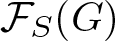
In this article,
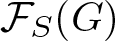 $\mathcal{F}_{S}(G)$ denotes the fusion category of G on a Sylow p-subgroup S of G where p denotes a prime. A subgroup K of G has normal complement in G if there is a normal subgroup T of G satisfying that G = KT and
 $T \cap K = 1$. We investigate the supersolvability of
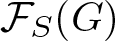 $\mathcal{F}_{S}(G)$ under the assumption that some subgroups of S are normal in G or have normal complement in G.
A local-global principle for unipotent characters
- Part of
-
- Journal:
- Forum of Mathematics, Sigma / Volume 12 / 2024
- Published online by Cambridge University Press:
- 17 December 2024, e125
-
- Article
-
- You have access
- Open access
- HTML
- Export citation
-
We obtain an adaptation of Dade’s Conjecture and Späth’s Character Triple Conjecture to unipotent characters of simple, simply connected finite reductive groups of type
 $\mathbf {A}$,
 $\mathbf {B}$ and
 $\mathbf {C}$. In particular, this gives a precise formula for counting the number of unipotent characters of each defect d in any Brauer
 $\ell $-block B in terms of local invariants associated to e-local structures. This provides a geometric version of the local-global principle in representation theory of finite groups. A key ingredient in our proof is the construction of certain parametrisations of unipotent generalised Harish-Chandra series that are compatible with isomorphisms of character triples.


A McKay Correspondence in Positive Characteristic
- Part of
-
- Journal:
- Forum of Mathematics, Sigma / Volume 12 / 2024
- Published online by Cambridge University Press:
- 10 December 2024, e116
-
- Article
-
- You have access
- Open access
- HTML
- Export citation
-
We establish a McKay correspondence for finite and linearly reductive subgroup schemes of
 ${\mathbf {SL}}_2$ in positive characteristic. As an application, we obtain a McKay correspondence for all rational double point singularities in characteristic
 $p\geq 7$. We discuss linearly reductive quotient singularities and canonical lifts over the ring of Witt vectors. In dimension 2, we establish simultaneous resolutions of singularities of these canonical lifts via G-Hilbert schemes. In the appendix, we discuss several approaches towards the notion of conjugacy classes for finite group schemes: This is an ingredient in McKay correspondences, but also of independent interest.


EXTENSIONS OF CHARACTERS IN TYPE D AND THE INDUCTIVE MCKAY CONDITION, I
- Part of
-
- Journal:
- Nagoya Mathematical Journal / Volume 252 / December 2023
- Published online by Cambridge University Press:
- 08 September 2023, pp. 906-958
-
- Article
-
- You have access
- Open access
- HTML
- Export citation
-
This is a contribution to the study of
 $\mathrm {Irr}(G)$ as an
 $\mathrm {Aut}(G)$-set for G a finite quasisimple group. Focusing on the last open case of groups of Lie type
 $\mathrm {D}$ and
 $^2\mathrm {D}$, a crucial property is the so-called
 $A'(\infty )$ condition expressing that diagonal automorphisms and graph-field automorphisms of G have transversal orbits in
 $\mathrm {Irr}(G)$. This is part of the stronger
 $A(\infty )$ condition introduced in the context of the reduction of the McKay conjecture to a question about quasisimple groups. Our main theorem is that a minimal counterexample to condition
 $A(\infty )$ for groups of type
 $\mathrm {D}$ would still satisfy
 $A'(\infty )$. This will be used in a second paper to fully establish
 $A(\infty )$ for any type and rank. The present paper uses Harish-Chandra induction as a parametrization tool. We give a new, more effective proof of the theorem of Geck and Lusztig ensuring that cuspidal characters of any standard Levi subgroup of
 $G=\mathrm {D}_{ l,\mathrm {sc}}(q)$ extend to their stabilizers in the normalizer of that Levi subgroup. This allows us to control the action of automorphisms on these extensions. From there, Harish-Chandra theory leads naturally to a detailed study of associated relative Weyl groups and other extendibility problems in that context.


Prime divisors and the number of conjugacy classes of finite groups
- Part of
-
- Journal:
- Mathematical Proceedings of the Cambridge Philosophical Society / Volume 176 / Issue 1 / January 2024
- Published online by Cambridge University Press:
- 10 July 2023, pp. 1-16
- Print publication:
- January 2024
-
- Article
-
- You have access
- Open access
- HTML
- Export citation
-
We prove that there exists a universal constant D such that if p is a prime divisor of the index of the Fitting subgroup of a finite group G, then the number of conjugacy classes of G is at least
 $Dp/\log_2p$. We conjecture that we can take
 $D=1$ and prove that for solvable groups, we can take
 $D=1/3$.


Weights in a Benson-Solomon block
- Part of
-
- Journal:
- Forum of Mathematics, Sigma / Volume 11 / 2023
- Published online by Cambridge University Press:
- 04 July 2023, e60
-
- Article
-
- You have access
- Open access
- HTML
- Export citation
-
To each pair consisting of a saturated fusion system over a p-group together with a compatible family of Külshammer-Puig cohomology classes, one can count weights in a hypothetical block algebra arising from these data. When the pair arises from a genuine block of a finite group algebra in characteristic p, the number of conjugacy classes of weights is supposed to be the number of simple modules in the block. We show that there is unique such pair associated with each Benson-Solomon exotic fusion system, and that the number of weights in a hypothetical Benson-Solomon block is
 $12$, independently of the field of definition. This is carried out in part by listing explicitly up to conjugacy all centric radical subgroups and their outer automorphism groups in these systems.

Trivial source character tables of
 $\operatorname{SL}_2(q)$, part II
- Part of
-
- Journal:
- Proceedings of the Edinburgh Mathematical Society / Volume 66 / Issue 3 / August 2023
- Published online by Cambridge University Press:
- 30 June 2023, pp. 689-709
-
- Article
-
- You have access
- HTML
- Export citation
-
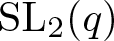
We compute the trivial source character tables (also called species tables of the trivial source ring) of the infinite family of finite groups
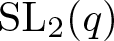 $\operatorname{SL}_{2}(q)$ for q even over a large enough field of odd characteristics. This article is a continuation of our article Trivial Source Character Tables of
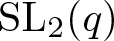 $\operatorname{SL}_{2}(q)$, where we considered, in particular, the case in which q is odd in non-defining characteristic.
REAL BLOCKS WITH DIHEDRAL DEFECT GROUPS REVISITED
- Part of
-
- Journal:
- Bulletin of the Australian Mathematical Society / Volume 109 / Issue 2 / April 2024
- Published online by Cambridge University Press:
- 14 June 2023, pp. 327-341
- Print publication:
- April 2024
-
- Article
-
- You have access
- Open access
- HTML
- Export citation
-
The Frobenius–Schur indicators of characters in a real
 $2$-block with dihedral defect groups have been determined by Murray [‘Real subpairs and Frobenius–Schur indicators of characters in 2-blocks’, J. Algebra 322 (2009), 489–513]. We show that two infinite families described in his work do not exist and we construct examples for the remaining families. We further present some partial results on Frobenius–Schur indicators of characters in other tame blocks.

NONREALIZABILITY OF CERTAIN REPRESENTATIONS IN FUSION SYSTEMS
- Part of
-
- Journal:
- Journal of the Australian Mathematical Society / Volume 116 / Issue 2 / April 2024
- Published online by Cambridge University Press:
- 11 April 2023, pp. 257-288
-
- Article
-
- You have access
- HTML
- Export citation
-
For a finite abelian p-group A and a subgroup
 $\Gamma \le \operatorname {\mathrm {Aut}}(A)$, we say that the pair
 $(\Gamma ,A)$ is fusion realizable if there is a saturated fusion system
 ${\mathcal {F}}$ over a finite p-group
 $S\ge A$ such that
 $C_S(A)=A$,
 $\operatorname {\mathrm {Aut}}_{{\mathcal {F}}}(A)=\Gamma $ as subgroups of
 $\operatorname {\mathrm {Aut}}(A)$, and
 . In this paper, we develop tools to show that certain representations are not fusion realizable in this sense. For example, we show, for
 $p=2$ or
 $3$ and
 $\Gamma $ one of the Mathieu groups, that the only
 ${\mathbb {F}}_p\Gamma $-modules that are fusion realizable (up to extensions by trivial modules) are the Todd modules and in some cases their duals.


