Refine search
Actions for selected content:
51 results
Subgroup mixing in Baumslag–Solitar groups
- Part of
-
- Journal:
- Ergodic Theory and Dynamical Systems , First View
- Published online by Cambridge University Press:
- 05 November 2026, pp. 1-31
-
- Article
-
- You have access
- Open access
- HTML
- Export citation
-
In this article, we contribute to the study of the dynamics by conjugation on the space of subgroups of Baumslag–Solitar groups $\mathrm {BS}(m,n)$
 via the mixing properties of elements asymptotically produced by suitable random walks on the group. In an acylindrically hyperbolic context, Hull, Minasyan and Osin [Subgroup mixing and random walks in groups acting on hyperbolic spaces. Ergod. Th. & Dynam. Sys. 46(10) (2026), 2505–2541] demonstrated strong mixing situations, namely topological $\mu $
 -mixing, a strengthening of high topological transitivity. Regarding non-metabelian $\mathrm {BS}(m,n)$
 with $|m|\neq |n|$
 , we exhibit here a radically different situation on each of the pieces except one of the partition introduced by Carderi, Gaboriau, Le Maître and Stalder [On the space of subgroups of Baumslag–Solitar groups I: perfect kernel and phenotype. Rev. Mat. Iberoam. 41(5) (2025), 1711–1758] (although it is highly topologically transitive on each piece). However, when $|m|= |n|$
 , we demonstrate the topological $\mu $
 -mixing character of the action on each of the pieces.


DYNAMICS ON THE PERFECT KERNEL OF NON-AMENABLE HIGHER-RANK GENERALIZED BAUMSLAG-SOLITAR GROUPS
- Part of
-
- Journal:
- Journal of the Institute of Mathematics of Jussieu , First View
- Published online by Cambridge University Press:
- 15 October 2026, pp. 1-39
-
- Article
-
- You have access
- Open access
- HTML
- Export citation
-
In this article, we study the space of subgroups of non-amenable generalized Baumslag-Solitar groups (GBS groups) of rank d, that is, groups acting cocompactly on an oriented tree with vertex and edge stabilizers isomorphic to $\mathbb {Z}^d$
 . Our results generalize the study of Baumslag-Solitar groups, and of GBS groups of rank $1$
 . We give an explicit description of the perfect kernel of a non-amenable GBS group G of rank d and show the existence of a partition of the perfect kernel into a countably infinite set of pieces that are invariant under the action by conjugation of G, and such that each piece contains a dense orbit.


NONCOMMUTATIVE COTLAR IDENTITIES FOR GROUPS ACTING ON TREE-LIKE STRUCTURES
- Part of
-
- Journal:
- Journal of the Institute of Mathematics of Jussieu / Volume 25 / Issue 5 / September 2026
- Published online by Cambridge University Press:
- 20 July 2026, pp. 2623-2670
- Print publication:
- September 2026
-
- Article
-
- You have access
- Open access
- HTML
- Export citation
-
Let $T_m$
 be a noncommutative Fourier multiplier. In recent work, Mei and Ricard introduced a noncommutative analogue of Cotlar's identity to prove that certain multipliers are bounded on the noncommutative $L_p$
 -spaces of a free group. Here, we study Cotlar-type identities in full generality, giving a closed characterization for them in terms of m:$$\begin{align*}\big( m(g h) - m(g) \big) \, \big( m(g^{-1}) - m(h) \big) = 0, \; \forall g \in \mathrm{G}\setminus \{e\}, h \in \mathrm{G}. \end{align*}$$Using a geometric argument, we prove that if X is a tree —or more generally an $\mathbb{R}$

 -tree— on which $\mathrm{G}$
 acts and m lifts to a function $\widetilde{m}: X \to \mathbb{C}$
 that is constant on the connected subsets of $X \setminus \{x_0\}$
 , then m satisfies Cotlar’s identity and thus $T_m$
 is bounded in $L_p$
 for $1 < p < \infty$
 .
This result establishes a new connection between group actions on $\mathbb{R}$
 -trees and Fourier multipliers. This machinery allows us to simultaneously generalize the free group transforms of Mei and Ricard and the theory of Hilbert transforms in left-orderable groups, which follows from Arveson’s subdiagonal algebras. Using Bass-Serre theory, we construct new examples of Fourier multipliers on groups. These include new families such as Baumslag-Solitar groups. We also show that a natural Hilbert transform in $\mathrm {PSL}_2(\mathbb{C})$
 satisfies Cotlar’s identity when restricted to the Bianchi group $\mathrm {PSL}_2(\mathbb{Z}[\sqrt{-1}])$
 .


On the Farrell–Tate K-theory of $\operatorname {\mathrm {Out}}(F_n)$

- Part of
-
- Journal:
- Forum of Mathematics, Sigma / Volume 14 / 2026
- Published online by Cambridge University Press:
- 16 July 2026, e107
-
- Article
-
- You have access
- Open access
- HTML
- Export citation
-
Using Lück’s Chern character isomorphism we obtain a general formula in terms of centralisers for the p-adic Farrell–Tate K-theory of any discrete group G with a finite classifying space for proper actions. We apply this formula to $\operatorname {\mathrm {Out}}(F_n)$
 . The case $n=p+1$
 turns out to be especially interesting for the following reason: Up to conjugacy there is exactly one order p element in $\operatorname {\mathrm {Out}}(F_{p+1})$
 which does not lift to an order p element in $\operatorname {\mathrm {Aut}}(F_{p+1})$
 . We compute the rational cohomology of the centraliser of this element and as a consequence obtain a full calculation of the p-adic Farrell–Tate K-theory of $\operatorname {\mathrm {Out}}(F_{p+1})$
 for any prime $p \geq 5$
 . Our arguments provide an infinite family of $\mathbb {Q}_p$
 summands in $K^1(B\operatorname {\mathrm {Out}}(F_n)) \otimes _{\mathbb {Z}} \mathbb {Q}$
 , with no need for computer calculations. The smallest value of p to which this applies is $p=11$
 . In this case we obtain a $\mathbb {Q}_{11}$
 summand in $K^1(B\operatorname {\mathrm {Out}}(F_{12})) \otimes _{\mathbb {Z}} \mathbb {Q}$
 .


COUNTING AND EQUIDISTRIBUTION OF STRONGLY REVERSIBLE CLOSED GEODESICS IN NEGATIVE CURVATURE
- Part of
-
- Journal:
- Journal of the Institute of Mathematics of Jussieu / Volume 25 / Issue 4 / July 2026
- Published online by Cambridge University Press:
- 19 May 2026, pp. 1921-1959
- Print publication:
- July 2026
-
- Article
-
- You have access
- Open access
- HTML
- Export citation
-
Let M be a pinched negatively curved Riemannian orbifold, whose fundamental group has torsion of order $2$
 . Generalising results of Sarnak and Erlandsson-Souto for constant curvature oriented surfaces, and with very different techniques, we give an asymptotic counting result on the number of strongly reversible periodic orbits of the geodesic flow in $T^1M$
 , and prove their equidistribution towards the Bowen-Margulis measure. The result holds in the more general setting with weights coming from thermodynamic formalism, and also in the analogous setting of graphs of groups with $2$
 -torsion. We give new examples in real hyperbolic Coxeter groups, complex hyperbolic orbifolds and graphs of groups.


On the quasi-transitivity degree of branch groups
- Part of
-
- Journal:
- Mathematical Proceedings of the Cambridge Philosophical Society / Volume 179 / Issue 3 / November 2025
- Published online by Cambridge University Press:
- 04 August 2025, pp. 695-715
- Print publication:
- November 2025
-
- Article
-
- You have access
- HTML
- Export citation
-
An action of a group G on a set X is said to be quasi-n-transitive if the diagonal action of G on
 $X^n$ has only finitely many orbits. We show that branch groups, a special class of groups of automorphisms of rooted trees, cannot act quasi-2-transitively on infinite sets.

Tree-like graphings, wallings, and median graphings of equivalence relations
- Part of
-
- Journal:
- Forum of Mathematics, Sigma / Volume 13 / 2025
- Published online by Cambridge University Press:
- 26 March 2025, e64
-
- Article
-
- You have access
- Open access
- HTML
- Export citation
A note on the splittings of finitely presented Bestvina–Brady groups
- Part of
-
- Journal:
- Glasgow Mathematical Journal / Volume 67 / Issue 2 / May 2025
- Published online by Cambridge University Press:
- 19 December 2024, pp. 224-227
-
- Article
-
- You have access
- Open access
- HTML
- Export citation
-
We show that when a finitely presented Bestvina–Brady group splits as an amalgamated product over a subgroup
 $H$, its defining graph contains an induced separating subgraph whose associated Bestvina–Brady group is contained in a conjugate of
 $H$.


Limit trees for free group automorphisms: universality
- Part of
-
- Journal:
- Forum of Mathematics, Sigma / Volume 12 / 2024
- Published online by Cambridge University Press:
- 10 December 2024, e122
-
- Article
-
- You have access
- Open access
- HTML
- Export citation
Weyl chamber length compactification of the
 $\textrm{PSL}(2,{\mathbb{R}})\times \textrm{PSL}(2,{\mathbb{R}})$ maximal character variety
- Part of
-
- Journal:
- Glasgow Mathematical Journal / Volume 67 / Issue 1 / January 2025
- Published online by Cambridge University Press:
- 27 September 2024, pp. 11-33
-
- Article
-
- You have access
- HTML
- Export citation
-
We study the vectorial length compactification of the space of conjugacy classes of maximal representations of the fundamental group
 $\Gamma$ of a closed hyperbolic surface
 $\Sigma$ in
 $\textrm{PSL}(2,{\mathbb{R}})^n$. We identify the boundary with the sphere
 ${\mathbb{P}}(({\mathcal{ML}})^n)$, where
 $\mathcal{ML}$ is the space of measured geodesic laminations on
 $\Sigma$. In the case
 $n=2$, we give a geometric interpretation of the boundary as the space of homothety classes of
 ${\mathbb{R}}^2$-mixed structures on
 $\Sigma$. We associate to such a structure a dual tree-graded space endowed with an
 ${\mathbb{R}}_+^2$-valued metric, which we show to be universal with respect to actions on products of two
 $\mathbb{R}$-trees with the given length spectrum.


Centralisers of linear growth automorphisms of free groups
- Part of
-
- Journal:
- Mathematical Proceedings of the Cambridge Philosophical Society / Volume 177 / Issue 2 / September 2024
- Published online by Cambridge University Press:
- 20 September 2024, pp. 219-240
- Print publication:
- September 2024
-
- Article
-
- You have access
- Open access
- HTML
- Export citation
-
In this note we investigate the centraliser of a linearly growing element of
 $\mathrm{Out}(F_n)$ (that is, a root of a Dehn twist automorphism), and show that it has a finite index subgroup mapping onto a direct product of certain “equivariant McCool groups” with kernel a finitely generated free abelian group. In particular, this allows us to show it is VF and hence finitely presented.

Maximal subgroups of a family of iterated monodromy groups
- Part of
-
- Journal:
- Glasgow Mathematical Journal / Volume 66 / Issue 3 / September 2024
- Published online by Cambridge University Press:
- 17 April 2024, pp. 541-562
-
- Article
-
- You have access
- Open access
- HTML
- Export citation
-
The Basilica group is a well-known 2-generated weakly branch, but not branch, group acting on the binary rooted tree. Recently, a more general form of the Basilica group has been investigated by Petschick and Rajeev, which is an
 $s$-generated weakly branch, but not branch, group that acts on the
 $m$-adic tree, for
 $s,m\ge 2$. A larger family of groups, which contains these generalised Basilica groups, is the family of iterated monodromy groups. With the new developments by Francoeur, the study of the existence of maximal subgroups of infinite index has been extended from branch groups to weakly branch groups. Here we show that a subfamily of iterated monodromy groups, which more closely resemble the generalised Basilica groups, have maximal subgroups only of finite index.


BASIC NONARCHIMEDEAN JØRGENSEN THEORY
- Part of
-
- Journal:
- Journal of the Australian Mathematical Society / Volume 117 / Issue 3 / December 2024
- Published online by Cambridge University Press:
- 19 March 2024, pp. 273-287
-
- Article
-
- You have access
- HTML
- Export citation
-
We prove a nonarchimedean analogue of Jørgensen’s inequality, and use it to deduce several algebraic convergence results. As an application, we show that every dense subgroup of
 ${\mathrm {SL}_2}(K)$, where K is a p-adic field, contains two elements that generate a dense subgroup of
 ${\mathrm {SL}_2}(K)$, which is a special case of a result by Breuillard and Gelander [‘On dense free subgroups of Lie groups’, J. Algebra 261(2) (2003), 448–467]. We also list several other related results, which are well known to experts, but not easy to locate in the literature; for example, we show that a nonelementary subgroup of
 ${\mathrm {SL}_2}(K)$ over a nonarchimedean local field K is discrete if and only if each of its two-generator subgroups is discrete.


RADU GROUPS ACTING ON TREES ARE CCR
- Part of
-
- Journal:
- Journal of the Australian Mathematical Society / Volume 117 / Issue 2 / October 2024
- Published online by Cambridge University Press:
- 06 March 2024, pp. 149-186
-
- Article
-
- You have access
- HTML
- Export citation
-
We classify the irreducible unitary representations of closed simple groups of automorphisms of trees acting
 $2$-transitively on the boundary and whose local action at every vertex contains the alternating group. As an application, we confirm Claudio Nebbia’s CCR conjecture on trees for
 $(d_0,d_1)$-semi-regular trees such that
 $d_0,d_1\in \Theta $, where
 $\Theta $ is an asymptotically dense set of positive integers.


LIMIT SETS OF UNFOLDING PATHS IN OUTER SPACE
- Part of
-
- Journal:
- Journal of the Institute of Mathematics of Jussieu / Volume 23 / Issue 5 / September 2024
- Published online by Cambridge University Press:
- 15 February 2024, pp. 2365-2403
- Print publication:
- September 2024
-
- Article
-
- You have access
- Open access
- HTML
- Export citation
-
We construct an unfolding path in Outer space which does not converge in the boundary, and instead it accumulates on the entire 1-simplex of projectivized length measures on a nongeometric arational
 ${\mathbb R}$-tree T. We also show that T admits exactly two dual ergodic projective currents. This is the first nongeometric example of an arational tree that is neither uniquely ergodic nor uniquely ergometric.

COMPLETE EMBEDDINGS OF GROUPS
- Part of
-
- Journal:
- Bulletin of the Australian Mathematical Society / Volume 110 / Issue 1 / August 2024
- Published online by Cambridge University Press:
- 26 January 2024, pp. 136-144
- Print publication:
- August 2024
-
- Article
-
- You have access
- Open access
- HTML
- Export citation
-
Every countable group G can be embedded in a finitely generated group
 $G^*$ that is hopfian and complete, that is,
 $G^*$ has trivial centre and every epimorphism
 $G^*\to G^*$ is an inner automorphism. Every finite subgroup of
 $G^*$ is conjugate to a finite subgroup of G. If G has a finite presentation (respectively, a finite classifying space), then so does
 $G^*$. Our construction of
 $G^*$ relies on the existence of closed hyperbolic 3-manifolds that are asymmetric and non-Haken.


Joint partial equidistribution of Farey rays in negatively curved manifolds and trees
- Part of
-
- Journal:
- Ergodic Theory and Dynamical Systems / Volume 44 / Issue 9 / September 2024
- Published online by Cambridge University Press:
- 08 January 2024, pp. 2700-2736
- Print publication:
- September 2024
-
- Article
-
- You have access
- HTML
- Export citation
On subdirect products of type FPn of limit groups over Droms RAAGs
- Part of
-
- Journal:
- Mathematical Proceedings of the Cambridge Philosophical Society / Volume 176 / Issue 2 / March 2024
- Published online by Cambridge University Press:
- 11 October 2023, pp. 417-440
- Print publication:
- March 2024
-
- Article
-
- You have access
- HTML
- Export citation
-
We generalise some known results for limit groups over free groups and residually free groups to limit groups over Droms RAAGs and residually Droms RAAGs, respectively. We show that limit groups over Droms RAAGs are free-by-(torsion-free nilpotent). We prove that if S is a full subdirect product of type
 $FP_s(\mathbb{Q})$ of limit groups over Droms RAAGs with trivial center, then the projection of S to the direct product of any s of the limit groups over Droms RAAGs has finite index. Moreover, we compute the growth of homology groups and the volume gradients for limit groups over Droms RAAGs in any dimension and for finitely presented residually Droms RAAGs of type
 $FP_m$ in dimensions up to m. In particular, this gives the values of the analytic
 $L^2$-Betti numbers of these groups in the respective dimensions.


Continuum of allosteric actions for non-amenable surface groups
- Part of
-
- Journal:
- Ergodic Theory and Dynamical Systems / Volume 44 / Issue 6 / June 2024
- Published online by Cambridge University Press:
- 19 July 2023, pp. 1581-1596
- Print publication:
- June 2024
-
- Article
-
- You have access
- HTML
- Export citation
-
Let
 $\Sigma $ be a closed surface other than the sphere, the torus, the projective plane or the Klein bottle. We construct a continuum of probability measure preserving ergodic minimal profinite actions for the fundamental group of
 $\Sigma $ that are topologically free but not essentially free, a property that we call allostery. Moreover, the invariant random subgroups we obtain are pairwise distincts.


On the Dales–Żelazko conjecture for Beurling algebras on discrete groups
- Part of
-
- Journal:
- Proceedings of the Edinburgh Mathematical Society / Volume 66 / Issue 3 / August 2023
- Published online by Cambridge University Press:
- 03 July 2023, pp. 613-624
-
- Article
-
- You have access
- HTML
- Export citation
-
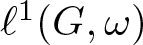
Let G be a group that is either virtually soluble or virtually free, and let ω be a weight on G. We prove that if G is infinite, then there is some maximal left ideal of finite codimension in the Beurling algebra
 $\ell^1(G, \omega)$, which fails to be (algebraically) finitely generated. This implies that a conjecture of Dales and Żelazko holds for these Banach algebras. We then go on to give examples of weighted groups for which this property fails in a strong way. For instance, we describe a Beurling algebra on an infinite group in which every closed left ideal of finite codimension is finitely generated and which has many such ideals in the sense of being residually finite dimensional. These examples seem to be hard cases for proving Dales and Żelazko’s conjecture.
