Refine search
Actions for selected content:
136 results
The Hardy averaging operator between Orlicz spaces and a new gauge functional characterizing a given Orlicz space
- Part of
-
- Journal:
- Canadian Mathematical Bulletin , First View
- Published online by Cambridge University Press:
- 22 September 2026, pp. 1-15
-
- Article
-
- You have access
- HTML
- Export citation
-
We prove that the largest Orlicz space into which the Hardy averaging operator maps coincides with the largest rearrangement-invariant (r.i.) space mapping into that space; in other words, the optimal Orlicz domain is automatically the optimal r.i. domain. More generally, we show that every Luxemburg–Orlicz norm is equivalent to a sublinear functional which makes more computable a certain expression for a dual norm arising in the $\mathcal {K}$
 -theory of interpolation. As applications, we obtain Orlicz space mapping properties for the Hardy–Littlewood maximal function, approximate identities, and Calderón–Zygmund singular integral operators. These mapping properties are shown to be optimal for the Hardy–Littlewood maximal function and the approximate identities.

Some more sparse bounds for rough and smooth pseudodifferential operators
- Part of
-
- Journal:
- Proceedings of the Royal Society of Edinburgh. Section A: Mathematics , First View
- Published online by Cambridge University Press:
- 17 April 2026, pp. 1-30
-
- Article
-
- You have access
- Open access
- HTML
- Export citation
-
Beltran & Cladek use
 $L^r$ to
 $L^s$ bounds to prove sparse form bounds for pseudodifferential operators with Hörmander symbols in
 $S^m_{\rho,\delta}$ up to, but not including, the sharp end-point in decay
 $m$. We further develop their technique, obtaining pointwise sparse bounds for rough pseudodifferential operators that are merely measurable in their spatial variables and an alternative proof of their results, which avoids proving geometrically decaying sparse bounds. We also provide sufficient conditions for sparse form bounds to hold and use these to reprove known sparse bounds for pseudodifferential operators with symbols in
 $S^0_{1,\delta}$ for
 $\delta \lt 1$.


Pointwise convergence to initial data of heat and Hermite-heat equations in modulation spaces
- Part of
-
- Journal:
- Canadian Mathematical Bulletin , First View
- Published online by Cambridge University Press:
- 07 April 2026, pp. 1-25
-
- Article
-
- You have access
- HTML
- Export citation
-
We characterize weighted modulation spaces (data space) for which the heat semigroup
 $e^{-tL}f$ converges pointwise to the initial data f as time t tends to zero. Here L stands for the standard Laplacian
 $-\Delta $ or Hermite operator
 $H=-\Delta +|x|^2$ on the Euclidean space. This is the first result on pointwise convergence with data in a weighted modulation spaces (which do not coincide with weighted Lebesgue spaces). We also prove that the Hardy–Littlewood maximal operator operates on certain modulation spaces. This may be of independent interest. We have highlighted several open questions that arise naturally from our findings.


ɛ-approximability and quantitative Fatou property on Lipschitz-graph domains for a class of non-harmonic functions
- Part of
-
- Journal:
- Proceedings of the Royal Society of Edinburgh. Section A: Mathematics , First View
- Published online by Cambridge University Press:
- 31 March 2026, pp. 1-37
-
- Article
-
- You have access
- Open access
- HTML
- Export citation
-
We study the class of functions on Lipschitz-graph domains satisfying a differential-oscillation condition and show that such functions are
 $\varepsilon$-approximable. As a consequence, we obtain the quantitative Fatou theorem in the spirit of works, for example, by Garnett [6] and Bortz–Hofmann [1]. Such a class contains harmonic functions, as well as non-harmonic ones, for example, nonnegative subharmonic functions whose gradient norm is quasi-nearly subharmonic, as illustrated by our discussion.

A Harnack-type characterization of
 $A_\infty $-weights and applications
- Part of
-
- Journal:
- Canadian Mathematical Bulletin , First View
- Published online by Cambridge University Press:
- 24 March 2026, pp. 1-17
-
- Article
-
- You have access
- HTML
- Export citation

Uniform bounds for polynomial Carleson operators and oscillatory integrals of Radon type
- Part of
-
- Journal:
- Proceedings of the Royal Society of Edinburgh. Section A: Mathematics , First View
- Published online by Cambridge University Press:
- 04 December 2025, pp. 1-23
-
- Article
-
- You have access
- HTML
- Export citation
-
In this paper, we establish the
 $L^p$ bounds for partial polynomial Carleson operators along polynomial curves for
 $p \gt 1$, which depend only on
 $p$ and the number of monomials in the defining polynomial. Additionally, we study two classes of oscillatory integral operators of Radon type and derive uniform
 $L^2$ bounds.


Weak porosity on metric measure spaces
- Part of
-
- Journal:
- Proceedings of the Royal Society of Edinburgh. Section A: Mathematics , First View
- Published online by Cambridge University Press:
- 17 November 2025, pp. 1-48
-
- Article
-
- You have access
- Open access
- HTML
- Export citation
-
We characterize the subsets E of a metric space X with doubling measure whose distance function to some negative power
 $\operatorname{dist}(\cdot,E)^{-\alpha}$ belongs to the Muckenhoupt A1 class of weights in X. To this end, we introduce the weakly porous sets in this setting, and show that, along with certain doubling-type conditions for the sizes of the largest E-free holes, these sets characterize the mentioned A1-property. We exhibit examples showing the optimality of these conditions, and simplify them in the particular case where the underlying measure satisfies a qualitative annular decay property. In addition, we use some of these distance functions as a new and simple method to explicitly construct doubling weights in
 ${\mathbb R}^n$ that do not belong to
 $A_\infty.$


Variation of the one-dimensional centered maximal operator on simple functions with gaps between pieces
- Part of
-
- Journal:
- Proceedings of the Royal Society of Edinburgh. Section A: Mathematics , First View
- Published online by Cambridge University Press:
- 03 November 2025, pp. 1-13
-
- Article
-
- You have access
- Open access
- HTML
- Export citation
-
Let
 $M$ denote the centered Hardy–Littlewood operator on
 $\mathbb{R}$. We prove that
 \begin{equation*}{\rm Var} (Mf)\le {\rm Var} (f) - \frac12\big| |f(\infty)|-|f(-\infty)|\big|,\end{equation*}
for piecewise constant functions
 $f$ with nonzero and zero values alternating. The above inequality strengthens a recent result of Bilz and Weigt [3] proved for indicator functions of bounded variation vanishing at
 $\pm\infty$. We conjecture that the inequality holds for all functions of bounded variation, representing a stronger version of the existing conjecture
 ${\rm Var} (Mf)\le {\rm Var} (f)$. We also obtain the discrete counterpart of our theorem, moreover proving a transference result on equivalency between both settings that is of independent interest.


Weighted decoupling estimates and the Bochner-Riesz means
- Part of
-
- Journal:
- Forum of Mathematics, Sigma / Volume 13 / 2025
- Published online by Cambridge University Press:
- 06 October 2025, e167
-
- Article
-
- You have access
- Open access
- HTML
- Export citation
-
We prove new weighted decoupling estimates. As an application, we give an improved sufficient condition for almost everywhere convergence of the Bochner-Riesz means of arbitrary
 $L^p$ functions for
 $1<p<2$ in dimensions 2 and 3.


A note on the best constant for uncentered maximal functions with measure on ℝ
- Part of
-
- Journal:
- Canadian Mathematical Bulletin / Volume 69 / Issue 1 / March 2026
- Published online by Cambridge University Press:
- 12 September 2025, pp. 344-352
- Print publication:
- March 2026
-
- Article
-
- You have access
- HTML
- Export citation
-
Let
 $M_\mu $ be the uncentered Hardy–Littlewood maximal operator with a Borel measure
 $\mu $ on
 $\mathbb {R}$. In this note, we verify that the norm of
 $M_\mu $ on
 $L^p(\mathbb {R},\mu )$ with
 $p\in (1,\infty )$ is just the upper bound
 $\theta _p$ obtained by Grafakos and Kinnunen and reobtain the norm of
 $M_\mu $ from
 $L^1(\mathbb {R},\mu )$ to
 $L^{1,\infty }(\mathbb {R},\mu )$. Moreover, the norm of the “strong” maximal operator
 $N_{\vec {\mu }}^{n}$ on
 $L^p(\mathbb {R}^n, \vec {\mu })$ is also given.


Hardy-type inequalities for the drifting p-Laplace operator and applications
- Part of
-
- Journal:
- Proceedings of the Royal Society of Edinburgh. Section A: Mathematics , First View
- Published online by Cambridge University Press:
- 06 August 2025, pp. 1-33
-
- Article
-
- You have access
- Open access
- HTML
- Export citation
-
We consider the drifting p-Laplace operator
 \begin{equation*}\Delta_{p,v}u=e^{-v} \text{div}\,(e^v |\nabla u|^{p-2}\nabla u)\end{equation*}
and discuss generalized weighted Hardy-type inequalities associated with the measure
 $d\mu=e^{v(x)}dx$. As an application, we obtain several Liouville-type results for positive solutions of the non-linear elliptic problem with singular lower order term
 \begin{equation*}-\Delta_{p,v} u\ge c(x) u^{p-1}+B \frac{|\nabla u|^p}{u} \quad \text{in}\ \Omega,\end{equation*}
where Ω is a bounded or an unbounded exterior domain in
 ${\mathbb{R}}^N$,
 $N \gt p \gt 1$,
 $B+p-1 \gt 0$, as well as of the non-autonomous quasilinear elliptic problem
 \begin{equation*}-\Delta_{p,v} u+b(x)|\nabla u|^{p-1} \ge c(x) u^{p-1}\quad \text{in}\ \Omega,\end{equation*}
with general weights
 $b\ge0$ and c > 0. Liouville-type results are also discussed for a class of higher order differential equations.


Parabolic Muckenhoupt weights characterized by parabolic fractional maximal and integral operators with time lag
- Part of
-
- Journal:
- Canadian Journal of Mathematics / Volume 78 / Issue 6 / December 2026
- Published online by Cambridge University Press:
- 17 March 2025, pp. 1959-2012
- Print publication:
- December 2026
-
- Article
-
- You have access
- HTML
- Export citation
BOUNDEDNESS OF DIFFERENTIAL TRANSFORMS FOR FRACTIONAL HEAT SEMIGROUPS GENERATED BY SCHRÖDINGER OPERATORS
- Part of
-
- Journal:
- Journal of the Australian Mathematical Society / Volume 118 / Issue 2 / April 2025
- Published online by Cambridge University Press:
- 25 November 2024, pp. 210-244
-
- Article
-
- You have access
- HTML
- Export citation
-
Let
 $L=-\Delta +V$ be a Schrödinger operator in
 ${\mathbb R}^n$ with
 $n\geq 3$, where
 $\Delta $ is the Laplace operator denoted by
 $\Delta =\sum ^{n}_{i=1}({\partial ^{2}}/{\partial x_{i}^{2}})$ and the nonnegative potential V belongs to the reverse Hölder class
 $(RH)_{q}$ with
 $q>n/2$. For
 $\alpha \in (0,1)$, we define the operator
 $$ \begin{align*} T_N^{L^{\alpha}} f(x) =\sum_{j=N_1}^{N_2} v_j(e^{-a_{j+1}L^\alpha} f(x)-e^{-a_{j}L^\alpha} f(x)) \quad \mbox{for all }x\in \mathbb R^n, \end{align*} $$
where
 $\{e^{-tL^\alpha } \}_{t>0}$ is the fractional heat semigroup of the operator L,
 $\{v_j\}_{j\in \mathbb Z}$ is a bounded real sequence and
 $\{a_j\}_{j\in \mathbb Z}$ is an increasing real sequence.
We investigate the boundedness of the operator
 $T_N^{L^{\alpha }}$ and the related maximal operator
 $T^*_{L^{\alpha }}f(x):=\sup _N \vert T_N^{L^{\alpha }} f(x)\vert $ on the spaces
 $L^{p}(\mathbb {R}^{n})$ and
 $BMO_{L}(\mathbb {R}^{n})$, respectively. As extensions of
 $L^{p}(\mathbb {R}^{n})$, the boundedness of the operators
 $T_N^{L^{\alpha }}$ and
 $T^*_{L^{\alpha }}$ on the Morrey space
 $L^{\rho ,\theta }_{p,\kappa }(\mathbb {R}^{n})$ and the weak Morrey space
 $WL^{\rho ,\theta }_{1,\kappa }(\mathbb {R}^{n})$ has also been proved.


Compact bilinear operators and paraproducts revisited
- Part of
-
- Journal:
- Canadian Mathematical Bulletin / Volume 68 / Issue 1 / March 2025
- Published online by Cambridge University Press:
- 22 November 2024, pp. 44-59
- Print publication:
- March 2025
-
- Article
-
- You have access
- Open access
- HTML
- Export citation
Model structures, n-Gorenstein flat modules and PGF dimensions
- Part of
-
- Journal:
- Proceedings of the Edinburgh Mathematical Society / Volume 67 / Issue 4 / November 2024
- Published online by Cambridge University Press:
- 22 November 2024, pp. 1241-1264
-
- Article
-
- You have access
- HTML
- Export citation
-
Given a non-negative integer n and a ring R with identity, we construct a hereditary abelian model structure on the category of left R-modules where the class of cofibrant objects coincides with
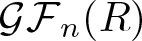 $\mathcal{GF}_n(R)$ the class of left R-modules with Gorenstein flat dimension at most n, the class of fibrant objects coincides with
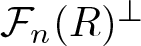 $\mathcal{F}_n(R)^\perp$ the right
 ${\rm Ext}$-orthogonal class of left R-modules with flat dimension at most n, and the class of trivial objects coincides with
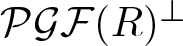 $\mathcal{PGF}(R)^\perp$ the right
 ${\rm Ext}$-orthogonal class of PGF left R-modules recently introduced by Šaroch and
 . The homotopy category of this model structure is triangulated equivalent to the stable category
 $\underline{\mathcal{GF}(R)\cap\mathcal{C}(R)}$ modulo flat-cotorsion modules and it is compactly generated when R has finite global Gorenstein projective dimension.
The second part of this paper deals with the PGF dimension of modules and rings. Our results suggest that this dimension could serve as an alternative definition of the Gorenstein projective dimension. We show, among other things, that (n-)perfect rings can be characterized in terms of Gorenstein homological dimensions, similar to the classical ones, and the global Gorenstein projective dimension coincides with the global PGF dimension.


 . The homotopy category of this model structure is triangulated equivalent to the stable category
CORRECTION TO ‘CHOQUET INTEGRALS, HAUSDORFF CONTENT AND FRACTIONAL OPERATORS’
- Part of
-
- Journal:
- Bulletin of the Australian Mathematical Society / Volume 111 / Issue 3 / June 2025
- Published online by Cambridge University Press:
- 04 October 2024, pp. 568-570
- Print publication:
- June 2025
-
- Article
-
- You have access
- HTML
- Export citation
The multilinear spherical maximal function in one dimension
- Part of
-
- Journal:
- Proceedings of the Edinburgh Mathematical Society / Volume 67 / Issue 4 / November 2024
- Published online by Cambridge University Press:
- 25 September 2024, pp. 1045-1059
-
- Article
-
- You have access
- Open access
- HTML
- Export citation
-
In dimension n = 1, we obtain
 $L^{p_1}(\mathbb R) \times\dots\times L^{p_m}(\mathbb R)$ to
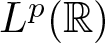 $L^p(\mathbb R)$ boundedness for the multilinear spherical maximal function in the largest possible open set of indices and we provide counterexamples that indicate the optimality of our results.
On some convexity questions of Handelman
- Part of
-
- Journal:
- Canadian Mathematical Bulletin / Volume 67 / Issue 4 / December 2024
- Published online by Cambridge University Press:
- 16 May 2024, pp. 936-939
- Print publication:
- December 2024
-
- Article
-
- You have access
- HTML
- Export citation
-
We resolve some questions posed by Handelman in 1996 concerning log convex
 $L^1$ functions. In particular, we give a negative answer to a question he posed concerning the integrability of
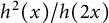 $h^2(x)/h(2x)$ when h is
 $L^1$ and log convex and
 $h(n)^{1/n}\rightarrow 1$.


CHOQUET INTEGRALS, HAUSDORFF CONTENT AND FRACTIONAL OPERATORS
- Part of
-
- Journal:
- Bulletin of the Australian Mathematical Society / Volume 110 / Issue 2 / October 2024
- Published online by Cambridge University Press:
- 19 March 2024, pp. 355-366
- Print publication:
- October 2024
-
- Article
-
- You have access
- HTML
- Export citation
-
We show that the fractional integral operator
 $I_{\alpha }$,
 $0<\alpha <n$, and the fractional maximal operator
 $M_{\alpha }$,
 $0\le \alpha <n$, are bounded on weak Choquet spaces with respect to Hausdorff content. We also investigate these operators on Choquet–Morrey spaces. The results for the fractional maximal operator
 $M_\alpha $ are extensions of the work of Tang [‘Choquet integrals, weighted Hausdorff content and maximal operators’, Georgian Math. J. 18(3) (2011), 587–596] and earlier work of Adams and Orobitg and Verdera. The results for the fractional integral operator
 $I_{\alpha }$ are essentially new.


TRILINEAR FOURIER MULTIPLIERS ON HARDY SPACES
- Part of
-
- Journal:
- Journal of the Institute of Mathematics of Jussieu / Volume 23 / Issue 5 / September 2024
- Published online by Cambridge University Press:
- 15 February 2024, pp. 2217-2278
- Print publication:
- September 2024
-
- Article
-
- You have access
- HTML
- Export citation
-
In this paper, we obtain the
 $H^{p_1}\times H^{p_2}\times H^{p_3}\to H^p$ boundedness for trilinear Fourier multiplier operators, which is a trilinear analogue of the multiplier theorem of Calderón and Torchinsky [4]. Our result improves the trilinear estimate in [22] by additionally assuming an appropriate vanishing moment condition, which is natural in the boundedness into the Hardy space
 $H^p$ for
 $0<p\le 1$.


