Refine search
Actions for selected content:
9 results
A NOTE ON THE PLANAR SKOROKHOD EMBEDDING PROBLEM
- Part of
-
- Journal:
- Bulletin of the Australian Mathematical Society / Volume 114 / Issue 2 / October 2026
- Published online by Cambridge University Press:
- 12 February 2026, pp. 363-369
- Print publication:
- October 2026
-
- Article
-
- You have access
- HTML
- Export citation
-
The planar Skorokhod embedding problem was first proposed and solved by Gross [‘A conformal Skorokhod embedding’, Electron. Commun. Probab. 24 (2019), 11 pages; doi:10.1214/19-ECP272]. Gross worked with probability distributions having finite second moment. Boudabra and Markowsky [‘Remarks on Gross’ technique for obtaining a conformal Skorokhod embedding of planar Brownian motion’, Electron. Commun. Probab. 25 (2020), 13 pages; doi:10.1214/20-ECP300] extended the solution to all distributions with a finite pth moment for $p>1$
 . The case $p=1$
 has remained uncovered since then. In this note, we show that the planar Skorokhod embedding problem is solvable for $p=1$
 when the Hilbert transform of its quantile function is integrable, effectively closing this line of investigation.


Geometric versions of Schwarz’s lemma for spherically convex functions
- Part of
-
- Journal:
- Canadian Journal of Mathematics / Volume 75 / Issue 6 / December 2023
- Published online by Cambridge University Press:
- 03 October 2022, pp. 1780-1799
- Print publication:
- December 2023
-
- Article
-
- You have access
- Open access
- HTML
- Export citation
Quaternionic hyperbolic lattices of minimal covolume
- Part of
-
- Journal:
- Forum of Mathematics, Sigma / Volume 10 / 2022
- Published online by Cambridge University Press:
- 25 August 2022, e68
-
- Article
-
- You have access
- Open access
- HTML
- Export citation
-
For any
 $n>1$ we determine the uniform and nonuniform lattices of the smallest covolume in the Lie group
 $\operatorname {\mathrm {Sp}}(n,1)$. We explicitly describe them in terms of the ring of Hurwitz integers in the nonuniform case with n even, respectively, of the icosian ring in the uniform case for all
 $n>1$.


Shortest paths in arbitrary plane domains
- Part of
-
- Journal:
- Canadian Journal of Mathematics / Volume 74 / Issue 2 / April 2022
- Published online by Cambridge University Press:
- 09 November 2020, pp. 349-367
- Print publication:
- April 2022
-
- Article
-
- You have access
- Export citation
-
Let
 $\Omega $ be a connected open set in the plane and
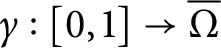 $\gamma : [0,1] \to \overline {\Omega }$ a path such that
 $\gamma ((0,1)) \subset \Omega $. We show that the path
 $\gamma $ can be “pulled tight” to a unique shortest path which is homotopic to
 $\gamma $, via a homotopy h with endpoints fixed whose intermediate paths
 $h_t$, for
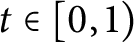 $t \in [0,1)$, satisfy
 $h_t((0,1)) \subset \Omega $. We prove this result even in the case when there is no path of finite Euclidean length homotopic to
 $\gamma $ under such a homotopy. For this purpose, we offer three other natural, equivalent notions of a “shortest” path. This work generalizes previous results for simply connected domains with simple closed curve boundaries.


Ideal Uniform Polyhedra in
 $\mathbb{H}^{n}$ and Covolumes of Higher Dimensional Modular Groups
- Part of
-
- Journal:
- Canadian Journal of Mathematics / Volume 73 / Issue 2 / April 2021
- Published online by Cambridge University Press:
- 27 January 2020, pp. 465-492
- Print publication:
- April 2021
-
- Article
-
- You have access
- Export citation
-
Higher dimensional analogues of the modular group
 $\mathit{PSL}(2,\mathbb{Z})$ are closely related to hyperbolic reflection groups and Coxeter polyhedra with big symmetry groups. In this context, we develop a theory and dissection properties of ideal hyperbolic
 $k$-rectified regular polyhedra, which is of independent interest. As an application, we can identify the covolumes of the quaternionic modular groups with certain explicit rational multiples of the Riemann zeta value
 $\unicode[STIX]{x1D701}(3)$.


Invariant Measure Under the Affine Group Over
 ${\mathbb{Z}$
-
- Journal:
- Combinatorics, Probability and Computing / Volume 23 / Issue 2 / March 2014
- Published online by Cambridge University Press:
- 02 January 2014, pp. 248-268
-
- Article
-
- You have access
- Export citation
-
A rational polyhedron
 $P\subseteq {\mathbb{R^n}}$ is a finite union of simplexes in
 ${\mathbb{R^n}}$ with rational vertices. P is said to be
 $\mathbb Z$-homeomorphic to the rational polyhedron
 $Q\subseteq {\mathbb{R^{\it m}}}$ if there is a piecewise linear homeomorphism η of P onto Q such that each linear piece of η and η−1 has integer coefficients. When n=m, $\mathbb Z$-homeomorphism amounts to continuous
 $\mathcal{G}_n$-equidissectability, where
 $\mathcal{G}_n=GL(n,\mathbb Z) \ltimes \mathbb Z^{n}$ is the affine group over the integers, i.e., the group of all affinities on $\mathbb{R^{n}}$ that leave the lattice
 $\mathbb Z^{n}$ invariant. $\mathcal{G}_n$ yields a geometry on the set of rational polyhedra. For each d=0,1,2,. . ., we define a rational measure λd on the set of rational polyhedra, and show that any two $\mathbb Z$-homeomorphic rational polyhedra $$P\subseteq {\mathbb{R^n}}$$ and $Q\subseteq {\mathbb{R^{\it m}}}$ satisfy
 $\lambda_d(P)=\lambda_d(Q)$. $\lambda_n(P)$ coincides with the n-dimensional Lebesgue measure of P. If 0 ≤ dim P=d < n then λd(P)>0. For rational d-simplexes T lying in the same d-dimensional affine subspace of
 ${\mathbb{R^{\it n}}, $\lambda_d(T)$$ is proportional to the d-dimensional Hausdorff measure of T. We characterize λd among all unimodular invariant valuations.


Curves of infinite length in labyrinth fractals
- Part of
-
- Journal:
- Proceedings of the Edinburgh Mathematical Society / Volume 54 / Issue 2 / June 2011
- Published online by Cambridge University Press:
- 30 March 2011, pp. 329-344
-
- Article
-
- You have access
- Export citation
Isoperimetric Inequalities on Surfaces of Constant Curvature
-
- Journal:
- Canadian Journal of Mathematics / Volume 49 / Issue 6 / 01 December 1997
- Published online by Cambridge University Press:
- 20 November 2018, pp. 1162-1187
- Print publication:
- 01 December 1997
-
- Article
-
- You have access
- Export citation
Large Sets not Containing Images of a Given Sequence
-
- Journal:
- Canadian Mathematical Bulletin / Volume 26 / Issue 1 / 01 March 1983
- Published online by Cambridge University Press:
- 20 November 2018, pp. 41-43
- Print publication:
- 01 March 1983
-
- Article
-
- You have access
- Export citation
-
In the first part we construct a subset H of positive measure in the unit interval and a zero-sequence {an} so that H contains no homothetic copy of {an}. In Theorem 2 we prove that if ε > 0 and a zero-sequence {an} are given then there exists a set A of measure less than ε so that
 covers the interval. An application of this result is Theorem 3: for any sequence {an} and ε > 0 there is a set H of measure 1 - ε such that for no N and c is {an + c}n ≥ N contained by H.
 covers the interval. An application of this result is Theorem 3: for any sequence {a
