Refine search
Actions for selected content:
51 results
Balancing the 2-systoles of some Kähler manifolds with positive scalar curvature
- Part of
-
- Journal:
- Canadian Mathematical Bulletin , First View
- Published online by Cambridge University Press:
- 26 October 2026, pp. 1-10
-
- Article
-
- You have access
- HTML
- Export citation
-
Theorems by Bray–Brendle–Neves and Zhu about positive scalar curvature metrics on products of a $2$
 -sphere and an n-torus suggest that positive scalar curvature and appropriate topological assumptions should lead to the existence of topologically nontrivial 2-spheres of small area, which can be stated as an upper bound on the 2-systole of such manifolds. Recent progress has been made in this direction by Sha and Tsiamis under the additional Kähler assumption while Cecchini–Hirsh–Zeidler, Stryker, and Tsiamis showed similar upper bounds on the stable 2-systole using index theoretic methods. We prove here similar inequalities for some Kähler manifolds which control the relative sizes of the representatives of a well-chosen set of homology classes. For instance, on $(\mathbb {CP}^1\times \mathbb {CP}^1,\omega )$
 with a positive scalar curvature Kähler metric, we quantitatively show that largeness of one factor imposes smallness of the other.

Fundamental groups of compact Kähler manifolds with semi-positive holomorphic sectional curvature
- Part of
-
- Journal:
- Forum of Mathematics, Sigma / Volume 14 / 2026
- Published online by Cambridge University Press:
- 14 October 2026, e135
-
- Article
-
- You have access
- Open access
- HTML
- Export citation
-
In this paper, we prove that a compact Kähler manifold X with semi-positive holomorphic sectional curvature admits a locally trivial fibration $\phi \colon X \to Y$
 , where the fiber F is a rationally connected projective manifold and the base Y is a finite étale quotient of a (compact complex) torus. This result extends the structure theorem, previously established for projective manifolds, to compact Kähler manifolds. A key part of the proof involves analyzing the foliation generated by truly flat tangent vectors and showing the abelianness of the topological fundamental group $\pi _{1}(X)$
 , with a focus on varieties of special type.


On the image of the Hilbert map
- Part of
-
- Journal:
- Proceedings of the Edinburgh Mathematical Society / Volume 69 / Issue 4 / November 2026
- Published online by Cambridge University Press:
- 09 September 2026, pp. 1314-1322
-
- Article
-
- You have access
- HTML
- Export citation
Gromov–Hausdorff continuity of non-Kähler Calabi–Yau conifold transitions
- Part of
-
- Journal:
- Compositio Mathematica / Volume 162 / Issue 2 / February 2026
- Published online by Cambridge University Press:
- 15 June 2026, pp. 327-367
- Print publication:
- February 2026
-
- Article
-
- You have access
- Open access
- HTML
- Export citation
COHOMOLOGY ISOMORPHISM OF SYMMETRIC POWER OF COTANGENT BUNDLE OF BALL QUOTIENT AND ITS TOROIDAL COMPACTIFICATION
- Part of
-
- Journal:
- Nagoya Mathematical Journal / Volume 261 / 2026
- Published online by Cambridge University Press:
- 11 December 2025, e1
-
- Article
-
- You have access
- Open access
- HTML
- Export citation
-
In this article, we investigate the
 $L^2$-Dolbeault cohomology of the symmetric power of cotangent bundles of ball quotients with finite volume, as well as their toroidal compactification. Moreover, by proving the finite dimensionality of these cohomologies, through the application of Hodge theory for complete Hermitian manifolds, we establish the existence of Hodge decomposition and Green’s operator.

SPECIAL RICCI–HESSIAN EQUATIONS ON KÄHLER MANIFOLDS
- Part of
-
- Journal:
- Journal of the Australian Mathematical Society / Volume 120 / Issue 1 / February 2026
- Published online by Cambridge University Press:
- 07 July 2025, pp. 57-77
-
- Article
-
- You have access
- Open access
- HTML
- Export citation
-
Special Ricci–Hessian equations on Kähler manifolds
 $(M,g)$, as defined by Maschler [‘Special Kähler–Ricci potentials and Ricci solitons’, Ann. Global Anal. Geom. 34 (2008), 367–380], involve functions
 $\tau $ on M and state that, for some function
 $\alpha $ of the real variable
 $\tau\kern-0.8pt $, the sum of
 $\alpha \nabla d\tau\kern-0.8pt $ and the Ricci tensor equals a functional multiple of the metric g, while
 $\alpha \nabla d\tau\kern-0.8pt $ itself is assumed to be nonzero almost everywhere. Three well-known obvious ‘standard’ cases are provided by (non-Einstein) gradient Kähler–Ricci solitons, conformally-Einstein Kähler metrics, and special Kähler–Ricci potentials. We show that, outside of these three cases, such an equation can only occur in complex dimension two and, at generic points, it must then represent one of three types, for which, up to normalizations,
 $\alpha =2\cot \tau\kern-0.8pt $,
 $\alpha =2\coth \tau\kern-0.8pt $, or
 $\alpha =2\tanh \tau\kern-0.8pt $. We also use the Cartan–Kähler theorem to prove that these three types are actually realized in a ‘nonstandard’ way.


GAUSSIAN HOLOMORPHIC SECTIONS ON NONCOMPACT COMPLEX MANIFOLDS
- Part of
-
- Journal:
- Journal of the Institute of Mathematics of Jussieu / Volume 24 / Issue 4 / July 2025
- Published online by Cambridge University Press:
- 12 March 2025, pp. 1197-1262
- Print publication:
- July 2025
-
- Article
-
- You have access
- Open access
- HTML
- Export citation
-
We provide two constructions of Gaussian random holomorphic sections of a Hermitian holomorphic line bundle
 $(L,h_{L})$ on a Hermitian complex manifold
 $(X,\Theta )$, that are particularly interesting in the case where the space of
 $\mathcal {L}^2$-holomorphic sections
 $H^{0}_{(2)}(X,L)$ is infinite dimensional. We first provide a general construction of Gaussian random holomorphic sections of L, which, if
 $H^{0}_{(2)}(X,L)$ is infinite dimensional, are almost never
 $\mathcal {L}^2$-integrable on X. The second construction combines the abstract Wiener space theory with the Berezin–Toeplitz quantization and yields a Gaussian ensemble of random
 $\mathcal {L}^2$-holomorphic sections. Furthermore, we study their random zeros in the context of semiclassical limits, including their distributions, large deviation estimates, local fluctuations and hole probabilities.


BOTT MANIFOLDS WITH VANISHING FUTAKI INVARIANTS FOR ALL KAHLER CLASSES
- Part of
-
- Journal:
- Nagoya Mathematical Journal / Volume 259 / September 2025
- Published online by Cambridge University Press:
- 24 February 2025, pp. 453-472
-
- Article
-
- You have access
- HTML
- Export citation
CYT and SKT manifolds with parallel Bismut torsion
- Part of
-
- Journal:
- Proceedings of the Royal Society of Edinburgh. Section A: Mathematics / Volume 156 / Issue 3 / June 2026
- Published online by Cambridge University Press:
- 18 November 2024, pp. 901-926
- Print publication:
- June 2026
-
- Article
-
- You have access
- Open access
- HTML
- Export citation
Invariant scalar-flat Kähler metrics on line bundles over generalized flag varieties
- Part of
-
- Journal:
- Canadian Journal of Mathematics / Volume 77 / Issue 5 / October 2025
- Published online by Cambridge University Press:
- 13 May 2024, pp. 1611-1636
- Print publication:
- October 2025
-
- Article
-
- You have access
- HTML
- Export citation
Examples of dHYM connections in a variable background
- Part of
-
- Journal:
- Canadian Journal of Mathematics / Volume 76 / Issue 5 / October 2024
- Published online by Cambridge University Press:
- 02 October 2023, pp. 1609-1637
- Print publication:
- October 2024
-
- Article
-
- You have access
- HTML
- Export citation
On the pluriclosed flow on Oeljeklaus–Toma manifolds
- Part of
-
- Journal:
- Canadian Journal of Mathematics / Volume 76 / Issue 1 / February 2024
- Published online by Cambridge University Press:
- 27 December 2022, pp. 39-65
- Print publication:
- February 2024
-
- Article
-
- You have access
- HTML
- Export citation
-
We investigate the pluriclosed flow on Oeljeklaus–Toma manifolds. We parameterize left-invariant pluriclosed metrics on Oeljeklaus–Toma manifolds, and we classify the ones which lift to an algebraic soliton of the pluriclosed flow on the universal covering. We further show that the pluriclosed flow starting from a left-invariant pluriclosed metric has a long-time solution
 $\omega _t$ which once normalized collapses to a torus in the Gromov–Hausdorff sense. Moreover, the lift of
 $\tfrac {1}{1+t}\omega _t$ to the universal covering of the manifold converges in the Cheeger–Gromov sense to
 $(\mathbb H^s\times \mathbb C^s, \tilde {\omega }_{\infty })$, where
 $\tilde {\omega }_{\infty }$ is an algebraic soliton.


Singular Gauduchon metrics
- Part of
-
- Journal:
- Compositio Mathematica / Volume 158 / Issue 6 / June 2022
- Published online by Cambridge University Press:
- 17 August 2022, pp. 1314-1328
- Print publication:
- June 2022
-
- Article
-
- You have access
- HTML
- Export citation
-
In 1977, Gauduchon proved that on every compact hermitian manifold
 $(X, \omega )$ there exists a conformally equivalent hermitian metric
 $\omega _\mathrm {G}$ which satisfies
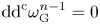 $\mathrm {dd}^{\mathrm {c}} \omega _\mathrm {G}^{n-1} = 0$. In this note, we extend this result to irreducible compact singular hermitian varieties which admit a smoothing.


A note on holomorphic sectional curvature of a hermitian manifold
- Part of
-
- Journal:
- Glasgow Mathematical Journal / Volume 64 / Issue 3 / September 2022
- Published online by Cambridge University Press:
- 04 March 2022, pp. 739-745
-
- Article
-
- You have access
- HTML
- Export citation
On cohomogeneity one Hermitian non-Kähler metrics
- Part of
-
- Journal:
- Proceedings of the Royal Society of Edinburgh. Section A: Mathematics / Volume 153 / Issue 2 / April 2023
- Published online by Cambridge University Press:
- 17 February 2022, pp. 545-587
- Print publication:
- April 2023
-
- Article
-
- You have access
- Open access
- HTML
- Export citation
-
We investigate the geometry of Hermitian manifolds endowed with a compact Lie group action by holomorphic isometries with principal orbits of codimension one. In particular, we focus on a special class of these manifolds constructed by following Bérard-Bergery which includes, among the others, the holomorphic line bundles on $\mathbb {C}\mathbb {P}^{m-1}$
 , the linear Hopf manifolds and the Hirzebruch surfaces. We characterize their invariant special Hermitian metrics, such as balanced, Kähler-like, pluriclosed, locally conformally Kähler, Vaisman and Gauduchon. Furthermore, we construct new examples of cohomogeneity one Hermitian metrics solving the second-Chern–Einstein equation and the constant Chern-scalar curvature equation.

Counting and equidistribution in quaternionic Heisenberg groups
- Part of
-
- Journal:
- Mathematical Proceedings of the Cambridge Philosophical Society / Volume 173 / Issue 1 / July 2022
- Published online by Cambridge University Press:
- 08 July 2021, pp. 67-104
- Print publication:
- July 2022
-
- Article
-
- You have access
- Export citation
-
We develop the relationship between quaternionic hyperbolic geometry and arithmetic counting or equidistribution applications, that arises from the action of arithmetic groups on quaternionic hyperbolic spaces, especially in dimension 2. We prove a Mertens counting formula for the rational points over a definite quaternion algebra A over
 ${\mathbb{Q}}$ in the light cone of quaternionic Hermitian forms, as well as a Neville equidistribution theorem of the set of rational points over A in quaternionic Heisenberg groups.

POWER SERIES PROOFS FOR LOCAL STABILITIES OF KÄHLER AND BALANCED STRUCTURES WITH MILD
 $\partial \overline {\partial }$-LEMMA
- Part of
-
- Journal:
- Nagoya Mathematical Journal / Volume 246 / June 2022
- Published online by Cambridge University Press:
- 08 June 2021, pp. 305-354
-
- Article
-
- You have access
- HTML
- Export citation
-
By use of a natural map introduced recently by the first and third authors from the space of pure-type complex differential forms on a complex manifold to the corresponding one on the small differentiable deformation of this manifold, we will give a power series proof for Kodaira–Spencer’s local stability theorem of Kähler structures. We also obtain two new local stability theorems, one of balanced structures on an n-dimensional balanced manifold with the
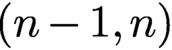 $(n-1,n)$th mild
 $\partial \overline {\partial }$-lemma by power series method and the other one on p-Kähler structures with the deformation invariance of
 $(p,p)$-Bott–Chern numbers.


Uniqueness of optimal symplectic connections
- Part of
-
- Journal:
- Forum of Mathematics, Sigma / Volume 9 / 2021
- Published online by Cambridge University Press:
- 04 March 2021, e18
-
- Article
-
- You have access
- Open access
- Export citation
Non-existence of conformally flat real hypersurfaces in both the complex quadric and the complex hyperbolic quadric
- Part of
-
- Journal:
- Canadian Mathematical Bulletin / Volume 65 / Issue 1 / March 2022
- Published online by Cambridge University Press:
- 15 February 2021, pp. 68-83
- Print publication:
- March 2022
-
- Article
-
- You have access
- HTML
- Export citation
-
In this paper, by applying for a new approach of the so-called Tsinghua principle, we prove the nonexistence of locally conformally flat real hypersurfaces in both the m-dimensional complex quadric
 $Q^m$ and the complex hyperbolic quadric
 $Q^{m\ast }$ for
 $m\ge 3$.


A new classification on parallel Ricci tensor for real hypersurfaces in the complex quadric
- Part of
-
- Journal:
- Proceedings of the Royal Society of Edinburgh. Section A: Mathematics / Volume 151 / Issue 6 / December 2021
- Published online by Cambridge University Press:
- 18 November 2020, pp. 1846-1868
- Print publication:
- December 2021
-
- Article
-
- You have access
- Export citation
-
First we introduce the notion of parallel Ricci tensor
 ${\nabla }\mathrm {Ric}=0$ for real hypersurfaces in the complex quadric Qm = SOm+2/SOmSO2 and show that the unit normal vector field N is singular. Next we give a new classification of real hypersurfaces in the complex quadric Qm = SOm+2/SOmSO2 with parallel Ricci tensor.

