Refine search
Actions for selected content:
35 results
The
 $B_2$ index of galled trees
- Part of
-
- Journal:
- Advances in Applied Probability , First View
- Published online by Cambridge University Press:
- 10 August 2026, pp. 1-44
-
- Article
-
- You have access
- HTML
- Export citation
-
In recent years, there has been effort to extend the classical notion of phylogenetic balance, originally defined in the context of trees, to networks. One of the most natural ways to do this is with the so-called
 $B_2$ index. In this paper, we study the
 $B_2$ index for a prominent class of phylogenetic networks: galled trees. We show that the
 $B_2$ index of a uniform leaf-labeled galled tree converges in distribution as the network becomes large. We characterize the corresponding limiting distribution, and provide a way to compute its moments. This is the first time that a balance index has been studied to this level of detail for a random phylogenetic network. One specificity of this work is that we use two different and independent approaches, each with its advantages: analytic combinatorics, and local limits. The analytic combinatorics approach is more direct, as it relies on standard tools, but it involves slightly more complex calculations. Because it has not previously been used to study such questions, the local limit approach requires the development of an extensive framework beforehand; however, this framework is interesting in itself, and can be used to tackle other, similar problems.


BIPOLAR FUZZY KNOWLEDGE-BASED ACCURACY MEASURE WITH APPLICATIONS IN MEDICAL DIAGNOSIS, PATTERN DETECTION AND CLUSTER ANALYSIS
- Part of
-
- Journal:
- The ANZIAM Journal / Volume 68 / 2026
- Published online by Cambridge University Press:
- 07 April 2026, e6
-
- Article
-
- You have access
- HTML
- Export citation
Non-parametric estimation of the generalized past entropy function under α-mixing sample
- Part of
-
- Journal:
- Probability in the Engineering and Informational Sciences / Volume 40 / Issue 2 / April 2026
- Published online by Cambridge University Press:
- 05 November 2025, pp. 272-287
-
- Article
-
- You have access
- Open access
- HTML
- Export citation
-
Measure of uncertainty in past lifetime distribution plays an important role in the context of information theory, forensic science and other related fields. In the present work, we propose non-parametric kernel type estimator for generalized past entropy function, which was introduced by Gupta and Nanda [9], under
 $\alpha$-mixing sample. The resulting estimator is shown to be weak and strong consistent and asymptotically normally distributed under certain regularity conditions. The performance of the estimator is validated through simulation study and a real data set.

Introducing and applying varinaccuracy: a measure for doubly truncated random variables in reliability analysis
- Part of
-
- Journal:
- Probability in the Engineering and Informational Sciences / Volume 40 / Issue 2 / April 2026
- Published online by Cambridge University Press:
- 05 September 2025, pp. 155-181
-
- Article
-
- You have access
- Open access
- HTML
- Export citation
Relative entropy bounds for sampling with and without replacement
- Part of
-
- Journal:
- Journal of Applied Probability / Volume 62 / Issue 4 / December 2025
- Published online by Cambridge University Press:
- 28 July 2025, pp. 1578-1593
- Print publication:
- December 2025
-
- Article
-
- You have access
- Open access
- HTML
- Export citation
-
Sharp, nonasymptotic bounds are obtained for the relative entropy between the distributions of sampling with and without replacement from an urn with balls of
 $c\geq 2$ colors. Our bounds are asymptotically tight in certain regimes and, unlike previous results, they depend on the number of balls of each color in the urn. The connection of these results with finite de Finetti-style theorems is explored, and it is observed that a sampling bound due to Stam (1978) combined with the convexity of relative entropy yield a new finite de Finetti bound in relative entropy, which achieves the optimal asymptotic convergence rate.

Sharp estimates for Gowers norms on discrete cubes
- Part of
-
- Journal:
- Proceedings of the Royal Society of Edinburgh. Section A: Mathematics , First View
- Published online by Cambridge University Press:
- 16 June 2025, pp. 1-27
-
- Article
-
- You have access
- HTML
- Export citation
-
We study optimal dimensionless inequalities
 \begin{equation*} \|f\|_{\textrm{U}^k} \leqslant \|f\|_{\ell^{p_{k,n}}} \end{equation*}
that hold for all functions
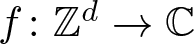 $f\colon\mathbb{Z}^d\to\mathbb{C}$ supported in
 $\{0,1,\ldots,n-1\}^d$ and estimates
 \begin{equation*} \|\mathbb{1}_A\|_{\textrm{U}^k}^{2^k}\leqslant |A|^{t_{k,n}} \end{equation*}
that hold for all subsets A of the same discrete cubes. A general theory, analogous to the work of de Dios Pont, Greenfeld, Ivanisvili, and Madrid, is developed to show that the critical exponents are related by
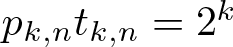 $p_{k,n} t_{k,n} = 2^k$. This is used to prove the three main results of the article:
• an explicit formula for
 $t_{k,2}$, which generalizes a theorem by Kane and Tao,
• two-sided asymptotic estimates for
 $t_{k,n}$ as
 $n\to\infty$ for a fixed
 $k\geqslant2$, which generalize a theorem by Shao, and
• a precise asymptotic formula for
 $t_{k,n}$ as
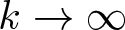 $k\to\infty$ for a fixed
 $n\geqslant2$.


Extropy-based dynamic cumulative residual inaccuracy measure: properties and applications
- Part of
-
- Journal:
- Probability in the Engineering and Informational Sciences / Volume 39 / Issue 4 / October 2025
- Published online by Cambridge University Press:
- 26 February 2025, pp. 461-485
-
- Article
-
- You have access
- Open access
- HTML
- Export citation
Some generalized information and divergence generating functions: properties, estimation, validation, and applications
- Part of
-
- Journal:
- Probability in the Engineering and Informational Sciences / Volume 39 / Issue 3 / July 2025
- Published online by Cambridge University Press:
- 25 February 2025, pp. 397-430
-
- Article
-
- You have access
- Open access
- HTML
- Export citation
Optimal experimental design: Formulations and computations
- Part of
-
- Journal:
- Acta Numerica / Volume 33 / July 2024
- Published online by Cambridge University Press:
- 04 September 2024, pp. 715-840
-
- Article
-
- You have access
- Open access
- Export citation
Quantile-based information generating functions and their properties and uses
- Part of
-
- Journal:
- Probability in the Engineering and Informational Sciences / Volume 38 / Issue 4 / October 2024
- Published online by Cambridge University Press:
- 22 May 2024, pp. 733-751
-
- Article
-
- You have access
- Open access
- HTML
- Export citation
Convergence rate of entropy-regularized multi-marginal optimal transport costs
- Part of
-
- Journal:
- Canadian Journal of Mathematics / Volume 77 / Issue 3 / June 2025
- Published online by Cambridge University Press:
- 15 March 2024, pp. 1072-1092
- Print publication:
- June 2025
-
- Article
-
- You have access
- Open access
- HTML
- Export citation
-
We investigate the convergence rate of multi-marginal optimal transport costs that are regularized with the Boltzmann–Shannon entropy, as the noise parameter
 $\varepsilon $ tends to
 $0$. We establish lower and upper bounds on the difference with the unregularized cost of the form
 $C\varepsilon \log (1/\varepsilon )+O(\varepsilon )$ for some explicit dimensional constants C depending on the marginals and on the ground cost, but not on the optimal transport plans themselves. Upper bounds are obtained for Lipschitz costs or locally semiconcave costs for a finer estimate, and lower bounds for
 $\mathscr {C}^2$ costs satisfying some signature condition on the mixed second derivatives that may include degenerate costs, thus generalizing results previously in the two marginals case and for nondegenerate costs. We obtain in particular matching bounds in some typical situations where the optimal plan is deterministic.


On the Ziv–Merhav theorem beyond Markovianity I
- Part of
-
- Journal:
- Canadian Journal of Mathematics / Volume 77 / Issue 3 / June 2025
- Published online by Cambridge University Press:
- 07 March 2024, pp. 891-915
- Print publication:
- June 2025
-
- Article
-
- You have access
- Open access
- HTML
- Export citation
Approximate discrete entropy monotonicity for log-concave sums
- Part of
-
- Journal:
- Combinatorics, Probability and Computing / Volume 33 / Issue 2 / March 2024
- Published online by Cambridge University Press:
- 13 November 2023, pp. 196-209
-
- Article
-
- You have access
- HTML
- Export citation
-
It is proven that a conjecture of Tao (2010) holds true for log-concave random variables on the integers: For every
 $n \geq 1$, if
 $X_1,\ldots,X_n$ are i.i.d. integer-valued, log-concave random variables, thenas
 \begin{equation*} H(X_1+\cdots +X_{n+1}) \geq H(X_1+\cdots +X_{n}) + \frac {1}{2}\log {\Bigl (\frac {n+1}{n}\Bigr )} - o(1) \end{equation*}
 $H(X_1) \to \infty$, where
 $H(X_1)$ denotes the (discrete) Shannon entropy. The problem is reduced to the continuous setting by showing that if
 $U_1,\ldots,U_n$ are independent continuous uniforms on
 $(0,1)$, thenas
 \begin{equation*} h(X_1+\cdots +X_n + U_1+\cdots +U_n) = H(X_1+\cdots +X_n) + o(1), \end{equation*}
 $H(X_1) \to \infty$, where
 $h$ stands for the differential entropy. Explicit bounds for the
 $o(1)$-terms are provided.


The unified extropy and its versions in classical and Dempster–Shafer theories
- Part of
-
- Journal:
- Journal of Applied Probability / Volume 61 / Issue 2 / June 2024
- Published online by Cambridge University Press:
- 23 October 2023, pp. 685-696
- Print publication:
- June 2024
-
- Article
-
- You have access
- HTML
- Export citation
Costa’s concavity inequality for dependent variables based on the multivariate Gaussian copula
- Part of
-
- Journal:
- Journal of Applied Probability / Volume 60 / Issue 4 / December 2023
- Published online by Cambridge University Press:
- 12 April 2023, pp. 1136-1156
- Print publication:
- December 2023
-
- Article
-
- You have access
- HTML
- Export citation
A new lifetime distribution by maximizing entropy: properties and applications
- Part of
-
- Journal:
- Probability in the Engineering and Informational Sciences / Volume 38 / Issue 1 / January 2024
- Published online by Cambridge University Press:
- 28 February 2023, pp. 189-206
-
- Article
-
- You have access
- Open access
- HTML
- Export citation
Varentropy of doubly truncated random variable
- Part of
-
- Journal:
- Probability in the Engineering and Informational Sciences / Volume 37 / Issue 3 / July 2023
- Published online by Cambridge University Press:
- 08 July 2022, pp. 852-871
-
- Article
-
- You have access
- HTML
- Export citation
On reconsidering entropies and divergences and their cumulative counterparts: Csiszár's, DPD's and Fisher's type cumulative and survival measures
- Part of
-
- Journal:
- Probability in the Engineering and Informational Sciences / Volume 37 / Issue 1 / January 2023
- Published online by Cambridge University Press:
- 21 February 2022, pp. 294-321
-
- Article
-
- You have access
- Open access
- HTML
- Export citation
Concentration functions and entropy bounds for discrete log-concave distributions
- Part of
-
- Journal:
- Combinatorics, Probability and Computing / Volume 31 / Issue 1 / January 2022
- Published online by Cambridge University Press:
- 27 May 2021, pp. 54-72
-
- Article
-
- You have access
- Export citation
PROBABILISTIC STABILITY, AGM REVISION OPERATORS AND MAXIMUM ENTROPY
- Part of
-
- Journal:
- The Review of Symbolic Logic / Volume 15 / Issue 3 / September 2022
- Published online by Cambridge University Press:
- 21 October 2020, pp. 553-590
- Print publication:
- September 2022
-
- Article
-
- You have access
- HTML
- Export citation
