To save content items to your account,
please confirm that you agree to abide by our usage policies.
If this is the first time you use this feature, you will be asked to authorise Cambridge Core to connect with your account.
Find out more about saving content to .
To save content items to your Kindle, first ensure no-reply@cambridge.org
is added to your Approved Personal Document E-mail List under your Personal Document Settings
on the Manage Your Content and Devices page of your Amazon account. Then enter the ‘name’ part
of your Kindle email address below.
Find out more about saving to your Kindle.
Note you can select to save to either the @free.kindle.com or @kindle.com variations.
‘@free.kindle.com’ emails are free but can only be saved to your device when it is connected to wi-fi.
‘@kindle.com’ emails can be delivered even when you are not connected to wi-fi, but note that service fees apply.
This article looks at the deregulation of US prison labor in the 1970s and 1980s, and the use of prison labor in information technology (IT) and digital electronics supply chains. The article, on one hand, locates the effort to deregulate prison labor in US electronics firms’ search for cheap labor enclaves and the uneven development of the postwar United States. At the same time, the article situiates this deregulatory turn in the progressive reforms of the 1970s. These reforms, which occurred first at the state and local levels, sought to promote prisoner welfare, provide opportunities for “self-help,” and rationalize the allocation of state and local resources in light of rising inflation. As such, the article complicates narratives of the rise of neoliberalism, which center issues like “lost confidence” in the efficacy of federal social welfare programs, breaches in public trust following Watergate, the 1973 oil shock, knock-on effects of New Deal and Great Society programs, or emerging “family values” and racist dog-whistle politics. It also frames the labor history of digital electronics in a way that supports an analysis of the relationship between capitalist development and US federalism aongside the particularities of firm-level motivation, insitutional inertia, and prevailing political ideology. Current discussions of Artificial Intelligence (AI) and corrections largely focus on the use of incarcerated persons to train AI algorithms or the use of AI systems to surveil prisoners. However, this article centers the growth of tech supply chains in the 1970s and 1980s as an important precursor to the development of contemporary AI technology and firms.
Building on the Governing Knowledge Commons (GKC) framework, this chapter examines how processes of knowledge production, transmission, and utilization give rise to various collective action problems and how firms address these problems. Drawing on stakeholder theory in management studies, the chapter distinguishes three governance models – the hub-and-spoke model, the lead role governance model, and the shared governance model – each offering different solutions to these challenges. A case study of the famous Czech firm Bat’a Enterprises in the early twentieth century demonstrates the practical application of the lead role governance model, which grants employees high autonomy while maintaining management’s central role in strategic decisions. Through profit-sharing schemes, decentralized workshops, and internal education, Bat’a effectively aligned individual incentives with the firm’s goals, mitigating collective action problems and fostering innovation. By analyzing Bat’a’s success, this chapter contributes to the understanding of knowledge governance in firms and underscores the connections with the GKC framework and Ostrom’s design principles.
Corporations act as entities addressing the world with a single face and voice, with the law resorting to metaphors such as “person” and “body” to present the group as an entity distinct from its members. Four historic models of group action, which can hybridize across time, can provide an added functional analysis: the “cathedral” built by self-regulating guilds and societies; the “factory” resting on division of labour and hierarchical organization; the “bazaar” of adjoining enterprises providing some level of market integration between traders; and the “commune” resting on personalized bonds and common purposes. All types are affected by coordination problems arising whenever members must take joint decisions or set up a deliberative system for forming judgements preparatory to taking decisions. While a group can be said to attain corporate status when it functions as a univocal entity owning its actions, in order to act effectively, the corporation must develop techniques to gather and process information attained by its agents, much of which will be predictions of the conduct of other agents. The corporation exists to cultivate and embody common knowledge. Preceding this chapter’s conceptual analysis is a case study of the historically important and now-troubled Boeing.
Building on other efforts to bring historical approaches to bear on international business scholarship, this chapter examines the business strategy of selected European multinationals in the 1992 Program. Through business historical case studies on a range of companies operating in the internal market of the EEC, it considers a wide range of firms headquartered both inside and outside the EEC and from a wide range of sectors industries, including manufacturing, pharmaceuticals, telecommunications, electronics, and retail, chosen for their diversity of experiences and approaches. Not only does this case study approach “bring history (back) into international business” and “put the process back in” to research on firm internationalization, but, through repetition, it also contributes to the development of explanatory theories. This, then, is methodological impressionism: Together, the collection of vignette cases presented here paints a bigger picture, revealing patterns about the growth and development of multinationals, their regionalization and the relationship between regionalization and globalization that data alone could not make clear.
In post-Brexit Europe, it has never been more important to understand who benefits from the European Union and its Single Market. In this innovative approach to the history of European integration, Grace Ballor reconstructs the creation of the Single Market in the 1980s and 1990s through the lens of multinational business. She both shows how policymakers viewed big business as an ally in market integration and uncovers the diverse responses of European companies, ranging from enthusiastic support for the market to opposition to its attendant social and environmental policies. Drawing on institutional and corporate archives and interviews with key policymakers and business leaders, Ballor demonstrates how businesses adapted their strategies to the new realities of integration and how these adaptations in turn shaped international markets. This is essential reading for anyone wishing to make sense of contemporary European economics and the complex relationships between business and policymaking, economy and society.
This article traces the intellectual lineage between the German Historical School of Political Economy—particularly the work of Gustav Schmoller—and the formation of business history at Harvard Business School. It reconstructs a connection that remains insufficiently recognized in accounts of the discipline’s origins, situating its emergence within a broader transatlantic exchange of ideas and academic practices around the turn of the twentieth century. The article shows how Schmoller’s approach to political economy informed early business education at Harvard through key intermediaries such as William J. Ashley and Edwin F. Gay, and how these influences were subsequently embraced and advanced within the Harvard milieu. Focusing on the divergent yet complementary contributions of N. S. B. Gras and Arthur H. Cole, it highlights Harvard’s role as an intellectual incubator rather than a point of origin. In doing so, the article recovers a genealogy of business history and considers its implications for the field’s self-understanding.
This article offers a biographical reappraisal of Arthur H. Cole (1889–1974) as a field creator and architect of business history’s mid-century ambitions. It traces how institutional position and financial security enabled Cole to develop a research program for entrepreneurial history by redefining its evidentiary base, organizing it as a collective and interdisciplinary endeavor, and articulating an analytical framework for it. The article argues that Cole advanced two arguments that continue to provoke the field. First, he promoted the study of entrepreneurship without heroes, resisting great-firm and great-man narratives by treating entrepreneurial change primarily as a knowledge problem. Second, he sought to align levels of analysis, tracing the entrepreneurial function from micro-level decision-making through meso-level interfirm ecologies to macro-level social legitimacy. To communicate this complex agenda, Cole often theorized in metaphors, notably the “entrepreneurial stream,” that helped his ideas travel even when his synthesis proved difficult to canonize.
This article examines the career of Florence Edler de Roover, whose Glossary of Mediaeval Terms of Business, Italian Series, 1200–1600 (1934) established her as a leading business historian of medieval Italy at a time when it was widely understood as the cradle of capitalism. Drawing on extensive archival sources, it traces Edler’s extraordinary formation as a scholar, her pivotal role in N. S. B. Gras’s business history program at Harvard Business School, and the gradual eclipse of her independent career following her marriage to the Belgian accountant and historian Raymond de Roover in 1936. Edler’s trajectory illuminates the conditions under which women’s contributions could be indispensable and yet become invisible in mid-twentieth-century American academia, but the article attends equally to Edler’s temperament, choices, ambitions, and self-fashioning, arguing that her career was shaped by the interplay of institutional constraint and personal agency. Her story also sheds new light on the gendered dimensions of the founding of business history in the United States—largely submerged in the existing scholarship—and on the uneasy relationship between business and economic history during her lifetime.
Geoffrey Jones and Sabine Pitteloud present the latest research on the global history of multinationals and their impact on society and the environment. Bringing together leading international scholars, these essays survey key themes in our relationship with multinationals, from taxation and corruption to gender and the climate. Though often associated with large corporations like Apple or Nestlé, the contributors highlight the remarkable diversity in multinational strategies and organizational structures. They challenge the idea of an inescapable rise of multinationals by looking beyond the experience of Western countries and considering the effects of dramatic political shifts. Multinationals have often acted opportunistically, with their resilience carrying social costs through the exploitation of weak regulations, corrupt governments, inequalities, poor human rights, and environmental harm. This is an essential introduction to the historical role of multinationals for scholars and students as well as for policymakers and stakeholders navigating today's economic landscape.
This Companion volume presents the latest research on the history of multinationals and their impact on society and the environment. While often associated with large corporations like Ford or Coca-Cola, multinationals are defined not by size but by their ownership and control of assets in multiple countries. A key contribution of business history research has been to highlight the remarkable diversity in multinational strategies and organizational structures over time and to provide nuanced perspectives on the complex and often polarized debates surrounding their operations, showing how equally diverse and far-reaching are the impacts of multinationals. Understanding their historical role provides valuable insights for policymakers and stakeholders navigating today’s economic landscape.
Nadakkal Parameswaran Pillai, a worker at the Indian Coffee House (ICH) in Trichur, later recalled that the cooperative found its place in history through its “martyrdom” at the hands of Sanjay Gandhi during India’s Emergency (1975–1977). Before the state demolished its Connaught Place location in 1976, that flagship café in New Delhi became the largest and most visible expression of workers’ confidence. From selling coffee on the street, they collectively acquired prime urban property and created a central meeting place for ministers, bureaucrats, intellectuals, artists, and political activists. That ICH emerged as a site of resistance during the Emergency appears puzzling given its origins as a colonial Coffee Board enterprise. Yet its transformation into a workers’ cooperative reshaped both its clientele and its political significance, turning it by the 1970s into a space of oppositional sociability. The cooperative form itself was unexpected. In the decades before 1957, when ICH formally became a workers’ cooperative, Communist Party of India (CPI) leaders and union organizers had pursued nationalization as part of a broader vision of socialist development. After prolonged agitation, however, the CPI accepted the organization of newly unemployed Coffee Board workers into a cooperative rather than a state-owned enterprise—an outcome that disappointed many rank-and-file activists. Drawing on archival materials, memoirs, and oral histories from multiple continents, this article reconstructs the history of the ICH workers’ movement from the 1930s through the Emergency, explaining why workers first occupied and appropriated a colonial institution and ultimately compromised with the Nehruvian state.
This article examines how the ideological outlook of the British worker co-operative movement gradually assumed a neoliberal character. Drawing on methods from conceptual history, it traces the evolution of the movement’s key ideas and explores the changing language in which they were expressed. Central to this shift was the emergence of a social-enterprise discourse that reframed an earlier New Left commitment to pursuing worker control “in and against the market” as a conviction that such control could be achieved only “in and through” market participation. The study centres on the Industrial Common Ownership Movement (ICOM), a national federation of worker co-operatives active in Britain between 1971 and 2001. It uses items published by ICOM, material from numerous archives, and oral interviews conducted with some of those involved in the federation’s final years.
Following the recent resurgence of capitalism as a key subject in historical analysis, historians have highlighted the globally interconnected making and remaking of capitalism. Commodity-centered histories in global history have shown how to write locally grounded histories of global capitalism, emphasizing the complex and contingent relationship between the local and the global. In these accounts, however, businesses and global firms rarely appear as the analytical centerpiece. We argue that the globally active firm provides an ideal prism for writing locally grounded histories of global capitalism. Furthermore, drawing on recent usages of assemblage theory in economic history, we propose viewing “the global firm” as a “capitalist assemblage” in order to capture the spatiotemporally contingent processes through which capitalism and distinct ways of organizing business, labor, and life under capitalism emerged and evolved at specific sites and times. This approach will contribute to global studies and address limitations in business history’s treatment of the global firm.
In this chapter, we lay out the basic frame for studying innovation management. To do so, we are going to try to understand why innovation is important for society, for companies, and for individuals, and to do that we take our point of departure in the “urtext” of innovation research, namely Schumpeter’s work on Capitalism, Socialism and Democracy and especially the notion of Creative Destruction. To follow that up, we are going to untangle how innovation management fits within a broader context of capitalism as an economic system, within a particular ideology, and within the operations of the modern corporation.
This article traces the history of the life sciences business in the Cambridge–Boston area and explores how it became the global epicenter of the modern therapeutics industry. While business history scholarship on therapeutics is extensive, few have studied recent technological modalities—from therapeutic proteins to cell and gene therapies—or adopted a regional ecosystem perspective. Based on archival materials and oral histories, this research bridges these works and incorporates insights from the innovation ecosystems framework. It considers how dynamic interactions between an evolving network of complementary and interdependent actors, including therapeutics firms, universities, hospitals, and risk capital providers, enhanced innovative capacity. This perspective also illuminates how ecosystem strength derived from the co-evolution of actors—from universities restructuring technology transfer offices to academic scientists becoming entrepreneurs. The research further highlights the nonlinearity of innovation processes. It shows how an extraordinary interplay between structural advantage, serendipitous timing, and strategic actions cultivated an unparalleled capacity to translate emergent technologies into novel therapies.
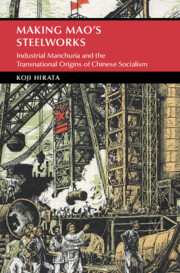
Located in Manchuria (Northeast China), the geopolitical borderland between China, Russia, and Japan, among others, Anshan Iron and Steel Works (Angang) was Mao-era China's most important industrial enterprise. The history of Angang from 1915 to 2000 reveals the hybrid nature of China's accelerated industrialization, shaped by transnational interactions, domestic factors, and local dynamics. Utilizing archives in Chinese, Japanese, Russian, and English, Koji Hirata provides the first comprehensive history of this enterprise before, during, and after the Mao era (1949–1976). Through this unique lens, he explores the complex interplay of transnational influences in Mao-era China. By illustrating the symbiotic relationship between socialism and capitalism during the twentieth century, this major new study situates China within the complex global history of late industrialization.
This article contributes to scholarship on business history and gender in twentieth-century energy transitions. It examines Canadian electric power utility marketing plans and materials, newspaper and magazine accounts, and oral history interview records. Utilities initially sought to sell power as capital and labor rationality, mirroring industrial ideals of producing more with fewer resources. As those labor savings were realized, they increasingly sold power as a means to perform new organizational and emotional jobs of creating a more intimate, happier, and child-centered family life. In doing so, they redefined social life, from family-as-labor unit to family-as-leisure unit, while also redefining leisure-as-labor for women. Women in utility marketing materials, as observed in subsequent time-use studies, eventually saw fewer hours of housework and family care, although offset by increasing leisure jobs. Mobilizing social groups to advance an electrification agenda, utilities sold this new labor as an extension of energy service work in homes, public spaces, and leisure facilities.
This article begins by examining the historiography of Shanxi piaohao and asking how modernist financial discourse gradually took shape over the past century. It then counters the persistent modernist discourse and its anachronistic application to the history of piaohao and the north Chinese interior from two aspects. First, how piaohao managed to build an empire-wide financial network and facilitated flows of capital and goods during the nineteenth century. Second, how family-centered capitalist and non-capitalist histories countered piaohao's unrealized path to modern Western-style banking. This article challenges the perceived universalism of the Western European economy and adopts a Braudelian emphasis on an essential feature of the history of capitalism in a global context—that is, capitalism's unlimited flexibility and capacity for change and adaptation, as seen throughout the history of the Shanxi merchants and piaohao firms, not confined to the singular future of transformation into modern Western-style banks.
China's cattle trade before 1949 is effectively invisible to historians. With no geographic center, few dominant firms, and little government oversight, cattle trade left behind no clear archive of sources, leaving scholars to the mercy of conjecture and episodic evidence. Combining insights from business and social history, we focused our attention on trade intermediation as the key to understanding the operations of a diffuse trade system. In the absence of a top–down archive, we composited hundreds of local sources on intermediation in cattle trade and remotely interviewed 80 former brokers. These sources revealed large numbers of individuated trade routes, which we break into three types: persistent supply, specialized demand, and resource circulation. Each type of trade called for distinct forms of intermediation with relatively little overlap between specialized networks. This recreation of China's cattle trade reveals a sophisticated market for animal labor that calls into question the direct causal link between imperialist resource extraction and rural immiseration, and suggests the utility of applying tools and perspectives of social history to other sorts of decentered commercial systems.
This article analyses the structure and changes of large companies based on a new database of the 200 largest non-financial firms operating from 1913 to 1971 in Argentina. The main contribution of the research consists of the elaboration of the rankings of the 200 largest companies according to their paid-up capital between 1913 and 1971 and the construction of a database of large companies based on homogeneous sources and criteria. The study identifies the long-lasting presence of family-based diversified business groups and foreign multinationals from the first global period to the end of Import Substitution Industrialisation. It also shows that the presence of foreign companies among the 200 largest firms is higher than that identified in other countries. The study constitutes the first comprehensive research into big business in Argentina until the 1970s and a first attempt to identify the life cycles of the largest companies in Argentina.