Refine search
Actions for selected content:
339 results
On the connectedness of p-adic period domains
- Part of
-
- Journal:
- Compositio Mathematica / Volume 162 / Issue 8 / August 2026
- Published online by Cambridge University Press:
- 01 October 2026, pp. 1869-1884
- Print publication:
- August 2026
-
- Article
-
- You have access
- Open access
- HTML
- Export citation
A thermo–optical chain-linked model and adaptive cavity-length compensation for high-power diamond Raman lasers
-
- Journal:
- High Power Laser Science and Engineering / Volume 14 / 2026
- Published online by Cambridge University Press:
- 06 May 2026, e61
-
- Article
-
- You have access
- Open access
- HTML
- Export citation
5 - Diamonds, Democratic Opposition, and the GNU in Zimbabwe
-
- Book:
- Zimbabwe's Diamond Trade
- Published online:
- 06 November 2025
- Print publication:
- 04 December 2025, pp 94-109
-
- Chapter
- Export citation
Women and Gendered Roles in the History of Diamond Mining in Colonial Ghana
-
- Journal:
- African Studies Review / Volume 68 / Issue 1 / March 2025
- Published online by Cambridge University Press:
- 26 February 2025, pp. 50-67
-
- Article
-
- You have access
- Open access
- HTML
- Export citation
Uranium–lead geochronology applied to pyrope garnet with very low concentrations of uranium
-
- Journal:
- Geological Magazine / Volume 160 / Issue 5 / May 2023
- Published online by Cambridge University Press:
- 21 March 2023, pp. 1010-1019
-
- Article
-
- You have access
- Open access
- HTML
- Export citation
What if it were True? Why Study the New Testament
-
- Journal:
- New Testament Studies / Volume 68 / Issue 2 / April 2022
- Published online by Cambridge University Press:
- 04 March 2022, pp. 144-155
- Print publication:
- April 2022
-
- Article
-
- You have access
- HTML
- Export citation
Diamond Raman laser: a promising high-beam-quality and low-thermal-effect laser
-
- Journal:
- High Power Laser Science and Engineering / Volume 9 / 2021
- Published online by Cambridge University Press:
- 05 July 2021, e35
-
- Article
-
- You have access
- Open access
- HTML
- Export citation
The effect of MoW interlayer thickness on diamond growth on steel substrates
-
- Journal:
- Journal of Materials Research / Volume 35 / Issue 5 / 16 March 2020
- Published online by Cambridge University Press:
- 03 February 2020, pp. 491-499
- Print publication:
- 16 March 2020
-
- Article
- Export citation
Effect of LPHT annealing on interface characteristics between HPHT Ib diamond substrates and homoepitaxial CVD diamond layers
-
- Journal:
- Journal of Materials Research / Volume 35 / Issue 5 / 16 March 2020
- Published online by Cambridge University Press:
- 17 January 2020, pp. 527-536
- Print publication:
- 16 March 2020
-
- Article
- Export citation
-
To study the interface characteristics between substrates and homoepitaxially grown single crystalline diamond layers, the high-pressure/high-temperature Ib diamond seeds with homoepitaxial diamond layers were annealed by low-pressure/high-temperature treatment in a hydrogen environment. The stress evolution and related impurity transformation near the interface were characterized by Raman spectroscopy, photoluminescence, and micro-infrared spectroscopy before and after annealing. It is found that the stress is the smallest in a 100 μm wide zone near the interface, accompanying with the similar change in substitutional nitrogen (Ns) concentration. After annealing at 1050 °C, 1250 °C, and 1450 °C, the local compressive stress is released gradually with temperature change. It is decreased by 1.03 GPa in maximum after annealing at 1450 °C. The concentration of nitrogen–vacancy (NV) complexes in the chemical vapor deposition (CVD) layer is dramatically reduced at 1450 °C. The value of
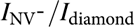 ${{I_{{\rm{NV}}^ \hbox- } } \mathord{\left/ {\vphantom {{I_{{\rm{NV}}^ - } } {I_{{\rm{diamond}}} }}} \right. \kern-\nulldelimiterspace} {I_{{\rm{diamond}}} }}$ decreases much more than
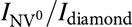 ${{I_{{\rm{NV}}^0 } } \mathord{\left/ {\vphantom {{I_{{\rm{NV}}^0 } } {I_{{\rm{diamond}}} }}} \right. \kern-\nulldelimiterspace} {I_{{\rm{diamond}}} }}$ in the CVD layer, which is due to the lower stability of NV− compared with NV0 at high temperature.
Enhancement of diamond seeding on aluminum nitride dielectric by electrostatic adsorption for GaN-on-diamond preparation
-
- Journal:
- Journal of Materials Research / Volume 35 / Issue 5 / 16 March 2020
- Published online by Cambridge University Press:
- 17 January 2020, pp. 508-515
- Print publication:
- 16 March 2020
-
- Article
- Export citation
Development of All-Diamond Scanning Probes Based on Faraday Cage Angled Etching Techniques
-
- Journal:
- MRS Advances / Volume 5 / Issue 35-36 / 2020
- Published online by Cambridge University Press:
- 02 March 2020, pp. 1899-1907
- Print publication:
- 2020
-
- Article
- Export citation
4 - Carbon-Bearing Phases throughout Earth’s Interior
-
-
- Book:
- Deep Carbon
- Published online:
- 03 October 2019
- Print publication:
- 17 October 2019, pp 66-88
-
- Chapter
-
- You have access
- Open access
- HTML
- Export citation
The story of one diamond: the heterogeneous distribution of the optical centres within a diamond crystal from the Ichetju placer, northern Urals
-
- Journal:
- Mineralogical Magazine / Volume 83 / Issue 4 / August 2019
- Published online by Cambridge University Press:
- 08 May 2019, pp. 515-522
-
- Article
-
- You have access
- HTML
- Export citation
Photomemristors using carbon nanowall/diamond heterojunctions
-
- Journal:
- Journal of Materials Research / Volume 34 / Issue 4 / 28 February 2019
- Published online by Cambridge University Press:
- 06 February 2019, pp. 626-633
- Print publication:
- 28 February 2019
-
- Article
-
- You have access
- HTML
- Export citation
A Forcing Axiom Deciding the Generalized Souslin Hypothesis
- Part of
-
- Journal:
- Canadian Journal of Mathematics / Volume 71 / Issue 2 / April 2019
- Published online by Cambridge University Press:
- 07 January 2019, pp. 437-470
- Print publication:
- April 2019
-
- Article
-
- You have access
- Export citation
-
We derive a forcing axiom from the conjunction of square and diamond, and present a few applications, primary among them being the existence of super-Souslin trees. It follows that for every uncountable cardinal
 $\unicode[STIX]{x1D706}$, if
 $\unicode[STIX]{x1D706}^{++}$ is not a Mahlo cardinal in Gödel’s constructible universe, then
 $2^{\unicode[STIX]{x1D706}}=\unicode[STIX]{x1D706}^{+}$ entails the existence of a
 $\unicode[STIX]{x1D706}^{+}$-complete
 $\unicode[STIX]{x1D706}^{++}$-Souslin tree.


TOWERS IN FILTERS, CARDINAL INVARIANTS, AND LUZIN TYPE FAMILIES
-
- Journal:
- The Journal of Symbolic Logic / Volume 83 / Issue 3 / September 2018
- Published online by Cambridge University Press:
- 23 October 2018, pp. 1013-1062
- Print publication:
- September 2018
-
- Article
-
- You have access
- Export citation
-
We investigate which filters on ω can contain towers, that is, a modulo finite descending sequence without any pseudointersection (in
 ${[\omega ]^\omega }$). We prove the following results:
(1) Many classical examples of nice tall filters contain no towers (in ZFC).
(2) It is consistent that tall analytic P-filters contain towers of arbitrary regular height (simultaneously for many regular cardinals as well).
(3) It is consistent that all towers generate nonmeager filters (this answers a question of P. Borodulin-Nadzieja and D. Chodounský), in particular (consistently) Borel filters do not contain towers.
(4) The statement “Every ultrafilter contains towers.” is independent of ZFC (this improves an older result of K. Kunen, J. van Mill, and C. F. Mills).
Furthermore, we study many possible logical (non)implications between the existence of towers in filters, inequalities between cardinal invariants of filters (
 ${\rm{ad}}{{\rm{d}}^{\rm{*}}}\left( {\cal F} \right)$,
 ${\rm{co}}{{\rm{f}}^{\rm{*}}}\left( {\cal F} \right)$,
 ${\rm{no}}{{\rm{n}}^{\rm{*}}}\left( {\cal F} \right)$, and
 ${\rm{co}}{{\rm{v}}^{\rm{*}}}\left( {\cal F} \right)$), and the existence of Luzin type families (of size
 $\ge {\omega _2}$), that is, if
 ${\cal F}$ is a filter then
 ${\cal X} \subseteq {[\omega ]^\omega }$ is an
 ${\cal F}$-Luzin family if
 $\left\{ {X \in {\cal X}:|X \setminus F| = \omega } \right\}$ is countable for every
 $F \in {\cal F}$.


A high-chromium corundum (ruby) inclusion in diamond from the São Luiz alluvial mine, Brazil
-
- Journal:
- Mineralogical Magazine / Volume 58 / Issue 392 / September 1994
- Published online by Cambridge University Press:
- 05 July 2018, pp. 490-493
-
- Article
- Export citation
An unusual octahedral diamond
-
- Journal:
- Mineralogical Magazine / Volume 56 / Issue 382 / March 1992
- Published online by Cambridge University Press:
- 05 July 2018, pp. 111-113
-
- Article
- Export citation
Mineralogy and 40Ar/39Ar geochronology of orangeites (Group II kimberlites) from the Damodar Valley, eastern India
-
- Journal:
- Mineralogical Magazine / Volume 62 / Issue 3 / June 1998
- Published online by Cambridge University Press:
- 05 July 2018, pp. 313-323
-
- Article
- Export citation
Rare earth element patterns of carbonado and yakutite: evidence for their crustal origin
-
- Journal:
- Mineralogical Magazine / Volume 57 / Issue 389 / December 1993
- Published online by Cambridge University Press:
- 05 July 2018, pp. 607-611
-
- Article
- Export citation
