To save content items to your account,
please confirm that you agree to abide by our usage policies.
If this is the first time you use this feature, you will be asked to authorise Cambridge Core to connect with your account.
Find out more about saving content to .
To save content items to your Kindle, first ensure no-reply@cambridge.org
is added to your Approved Personal Document E-mail List under your Personal Document Settings
on the Manage Your Content and Devices page of your Amazon account. Then enter the ‘name’ part
of your Kindle email address below.
Find out more about saving to your Kindle.
Note you can select to save to either the @free.kindle.com or @kindle.com variations.
‘@free.kindle.com’ emails are free but can only be saved to your device when it is connected to wi-fi.
‘@kindle.com’ emails can be delivered even when you are not connected to wi-fi, but note that service fees apply.
This article examines the sources for reconstructing Jesuit finances in China. While there are a multitude of anecdotal references in Jesuit letters and reports, only four in-depth accounting documents have survived. One of those four documents is “Les Biens de la Maison Française de Pékin en 1776–1778.” After 1773, both ecclesiastical and state agents took an interest in the Jesuit possessions. While multiple rulers had provided the funding to start up these missions, the fact that their keepers were no longer able to secure these substantial possessions explains why the account books and further documentation were painstakingly tracked down. When compared to other accounting sources, “Les Biens de la Maison Française” indicates that the local investments and revenue from these properties were the most important sources of income by the end of the eighteenth century. In combination with references to these properties in Jesuit letters, this particular set of accounting sources illustrates a central trend in Jesuit finances in the China missions: They became an increasingly regional and local affair after the Jesuits failed to secure sustainable global funding, transported from Europe to Asia along ever-changing, yet continuously insecure, networks.
This article aims at describing the sixteenth-seventeenth century Jesuit Japan mission’s finances through its accounting documents. The article demonstrates that accounting documents played a key role in the dialogue with Rome over the mission’s financial management and needs. Portraying a mission dependent on Europe and India to secure its resources, the accounts raise the question of how religious orders managed funds on a global scale. This article provides a detailed analysis of a type of source specific to the Society of Jesus, namely its catalogues. While it was common for overseas missions to purchase goods from Europe or other distant places, the Japan mission was singular in that it also had highly dispersed sources of income, spreading between Europe and Asia. This article demonstrates how the Jesuits of Japan articulated these resources and their disbursements, so that they could meet the material and spiritual needs of their evangelical project. The study of the catalogues thus reveals the challenges faced by a mission trying to manage its finances between Europe and Asia. It questions the order’s ability to design and enforce an administrative and institutional framework that could fit the complex case of globally deployed religious missions.
Understanding Plato means having to assimilate concepts. But it also means having to familiarize oneself, in the first place, with dozens of proper names, the names of all those who figure in the Socratic dialogues. The Japanese tried to do this in a remarkably short period of time, between roughly 1900 and 1950. To be sure, most readers remembered only the most outstanding name, Socrates, but, as in Europe, his interlocutors were known to the more cultivated among them. At all events, there was no feeling of revulsion whatever. In Europe, by contrast, Japanese, Chinese, and Indian patronymics tend to arouse so great a sense of foreignness that even comprehension appears to be impossible: The mind becomes fogged, names pile up one after another, who is who is hopelessly unclear; one becomes lost in concatenations of syllables, to the point that trying to separate and remember them seems futile.
The sixteenth century witnessed the expansion of Spain's empire on a global scale, as the Americas and portions of Asia fell within its dominions. Catholicism played a critical role in the Spanish colonization campaign, with the cult of saints at the centre of an expansionist agenda. In this book, Jonathan E. Greenwood offers an interdisciplinary examination of the recognition and veneration of sainthood through the case study of the canonization of Ignatius of Loyola, the founder of the Jesuits. Integral to this phenomenon were the miracles and devotional objects that navigated through the official canonization process conducted in Europe, which was overseen by the church hierarchy, and its oftentimes unsanctioned counterparts. Greenwood demonstrates how non- European cultic devotions to Ignatius were made manifest through images, relics, and reports of intercessions. Although the pope's role in the naming of a saint was paramount, the uninhibited practices of colonial subjects proved to be equally important and worthy of consideration, culminating in the canonization of Ignatius.
Chapter 3 examines the blood libel invented by Hyppolitus Guarinoni in 1619, Tyrol, Austria. The fictional murder of the boy, Andreas of Rinn, would have taken place in July of 1462. The accepted explanation for this unusual blood libel is a response to Protestant incursions into the Tyrol area, where Rinn is located. The chapter provides a systemic account of the blood libel, which includes complex responses to drought, plague, famine, along with the continuing influence of pagan magic. These elements created an internal dissonance within the Catholic system that Guarinoni was trying to fortify.
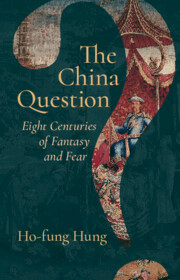
For centuries, Western scholars portrayed China either as a land of superior morality, economy, and governance or as a formidable country of pagans that posed a global threat to Western values. Idealized images of China were used to shame rulers for their incompetence, while China was demonized as an external threat to cover up domestic political failures. In the twentieth century, the geopolitics of global capitalism have facilitated more nuanced perspectives, but the diversifying of knowledge about China is far from complete. In this thought-provoking study, Ho-fung Hung finds that both Western elites and China's authoritarian regime today continue to promote many Orientalist stereotypes to advance their economic interests and political projects. He shows how big-picture historical, social, and economic changes are inextricably linked to fluctuations in the realm of ideas. Only open debate can overcome extremes of fantasy and fear.
After over five decades of de-Orientalization, academic China studies in the US and Europe have largely moved beyond the essentialist and reductionist epistemology of old Sinology. Scholars in the field now actively collaborate with counterparts from China, Japan, and beyond to develop nuanced, multifaceted understandings of China’s economy, politics, society, and culture, engaging in open and dynamic debates. Nevertheless, simplistic fantasies and fears about China – rooted in monolithic and ahistorical stereotypes from old Sinology – continue to shape popular and political perceptions of China in the West. The authoritarian regime in China also selectively leverages these stereotypes to promote Chinese exceptionalism and justify its resistance to liberal democracy. While striving to foster a more sophisticated public understanding and representation of China, contemporary China Studies scholars are also confronted with the risk of re-Orientalization under the growing influence of Western political elites, popular writers, and the Chinese Communist Party-state within the field.
During the economic crisis and geopolitical turmoil in seventeenth-century Europe, Catholic missionaries observed similar chaos in China and its rapid recovery under the Qing dynasty in the mid seventeenth century. The Jesuits gained exclusive access to the Qing court. They translated classic Confucian texts into European languages and began publishing books on the history, economy, technology, politics, and other aspects of the Chinese Empire. To secure support from the Church and European rulers for their missionary efforts, the Jesuits presented an idealized image of China, claiming that classical Confucian texts reflected a belief in a monotheistic God. They argued that China’s continuous adherence to ancient teachings, in contrast to Europe’s degeneration from antiquity, brought Chinese civilization closer to the pure morality of God. Jesuit writings on China provoked attacks from other Catholic orders, who persuaded the Church that the Chinese were godless and idolatrous. Although the Jesuits were cornered in the Church, their writings became popular and intensified Sinophilia outside the Church.
China entered Europe’s consciousness through the rise of the Mongol Empire. Marco Polo’s portrayal of well-governed and prosperous Mongol’s China and a benevolent Mongol ruler willing to convert to Christianity marked the beginning of Western idealization of China. Polo’s belief in the Mongol ruler’s readiness for Christianity stemmed from earlier monastic writings that claimed the Mongols were descendants of the Three Magi. Prior to Marco Polo, some Catholic scholars depicted the Mongols as cannibalistic barbarians and the gravest threat Christianity had ever faced. These writings made no distinction between Mongols and the Chinese. This simplification persisted into the nineteenth century, when scientific texts often referred to people from China, Mongolia, Korea, and Japan collectively as “Mongoloid.” The medieval fears and fantasies surrounding the Mongols and the Chinese constituted the archetypes for the two opposing poles of Western representation of China. These polarizing views were deeply ingrained in Europe by the time direct and regular contact with China was established during the Spanish and Portuguese globalization in the long sixteenth century.
This article challenges the traditional view of the linear causality of technological globalization in the history of modern predictive meteorology. According to this linear narrative, telegraphy, by enabling near-instantaneous communication over vast distances, was the causa efficiens that directly and inevitably produced large-scale weather forecasting. However, the role of Jesuit scientists in East Asia as pioneers of cyclone warning systems not only demonstrates that the linear narrative is too simple but invites a rigorous examination of the relationships between prior knowledge networks and technological infrastructures. This article contends that the expansion of technological networks does not inexorably imply the expansion of knowledge networks. There was not, therefore, a unidirectional causal relationship but a concomitant two-way interaction; that is, there was a coextension of knowledge and technological networks, where both Jesuit scientists and telegraph companies benefited from each other and shared common goals confronting a global threat—cyclones. This offers a new perspective not only on the history of meteorological services but also of science globalization.
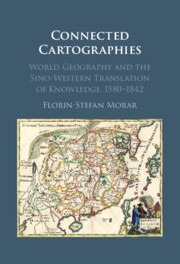
In the 'Age of Discovery', explorers brought a wealth of information about new and strange lands from across the oceans. Yet, even as the Americas appeared on new world maps, China remained a cartographic mystery. How was the puzzle of China's geography unravelled? Connected Cartographies demonstrates that knowledge about China was generated differently, not through exploration but through a fascinating bi-directional cross-cultural exchange of knowledge. Florin-Stefan Morar shows that interactions between Chinese and Western cartographic traditions led to the creation of a new genre of maps that incorporated features from both. This genre included works by renowned cartographers such as Abraham Ortelius and Matteo Ricci and other less-known works, 'black tulips of cartography,' hidden in special collections. Morar builds upon original sources in multiple languages from archives across three continents, producing a pioneering reconstruction of Sino-Western cartographic exchanges that shaped the modern world map and our shared global perspective.
This chapter analyzes the controversy that arose after the assassination of Henry IV in 1610 between the Jesuits, especially Cardinal Robert Bellarmine and Jacques Davy du Peron, and Louis XIII and his royalist supporters in France. Peron claimed in print that the young Louis XIII was illegitimate becasue the pope had annulled the marriage of Henry IV to Marguerite de Valois.. He further claimed that the popes authority was superior to that of kings. This chapter demonstrates that the language used to denounce Bellarmine and Peron by Gallican supporters of the crown, especially at the Estates General of 1614, underscored the vocabulary of the royal state.
The final chapter examines how a new kind of shamanism developed in the riverbank settlements and attracted peoples across the colonial and Indigenous spaces. Although shamanism was a feature of Amerindian societies, the Portuguese also had a tradition of healing and folk curing. Riverine shamans from Indigenous communities were highly active in the eighteenth century, and modified Indigenous practices and Catholic symbols to meet the needs of their clients from all backgrounds seeking their ‘merciful’ work. Shamanic curing and healing connected the three spaces as shamans moved between each one and provided clients with relief from their suffering.
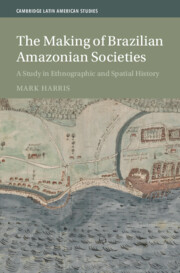
Amazonia presents the contemporary scholar with myriad challenges. What does it consist of, and what are its limits? In this interdisciplinary book, Mark Harris examines the formation of Brazilian Amazonian societies in the seventeenth and eighteenth centuries, focusing predominantly on the Eastern Amazon, what is today the states of Pará and Amapá in Brazil. His aim is to demonstrate how the region emerged through the activities and movements of Indigenous societies with diverse languages, cultures, individuals of mixed heritage, and impoverished European and African people from various nations. Rarely are these approaches and people examined together, but this comprehensive history insightfully illustrates that the Brazilian Amazon consists of all these communities and their struggles and highlights the ways the Amazon has been defended through partnership and alliance across ethnic identities.
Edited by
Martin Nedbal, University of Kansas,Kelly St. Pierre, Wichita State University and Institute for Theoretical Studies, Prague,,Hana Vlhová-Wörner, University of Basel and Masaryk Institute, Prague
The musical foundations of the Bohemian Catholic Reformation were laid during the Thirty Years’ War (1618–48). Successive Habsburg emperors spent enormous sums on sacred music, which refashioned their image as protective fathers of their citizens, in a distinctive pietas austriaca, emulated competitively by aristocrats to demonstrate piety and loyalty.
Religious orders, especially Jesuits, prioritized education, combining Italian musical influences with older Bohemian traditions, such as those of “literary brotherhoods”: their vernacular strophic solo song followed Italian models while raising the status of the German and Czech languages. The balanced phrases of Italian canzonettas encouraged clear musical forms and cadence-oriented tonality, as in the hymns of Adam Michna.
Recreational music for aristocrats encouraged meraviglia, “marveling,” especially in the virtuosity of Heinrich Biber’s Mystery Sonatas (c. 1674), depending on scordatura (“mistuning” of the strings). Some such music imitates natural sounds ingeniously.
Edited by
Martin Nedbal, University of Kansas,Kelly St. Pierre, Wichita State University and Institute for Theoretical Studies, Prague,,Hana Vlhová-Wörner, University of Basel and Masaryk Institute, Prague
In 1708 and 1710, after Saxon Elector Friedrich August I (August II, as King of Poland) converted to Catholicism, public Catholic churches were established in Dresden and Leipzig. Their organisation was set out in an undated, incomplete draft document by the king’s confessor, Fr. Maurizio Vota SJ, who advised that the principal establishment at the Dresden court would comprise six chaplains from the same order, and six choristers, or clercs. The final set of royal decrees, however, increased the music establishment to include an organist and four instrumentalists, and both churches came to be served by musicians and Jesuits from the province of Bohemia. This chapter reports on the migration of a succession of young Bohemians who musically served both royal Catholic churches. While many returned home when their voices broke, others remained to become important contributors to the musical life of Dresden during the Polish-Saxon Union era.
The Qing Empire’s military drew from the traditions of bodyguards and booty warfare in North-East Asia (primarily what is now southern Jilin province) in the late sixteenth century. The foundations of imperial expansion were built during the long war with Ming China, from 1618 to 1644, which allowed the Qing to absorb the central features of Ming military technology. Patterns of human management and technology application established in this period persisted over the next forty years as the Qing completed their conquest of China and Taiwan. After 1685, Qing expansion spread out to Mongolia, Qinghai, Tibet, and what is now the province of Xinjiang. These wars, against less densely populated, sometimes nomadic zones, changed Qing campaigns significantly. By the nineteenth century, the century and a half of focus on the continental frontiers left the Qing poorly prepared for seaborne challenges, and from some technologies that the Qing had previously regarded as less relevant to their military needs.
Two networks transformed the early modern world. The first was the Iberian network of discoverers and conquerors that helped usher in an age of European world domination and colonialism. The second was facilitated by a new technology, printing, which helped unleash the huge religious and political disruption we know as the Reformation. What Niall Ferguson describes as a “religious virus that came to be known as Protestantism” disrupted an ancient ecclesiastical hierarchy, fractured into many pieces Europe’s Catholic Christianity, and ushered in a long era of violent conflict. This chapter investigates religious networks within the Lutheran, Reformed, and Radical wings of the Reformation and highlights the formation, evolution, suppression, and ultimate survival of the Jesuit Order as a classic transnational network within Catholic Christianity.
Although several scholars have expanded their selection criteria when editing anthologies of Latinx literature, they rarely include writings by colonial Creoles. Focusing on Francisco de Florencia (1620–1695), this chapter argues that his 1694 provincial chronicle of the Jesuits in New Spain deserves to be studied with other colonial texts that have been described as “symbolic precursors” to Latinx writings. Unlike other Spanish explorers and missionaries who traveled to the Spanish Borderlands, Florencia was born there; his hometown was Saint Augustine, he lived most of his life in Mexico City, and he spent almost a decade in southern Europe representing his religious province. Florencia’s frontier crossings offer early modern examples of border crossings, themes that emerge in the ways he deals with transnational experiences and influences, questions of belonging, and a sense of space. Even though sacred (or ecclesiastical) history is often overlooked in studies of Latinx literature, an analysis of the ways in which Florencia engages with earlier Spanish accounts of the Jesuit missions in La Florida is a unique window onto Creole identities in the early modern Spanish world.
In the first half of the nineteenth century the Society of Jesus were responsible for some of the most significant new Catholic church-buildings in England since the Reformation. Jesuits were involved in all aspects of building, as active and informed patrons and sometimes as priest-architects who designed and even helped to build their buildings. They cared about architecture, architectural identity, and architectural style. Notwithstanding this, English Jesuit church-building is one of the least-developed areas within the field of global Jesuit studies. How architecturally and visually aware were the English Jesuits? How did they acquire the knowledge and skills to be active participants in building? What role did the Jesuits’ central House Libraries at Stonyhurst play in their architectural culture? This article considers how their academic studies and priestly formation gave the Jesuits the tools to build. It constitutes the first published research specifically focused on the architectural holdings of the Jesuits’ House Libraries. Consideration of the provenance, development, and contents of these libraries enhances our understanding of how the Jesuits were able to play an active and hands-on role in their building works. In so doing, it seeks to draw attention to the significance of the English Jesuits’ engagement with architecture.