Refine search
Actions for selected content:
81 results
Thresholds and fluctuations of submultiplexes in random multiplex networks
- Part of
-
- Journal:
- Canadian Mathematical Bulletin , First View
- Published online by Cambridge University Press:
- 04 August 2026, pp. 1-27
-
- Article
-
- You have access
- HTML
- Export citation
-
In a multiplex network, a common set of nodes is connected through different types of interactions, each represented as a separate graph (layer) within the network. In this article, we study the asymptotic properties of submultiplexes, the counterparts of subgraphs (motifs) in single-layer networks, in the correlated Erdős–Rényi multiplex model. This is a random multiplex model with two layers, where the graphs in each layer marginally follow the classical (single layer) Erdős–Rényi model, while the edges across layers are correlated. We derive the precise threshold condition for the emergence of a fixed submultiplex $\boldsymbol {H}$
 in a random multiplex sampled from the correlated Erdős–Rényi model. Specifically, we show that the satisfiability region, the regime where the random multiplex contains a diverging number of copies of $\boldsymbol {H}$
 , is a polyhedral region in $\mathbb {R}^3$
 . Furthermore, within this region, the count of $\boldsymbol {H}$
 is asymptotically normal, with an explicit convergence rate in the Wasserstein distance. We also establish various Poisson approximation results for the count of $\boldsymbol {H}$
 on the boundary of the threshold, which depends on a notion of balance of submultiplexes. Collectively, these results provide an asymptotic theory for small submultiplexes in the correlated multiplex model, analogous to the classical theory of small subgraphs in random graphs.


Scaling limits for supercritical nearly unstable Hawkes processes
- Part of
-
- Journal:
- Journal of Applied Probability / Volume 63 / Issue 2 / June 2026
- Published online by Cambridge University Press:
- 19 November 2025, pp. 607-622
- Print publication:
- June 2026
-
- Article
-
- You have access
- Open access
- HTML
- Export citation
-
We investigate the asymptotic behavior of nearly unstable Hawkes processes whose regression kernel has
 $L^1$ norm strictly greater than 1 and close to 1 as time goes to infinity. We find that the scaling size determines the scaling behavior of the processes as in Jaisson and Rosenbaum (2015). Specifically, after a suitable rescale of
 $({a_T-1})/{T{\textrm{e}}^{b_TTx}}$, the limit of the sequence of Hawkes processes is deterministic. Also, with another appropriate rescaling of
 $1/T^2$, the sequence converges in law to an integrated Cox–Ingersoll–Ross-like process. This theoretical result may apply to model the recent COVID-19 outbreak in epidemiology and phenomena in social networks.


Appendix B - Learning Representations Theory
-
- Book:
- Hands-On Network Machine Learning with Python
- Published online:
- 23 September 2025
- Print publication:
- 18 September 2025, pp 433-453
-
- Chapter
- Export citation
Stable functional CLT for deterministic systems
- Part of
-
- Journal:
- Ergodic Theory and Dynamical Systems / Volume 45 / Issue 10 / October 2025
- Published online by Cambridge University Press:
- 26 May 2025, pp. 3192-3222
- Print publication:
- October 2025
-
- Article
-
- You have access
- Open access
- HTML
- Export citation
-
We show that
 $\alpha $-stable Lévy motions can be simulated by any ergodic and aperiodic probability-preserving transformation. Namely we show that: for
 $0<\alpha <1$ and every
 $\alpha $-stable Lévy motion
 ${\mathbb {W}}$, there exists a function f whose partial sum process converges in distribution to
 ${\mathbb {W}}$; for
 $1\leq \alpha <2$ and every symmetric
 $\alpha $-stable Lévy motion, there exists a function f whose partial sum process converges in distribution to
 ${\mathbb {W}}$; for
 $1< \alpha <2$ and every
 $-1\leq \beta \leq 1$ there exists a function f whose associated time series is in the classical domain of attraction of an
 $S_\alpha (\ln (2), \beta ,0)$ random variable.


Markov Chains with Asymptotically Zero Drift
- Lamperti's Problem
-
- Published online:
- 24 April 2025
- Print publication:
- 08 May 2025
Probabilistic voting models with varying speeds of Correlation decay
- Part of
-
- Journal:
- Advances in Applied Probability / Volume 57 / Issue 1 / March 2025
- Published online by Cambridge University Press:
- 17 February 2025, pp. 35-64
- Print publication:
- March 2025
-
- Article
-
- You have access
- HTML
- Export citation
The elephant random walk in the triangular array setting
- Part of
-
- Journal:
- Journal of Applied Probability / Volume 62 / Issue 3 / September 2025
- Published online by Cambridge University Press:
- 16 January 2025, pp. 997-1009
- Print publication:
- September 2025
-
- Article
-
- You have access
- HTML
- Export citation
On the Kolmogorov constant explicit form in the theory of discrete-time stochastic branching systems
- Part of
-
- Journal:
- Journal of Applied Probability / Volume 61 / Issue 3 / September 2024
- Published online by Cambridge University Press:
- 04 January 2024, pp. 927-941
- Print publication:
- September 2024
-
- Article
-
- You have access
- HTML
- Export citation
-
We consider a discrete-time population growth system called the Bienaymé–Galton–Watson stochastic branching system. We deal with a noncritical case, in which the per capita offspring mean
 $m\neq1$. The famous Kolmogorov theorem asserts that the expectation of the population size in the subcritical case
 $m<1$ on positive trajectories of the system asymptotically stabilizes and approaches
 ${1}/\mathcal{K}$, where
 $\mathcal{K}$ is called the Kolmogorov constant. The paper is devoted to the search for an explicit expression of this constant depending on the structural parameters of the system. Our argumentation is essentially based on the basic lemma describing the asymptotic expansion of the probability-generating function of the number of individuals. We state this lemma for the noncritical case. Subsequently, we find an extended analogue of the Kolmogorov constant in the noncritical case. An important role in our discussion is also played by the asymptotic properties of transition probabilities of the Q-process and their convergence to invariant measures. Obtaining the explicit form of the extended Kolmogorov constant, we refine several limit theorems of the theory of noncritical branching systems, showing explicit leading terms in the asymptotic expansions.


Large deviations, moment estimates and almost sure invariance principles for skew products with mixing base maps and expanding-on-average fibers
-
- Journal:
- Ergodic Theory and Dynamical Systems / Volume 44 / Issue 1 / January 2024
- Published online by Cambridge University Press:
- 11 April 2023, pp. 118-158
- Print publication:
- January 2024
-
- Article
-
- You have access
- Open access
- HTML
- Export citation
-
In this paper we show how to apply classical probabilistic tools for partial sums
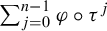 $\sum _{j=0}^{n-1}\varphi \circ \tau ^j$ generated by a skew product
 $\tau $, built over a sufficiently well-mixing base map and a random expanding dynamical system. Under certain regularity assumptions on the observable
 $\varphi $, we obtain a central limit theorem (CLT) with rates, a functional CLT, an almost sure invariance principle (ASIP), a moderate-deviations principle, several exponential concentration inequalities and Rosenthal-type moment estimates for skew products with
 $\alpha $-,
 $\phi $- or
 $\psi $-mixing base maps and expanding-on-average random fiber maps. All of the results are new even in the uniformly expanding case. The main novelty here (in contrast to [2]) is that the random maps are not independent, they do not preserve the same measure and the observable
 $\varphi $ depends also on the base space. For stretched exponentially
 ${\alpha }$-mixing base maps our proofs are based on multiple correlation estimates, which make the classical method of cumulants applicable. For
 $\phi $- or
 $\psi $-mixing base maps, we obtain an ASIP and maximal and concentration inequalities by establishing an
 $L^\infty $ convergence of the iterates
 ${\mathcal K}^{\,n}$ of a certain transfer operator
 ${\mathcal K}$ with respect to a certain sub-
 ${\sigma }$-algebra, which yields an appropriate (reverse) martingale-coboundary decomposition.


On extremes of random clusters and marked renewal cluster processes
- Part of
-
- Journal:
- Journal of Applied Probability / Volume 60 / Issue 2 / June 2023
- Published online by Cambridge University Press:
- 09 December 2022, pp. 367-381
- Print publication:
- June 2023
-
- Article
-
- You have access
- HTML
- Export citation
-
This article describes the limiting distribution of the extremes of observations that arrive in clusters. We start by studying the tail behaviour of an individual cluster, and then we apply the developed theory to determine the limiting distribution of
 $\max\{X_j\,:\, j=0,\ldots, K(t)\}$, where K(t) is the number of independent and identically distributed observations
 $(X_j)$ arriving up to the time t according to a general marked renewal cluster process. The results are illustrated in the context of some commonly used Poisson cluster models such as the marked Hawkes process.

Fluctuations of subgraph counts in graphon based random graphs
- Part of
-
- Journal:
- Combinatorics, Probability and Computing / Volume 32 / Issue 3 / May 2023
- Published online by Cambridge University Press:
- 09 December 2022, pp. 428-464
-
- Article
-
- You have access
- HTML
- Export citation
-
Given a graphon
 $W$ and a finite simple graph
 $H$, with vertex set
 $V(H)$, denote by
 $X_n(H, W)$ the number of copies of
 $H$ in a
 $W$-random graph on
 $n$ vertices. The asymptotic distribution of
 $X_n(H, W)$ was recently obtained by Hladký, Pelekis, and Šileikis [17] in the case where
 $H$ is a clique. In this paper, we extend this result to any fixed graph
 $H$. Towards this we introduce a notion of
 $H$-regularity of graphons and show that if the graphon
 $W$ is not
 $H$-regular, then
 $X_n(H, W)$ has Gaussian fluctuations with scaling
 $n^{|V(H)|-\frac{1}{2}}$. On the other hand, if
 $W$ is
 $H$-regular, then the fluctuations are of order
 $n^{|V(H)|-1}$ and the limiting distribution of
 $X_n(H, W)$ can have both Gaussian and non-Gaussian components, where the non-Gaussian component is a (possibly) infinite weighted sum of centred chi-squared random variables with the weights determined by the spectral properties of a graphon derived from
 $W$. Our proofs use the asymptotic theory of generalised
 $U$-statistics developed by Janson and Nowicki [22]. We also investigate the structure of
 $H$-regular graphons for which either the Gaussian or the non-Gaussian component of the limiting distribution (but not both) is degenerate. Interestingly, there are also
 $H$-regular graphons
 $W$ for which both the Gaussian or the non-Gaussian components are degenerate, that is,
 $X_n(H, W)$ has a degenerate limit even under the scaling
 $n^{|V(H)|-1}$. We give an example of this degeneracy with
 $H=K_{1, 3}$ (the 3-star) and also establish non-degeneracy in a few examples. This naturally leads to interesting open questions on higher order degeneracies.


Interacting urns on a finite directed graph
- Part of
-
- Journal:
- Journal of Applied Probability / Volume 60 / Issue 1 / March 2023
- Published online by Cambridge University Press:
- 23 September 2022, pp. 166-188
- Print publication:
- March 2023
-
- Article
-
- You have access
- HTML
- Export citation
A unifying approach to non-minimal quasi-stationary distributions for one-dimensional diffusions
- Part of
-
- Journal:
- Journal of Applied Probability / Volume 59 / Issue 4 / December 2022
- Published online by Cambridge University Press:
- 08 August 2022, pp. 1106-1128
- Print publication:
- December 2022
-
- Article
-
- You have access
- HTML
- Export citation
Nonlinear and unbalanced urn models with two types of strategies: a stochastic approximation point of view
-
- Journal:
- Probability in the Engineering and Informational Sciences / Volume 37 / Issue 3 / July 2023
- Published online by Cambridge University Press:
- 20 May 2022, pp. 711-729
-
- Article
-
- You have access
- HTML
- Export citation
-
In this paper, we treat a nonlinear and unbalanced
 $2$-color urn scheme, subjected to two different nonlinear drawing rules, depending on the color withdrawn. We prove a central limit theorem as well as a law of large numbers for the urn composition. We also give an estimate of the mean and variance of both types of balls.

From microscopic price dynamics to multidimensional rough volatility models
- Part of
-
- Journal:
- Advances in Applied Probability / Volume 53 / Issue 2 / June 2021
- Published online by Cambridge University Press:
- 01 July 2021, pp. 425-462
- Print publication:
- June 2021
-
- Article
-
- You have access
- HTML
- Export citation
Limit theorems for assortativity and clustering in null models for scale-free networks
- Part of
-
- Journal:
- Advances in Applied Probability / Volume 52 / Issue 4 / December 2020
- Published online by Cambridge University Press:
- 03 December 2020, pp. 1035-1084
- Print publication:
- December 2020
-
- Article
-
- You have access
- HTML
- Export citation
Improvements on the distribution of maximal segmental scores in a Markovian sequence
- Part of
-
- Journal:
- Journal of Applied Probability / Volume 57 / Issue 1 / March 2020
- Published online by Cambridge University Press:
- 04 May 2020, pp. 29-52
- Print publication:
- March 2020
-
- Article
-
- You have access
- HTML
- Export citation
-
Let
 $(A_i)_{i \geq 0}$ be a finite-state irreducible aperiodic Markov chain and f a lattice score function such that the average score is negative and positive scores are possible. Define
 $S_0\coloneqq 0$ and
 $S_k\coloneqq \sum_{i=1}^k f(A_i)$ the successive partial sums,
 $S^+$ the maximal non-negative partial sum,
 $Q_1$ the maximal segmental score of the first excursion above 0, and
 $M_n\coloneqq \max_{0\leq k\leq\ell\leq n} (S_{\ell}-S_k)$ the local score, first defined by Karlin and Altschul (1990). We establish recursive formulae for the exact distribution of
 $S^+$ and derive a new approximation for the tail behaviour of
 $Q_1$ , together with an asymptotic equivalence for the distribution of
 $M_n$ . Computational methods are explicitly presented in a simple application case. The new approximations are compared with those proposed by Karlin and Dembo (1992) in order to evaluate improvements, both in the simple application case and on the real data examples considered by Karlin and Altschul (1990).


On maxima of stationary fields
- Part of
-
- Journal:
- Journal of Applied Probability / Volume 56 / Issue 4 / December 2019
- Published online by Cambridge University Press:
- 11 December 2019, pp. 1217-1230
- Print publication:
- December 2019
-
- Article
-
- You have access
- HTML
- Export citation
-
Let
 $\{X_{\textbf{n}} \colon\textbf{n}\in{\mathbb Z}^d\}$ be a weakly dependent stationary random field with maxima
 $M_{A} :=, \sup\{X_{\textbf{i}} \colon\textbf{i}\in A\}$ for finite
 $A\subset{\mathbb Z}^d$ and
 $M_{\textbf{n}} := \sup\{X_{\textbf{i}} \colon\mathbf{1} \leq\textbf{i} \leq\textbf{n} \}$ for
 $\textbf{n}\in{\mathbb N}^d$. In a general setting we prove that
 ${\mathbb{P}}(M_{(N_1(n),N_2(n),\ldots, N_d(n))} \leqv_n)$
 $= \exp(\!- n^d {\mathbb{P}}(X_{\mathbf{0}} > v_n , M_{A_n} \leqv_n)) +{\text{o}}(1)$ for some increasing sequence of sets
 $A_n$ of size
 $ {\text{o}}(n^d)$, where
 $(N_1(n),N_2(n), \ldots,N_d(n))\to(\infty,\infty, \ldots, \infty)$ and
 $N_1(n)N_2(n)\cdots N_d(n)\sim n^d$. The sets
 $A_n$ are determined by a translation-invariant total order
 $\preccurlyeq$ on
 ${\mathbb Z}^d$. For a class of fields satisfying a local mixing condition, including m-dependent ones, the main theorem holds with a constant finite A replacing
 $A_n$. The above results lead to new formulas for the extremal index for random fields. The new method for calculating limiting probabilities for maxima is compared with some known results and applied to the moving maximum field.


Variations around Eagleson’s theorem on mixing limit theorems for dynamical systems
- Part of
-
- Journal:
- Ergodic Theory and Dynamical Systems / Volume 40 / Issue 12 / December 2020
- Published online by Cambridge University Press:
- 26 June 2019, pp. 3368-3374
- Print publication:
- December 2020
-
- Article
-
- You have access
- Export citation
-
Eagleson’s theorem asserts that, given a probability-preserving map, if renormalized Birkhoff sums of a function converge in distribution, then they also converge with respect to any probability measure which is absolutely continuous with respect to the invariant one. We prove a version of this result for almost sure limit theorems, extending results of Korepanov. We also prove a version of this result, in mixing systems, when one imposes a conditioning both at time 0 and at time
 $n$.

Branching processes in generalized autoregressive conditional environments
- Part of
-
- Journal:
- Advances in Applied Probability / Volume 48 / Issue 4 / December 2016
- Published online by Cambridge University Press:
- 11 January 2017, pp. 1211-1234
- Print publication:
- December 2016
-
- Article
-
- You have access
- Export citation
