To save content items to your account,
please confirm that you agree to abide by our usage policies.
If this is the first time you use this feature, you will be asked to authorise Cambridge Core to connect with your account.
Find out more about saving content to .
To save content items to your Kindle, first ensure no-reply@cambridge.org
is added to your Approved Personal Document E-mail List under your Personal Document Settings
on the Manage Your Content and Devices page of your Amazon account. Then enter the ‘name’ part
of your Kindle email address below.
Find out more about saving to your Kindle.
Note you can select to save to either the @free.kindle.com or @kindle.com variations.
‘@free.kindle.com’ emails are free but can only be saved to your device when it is connected to wi-fi.
‘@kindle.com’ emails can be delivered even when you are not connected to wi-fi, but note that service fees apply.
In this chapter, the editors of the volume Turkish Literature as World Literature (Bloomsbury 2021) work through the entanglements between modernization and modernism in Turkey in the fashion of a broad survey and present a framework to understand the various modernisms in the literary sphere as they convey the country’s unique dynamics. Alkan and Günay-Erkol discuss how various elements of modernism are utilized, appropriated, and transformed in the context of Turkey and examine how the term “modernist” gains different meanings in relation to modernity’s varying but constant powerful drive toward a radical break from the past. To this end, they first establish the essential premise of Ottoman Turkish modernization. They investigate the historical and cultural circumstances of literary production and the responses and reactions to modernity during this period. The chapter thus elaborates on how “modernist” works differ from the more broadly conceived “modern” ones in order to delineate a space for modernism as a literary mode in Turkey.
Chapter Two sets the scene, providing the context of regional networks within which global circulations of law were elaborated. The chapter shows how Malay elite figures such as Abu Bakar navigated regional and familial networks to make space for themselves in imperial and colonial hierarchies. Abu Bakar’s story encapsulates the ambition, sense of self-invention and possibility that accompanied Malay elite exploration of the world in the nineteenth century, explorations made both possible and needful by colonial and imperial encounter. These explorations also gave rise to a welter of new and pressing anxieties around recognition, authority and legitimacy, and representation. Tensions proliferated, between belonging and innovation, authority and representation, recognition and invention. Where textual archives often served to efface or resolve these tensions, visual material often captured them, in all their creativity, anxiety, and alterations. Chapter Two places these archives in conversation, in order to explore the critical utility of elite biography as a problematic for global Islamic history, against an imperial backdrop.
This article investigates the seventeenth-century Ottoman Empire’s transition from domestic to foreign currency, a striking episode in early modern monetary history. Drawing on over 22,000 Istanbul court records, we provide the first large-scale quantitative account of how European currencies, especially the Spanish dollar and the Dutch lion dollar, displaced Ottoman currency in everyday legal and economic transactions. Our analysis combines descriptive trends with regression models to examine variation across gender, religion, socio-economic status, case type and court district. We show that while men and non-Muslims initially dominated foreign coin use, women and Muslims disproportionately adopted foreign currencies in commercial cases and in Istanbul’s central courts, revealing the social complexities of access to and reliance on foreign monies. These findings challenge state-centered narratives of Ottoman monetary history by highlighting the routine practices through which currency transitions occurred. More broadly, the study situates the Ottoman experience within global patterns of early modern money, demonstrating how fragmented and socially differentiated currency transitions were across time and space.
Palestinian doctors became a dynamic, vocal, influential, and fascinating professional community over the first half of the twentieth century, growing from roughly a dozen on the eve of World War I to 300 in 1948. This study examines the social history of this group during the late Ottoman and British Mandate periods, examining their social and geographic origins, their professional academic training outside Palestine, and their role and agency in the country's medical market. Yoni Furas and Liat Kozma examine doctors' interactions with the rural and urban society and their entangled relationship with the British colonial administration and Jewish doctors. This book also provides an in-depth description of how Palestinian doctors thought and wrote about themselves and their personal, professional, and collective ambitions, underlining the challenges they faced while attempting to unionize. Furas and Kozma tell Palestine's story through the acts and challenges of these doctors, writing them back into the local and regional history.
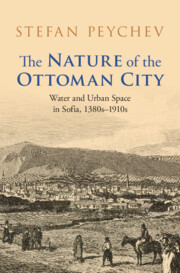
In this innovative interdisciplinary work, Stefan Peychev problematizes the dominant narrative of decline and stagnation in Ottoman Sofia. Drawing on a range of sources and perspectives, including environmental and urban history, archaeology and anthropology, he examines the creation and experience of urban space and place. By employing a longue durée framework and considering empire-wide developments, this work challenges the epistemological boundaries that have traditionally separated Ottoman from post-Ottoman space and the Middle East from Southeast Europe. Peychev argues instead for an integrated understanding of Sofia's water infrastructure, in which Ottoman ideas of the built environment fused with local cultural and technological traditions to create an efficient and long-lasting system.
This article argues that the late Ottoman Empire saw the rise of a novel concept of difference, the “millet,” that fundamentally reordered the lives of the empire’s many subjects. Rather than a term with clearly identifiable content—“religion,” “nation,” “ethnicity,” or otherwise—millet should be understood instead as auguring the emergence of history as the organizing principle of the late Ottoman politics of difference. Unlike the Islamic distinction between Muslim and non-Muslim that had previously structured Ottoman rule, the millet paradigm did not stipulate any predetermined set of terms through which difference had to be articulated. Instead, it issued an injunction to Ottoman subjects to merely say who they were, to declare the name they went by—to confess. This simple injunction, however, which appeared to require nothing other than assent to the reality of history itself, tended to misfire. When it did, Ottoman subjects confronted the anxious truth that history—the purported ground of the millet paradigm of difference—was no ground at all.
World-historical analyses often view the “Asian” empires that survived into the twentieth century (the Russian, Qing, and Ottoman empires) as anomalies: sovereign “archaic” formations that remained external to the capitalist system. They posit an antagonistic relationship between state and capital and assume that modern capitalism failed to emerge in these empires because local merchants could not take over their states, as they did in Europe. Ottoman economic actors, and specifically the sarraf as state financier, have accordingly been portrayed as premodern intermediaries serving a “predatory” fiscal state, and thus, as external to capitalist development. This article challenges these narratives by uncovering the central role of Ottoman sarrafs, tax-farmers, and other merchant-financiers in the expanding credit economy of the mid-nineteenth century, focusing on their investment in the treasury bonds of Damascus. I show how fiscal change and new laws on interest facilitated the expansion of credit markets while attempting to regulate them by distinguishing between legitimate interest and usury. I also discuss Ottoman efforts to mitigate peasant indebtedness and the abuse of public debt by foreigners, amid the treasury bonds’ growing popularity. In this analysis, global capitalism was forged in the encounter between Ottoman imperial structures, geo-political concerns, and diverse, interacting traditions of credit, while the boundaries between public and private finance were being negotiated and redefined. Ultimately, Ottoman economic policies aimed to retain imperial sovereignty against European attempts to dominate regional credit markets—efforts often recast by the latter as “fanatical” Muslim resistance.
This article examines Ottoman–Portuguese commercial agreements in Basra during the century after 1622 and the legal ambiguities that they engendered. On two separate occasions, the Portuguese established a factory in Basra: first in 1624 during the reign of the Afrāsiāb pasha (who governed in the name of the Ottomans from 1612 to 1667) and once again in 1690 when the city was ruled again by Ottoman governors (Ottoman direct rule was restored in 1667). Yet there were myriad issues that supplied cause for disputation between the two parties, not least the legal status of the factory itself. On the face of it, both the Portuguese and the Ottoman functionaries in Basra operated according to divergent models of extraterritorial trading privileges. After a century of expansion on the coasts of Africa and the Indian Ocean, the Portuguese had grown accustomed to the model of the factory (feitoria), in both those places in which the Portuguese governed in their own name and those in which they traded at the sufferance of African and Asian rulers. On the other hand, over the course of the sixteenth and seventeenth centuries, the Ottomans had granted so-called capitulations to European powers in the Mediterranean, which were governed by norms that were distinct from the factory model of Africa and Asia. Basra brought these two models into interaction and disrupted the straightforward implementation of either model. Frequent moments of misunderstanding and manoeuvring between the two sides were the result.
While animals and plants have been part of Ottoman studies for a long time, the way students of history study them has changed over time. This chapter traces that change and its implications. It first describes the literature acknowledging the significance of plants and animals (such as wheat, cotton, tobacco, and sheep) as commodities in both domestic and world markets, but viewing their role in history as basically secondary to humans. Then it provides an overview of studies on the cultural representations of animals and plants, and finally focuses on recent historiography that sees nonhuman species as active agents of Ottoman history. The latter approach, the chapter argues, provides a more comprehensive and dynamic understanding of the past as it highlights the role played by nonhuman actors, ranging from crop plants to street dogs and mosquitos, in transformations that the empire underwent in the course of centuries.
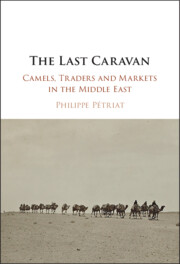
What can travelling camels tell us about the history of the interior of the Middle East? In this innovative book Philippe Pétriat demonstrates how caravans - groups of travellers, often on trade expeditions, journeying together for mutual protection in hostile regions - are essential to understanding the history of the inside territories of the Ottoman Empire with its neighbours. From the first use of camels in transport, through to the decline of the caravan from the 1930s onwards, Pétriat reconstructs the land routes of these travellers through vast steppes and deserts in captivating detail. Moving discussions of the political economy of the Ottoman and post-Ottoman Middle East beyond analysis of the coastal regions and maritime exchanges with Western countries, The Last Caravan instead reveals the pivotal importance of the Ottoman and Arab merchants in the suburbs of the cities and the rural markets and the travelling nomads and the animals that supported them.
The present article is a study of Ottoman military recruitment attempts of Circassians in the northwestern Caucasus. It examines the process of realizing a Circassian highlander army and the administration of the Anapa fortress during the time of two different fortress commanders. Focusing on the deeds of these two pashas regarding Circassian recruitment and their social background, this study highlights the Ottoman-Circassian relations and the dynamics of loyalty and pragmatism. Specifically, the role of provincial networks in ruling the border fortresses and regional politics in the Eastern Black Sea have been underlined within the context of the Russian-Ottoman rivalry over the Caucasus. Rebutting the importance of the origins of Ottoman officers for Ottoman borderland politics, this study argues that the contribution of provincial notables to the Ottoman civilizing mission and the Circassian army project in the early nineteenth century has been indispensable to the realization of Ottoman establishment in the Caucasus.
This chapter traces the inflection of various religio-cultural traditions and customs of erotic love and sex and ordering of sexual acts in sixteenth-century Istanbul as defined by literary and documentary sources. With its diverse population and as the seat of the Ottoman dynasty, Istanbul was one of the most crowded and diverse cities of the sixteenth century. It witnessed the formation of an elite class that distinguished itself from the majority of the urban population through ideological othering strategies and the establishment of law codes to order and rule the diverse communities in the city. Literary works that focused on the city and documents, including law codes and court records, reflect conflicting views on sexual relations: while chaste love among members of the elite was idealized in romances and sexual acts were criticized in satirical works, documents reflected the ways sexual acts and desires were regulated, controlled, and punished.
This chapter explores water development in the Buhayra province (western Delta), mainly from the sixteenth to the eighteenth century, to examine the canal system and how it was developed. Buhayra province, an administrative prefecture in Ottoman Egypt, was located on the route that connected Alexandria to Cairo. From the early Islamic period down to the Mamluk period (1250–1517), the province had seen the development of canals for navigation and irrigation. Although Mamluk sources describe these water development works, we know less about them through the Ottoman period due to a lack of contemporary accounts. The most accessible and seemingly accurate source on the rural landscape is the Napoleonic map from Description de l’Égypte; this map, however, only reflects the landscape at the end of the eighteenth century. Such a situation makes the Ottoman period a blank space in the province’s history. This chapter aims to analyse what happened in the Ottoman period to those canals developed in the Mamluk period to understand, as sequentially as possible, how the canals and the landscape along them changed. The analysis also gives us a glimpse of the fringes of Ottoman rural administration, revealing how the canals were maintained at the time.
This chapter considers civic newspaper poetry in Persian and Azerbaijani Turkic as a site for the establishment of a new radical politics and poetics of representation during and after the entangled Russian, Iranian, and Ottoman revolutions of 1905–1911. In the historiography of Persian and Central Asian literature, these revolutions are generally considered to be catalysts for a literary modernity engaged with European models and genres. This chapter shows how the poetics of new modes of political representation came to be articulated in classical and folk verse forms (qasida, ghazal, lullaby) that had preexisting repertories of tools for establishing, negotiating, and contesting claims to representational legitimacy. Surveying the main types of periodicals (newspaper, literary journal, satirical journal), the chapter shows how poets developed different styles for different venues, focusing on ‘Ali-akbar Sabir, lead poet of the Azerbaijani satirical journal Mulla Nasreddin. The chapter next considers how poets reworked court panegyric to glorify the parliaments and revolutionary parties that contested royal sovereignty, focusing on the newspaper verse of the Iranian poets Abu al-Qasim Lahuti and Adib al-Mamalik. Lastly, the chapter follows the transfer of the allegorical patriotic lullaby from Azerbaijan to Iran, focusing on the role of the Iranian publisher Nasim-i Shumal.
The current countries in the Middle East and North Africa were all formed, or transformed, in the nineteenth and early twentieth century by processes of partitioning and territorialization propelled by European colonial expansion and local responses to those interventions. As the region’s political topography was remapped before and after the First World War, collective identities were activated, reimagined, and mobilized within and across these newly delineated units. From Northern Africa to the Iranian plateau, an array of nationalisms emerged over the course of this transformation, pairing notions of peoplehood and political sovereignty in new frameworks of identity. For the Middle East and North Africa, the related questions “what is a nation?” and “when is the nation?” are best answered by focusing on a third question: how has the nation (and nationalism) worked in the region over the past two centuries?
Focusing on the eighteenth century, this chapter uses the surviving books from the manuscript library of the Buffalo Agency to reveal how Ibadi intellectual, religious, and commercial life in Ottoman Cairo intersected with that of their non-Ibadi contemporaries. Beyond funding the endowment for students at the Buffalo Agency, Ibadi merchants were also often the ones responsible for gifting or commissioning the books in its library. The books themselves included roughly equal numbers of Sunni and Ibadi titles. It traces the relationship of Ibadis with the famous (Sunni) al-Azhar Mosque and how the library of the Buffalo Agency reflects this relationship. In all cases, from the production of books to their endowment and use by students, Ibadis mirror the social and religious trends of their Sunni contemporaries in the Ottoman period.
This chapter examines the last phase of the Buffalo Agency’s existence from the late nineteenth to the early twentieth centuries. It refracts this institution’s history through an existing body of historical literature that explores the intersections among print technology, Islamic reform and ecumenicalism, and political life in the history of Ibadi and other Muslims communities in Egypt in the context of colonialism. The chapter examines these themes by telling the stories of two people whose lives are largely unknown. The first figure, Saʿīd al-Shammākhī, served as the director of the Buffalo Agency in the mid-nineteenth century. In 1871, however, he was appointed agent (wakīl) for the Husaynid bey of Tunisia in Egypt and served as a line of communication between the governments of the two Ottoman provinces. The second figure is Muḥammad al-Bārūnī, owner of the first Ibadi printing house in Cairo. In terms of its operation, its financing, and its choice of titles, this Ibadi press functioned in much the same way as other late Ottoman presses in Egypt. Through the stories of these two men, the chapter situates Ibadis in the changing technologies and politics of late nineteenth century Ottoman Egypt.
This chapter presents the Buffalo Agency, a trade agency, school, and library that was owned and operated by Ibadi Muslims in Ottoma-era Cairo. It presents the book’s main argument; namely, that the history of the Buffalo Agency shows how Ibadi Muslims participated fully in the religious, economic, legal, and political life of Ottoman Egypt. Their ability to maintain cohesion as a community while also engaging fully with Ottoman society was in part due to their unusual status as both members of a religious minority and part of the Muslim majority. The chapter then situates this argument in the three conversations to which the book contributes: Ottoman history in Egypt, minority communities in the empire, and the history of Ibadi Islam. The chapter next introduces the main historical sources used to support the argument: shariah court records, manuscript evidence from private libraries, and archival documents. Methodologically, the chapter grapples with the tension between the emphasis on the material history of Ibadis in Egypt and my need to rely on digital facsimiles of many of the sources.
This chapter begins with the arrival of Ibadi student Saʿīd al-Bārūnī in Cairo in 1798, just before the invasion of the French army under Napoleon. It follows the life of Saʿīd in Cairo during the tumultuous decades of the early nineteenth century, including the departure of the French and the rise to power of the Ottoman governor Muḥammad ʿAlī. Following his return to the Maghrib, the chapter continues the story of the Agency by turning to a private letter written to Saʿīd by one of his students, Muḥammad al-Bārūnī, who was studying at the Agency in the 1850s. The books and letters connected to the Agency in this period reveal much about the world of Cairene Ibadis in the mid-nineteenth century, including the state of education at al-Azhar, the changing demographics of the Ibadi community, and signs of a growing relationship between the Ibadi community of the Indian Ocean and that of northern Africa.