To save content items to your account,
please confirm that you agree to abide by our usage policies.
If this is the first time you use this feature, you will be asked to authorise Cambridge Core to connect with your account.
Find out more about saving content to .
To save content items to your Kindle, first ensure no-reply@cambridge.org
is added to your Approved Personal Document E-mail List under your Personal Document Settings
on the Manage Your Content and Devices page of your Amazon account. Then enter the ‘name’ part
of your Kindle email address below.
Find out more about saving to your Kindle.
Note you can select to save to either the @free.kindle.com or @kindle.com variations.
‘@free.kindle.com’ emails are free but can only be saved to your device when it is connected to wi-fi.
‘@kindle.com’ emails can be delivered even when you are not connected to wi-fi, but note that service fees apply.
This article examines how litigation reshapes civil rights mobilization under authoritarianism through a study of married-out women’s struggles for land rights in rural China over more than three decades. Drawing on in-depth empirical observations, it develops the concept of cooptation justice to explain how litigation shifted from a pressure-building tactic within a broader repertoire of contention to a mechanism of institutional closure. In the earlier period, litigation operated alongside petitioning, protest, media exposure, and support from lawyers and civic actors to generate leverage over local authorities. In the later period, however, shrinking political opportunities and the promotion of formally accessible but politically bounded legal opportunities redirected grievances into courts. Under these conditions, judicial proceedings did not simply fail to remedy discrimination. They absorbed contentious claims into authoritative processes that validated exclusion, weakened alternative avenues of mobilization, and increased the costs of continued contention. The article argues that cooptation justice is a mode of authoritarian governance in which law functions not only as an instrument of legitimacy and dispute management but also as a mechanism for containing civil rights mobilization.
The World War II Japanese occupation had a major impact on Southeast Asia. This chapter traces those impacts, including the premature death of 4.4 million Southeast Asians.
In previous chapters the idea of racism permeating all of life including education, particularly social work education was discussed. These ideas are now traced in social work practice, focusing particularly on child welfare, one of the fields of practice employing social workers.
Lawyers instruct their clients to make performative and fleeting modifications in comportment to appease judges or officers. But how do they guide their clients to routinize everyday behaviors and lifestyles seen as desirable and respectable by the state? Expanding on theories of social control, nonstate governance, and lawyering, this paper considers the role of lawyers who guide mixed-status couples applying for marriage-based green card and naturalization petitions in the United States. Interviews with immigration attorneys, paralegals, and nonprofit advocates reveal their three-step strategy to shape intimate dimensions of mixed-status couples’ lives that connote marital legitimacy. First, lawyers translate immigration law into personalized checklists that function as the blueprint of marriage that couples must follow. Then, lawyers instruct and correct their clients’ family behaviors so that they are enacted and documented in compliance with vague immigration law as interpreted by the archetypal immigration officer. Crucially, lawyers help couples routinize and painstakingly archive these curated lifestyles for ongoing adjudication. Findings suggest that nonstate actors like immigration lawyers are more than intermediaries who broker and coach; they become domestic counselors who, as indirect agents of the state, coerce subjects toward acculturation.
Edward A. Ross (1866–1951), a prominent American sociologist, believed immigrants coming into the United States in the early twentieth century were members of the ‘lower races,’ barely human. Ross popularized the phrase ‘race suicide,’ the idea that the reproductive deficiency of Americans of Northwestern European origin would doom an America that would be overtaken by the “beaten men of beaten races” of Southeastern Europe. Ross grouped people according to racial categories that were based on his own subjective contemporaneous and historical analyses of ‘types’ he identifies, such as Hindus, Jews, Chinese, Mediterraneans, Japanese, Celtics, Teutons, and others. As was the case with many of his contemporaries in the academy, he understood his views to be ‘commonsense’ knowledge, not subject to any serious scrutiny or challenge. We can gain insight into the mindset of social scientists at the turn of the twentieth century by examining Ross’ methodology of categorizing and ranking human groups in order to better understand the bases upon which Ross confidently proclaimed that “there is at the present moment no people in the world that is, man for man, equal to the Americans in capacity and efficiency.”
Recent US policy changes, including abortion bans and reductions to social safety nets, have intensified structural pressures on reproductive decision-making. Research has examined interpersonal and clinical forms of reproductive coercion, but legal and policy forces remain undertheorized. This commentary introduces and defines sociolegal reproductive coercion as occurring when individuals feel pressured or constrained in their reproductive choices due to legal and policy landscapes that are reinforced and reified by social and cultural forces. These pressures operate collectively to make certain options, such as long-acting reversible contraception, feel obligatory even when undesired, by amplifying risks associated with pregnancy, abortion, and parenting. Sociolegal coercion interacts with clinical practice, shaping provider counseling and narrowing perceived options, and disproportionately affects marginalized communities already subject to systemic inequities. We situate this construct within existing scholarship on constrained choice and social control, propose a conceptual framework, and outline implications for research, clinical care, and policy. Recognizing sociolegal reproductive coercion is critical for understanding how health policy and sociocultural dynamics jointly constrain autonomy and for informing reforms that advance reproductive justice in a post-Roe landscape.
The Communist Party is building a digitally capable state to remain at the vanguard of social and political development in China. CPC leaders are advancing digitalization forcefully throughout the governance and economic system through various policy initiatives. Informatization serves both better governance and public service, by overcoming previous bottlenecks and spatial challenges in administration. It also enhances the party state’s surveillance and monitoring capabilities. The CPC’s goals for China’s future under its continued rule require a digital infrastructure and economy that is both efficacious and subject to the Party’s control. To this end, the CPC is building out a comprehensive governance architecture for cyberspace, including the world’s most expansive data regulatory regime. The current leadership regards these digital capabilities as a key part of its comprehensive governance model that will enable the CPC to implement its domestic and international vision for China in the coming years.
Using comparative case studies, process tracing, and in-depth interviews, this chapter builds on Chapter 6 to examine the mechanisms connecting protests, societal control strategies, and outcomes for firms in the solid waste treatment sector. Process tracing is first applied to Wuxi, a city with multiple incineration plants, to illustrate how escalating protests gradually shifted the city government’s strategy from appeasement to suppression. This shift in strategy made private firms less effective in providing societal control services, leading to the transfer of the city’s incineration plants into the hands of SOEs.
Next, a most-similar case study compares an incineration plant in Wuxi with another in Qinhuangdao, highlighting how differences in political capital, linked to firm ownership, influence the outcomes of societal control efforts. The weaker political capital of private firms means they are less equipped to assist local governments during protests, making them less favorable. This comparison sheds light on how Chinese local governments perceive protests and firms, explaining why SOEs increasingly dominate a sector as protests within it become more frequent and intense.
How do local officials in China initiate and sustain policy experiments within a bureaucratic system that often obstructs innovation? This article examines local policy experimentation through the lens of bureaucratic power networks, identifying three key challenges: agenda-setting challenges related to superiors, coordination challenges involving peers and implementation challenges concerning subordinates. When formal power networks fail, entrepreneurial officials develop informal interpersonal networks, positioning themselves as “uninvited advisors” to superiors, “rhetorical allies” to peers and “supportive mentors” to subordinates. Using the case of “police–business cooperation” in Shanghai, the study reveals how the committee on comprehensive management of public security mobilized property management companies to maintain social stability. This article contributes to research on policy experimentation by situating experiments within bureaucratic power dynamics and highlighting the role of informal networks in overcoming institutional barriers. It also reveals the mechanisms by which the Party assigns social control tasks to commercial entities.
Chapter 16 of DYB introduces a range of relief policies to succour the victims of natural disasters that Qiu Jun considers should be developed by the Ming state. His references go back to the Rites of Zhou and include a significant amount of Tang and Song precedents. He particularly insists on preparedness measures and on the pre-eminent role of the state to store the surpluses produced by society and redistribute them in years of famine – hence, for example, his reservations regarding public granaries run by local notables – and, more generally, to preserve the stability of local communities confronted with subsistence crises. If Qiu’s recommendations do not seem to have had much impact, if any, on Ming relief policies, several of them anticipate the setting up of a centrally controlled and fairly efficient system of famine relief under the Qing.
Why do most migrant workers still lack access to urban public services despite national directives to incorporate them into cities, reported worker shortages, and ongoing labor unrest? How do policies said to expand workers’ rights end up undermining their claims to benefits owed to them? This opening chapter maps out the challenge of urbanization as development and situates the concept of political atomization and the main findings of this book in the larger context of inequality and authoritarian distribution. The concept of political atomization helps us understand four phenomena better: how authoritarian regimes exercise social control beyond coercion, why the perceived exchange of promised services for loyalty bolsters authoritarian resilience, how public service provision works without elections, and why there have been new gradations of second-class citizenship and structural inequality in China. To show how political atomization works, this book tracks the dynamics and consequences of the process from the state’s perspective through migrants’ points of view. This book uncovers emergent and evolving sources of embedded inequality, social control, and everyday marginalization in China.
The second chapter identifies and conceptualizes political atomization. Political atomization explains two outcomes better than existing literature: why incremental expansions in social policy can entrench inequality and how authoritarian states sometimes use public service provision as a tool of social control. It also accounts for how policies said to expand workers’ rights end up undermining their claims to benefits owed to them in China. Alternative explanations are inadequate, and the research design, methods, and sources of the book offer different insights. The theory of political atomization is situated within the literatures on authoritarianism, immigration, and welfare states and elucidates in detail how the process works and why it persists. There are trade-offs and risks to this approach, but embedded inequality ultimately serves the state. Unpacking political atomization illuminates how everyday marginalization of people works on the ground in their lived experiences.
The final chapter concludes with broader implications. After recapping how the previous chapters fit together to form a larger window on social control beyond coercion, it scrutinizes the limits of political atomization with a focus on perverse outcomes that result from the accumulated effects of individualization. Next are implications for China for inequality, the economy, migrant welfare and citizenship, and the authoritarian state’s social control toolbox. China is not alone in using political atomization, and a comparative perspective can spur future research on how the phenomenon already exists in not only other developing and authoritarian countries but also in democracies and developed countries. It ends with an examination of inequality and the state, noting that individual-level schemes are no match for systemic deflection and demobilization to address the entrenchment of inequality in social policy.
Although rural migrants are frequently deflected and only selectively incorporated into urban public benefits, they have ways to undercut elements of social control and attain some education and health care. Resourcefulness and practical priorities help them find bureaucrats who practice co-migrant empathy and work within existing formal institutions to pry open what institutional leeway they can. When those are insufficient or inaccessible, they create and turn to private alternatives to get health care and education in the city. “People-run” schools are informal institutions that fill the gaps of public service provision, enabling migrants to keep their jobs when they get sick or have families in their destinations. However, because they are makeshift and typically operate on the outskirts of cities and in the shadows of legality, they can become subject to sudden intervention or regulation by the state. At other times, the government allows them to operate. The subversion of control is possible but not without the risk of being reverted into a target of the state.
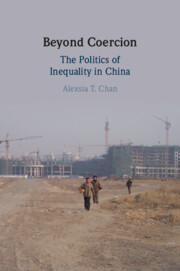
Beyond Coercion offers a new perspective on mechanisms of social control practiced by authoritarian regimes. Focusing on the Chinese state, Alexsia T. Chan presents an original theory and concept of political atomization, which explains how the state maintains social control and entrenches structural inequality. Chan investigates why migrant workers in China still lack access to urban public services despite national directives to incorporate them into cities, reported worker shortages, and ongoing labor unrest. Through a meticulous analysis of the implementation of policies said to expand workers' rights, she shows how these policies often end up undermining their claims to benefits. The book argues that local governments provide public services for migrants using a process of political individualization, which enables the state to exercise control beyond coercion by atomizing those who might otherwise mobilize against it. This title is part of the Flip it Open Programme and may also be available Open Access. Check our website Cambridge Core for details.
This chapter analyzes the regulation of sexual desire as one aspect of the process of progressive centralization through which the papacy affirmed its control over the Catholic Church and society across the centuries. While the accusation of homosexual behavior was increasingly associated with forms of religious and social nonconformity, the prohibition of homosexual intercourse became an instrument for encouraging ecclesiastics’ and lay people’s increasing examination of their individual consciences. The control of same-sex desire thus favored the internalization of a disciplinary attitude that hierarchically emanated from the center to the periphery. As a response to the increased visibility of sexual and gender minorities, nowadays the issue of same-sex marriage is demanding increased attention. The issue has never been discussed more thoroughly by popes as it has been in the last decades. Despite some significative epistemological shifts, however, the doctrinal approach towards this matter has remained strikingly consistent, and homosexuality is still condemned by the Catholic Church as a disordered inclination.
Böckenholt and van der Heijden’s results regarding compliance with insurance regulations—that the enforcement activities of a regulatory agency were relatively unpredictive of compliance—are consistent with findings from other domains (e.g., tax adherence), where personal factors and informal social controls have been shown to play a more significant role. However, the specific form of informal social control investigated in Böckenholt and van der Heijden’s study (the perceived approval/disapproval of friends and family) is not the only kind of informal social control that has proven effective in spurring compliance. Descriptive social norms, which involve perceptions not of what others approve but of what others actually do, also influence compliance decisions powerfully. Yet, the role of descriptive social norms in rule adherence is often underappreciated by governed and governors alike. The consequences of this relative lack of recognition are discussed within the arena of compliance with pro-environmental regulations and requests.
In recent years, the issue of Jewish settler violence in Israel and its territories has garnered increasing attention. The claimed motivations for such violence are that it is a response to Palestinian-Arab violence and perceived government inaction, as well as perceived selectivity in the formal response toward violence perpetrated by these two populations. These claims point to Jewish settler violence as being a crime as a form of social reaction, self-help and social control. We test this hypothesis by combining and analysing data from the Israel Security Agency, the Palestinian Authority, the United Nations and open sources for the period of 2009–2022 (n = 168 months) using a series of generalized negative-binomial models and Newey–West ordinary least squares models. We find that Jewish settler violence increases as serious Arab violence increases and decreases when formal responses toward Arab violence are higher. We also find iatrogenic effects for harsh measures targeting Jewish violence, namely administrative detention orders. The results imply that to reduce collective violence, it is necessary to take a more consistent and balanced approach in formal responses against opposing groups.
This article focuses on the everyday practices that make the place of the neighbourhood – social control, legitimacy and support, while also looking at how gender is produced in everyday life in the neighbourhood. In doing this, the discussion underlines the tremendous social and cultural influence of neighbours and the neighbourhood and argues that neighbourhoods need to be seen as a social formation as important as caste, class, ethnicity or religion. This is particularly important given that a strong focus on identities in recent decades has tended to eclipse social formations such as the neighbourhood. This ethnographic discussion is based on fieldwork carried out in neighbourhoods in two towns in India, Thalassery in Kerala, South India and Bikaner in Rajasthan, North India.
Does landholding inequality undermine democratization? Recent contributions have challenged the argument that landholding elites oppose suffrage extension if geographically fixed assets are unequally distributed. We advance research on this long-standing question by exploiting exogenous variance to reinvestigate the relationship. Using multiple instruments, we find that landholding inequality decreases support for suffrage extension. By focusing on traditional patterns of social control, we explore an empirically neglected mechanism linking landholding inequality and democratization. Taking advantage of four direct democratic votes between 1866 and 1877 in Switzerland, we demonstrate that landholding inequality also influences the political preferences of ordinary citizens who do not control these resources. This paper shows that high levels of landholding inequality provide local elites with the incentive and the means to align the local population's voting behaviour with their political goals. Supplementary analyses using qualitative and quantitative data further substantiate this social control mechanism.