To save content items to your account,
please confirm that you agree to abide by our usage policies.
If this is the first time you use this feature, you will be asked to authorise Cambridge Core to connect with your account.
Find out more about saving content to .
To save content items to your Kindle, first ensure no-reply@cambridge.org
is added to your Approved Personal Document E-mail List under your Personal Document Settings
on the Manage Your Content and Devices page of your Amazon account. Then enter the ‘name’ part
of your Kindle email address below.
Find out more about saving to your Kindle.
Note you can select to save to either the @free.kindle.com or @kindle.com variations.
‘@free.kindle.com’ emails are free but can only be saved to your device when it is connected to wi-fi.
‘@kindle.com’ emails can be delivered even when you are not connected to wi-fi, but note that service fees apply.
Wildlife infection with Fasciola spp. has been documented across diverse mammalian taxa and ecological settings; however, the epidemiological significance of these infections remains difficult to determine. Serological exposure, parasite DNA, adult fluke recovery, coproantigen detection, and egg shedding represent different diagnostic states and support various levels of inference. In Fasciola transmission, a patent definitive host is only one part of an indirect cycle that also requires eggs to reach wet or aquatic habitats, compatible lymnaeid snails to become infected and amplify the parasite, and susceptible hosts to ingest the viable metacercariae. From this critical perspective, we ask when wildlife infection actually contributes to persistence or transmission to a defined target population. We used the wildlife reservoir paradox to describe situations in which measured wildlife infection is poorly aligned with the realised transmission contribution, and distinguished four context-dependent functions: incidental hosts, amplifying contributors, interface connectors, and maintenance components. We then evaluated how lymnaeid identity and ecology, environmental and hydrological connectivity, and molecular evidence could strengthen or limit reservoir attribution. Finally, we refined Fasciola Interface Management (FIM) into an operational five-step workflow that asks who contaminates, where snail amplification occurs, which target populations are connected to those sites, where parasite flow can be disrupted, and whether transmission subsequently declines. The central argument is that wildlife reservoir status should be attributed to populations within defined transmission systems, not inferred from host positivity alone.
While Camp Ford at its most crowded had more favorable conditions than most wartime prison camps, Union prisoners of war nevertheless wanted out. Many attempted to escape, and most failed. “Escaping Camp Ford, 1863–1865” explores these remarkable escape attempts, at once telling the stories of the escapees, their pursuers, and the natural and cultural environments through which they sought freedom. In short, this chapter will convey rollicking and often deadly stories balanced by a deeper analysis of the environment and people both in the region immediately around Camp Ford and throughout much of East Texas, southern Indian Territory, and western Louisiana. The act of escape – successful or not – had a major impact on those within the prison and beyond.
Echinococcosis is a global zoonotic infection caused by larval stages of Echinococcus species. In sub-Saharan Africa, cystic echinococcosis caused by Echinococcus granulosus is prevalent, but comprehensive data are limited. This study investigates the role of lions (Panthera leo) as potential hosts for Echinococcus species, particularly E. equinus and E. felidis, in Greater Kruger National Park, South Africa. Four lion intestinal samples were macroscopically examined. High burdens of Echinococcus spp. worms were observed in 2 lions, a low-level infestation was detected in 1 lion and no parasites were identified in the fourth lion due to advanced decomposition of the sample. PCR analysis identified E. equinus in 2 samples and E. felidis in 1. Morphological and scanning electron microscopy studies provided detailed descriptions of the adult form, confirming the presence of these parasites. The findings underscore the importance of lions in the sylvatic cycle of echinococcosis and suggest potential implications for the epidemiology of the disease in African wildlife ecosystems. This study contributes to the understanding of the transmission dynamics of Echinococcus species in southern Africa.
Protected areas usually have conservation regulations designed to minimize physical disturbances, yet wildlife within them remains vulnerable to external factors such as noise pollution. We assessed transportation noise in over 2400 protected areas across Norway – Europe’s second least populated country – by overlaying protected area maps with publicly available noise zone data modelled down to 50 dB for Lden (day–evening–night) and Lnight. Road traffic was the dominant noise source. As wildlife can be affected at levels below 50 dB and by short bursts of high noise, we also examined road noise modelled down to 40 dB in two national parks and 15 smaller protected areas, and we conducted field measurements at a Ramsar site to capture peak noise events. Road noise at Lden ≥50 dB impacted 176 (7.1%) areas, increasing to 229 (9.2%) areas when multiple sources were considered; 126 (5.1%) areas were exposed to Lnight road noise. Smaller protected areas were more exposed. Including noise down to 40 dB raised the average affected area from 39.6%/18.6% to 56.6%/45.0% for Lden/Lnight. Field data revealed frequent peak noise events exceeding 80 dB, even at night. We recommend ecologically sensitive noise mapping using lower thresholds and consideration of frequencies inaudible to humans to better inform conservation planning.
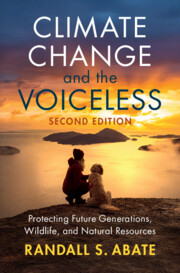
Future generations, wildlife, and natural resources – collectively referred to as 'the voiceless' in this work – are the most vulnerable and least equipped populations to protect themselves from the impacts of global climate change. In this new edition of Climate Change and the Voiceless, Randall S. Abate provides comprehensive analysis of recent landmark strategic litigation to protect vulnerable communities, significant updates on legislative and judicial developments on rights of nature, and a detailed summary of the most important climate change advisory opinions and their implications for the protection of voiceless communities. As in the original work, he identifies the common vulnerabilities of the voiceless in the Anthropocene era and demonstrates how the law can evolve to protect their interests more effectively. This work should be read by anyone interested in how the law can be employed to mitigate the effects of climate change on those who stand to lose the most.
We describe a new species of the genus Platynosomoides Yamaguti, 1971 (Trematoda: Dicrocoeliidae) from the bile ducts of the cricetid Akodon cursor (Winge, 1887) (Rodentia: Sigmodontinae) from Itatiaia National Park (Parque Nacional do Itatiaia, PNI), in the state of Rio de Janeiro, Brazil. The species is characterized by the following diagnostic features: body size; dimensions and relative proportions of the testes in relation to the body length; extracecal and asymmetrical vitelline glands commencing at the level of the acetabulum, the left vitellarium terminating at the mid-region of the second third of the body, and the right one extending to the anterior margin of the posterior third; and the relative size of the suckers, with the ventral sucker being approximately 60% larger than the oral sucker. The morphological characteristics were described with the assistance of optical microscopy images to observe the internal structures, and their external details were provided by scanning electron microscopy (SEM). Additionally, molecular phylogenetic analyses based on the 18S rRNA gene were conducted to assess the phylogenetic placement of the genus within Dicrocoeliidae. These analyses accompany the description of Platynosomoides macrotestis sp. nov. and contribute to a better understanding of trematode diversity. Furthermore, this study highlights the importance of parasitological research in conserving helminth biodiversity. Its occurrence in conservation areas, such as the PNI, supports the maintenance of unique ecological interactions and species conservation.
Electrical power systems are a ubiquitous part of the Anthropocene. Wildlife interactions with these systems can be positive, for example when natural nesting substrates are limited, but are frequently negative, for example when nests catch fire or nesting individuals are electrocuted. Electrocution research focuses primarily on birds because they, especially large species, are particularly prone to electrocution. However, many other animals are also electrocuted. To explore non-avian electrocutions, we used crowdsourced data from Iran, where electric utility personnel frequently describe unusual incidents on electric industry-focused social media channels. In posts from January 2014 to December 2023, we identified 120 reports of non-avian electrocutions involving mammals (74%), reptiles (24%), amphibians (1%) and invertebrates (< 1%). Most (91%) incidents involved correctly operating electrical systems, indicating that the design of these electrical systems did not account for potential animal contacts. A few (9%) involved malfunctioning electrical components (overturned or energized power poles) that would also have been hazardous to humans. The greatest number of electrocutions occurred as a result of contact with low-voltage and ground-mounted equipment. For example, 220–600 V freestanding switchboards accounted for about one-third of electrocutions. Many of the documented incidents involved outages (n = 71), or outages together with fire ignitions (n = 8), indicating cascading effects on human populations and the environment. Mitigation measures to prevent these incidents are widely available, and should be used throughout the electrical system. Future research should document and quantify non-avian incidents beyond Iran, to better understand the impact of electrical systems on non-avian wildlife.
This chapter considers the environmental consequences of the United States’ victory in the American Revolution during the approximately three decades following the war. Domestically, US settlers carried the agroeconomy developed during the colonial era into new lands through the violent dispossession of Indigenous nations. This expanded the geographic scope of pre-existing ecological trends such as deforestation, wildlife depletion, and soil exhaustion. Urbanization and industrialization introduced new pollutants into local ecologies while facilitating the spread of epidemic disease. Commercial networks also tied American environments to foreign markets. Market demands for fur and heating oil led to the decimation of marine mammal populations. The final decades of the US transatlantic slave trade provided enslaved labor for the expansion of the ecologically destructive system of plantation capitalism. In the north and northwest, foreign demand for US-grown goods contributed to the simplification of local ecologies through their transformation into cropland and livestock grazing lands.
Recent zoonotic disease emergences emphasize the importance of studying wildlife parasite communities. As wild hosts frequently harbour diverse parasite species, understanding the drivers of multiple infection patterns in free-ranging hosts is critical for elucidating the ecological and epidemiological dynamics of parasite communities. In this study, we analysed co-infection patterns in European roe deer (Capreolus capreolus) inhabiting a fragmented rural landscape in southwestern France. Using data from 130 samples of GPS-tracked deer, we examined the influence of proximity to livestock, host activity levels, age, sex and between-parasite interactions on the presence of 11 parasitic taxa. Hierarchical modelling of species communities (HMSC) revealed that proximity to livestock significantly increased the likelihood of infection with orofecally transmitted parasites (Toxoplasma gondii, gastrointestinal parasites). Sex and age were other key predictors, with males and juveniles exhibiting a higher frequency of parasite presence, likely influenced by hormonal and immune system differences. Activity levels showed distinct age-related effects, with higher activity levels being positively associated with increased parasite prevalence in yearlings, but not in adults. In contrast, parasite association patterns within individual hosts were weak, suggesting minimal interactions between parasite species. Our findings highlight the interplay between exposure and susceptibility in shaping co-infection patterns and underscore the value of hierarchical modelling approaches in multi-parasite systems.
Risk factors for Eimeria infections are well documented in farm and pet animals, but studies focusing on wildlife species are less common. This research aimed to investigate the impact of selected demographic and environmental factors on the prevalence of Eimeria in the European hare (Lepus europaeus). Additionally, we analysed whether Eimeria infection affected the behaviour of hares by examining the relationship between infection status and the likelihood of a hare being killed by a vehicle at a hotspot for road mortality. Between 11 February 2022 and 24 June 2024, we collected 22 hare carcasses that had been killed in traffic along an 83.9 km monitoring route in central Bohemia, Czech Republic, to evaluate Eimeria prevalence in relation to factors such as age, hare density, distance to the nearest water source and rainfall over the previous 3 months. Contrary to our expectations, we found a higher prevalence of Eimeria in adult hares compared to juveniles. We propose that this outcome may be due to the high mortality rates among leverets and juvenile hares, which removes susceptible individuals from the population early on. The effects of the other factors examined were not significant. In conclusion, our study revealed that Eimeria infection did not contribute to the clustering of hare–vehicle collisions. We emphasize the importance of studying risk factors in wildlife species across different ecological contexts. Our findings challenge the general assumption that age negatively influences Eimeria prevalence.
Positive human–wildlife coexistence, especially in contexts of rewilding and the reintroduction of large carnivores, partially depends on communication between stakeholders. The media, and in particular local journalism, can play a crucial role in determining people’s knowledge of and attitudes towards wildlife. In this article, we analyse the online coverage of bears produced by the most widely circulated local newspaper in Trentino (Italy), where bears have been reintroduced thanks to a rewilding project funded by the European Union. Employing quantitative and qualitative content analysis of 375 articles, we look into the main features of the media coverage of bears over one year (2024). We find that articles tend to focus on controversial and uncommon events, such as culls and interactions. The most prevalent sources of quotations in the articles are politicians and activists, while experts, local residents, and individuals in the farming sector are less often quoted. The majority of articles are framed through the lens of the socio-political struggle generated by bear presence. Micro-dynamics of the online media coverage include high polarisation, fragmentation of narratives, and the marginalisation of relevant stakeholders (i.e., local communities, experts, European institutions).
Increasing disease outbreaks and declining biodiversity underscore the need for understanding the impact pathogens have on wildlife populations. To understand how zoonoses impact wild animal welfare, we created a severity index. Using signs of disease information from a bacterial zoonotic disease database, we quantified severity of each sign of disease combined with the number of welfare domains and body systems the pathogen impacts to find the severity index value (SIV) of each unique host-pathogen relationship. We then investigated the effects of host-pathogen richness and conservation status against SIV. We found there to be a strong, negative correlation between increasing pathogen richness and SIV. Species of least concern (LC) were not significantly more likely to have higher SIV than species of conservation concern (CC), but CC species did not have a significant decline of SIV with increasing pathogen richness. This study provides an insight into the relationships between pathogen richness and the risk of pathogen infections to wildlife.
Common peccaries (Tayassu pecari), wild boars (Sus scrofa) and collared peccaries (Dicotyles tajacu) are species that have gained attention in Brazil because of their close relationship with human beings, their influence on the environment and the parasitic fauna they host, which is common in free-ranging animals. In this study, we obtained the carcasses S. scrofa (n = 4), T. pecari (n = 12) and D. tajacu (n = 1) that were killed by hunting (only wild boars), or by being run over or burned. The animals were necropsied and searched for parasites. The parasites found in the gastrointestinal tract were fixed in ethanol for morphological identification. The parasites identified were Ascaris suum, Monodontus rarus, Monodontus semicircularis, Strongyloides spp., Lagochilascaris minor, Eucyathostomum dentatum, Oligacanthorhynchus major and Ascarops strongylina. In addition to observing the occurrence of different species of parasites in tayassuids and suids, we also aimed to raise awareness among the population about the dangers of consuming these animals, as well as the importance of ecological relationships for the propagation of parasitic fauna. Our results indicate that parasites are host switching, possibly related to the adaptation of L. minor and M. rarus.
Wildlife health surveillance is a rapidly evolving field. The goal of this commentary is to share the authors perspectives on the evolving expectations of wildlife health surveillance. We describe the basis for developing our opinions using multiple information sources including a narrative literature review, convenience samples of websites and conversations with experts. With increasing prominence of wildlife health, expectations for surveillance have increased. Situational awareness and threat or vulnerability detection were expected outputs. Action expectation themes included knowledge mobilization, reliable action thresholds and evidence-based decision making. Information expectations were broad and included the need for information on social and ecological risk drivers and impacts and evaluation of surveillance systems. Surveillance systems developers should consider: (1) What methods can equivalently and reliably manage the biases, uncertainties and ambiguities of wildlife health information; (2) How surveillance and intelligence systems support acceptable, ethical, efficient and effective actions that do not generate unintended consequences; and (3) How to generate evidence to show that surveillance and intelligence systems lead to decisions affecting vulnerability or resilience to endemic health threats, emerging diseases, climate change and other conservation threats.
Kanye West’s plans to build a Yeezy utopia in Wyoming run headlong into an endangered species, the Greater Sage-Grouse, whose protection must trump other development activities.
Historiographic studies of transnational environmental law (TEL) are increasingly relevant as scholars and practitioners search for ways in which to deliver more quickly and efficiently effective regulation that is responsive to global environmental issues. This article uses new and original archival research to better locate the Convention for the Preservation of Wild Animals, Birds and Fish in Africa (1900 London Convention) in its legal-scientific historical context. Most of the scholarship on this topic draws on historian John M. MacKenzie's groundbreaking analysis of what he called ‘the hunting cult’ and its role in the imperial advance into India, Africa, and elsewhere. When viewed through the dual lens of legal history and the history of science, the late 19th and early 20th centuries represented a period of transition during which a new science-based perspective advanced by evolutionary biologists was embraced by science-minded policymakers, and expressed in domestic law and foreign policy aimed at the preservation of endangered species and the protection of biodiversity. The 1900 London Convention is an early example of a modern TEL instrument informed by science and by values that today most recognize as being critically important and universal. The new history in this article also resonates as an example of how polarizing political narratives can delay law reform and the importance of maintaining focus on collaborative problem solving and science-based regulation of complex transnational environmental issues.
Most studies concerning parasitic infections in European bison have been performed on free-ranging animals: comparatively little is known about the abomasal nematodes of captive wisents, which are widely used in reintroduction programmes. The aim of the study was to determine the infection level and species composition of abomasal nematodes in captive European bison in enclosures (including zoos) and breeding centres compared to free-ranging individuals. It also includes a morphological analysis of the parasites based on figures and measurement data. Altogether, 11 species of nematodes were detected, with both captive and free-ranging animals demonstrating similar species compositions. Among those, 2 species of blood-sucking nematodes were detected, including Ashworthius sidemi and Haemonchus contortus. Interestingly, A. sidemi was found in almost all free-roaming animals, but only in 1 captive European bison. In addition, H. contortus was predominant in captive animals. The morphological identification was confirmed molecularly for 5 nematode species: A. sidemi, H. contortus, Ostertagia kolchida, O. ostertagi and Spiculopteragia boehmi. The identification was performed using small subunit ribosomal rDNA. The study provides the first available set of specular lengths of the gastric nematodes of European bison, and the first molecular data of O. kolchida and S. boehmi derived from the same host species. Our findings may simplify the morphometrical and molecular identification of Trichostrongylidae species infecting European bison, and can be useful in developing new management strategies for populations of this near-threatened species in Europe.
Leptospirosis is a widespread zoonosis caused by bacteria of the genus Leptospira. Although crucial to mitigate the disease risk, basic epidemiological information is lacking, such as the identities of Leptospira maintenance hosts. The raccoon (Procyon lotor), an alien invasive species in France, could pose a public health risk if it carries pathogenic Leptospira. We investigated the rate and type (selective vs. unselective) of Leptospira carriage in the two main raccoon populations in France. Out of the 141 raccoons collected, seven (5%) tested quantitative PCR positive, targeting lfb1 gene, based on kidney, lung, and urine samples. Phylogenetic analysis revealed the presence of three different L. interrogans clusters. The results suggest that raccoons were more likely accidental hosts and made only a limited contribution to Leptospira maintenance.
How well do we know how non-humans experience environmental stressors and how do we communicate that knowledge as educators? This paper addresses these questions by way of an auto-ethnographic account of the author’s experience of attempting to listen to the Great Barrier Reef, off the Queensland coast. Through a series of methodological failures and roadblocks, this paper discusses the difficulties in understanding non-human sensory worlds. Following the auto-ethnographic account, the paper explores how anthropological pedagogies can contribute to environmental education of non-human experiences more broadly. The paper uses anthropological pedagogy to draw an analogy between ethnocentrism/cultural relativism and anthropocentrism/ecocentrism. Utilising practices of “third place” then demonstrates how the latter terms of these relationships are correctives to the former terms rather than oppositions. This paper concludes by suggesting ways in which the lessons learned can be applied to environmental education. It recommends creating a third space environmental curriculum which defamiliarises human experience and creates a zone of contact between humans and non-humans. The use of mediating technologies and artistic practice in conjunction with scientific education is recommended to maintain a critical perspective of human knowledge and biological limitations in creating experiential relationships with the environment.
It is well documented that Andean bears (Tremarctos ornatus) feed extensively on plants and carrion, but their hunting habits remain understudied. Better understanding and documentation of Andean bear feeding ecology can improve conservation efforts for this vulnerable species. Here, we report an observation of an Andean bear hunting and capturing a wild guinea pig (Cavia aperea) in Chingaza National Natural Park, in Cundinamarca, Colombia. The sighting occurred in January 2023 by a team of conservationists, and we provided photographic evidence and details of the encounter. Our observation suggests that Andean bears are capable hunters of small rodents, indicating that hunting may play a more important role in the ecology of Andean bears than previously appreciated and highlighting the need for a better understanding of this feeding behaviour.