Monografías publishes critical studies covering a wide range of topics in the literature, culture and history of the Iberian Peninsula and Latin America from the Middle Ages to the present day. It aims to promote intellectually stimulating and innovative scholarship that will make a major contribution to the fields of Hispanic and Lusophone studies. Work on un- or under-explored sources and themes or utilising new methodological and theoretical approaches, as well as interdisciplinary studies, are particularly encouraged. Both monographs and essay collections, in English, Spanish, English/Spanish or English/Portuguese, are welcome.
To save content items to your account,
please confirm that you agree to abide by our usage policies.
If this is the first time you use this feature, you will be asked to authorise Cambridge Core to connect with your account.
Find out more about saving content to .
To save content items to your Kindle, first ensure no-reply@cambridge.org
is added to your Approved Personal Document E-mail List under your Personal Document Settings
on the Manage Your Content and Devices page of your Amazon account. Then enter the ‘name’ part
of your Kindle email address below.
Find out more about saving to your Kindle.
Note you can select to save to either the @free.kindle.com or @kindle.com variations.
‘@free.kindle.com’ emails are free but can only be saved to your device when it is connected to wi-fi.
‘@kindle.com’ emails can be delivered even when you are not connected to wi-fi, but note that service fees apply.
This book engages with representations of social crisis in Argentine fictional cinema between 1998 and 2005, a period when Argentina experienced a deep economic crisis that brought about significant changes in politics, culture, society and the arts. It focuses on the ways in which cinema interpreted and represented both contemporary and long-established issues within national and social discourse, while re-assessing notions of national identity, culture and class. Despite a growing body of scholarship on Argentine film published in English over the past few years, the role of more conventional films aimed at the public at large remains underexplored. By combining close textual analysis of films with the study of their cultural context, this book argues that fictional cinema at large addressed predominantly middle-class audiences, offering both reflective and divergent views on social reality that enriched the cultural arena in which Argentineans could reflect on their past, their daily life, and their relationship with the other. In this sense cinema helped Argentine people to learn to live in democracy.
Santiago Oyarzabal is Associate Fellow in Hispanic Studies at the University of Warwick.
Presents research conducted in three difficult-to-access Cuban archives with rare textual resources, upon which very little analysis has ever previously been published.
A sophisticated introduction to contemporary Basque literature that chronicles its growth and success after the death of Spanish dictator Francisco Franco.
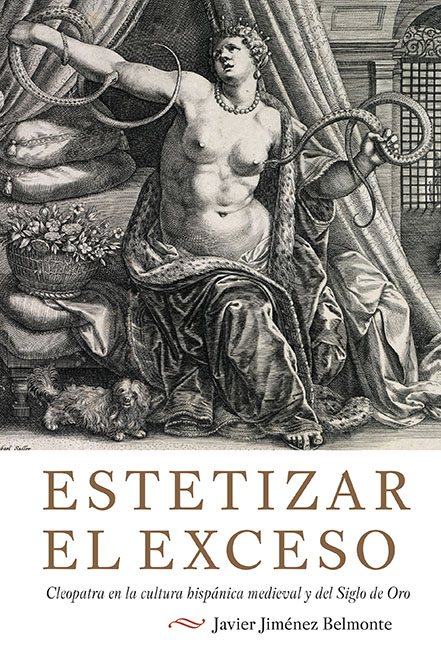
La primera monografía académica en ocuparse de la historia del icono cleopátrico en la cultura española. The first thorough study of the history of the Cleopatra icon in Spanish culture.
La autora examina cómo el conflicto político ha permeado la actual narrativa venezolana para trazar los orígenes y consecuencias de una contemporaneidad turbulenta.Explores the intersections of cultural policies, social changes, political conflict, and fiction writing in modern-day Venezuela.
En contraste con la normativa lectura criollista y proto-nacionalista de Grandeza mexicana (1604), El imperio de la virtud analiza el texto de Bernardo de Balbuena en un contexto atlántico y propone interpretarlo como una defensa del derecho natural de los inmigrantes peninsulares a gobernar la Nueva España. Además de ofrecer una actualizada y documentada biografía de Balbuena que nos recuerda sus lazos con la península ibérica, el libro reconstruye las olvidadas tradiciones retórica, científica, geopolítica y económica que articulan Grandeza mexicana. Gracias a ello, la obra presenta este elogio de la capital virreinal como un posicionamiento político en favor de peninsulares como el propio Balbuena, supuestos poseedores de las virtudes morales e intelectuales necesarias para gobernar espiritual y temporalmente el virreinato novohispano, y en desmedro de los moralmente deficientes criollos y los salvajes indígenas. El imperio de la virtud nos invita a reconsiderar el lugar que Balbuena y Grandeza mexicana ocupan en el acervo cultural mexicano.
Jorge L. Terukina Yamauchi es docente e investigador de Estudios Hispánicos en el College of William and Mary.
Against the normative proto-Mexican and criollista reading of Grandeza mexicana (1604), El imperio de la virtud positions Bernardo de Balbuena's work in an Atlantic context and hence interprets it as a political assertion of the natural right of peninsular émigrés to rule New Spain. The book offers an updated biography of Balbuena that reminds us of his ties to the Iberian Peninsula, and traces the pre-modern rhetorical, scientific, geopolitical, and economic paradigms upon which Grandeza mexicana is designed. Thus, the work analyzes Balbuena's encomium of Mexico City as a political prise de position in favor of peninsular émigrés like Balbuena himself, who are allegedly endowed with the moral and intellectual virtues needed to direct the spiritual and temporal life of the viceroyalty, and against the morally deficient criollos and the barbaric Indians. El imperio de la virtud invites us to reassess the role that Balbuena and Grandeza mexicana play in the cultural history of present-day Mexico.
Jorge L. Terukina Yamauchi is Assistant Professor in Hispanic Studies at the College of William and Mary.
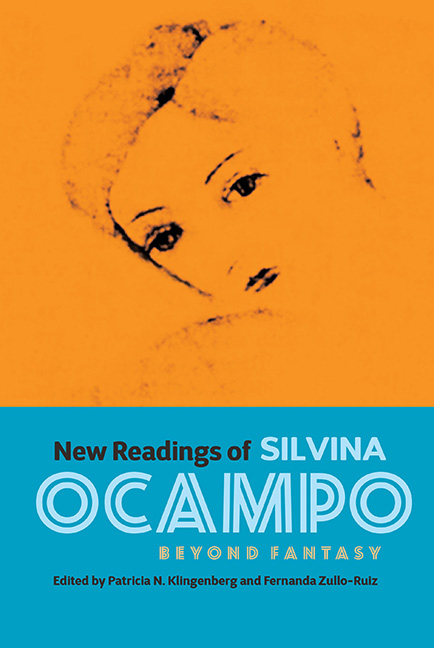
The critical essays in this volume are dedicated to the works of Argentine writer Silvina Ocampo (1903-1993) and introduce readers more fully to a figure who has long been a kind of insider's secret among intellectuals of her country. As the title suggests, the purpose of the volume is to move beyond the codification of Ocampo's use of the supernatural, an early oversimplification of her work. Theessays address the quirkiness, cruelty, violence, and overt sexuality of her works, elements which have impeded a full understanding of her creative vision. Here it becomes clear that Silvina Ocampowas a co-contributor to the literary enterprise of the Sur generation, which produced Jorge Luis Borges, Adolfo Bioy Casares, and Victoria Ocampo, and had a profound influence on writers of the younger generation, such as Alejandra Pizarnik, Sylvia Molloy, Marjorie Agosín and others.
Patricia N. Klingenberg is Professor of Latin American literature at Miami University, Oxford, Ohio.
Fernanda Zullo-Ruiz is Associate Professor of Spanish at Hanover College in Madison, Indiana.
Este libro presenta un análisis detallado de la Pentagonía de Reinaldo Arenas, que incluye las novelas Celestino antes del alba, El palacio de los blanquísimas mofetas, Otra vez el mar, El color del verano, y El asalto. A través del uso de la ficción, Arenas ofrece un testimonio de la opresión que sufrió en Cuba como escritor homosexual durante los años sesenta y los setenta. Este libro pone de relieve el hecho de que, aunque su trabajo no cumpla con las pautas de la novela testimonial cubana, le da una voz a aquellos que fueron silenciados por el gobierno revolucionario. Los dos primeros capítulos ofrecen una visión general de los géneros literarios relevantes para este estudio, como la autobiografía, la novela autobiográfica y la novela testimonial, así como del contexto socio-histórico de la Pentagonía. Posteriormente, este estudio analiza en detalle cada novela por separado, y ofrece una visión de la Pentagonía en su conjunto.
Stephanie Panichelli-Batalla es profesora titular de español y estudios latinoamericanos en la Universidad de Aston.
This book presents an in-depth analysis of Reinaldo Arenas's Pentagony, which includes the novels Singingfrom the Well, The Palace of the White Skunks, Farewell to the Sea, The Color of Summer, and The Assault. Through the use of fiction, Arenas offers a testimony of theoppression he suffered in Cuba during the sixties and the seventies as a homosexual writer. This book highlights the fact that although his work does not comply with the guidelines of the Cuban documentary novel, it does give a strong voice to those who were silenced by the Revolutionary government. The first two chapters provide an overview of literary genres relevant to this study, such as the autobiography, autobiographical novel and documentary novel, as well as the socio-historical context of the novels. Subsequently, this study looks in detail at each novel separately, offering a comprehensive overview of the Pentagony as a whole.
Stephanie Panichelli-Batalla is a Lecturer of Spanish and Latin American Studies at Aston University.
Colvin studies the evolution of Fado music as the soundtrack to the Portuguese talkie. He analyzes the most successful Portuguese films of the first two decades of the Estado Novo era to understand how directors used the national song to promote the values of the young Regime regarding the poor inhabitants of Lisbon's popular neighborhoods. He consides the aesthetic, technological, and social advances that accompany the progress of the Estado Novo---Futurism; the development of sound film; the inception of national radio broadcast; access to the automobile; and urban renewal---within a historical context that considers Portugal's global profile at the time of António de Oliveira Salazar's rise to power and the inauguration of António Ferro's Secretariado da Propaganda Nacional [Ministry of National Propaganda]; Portugal's role as a secret ally of the Falange during the Spanish Civil War; Lisbon's role as a neutral refuge during World War II; and the Portuguese Colonial Empire as an anachronism in the post-World War II years. Colvin argues that Portuguese directors have exploited the growing popularity of the Fado and Lisbon's fadistas to dissuade citizens from alien values that promote individual ambitions and the notion of an easy life of poverty in the Capital. As the public image of the Fado evolves, the fadista's role in film becomes more prominent and eventually,the fadista is the protagonist and the Fado, the principal concern of national film. The author exposes the irony that as the social profile of the Lisbon fadista improves with the international fame of singer Amália Rodrigues, Portuguese film perpetuates and validates the outdated characterization of the fadista as a social pariah that Leito de Barros had proposed in the first Portuguese talkie, A Severa (1931).
Michael Colvin is Associate Professor of Hispanic Studies at Marymount Manhattan College.
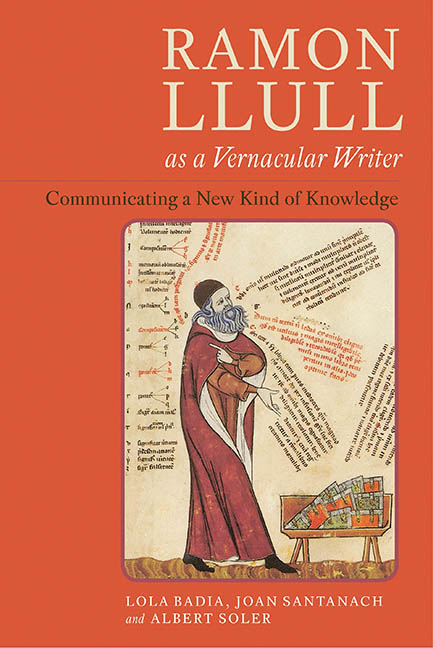
Ramon Llull (1232-1316), mystic, missionary, philosopher and author of narrative and poetry, wrote both in Latin and in Vernacular claiming he had been given a new science to unveil the Truth. This book shows why his Latin and Vernacular books cannot be read as if they had been written in isolation from one another. Llull was an atypical 'scholar' because he enjoyed a form of access to knowledge that differed from the norm and because he organized the production and dissemination of his writings in a creative and unconventional fashion. At a time when learned texts and university culture wereconveyed for the most part using the vehicle of Latin, he wrote a substantial proportion of his theological and scientific works in his maternal Catalan while, at the same time, he was deeply involved in the circulation of such works in other Romance languages. These circumstances do not preclude the fact that a no less important number of the titles comprising his extensive output of more than 260 items were written directly in Latin, or that he had various books which were originally conceived in Catalan subsequently translated or adapted into Latin.
Lola Badia is a professor in the Catalan Philology Departament at the University of Barcelona.
Joan Santanach is Lecturer of Catalan Philology at the University of Barcelona.
Albert Soler (1963) is Lecturer of Catalan Philology at the University of Barcelona.
Este libro explora la representación de la mujer moderna en los ensayos y la ficción de Federica Montseny (1905-1994), líder anarquista española de gran prominencia en las décadas de 1920 y 1930. Se examinan en profundidad sus escritos sobre la cuestión de la mujer a la luz de las premisas filosóficas que sustentan el ideario del anarquismo. Además, su ficción mantiene un complejo diálogo con los discursos científicos y culturales de género que proliferaron durante las primeras décadas del siglo XX. La mujer moderna de Montseny no consiste en una figura única, finalizada y estática, sino que se desplaza entre una diversidad de articulaciones a veces contradictorias, pero que reflejan por igual sus creencias anarquistas. Montseny, quien gozó; de enorme popularidad en su época como escritoray política, elaboró y diseminó; algunas de las propuestas sobre la emancipación de las mujeres más originales de su tiempo, y este volumen es el primero en situar su pensamiento como una de las piezas fundamentales en la evolución del feminismo español.
Nuria Cruz-Cámara es Profesora Titular en la Universidad de Tennesse.
This book explores the figure of the modern woman in the essays and fiction of Federica Montseny (1905-1994), a prominent Spanish anarchist leader during the 1920s and 1930s. It examines in depth the author's theories of gender in light of the basic principles of anarchist political thought and philosophy. In addition, Montseny's novels are shown to engage in an elaborate and critical dialogue with scientific and cultural discourses on women that proliferated during the first four decades of the 20th century. Montseny's ideal modern woman is not a static and definite figure; rather, she shifts across different and at times contradictory articulations that, nonetheless, all fall within her anarchist beliefs. Montseny, a popular politician and writer during her time, developed and disseminated some of the most original concepts dealing with women's emancipation and gender theory, and the present volume is the first to situate her thought as a key component within the evolution of Spanish feminism..
Nuria Cruz-Cámara is Professor of Spanish at the University of Tennessee.
This volume brings together twenty-six essays from the world's leading scholars and practitioners of Spanish Golden Age theatre. Examining the startlingly wide variety of ways that Spanish comedias have been adapted, re-envisioned, and reinvented, the book makes the case that adaptation is a crucial lens for understanding the performance history of the genre. The essays cover a wide range of topics, from the early stage history of the comedia through numerous modern and contemporary case studies, as well as the transformation of the comedia into other dramatic genres, such as films, musicals, puppetry, and opera. The essays themselves are brief and accessible to non-specialists. This book will appeal not only to Golden Age scholars and students but also to theater practitioners, aswell as to anyone interested in the theory and practice of adaptation.
Harley Erdman is Professor of Theater at the University of Massachusetts, Amherst
Susan Paun de García is Professor of Spanish at Denison University.
Contributors: Sergio Adillo Rufo, Karen Berman, Robert E. Bayliss, Laurence Boswell, Bruce R. Burningham, Amaya Curieses Irarte, Rick Davis, Harley Erdman, Susan L. Fischer, Charles Victor Ganelin, Francisco Garcia Vicente, Alejandro Gonzalez Puche, Valerie Hegstrom, Kathleen Jeffs, David Johnston, Gina Kaufmann, Catherine Larson, Donald R. Larson, Barbara Mujica, Susan Paun de Garcia, Felipe B. Pedraza Jimenez, Veronika Ryjik, Jonathan Thacker, Laura L. Vidler, Duncan Wheeler, Amy Williamsen, Jason Yancey
Este libro reúne un número significativo de artículos suponen una aportación ciertamente notable a la bibliografía disponible hasta la fecha. Juan de Mena: de letrado a poeta recoge dieciséis trabajos en los que se estudia su figura y su obra desde perspectivas distintas pero complementarias que abren nuevas líneas de investigación o bien enriquecen otras ya existentes. El libro está estructurado en tres grandes bloques temáticos: El primero de ellos se dedica al contexto histórico de Juan de Mena. El segundo bloque gira en torno a la configuración del poeta, atendiendo a la conciencia autorial de Mena y a los recursos literarios que emplea. El tercer y último bloque está dedicado a la transformación del 'famosíssimo poeta Juan de Mena' en un clásico. Cristina Moya García es profesora en la Universidad de Córdoba. This book contains several studies reviewing the two facets of Juan de Mena's life as lawyer and poet. These contributions open up new lines of research on this important early-fifteenth-century Castilian writer and enrich some existing ones, studying Juan de Mena from different perspectives. The book is structured into three thematic blocks: The first is devoted to the historical context of Juan de Mena. The second section focuses on the configuration of the poet. The third and final part is dedicated to the transformation of "famosíssimo poeta Juan de Mena" into a classic author. Cristina Moya García is a profesor at the Universidad de Córdoba.Contributors: Federica Accorsi, Carlos Alvar, Linde M. Brocato, Daniel Capra, Juan Luis Carriazo Rubio, Antonio Cortijo, Sila Gómez Álvarez, Ángel Gómez Moreno, Daniel Hartnett, Julián Jiménez Heffernan, Maxim Kerkhof, Françoise Maurizi, Cristina Moya García, Francisco de Paula Cañas Gálvez, Pedro Ruiz Pérez.
The fourteen essays of this volume engage in distinct ways with the matter of motion in early modern Spanish poetics, without limiting the dialectic of stasis and movement to any single sphere or manifestation. Interrogation of the interdependence of tradition and innovation, poetry, power and politics, shifting signifiers, the intersection of topography and deviant temporalities, the movement between the secular and the sacred, tensions between centres and peripheries, issues of manuscript circulation and reception, poetic calls and echoes across continents and centuries, and between creative writing and reading subjects, all demonstrate that Helgerson's central notion of conspicuous movement is relevant beyond early sixteenth-century secular poetics, By opening it up we approximate a better understanding of poetry's flexible spatio-temporal co-ordinates in a period of extraordinary historical circumstances and conterminous radical cultural transformation. Los catorce ensayos de este volumen conectan de una manera perceptible con el tema del movimiento en la poesía española del siglo de oro, sin limitar la dialéctica de la estasis y movimiento a una sola esfera o manifestación única. Entre los multiples enfoques cabe destacar: el cuestionamiento de la interdependencia de la tradición e inovación, de la poesía, del poder y la política, de los significantes que se transforman, de los espacios que conectan y cruzan con los tiempos 'desviados'; análisis de las tensiones entre lo sagrado y lo secular, del conflicto centro-periferia y del complejo sistema de producción, circulación y recepción de los manuscritos; el diálogo con el eco poético a través de los siglos y de los continentes y la construcción creativa del sujeto escritor y/o lector. Al abrir la noción central de Helgerson del "movimiento conspicuo" más allá de la poesía nueva secular, este libro propone un entendimiento más completo de las coordinadas espacio-temporales de la poesía en un periodo de circunstancias históricas extrao. Jean Andrews is Associate Professor in the Department of Spanish, Portuguese and Latin American Studies, University of Nottingham. Isabel Torres is Professor of Spanish Golden Age Literature at Queen's University, Belfast. Contributors: Jean Andrews, Dana Bultman, Noelia Cirnigliaro, Marsha Collins, Trevor J. Dadson, Aurora Egido, Verónica Grossi, Anne Holloway, Mark J. Mascia, Terence O'Reilly, Carmen Peraita, Amanda Powell, Colin Thompson, Isabel Torres.