Monografías publishes critical studies covering a wide range of topics in the literature, culture and history of the Iberian Peninsula and Latin America from the Middle Ages to the present day. It aims to promote intellectually stimulating and innovative scholarship that will make a major contribution to the fields of Hispanic and Lusophone studies. Work on un- or under-explored sources and themes or utilising new methodological and theoretical approaches, as well as interdisciplinary studies, are particularly encouraged. Both monographs and essay collections, in English, Spanish, English/Spanish or English/Portuguese, are welcome.
To save content items to your account,
please confirm that you agree to abide by our usage policies.
If this is the first time you use this feature, you will be asked to authorise Cambridge Core to connect with your account.
Find out more about saving content to .
To save content items to your Kindle, first ensure no-reply@cambridge.org
is added to your Approved Personal Document E-mail List under your Personal Document Settings
on the Manage Your Content and Devices page of your Amazon account. Then enter the ‘name’ part
of your Kindle email address below.
Find out more about saving to your Kindle.
Note you can select to save to either the @free.kindle.com or @kindle.com variations.
‘@free.kindle.com’ emails are free but can only be saved to your device when it is connected to wi-fi.
‘@kindle.com’ emails can be delivered even when you are not connected to wi-fi, but note that service fees apply.
Of all the differentiated regions comprising contemporary Spain, Galicia is possibly the most deeply marked by political, economic and cultural inequities throughout the centuries. Possibly due to the absence of a nationally aware local bourgeoisie and the enduringly colonial structures informing Spanish-Galician economic and cultural relations, processes of national construction in the region have been patchily successful. However, Galicia's cultural distinctness is easily recognisable to the observer, from the language spoken in the region --- the contemporary variant of old Galician-Portuguese --- to the specific forms of the Galician built landscape, with its unique mixture of indigenous, imported and hybrid elements. The present volume offers English-language readers an in-depth introduction to the integral aspects of Galician cultural history, from pre-historical times to the present day. Whilst attention is given to the traditional areas of medieval culture, language, contemporary history and politics, the book also privileges compelling contemporary perspectives on cinema, architecture, the city of Santiago de Compostela and the urban qualities of Galician culture today. Helena Miguélez-Carballeira is a Senior Lecturer in Hispanic Studies at Bangor University, and Director of the Centre for Galician Studies in Wales.
Co-winner of the Inaugural AHGBI Prize for Best Doctoral Dissertation. The aftermath of Argentina's last dictatorship (1976-1983) has traditionally been associated with narratives of suffering, which recall the loss ofthe 30,000 civilians infamously known as the "disappeared". When democracy was recovered, the unspoken rule was that only those related by blood to the missing were entitled to ask for justice. This book both queries and queers this bloodline normativity. Drawing on queer theory and performance studies, it develops an alternative framework for understanding the affective transmission of trauma beyond traditional family settings. To do so, it introduces anarchive of non-normative acts of mourning that runs across different generations. Through the analysis of a broad spectrum of performances - including interviews, memoirs, cooking sessions, films, jokes, theatrical productions andliterature - the book shows how the experience of loss has not only produced a well-known imaginary of suffering but also new forms of collective pleasure. Cecilia Sosa received a PhD in Drama from Queen Mary, University of London. She is currently a post-doctoral research fellow at School of Arts & Digital Industries, University of East London.
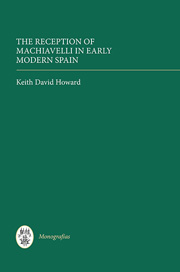
Arguing against historians of Spanish political thought that have neglected recent developments in our understanding of Machiavelli's contribution to the European tradition, the thesis of this book is that Machiavellian discourse had a profound impact on Spanish prose treatises of the sixteenth and seventeenth centuries. After reviewing in chapter 1 Machiavelli's ideological restructuring of the language of European political thought, in chapter 2 Dr. Howard shows how, before his works were prohibited in Spain in 1583, Spaniards such as Fadrique Furió Ceriol and Balthazar Ayala used Machiavelli's new vocabulary and theoretical framework to develop an imperial discourse that would be compatible with a militant understanding of Catholic Christianity. In chapters 3, 4 and 5 he demonstrates in detail how Giovanni Botero, Pedro de Ribadeneyra, and their imitators in the anti-Machiavellian reason-of-state tradition in Spain, attack a straw figure of Machiavelli that they have invented for their own rhetorical and ideological purposes, while they simultaneously incorporate key Machiavellian concepts into their own advice. Keith David Howard is an Assistant Professor of Spanish at Florida State University.
¿Qué ha hecho que la obra de Gabriel Miró parezca haberse relegado a un lugar marginal de la historia de la literatura española, con cada vez menos lectores? La pregunta no es baladí. Puede que Miró no fuera un escritor de masas. En efecto, en concordancia con la estética de vanguardia, fue un autor difícil. Pero fue una figura clave de la llamada edad de plata. Sus obras, además, suscitaron un interés de repercusiones mediáticas, como las polémicas en torno a su retrato del clero o la presunta inmoralidad de su prosa y su heterodoxa visión de Cristo. En este libro, se sugieren las razones que han podido llevar a este injusto olvido literario y se muestra que, a pesar de todo, su obra nunca ha dejado de ser relevante, y ha influido en autores de postguerra tan importantes como Camilo José Cela y Francisco Umbral, en la obra narrativa de un filólogo de tanto prestigio como Antonio Prieto y en otros novelistas como Pedro de Lorenzo, Antonio Zoido y Adolfo Lizón. Guillermo Laín Corona es profesor de lengua y literatura españolas en University College London. ENGLISH VERSION: Why does it seem that Gabriel Miró has been neglected as a secondary writer in the literary history of Spain, with fewer and fewer readers? This is not an irrelevant question. Miró might not have had a mass readership, as, accordingly to the aesthetics of the Avant-Garde, he was a difficult writer. But he was a key figure in the so-called silver age. In addition, his works caught the kind of attention that fascinated the media, including the controversies surrounding his portrayals of the clergy, the supposedly immorality of his prose and his heterodox view of Christ. This book tackles the reasons for this unfair literary oblivion and shows that, despite it, his work was never completely overlooked. Indeed, Miró influenced relevant writers of the post-Civil War period, such as Camilo José Cela and Francisco Umbral, as well as the prose fiction of an important philologist like Antonio Prieto and other novelists such as Pedro de Lorenzo, Antonio Prieto and Adolfo Lizón. Guillermo Laín Corona is a Teaching Fellow in Spanish Language and Literature at University College London.
There has been a widely-held consensus among historians that the Moriscos of Spain made little or no attempt to assimilate to the majority Christian culture around them, and that this apparent obduracy made their expulsion between1609 and 1614 both necessary and inevitable. This book challenges that view. Assimilation, coexistence, and tolerance between Old and New Christians in early modern Spain were not a fiction or a fantasy, but could be a reality, made possible by the thousands of ordinary individuals who did not subscribe to the negative vision of the Moriscos put around by the propagandists of the government, and who had lived in peace and harmony side by side for generations. For some, this may be a new and surprising vision of early modern Spain, which for too long, and thanks in large part to the Black Legend, has been characterized as a land of intolerance and fanaticism. This book will help to rebalance the picture and show sixteenth- and seventeenth-century Spain in a new, infinitely richer and more rewarding light. Trevor J. Dadson FBA is Professor of Hispanic Studies at Queen Mary, University of London, andis currently President of the Association of Hispanists of Great Britain & Ireland. In 2008 he was elected a Fellow of the British Academy.
Eça de Queirós' work has primarily been studied within the context of French literature and culture.This book presents a different Eça. Focusing on the years that he lived in Paris, it demonstrates how the periodicals he himself conceived and edited were modeled on dozens of Victorian ones such as the Contemporary Review, the Review of Reviews or the Idler, as well as on some American ones such as the Forum, the Arena, and the North American Review. This book shows us an Eça who is undeniably an Anglophile, an Eça long seduced by the diversity and originality of English thought, an Eça increasingly distant from the French cultural model which had marked his education. This is a paradigm that, while in England (from 1874 to 1888), he perceives as being too restrictive if it were not complemented by the vast Anglo-Saxon universe which he was given to discover andfor which he nurtures a greater fascination, or we could even say a greater passion, than that to which critics and he himself are willing to admit. Teresa Pinto Coelho is Full Professor and Chair in Anglo-PortugueseStudies at the Universidade Nova de Lisboa.
This book examines six polyphonic Cuban novels, published between 1991 and 1999. All the novels studied here, part of the new 'boom' of the Cuban novel in the 1990s, subvert homogenized views of Cuban identity, and this book analyses how, in undermining monolithic representations of reality, these polyphonic texts employ discursive techniques that question absolute truths, defy established boundaries of literary genres and challenge concepts of national, gender and individual identity. In this book, the authors studied (Reinaldo Arenas, Leonardo Padura Fuentes, Abilio Estévez, Daína Chaviano, Yanitzia Canetti, and Zoé Valdés) are placed beyond the dichotomy of outside and inside Cuba, to focus on the fluidity and heterogeneity of Cuban culture displayed in its literature. This study establishes similarities and differences in the way these authors create polyphonic texts that question whether notions of country and nation coincide in novels that respond to economic hardship, political and social changes, issues of cubanía, and exile. ngela Dorado-Otero is Postdoctoral Research Fellow in Iberian and Latin American Studiesat Queen Mary University of London.
The Panic Theatre is a set of plays conceived by Fernando Arrabal between 1957 and 1966, the author's first years in Paris. Composed at the zenith of the avant-garde movement, they convey a radically new and challenging theatricality whose cornerstone is their ceremonial shape. The plays' underlying panic ceremony is thoroughly studied in light of Arrabal's programmatic text Le Panique, that singles out three key concepts responsible for artistic creation: memory, chance and confusion. This study shows how memory determines the plays' departure from mimesis and how chance articulates the materials recalled from memory into precisely arranged plots. Furthermore, subjects, objects, spatial-temporal frames and words are subject to confusion, in an attempt to create an utterly innovative form of theatre. This group of seemingly heterogeneous plays is given theoretical coherence and consistency by placing the idea of panic at the centre of a great formal experimentation. Diego Santos Sánchez is a full-time researcher at the Universitat Autònoma de Barcelona.
This companion to the work of Peruvian Nobel Laureate Mario Vargas Llosa traces his fictional and non-fictional writing throughout the different phases of a career spanning more than fifty years. His lifelong dedication to literature goes hand in hand with his commitment as a public intellectual, a role that frequently involves him in controversy. Against the backdrop of Vargas Llosa's political and intellectual development this study brings out the continuities and interrelations that give unity and coherence to a diverse body of work. It highlights the thematic concerns that re-emerge at different points in his writing and link Vargas Llosa's journalism and essays with his fiction: the effects of social ills on the individual, the nature of fiction, and the importance of literature for society. The novels at the centre of his work combine passionate storytelling with technical complexity and an often playful experimentation with genres. This book not only provides a comprehensive overview of Vargas Llosa's writing in the context of his intellectual biography, but looks in detail at each individual work, summarizing contents and analyzing the interplay of form, language, and meaning. A bibliography and suggestions for further reading complement this Companion which will serve the general reader as much as the undergraduate and scholar. Sabine Köllmann is an independent academic writer living in London.
Este libro analiza la perspectiva de cuatro escritoras mexicanas -Nellie Campobello, Elena Garro, Laura Esquivel y Ángeles Mastretta- acerca de la Revolución Mexicana y cómo estas escritoras recuperan la memoria popular, recreando y reincluyendo a las mujeres en la narrativa nacional respecto a su participación en la propia Revolución, más allá del conocido papel de soldaderas y Adelitas que acompañaban a los diferentes ejércitos revolucionarios. Mi trabajo combina diferentes planteamientos críticos feministas, antropológicos y geográficos que además de las mujeres, incluyen a los indígenas y a otras minorías étnicas contemplando la interrelación de las categorías de género, espacio, raza y clase como todos que definen y redefinen, permanentemente, identidades espacializadas en cambio permanente y constante. This book analyzes the perspective of four Mexican women writers regarding the Mexican Revolution---Nellie Campobello, Elena Garro, Laura Esquivel, and Angeles Mastretta. It examines how they recover popular memory to re-create and re-insert women in the national narrative with respect to their participation in the Revolution, which extended beyond the role of soldiers, camp followers, and soldiers' wives. The work combines cultural studies with feminist critical readings and an anthropological and geographical awareness of the roles of indigenous people and ethnic minorities, while paying attention to different categories such as gender, place, race, and class, as a wholeness of spatialized identities in permanent and constant flux. Ela Molina-Sevilla de Morelock is a Latin Americanist currently based in the U.S.
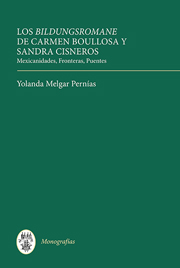
En este trabajo se analizan comparativamente los Bildungsromane femeninos de la escritora mexicana Carmen Boullosa (Mejor desaparece, Antes y Treinta años) y de la chicana Sandra Cisneros (The House on Mango Street y Caramelo). Partiendo del doble fundamento comparativo proporcionado por la diferencia de género y por el germen del legado cultural mexicano compartido por mexicanas y chicanas, este estudio constituye el primer intento de entender la relación entre las literaturas producidas por ambas entidades desde un enfoque que integra género sexual y género literario, materializado en el concepto de "Bildungsroman femenino" que vertebra el análisis de los textos. Desde la exploración de las diferencias en las representaciones de ambas autoras en el seno de contextos literarios y culturales específicos, este estudio enfatiza su proyecto común de deconstrucción y reconstrucción potencial, desde sus ubicaciones particulares, de la mexicanidad femenina, estableciéndose con ello un espacio de convergencia sensible a la diferencia que posibilita la apertura de avenidas para un diálogo literario y crítico transnacional, tan necesario como escaso. This work is a comparative analysis of the female Bildungsromane of Mexican writer Carmen Boullosa and Chicana writer Sandra Cisneros. Based on a double comparative foundation constituted by gender difference and by the Mexican cultural legacy shared by Mexicanas and Chicanas, the book represents the first attempt to understand the relationship between the literary production of both groups from a perspective that integrates gender and genre, as materialised in the concept of "female Bildungsroman" that structures the exploration of the narratives examined. By exploring the differences in the literary representations of both writers within their specific literary and cultural contexts, this study emphasizes their common project of deconstruction and potential reconstruction, each from their particular location, and of what is conceptualised as 'mexicanidad femenina', thus enabling a space of convergence sensitive to difference that contributes towards opening up a transnational literary and critical dialogue in the context of the surprisingly poor exchange between Mexicanas and Chicanas. Yolanda Melgar Pernías es asistente posdoctoral en literatura en el Institut für Romanistik de la Universidad de Innsbruck, Austria.
This work engages with a broader evaluation of early modern poetics that foregrounds the processes rather than the products of thinking. The locus of the study is the Imperial 'home' space, where love poetry meets early modern empire at the inception of a very conflicted national consciousness, and where the vernacular language, Castilian, emerges in the encounter as a strategic site of national and imperial identity. The political is, therefore, a pervasive presence, teased out where relevant in recognition of the poet's sensitivity to the ideologies within which writing comes into being. But the primary commitment of the book is to lyric poetry, and to poets, individually and in their dynamic interconnectedness. Moving beyond a re-evaluation of critical responses to four major poets of the period (Garcilaso de la Vega, Herrera, Góngora and Quevedo), this study disengages respectfully with the substantial body of biographical research that continues to impact upon our understanding of the genre, and renegotiates the Foucauldian concept of the 'epistemic break', often associated with the anti-mimetic impulses of the Baroque. This more flexible model accommodates the multiperspectivism that interrogated Imperial ideology even in the earliest sixteenth-century poetry, and allows for the exploration of new horizons in interpretation. Isabel Torres is Professor of Spanish Golden Age Literature and Head of Spanish and Portuguese Studies at Queen's University, Belfast.
Nísia Floresta Brasileira Augusta (1810-85) published prolifically in Brazil and Europe on the position of women and other subjects central to Brazilian national identity after independence. As such she is a hugely significant figure in the development of women's writing and feminist discourse in Brazil, yet this book is the first full length study of her work to be published in English. Through a close analysis of the writer's engagement with the discourses of women's rights, education, slavery, literary Indianism, political ideology and nation-building, this study challenges some of the more monolithic constructions of the writer that still prevail in Brazilian literary historiography. Beginning with a fresh analysis of Floresta's writing on women, this book identifies the influences and motivations that determined her stance and reassesses the writer's position in Brazil's feminist canon. A consideration of her participation in further social and political discourses exposes the hagiographic and reductive nature of her definition as an abolitionist and republican. It also reveals the problematic intersections of gender, race and class in her work. In particular, this study highlights the important part that patriotism plays in shaping the writer's approach to these issues, indicating how the patriotic rhetoric she consistently employs lends additional power and influence to her work, but simultaneously curtails and distorts the positions she adopts and the appeals she makes. Charlotte Hammond Matthews is a Lecturer in Portuguese at the University of Edinburgh.
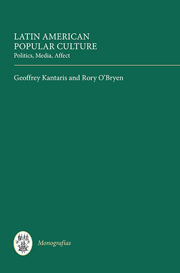
"Popular culture" has always represented a fulcrum within social, cultural and anthropological discourses in Latin America. Often imagined as representing a challenge to the dominant cultural paradigms of the "lettered city", it has repeatedly been mapped onto political, economic and even libidinal boundaries - between country and city, between folk and street, between the "masses" and elite national/political structures. Yet at the turn of the 21st century, concepts such as the "folk", the "popular", the "mass" and the "multitude" have exploded in the face of new cultural and informational technologies, putting cinematic, televisual and cybernetic manifestations of popular culture at the forefront of social processes. In order to address the fragile contemporaneity of popular culture in Latin America, the essays in this collection engage with a wide range of cultural phenomena, from forms of mass political experience in the Colonial and Independence periods, to the modern-day emergence of street art, blogs, comic books and television, as well as the recycling of refuse as art, the marketing of santería to tourists, and the filming of poverty in the favela. In so doing, they explore the diverse regimes of affect that both sustain and destabilize national symbolic orders, and chart the novel mediations between the national and the global in a see-sawing climate of conflicting economic and political ideologies. Geoffrey Kantaris is a Senior Lecturer at the University of Cambridge. Rory O'Bryen is a University Lecturer at the University of Cambridge. Contributors: Francisco Ortega, Joanna Page, Stephen Hart, Erica Segre, Jesús Martín Barbero, Lúcia Sá, Chandra Morrison, Claire Taylor, Andrea Noble, Ed King.
This is the first extended, English-language study to focus exclusively on the fiction of Juan Rulfo in over twenty years. It contains innovative analyses of a selection of short stories from Rulfo's collection, El llano en llamas (1953). It also examines in great depth two of the main characters of Pedro Páramo (1955), Rulfo's masterpiece and only novel. The book shows how Rulfo's works can be read as exercises in irony directed against the rhetoric of post-Revolutionary Mexican governments. It also demonstrates the relevance of certain legacies of colony in Rulfo's use of irony. Successive Mexican governments promoted a vision of post-Revolutionary society founded on specific notions of ethnicity, family, nation, education, religion and rural politics. The author combines examination of the speeches, images and newspaper articles which disseminated this vision with incisive literary analyses of Rulfo's work. These analyses are informed both by his original theory of irony, based on "internal" and "external" referents, and by existing postcolonial theories, particularly those of Homi K. Bhabha. Amit Thakkar is a Lecturer in Hispanic Studies at Lancaster University.
This book focuses on the cross-currents and points of contact in film production among so-called Hispanic countries (Spain, Portugal and Latin America), and in particular the impact that co-production and supranational funding initiatives are having on both the film industries and the films of Latin America in the twenty-first century. Together with chapters that discuss and further develop transnational approaches to reading films in the Hispanic and Latin American context, the volume includes chapters that focus on funding initiatives, such as IBERMEDIA, that are aimed at Spain, Portugal and Latin America. An analysis of such initiatives facilitates a nuanced discussion of the range of meanings afforded to the term transnationalism: from the workings of those driven by economic imperatives, such as co-productions and 'Hispanic' film festivals, to the cultural, for example the invention of a marketable 'Latinamericaness' in Spain, or a 'Hispanic aesthetic' elsewhere. Stephanie Dennison is Reader in Brazilian Studies at the University of Leeds
Portuguese writer Fernando Pessoa claimed that he did not evolve, but rather travelled. This book provides a state of the art panorama of Pessoa's literary travels, particularly in the English-speaking world. Its eighteen short, jargon-free essays were written by the most distinguished Pessoa scholars across the globe. They explore the influence on Pessoa's thinking of such writers as Whitman and Shakespeare, as well as his creative dialogues with figures ranging from decadent poets to the dark magician Aleister Crowley, and, finally, some of the ways in which he in turn has influenced others. They examine many different aspects of Pessoa's work, ranging from the poetry of the heteronyms to the haunting prose of The Book of Disquiet, from esoteric writings to personal letters, from reading notes to unpublished texts. Fernando Pessoa's Modernity Without Frontiers is a valuable introduction to this multifaceted modern master, intended for both students of modern literature and general readers interested in one of its major figures.
Este libro propone una relectura crítica de la relación entre los conceptos de nacionalismo y exilio durante el período inmediatamente posterior a la dictadura argentina (1976-1983) conocido también como la posdictadura. A partir de un análisis de los debates ideológicos del campo intelectual de los años 80 en el Río de la Plata, the author postula que la literatura de exilio más que una escritura particular de dicha época, forma parte de una tradición literaria mucho más amplia y compleja que merece ser revisada. Este libro aporta un nuevo enfoque en torno al estudio sobre exilio y diáspora en America Latina y el lugar que estos fenómenos ocupan en la formación del canon literario a fines del siglo XX. Por medio de un corpus que aún no ha sido trabajado en su merecida extensión-- 'Composición de lugar' (1984) de Juan Martini, 'Insomnio' (1986) de Marcelo Cohen, 'Maldición eterna a quien lea estas páginas' (1980) de Manuel Puig, y 'Vudú urbano' (1984) de Edgardo Cozarinsky--este trabajo estudia la compleja relación entre exilio y literatura en la Argentina durante un período de profundos cambios sociales y políticos. María Inés Cisterna Gold is a professor of Latin American Literature in the Department of Hispanic Studies at the University of Massachusetts, Boston.
The book analyses the evolution of the representation of distinct political elements throughout Cortázar's writings, mainly with reference to the novels and the so-called collage books, which have so far received only limited critical attention. The author also alludes to some short stories and refers to many of Cortázar's non-literary texts. Through this chosen corpus, the book follows a thematic thread, showing that politics was present in Cortázar's fiction from his very first writings, and not - as he himself tended to claim - only following his conversion to socialism. The study aims to show that contrary to what many critics have argued, this political conversion did not divide the writer into an irreconcilable before and after - the apolitical versus the political -, but rather it simply shifted the emphasis of the representation of the political that already existed in Cortázar's writings. Carolina Orloff is an independent scholar working on research projects in the UK and in Argentina.
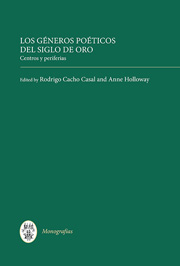
Generic experimentation is at the heart of the major poetic innovations of the Spanish Golden Age. The passage from the sixteenth to the seventeenth century marked a dynamic moment of transition in the evolution of aesthetic forms. This volume of essays, which unites contributions from a cross-section of specialists in the field of Hispanic poetry, presents a comprehensive exploration of the unprecedented flowering of Hispanic culture associated with this period. It not only places aesthetic questions in their broader European context, but looks beyond the confines of Europe to interrogate the key terms of its title, balancing panoramic approaches to questions of genre with the insights afforded by detailed readings of individual texts. The publication examines the aesthetic and ideological criteria on which assessments of artistic importance have been based, considering the relationship between genre and 'major' and 'minor' authors, and exploring the factors which precipitated a text's passage from the periphery to the centre of the canon. English translation for marketing purposes Generic experimentation is at the heart of the major poetic innovations of the Spanish Golden Age. The passage from the sixteenth to the seventeenth century marked a dynamic moment of transition in the evolution of aesthetic forms. This volume of essays, which unites contributions from a cross-section of specialists in the field of Hispanic poetry, presents a comprehensive exploration of the unprecedented flowering of Hispanic culture associated with this period. It not only places aesthetic questions in their broader European context, but looks beyond the confines of Europe to interrogate the key terms of its title, balancing panoramic approaches to questions of genre with the insights afforded by detailed readings of individual texts. The publication examines the aesthetic and ideological criteria on which assessments of artistic importance have been based, considering the relationship between genre and 'major' and 'minor' authors, and exploring the factors which precipitated a text's passage from the periphery to the centre of the canon. Rodrigo Cacho is currently a University Senior lecturer in Spanish Golden Age Culture in the University of Cambridge. Anne Holloway is currently a Lecturer in the University of Glasgow.