To save content items to your account,
please confirm that you agree to abide by our usage policies.
If this is the first time you use this feature, you will be asked to authorise Cambridge Core to connect with your account.
Find out more about saving content to .
To save content items to your Kindle, first ensure no-reply@cambridge.org
is added to your Approved Personal Document E-mail List under your Personal Document Settings
on the Manage Your Content and Devices page of your Amazon account. Then enter the ‘name’ part
of your Kindle email address below.
Find out more about saving to your Kindle.
Note you can select to save to either the @free.kindle.com or @kindle.com variations.
‘@free.kindle.com’ emails are free but can only be saved to your device when it is connected to wi-fi.
‘@kindle.com’ emails can be delivered even when you are not connected to wi-fi, but note that service fees apply.
We study the effect of the coronavirus disease 2019 (COVID-19) in India and model the epidemic to guide those involved in formulating policy and building health-care capacity.
Methods:
This effect is studied using the Susceptible-Exposed-Infected-Recovered (SEIR) compartmental model. We estimate the infection rate using a least square method with Poisson noise and calculate the reproduction number.
Results:
The infection rate is estimated to be 0.270 and the reproduction number to be 2.70. The approximate peak of the epidemic will be August 9, 2020. A 25% drop in infection rate will delay the peak by 11 d for a 1-mo intervention period. The total infected individuals in India will be 9% of the total population.
Conclusions:
The predictions are sensitive to changes in the behavior of people and their practice of social distancing.
A simple evaluation tool for patients with novel coronavirus disease 2019 (COVID-19) could assist the physicians to triage COVID-19 patients effectively and rapidly. This study aimed to evaluate the predictive value of 5 early warning scores based on the admission data of critical COVID-19 patients.
Methods:
Overall, medical records of 319 COVID-19 patients were included in the study. Demographic and clinical characteristics on admission were used for calculating the Standardized Early Warning Score (SEWS), National Early Warning Score (NEWS), National Early Warning Score2 (NEWS2), Hamilton Early Warning Score (HEWS), and Modified Early Warning Score (MEWS). Data on the outcomes (survival or death) were collected for each case and extracted for overall and subgroup analysis. Receiver operating characteristic curve analyses were performed.
Results:
The area under the receiver operating characteristic curve for the SEWS, NEWS, NEWS2, HEWS, and MEWS in predicting mortality were 0.841 (95% CI: 0.765-0.916), 0.809 (95% CI: 0.727-0.891), 0.809 (95% CI: 0.727-0.891), 0.821 (95% CI: 0.748-0.895), and 0.670 (95% CI: 0.573-0.767), respectively.
Conclusions:
SEWS, NEWS, NEWS2, and HEWS demonstrated moderate discriminatory power and, therefore, offer potential utility as prognostic tools for screening severely ill COVID-19 patients. However, MEWS is not a good prognostic predictor for COVID-19.
The ongoing coronavirus disease 2019 (COVID-19) pandemic, which was initially identified in December 2019 in the city of Wuhan in China, poses a major threat to worldwide health care. By August 04, 2020, there were globally 695,848 deaths (Johns Hopkins University, https://coronavirus.jhu.edu/map.html). A total of 5765 of them come from Turkey (Johns Hopkins University, https://coronavirus.jhu.edu/map.html). As a result, various governments and their respective populations have taken strong measures to control the spread of the pandemic. In this study, a model that is by construction able to describe both government actions and individual reactions in addition to the well-known exponential spread is presented. Moreover, the influence of the weather is included. This approach demonstrates a quantitative method to track these dynamic influences. This makes it possible to numerically estimate the influence that various private or state measures that were put into effect to contain the pandemic had at time t. This might serve governments across the world by allowing them to plan their actions based on quantitative data to minimize the social and economic consequences of their containment strategies.
Methods:
A compartmental model based on SEIR that includes the risk perception of the population by an additional differential equation and uses an implicit time-dependent transmission rate is constructed. Within this model, the transmission rate depends on temperature, population, and government actions, which in turn depend on time. The model was tested using different scenarios, with the different dynamic influences being mathematically switched on and off. In addition, the real data of infected coronavirus cases in Turkey were compared with the results of the model.
Results:
The mathematical study of the influence of the different parameters is presented through different scenarios. Remarkably, the last scenario is also an example of a theoretical mitigation strategy that shows its maximum in August 2020. In addition, the results of the model are compared with the real data from Turkey using conventional fitting that shows good agreement.
Conclusions:
Although most countries activated their pandemic plans, significant disruptions in health-care systems occurred. The framework of this model seems to be valid for a numerical analysis of dynamic processes that occur during the COVID-19 outbreak due to weather and human reactions. As a result, the effects of the measures introduced could be better planned in advance by use of this model.
Outbreaks and containment measures implemented to control them can increase stress in affected populations. The impact of the coronavirus disease 2019 (COVID-19) outbreak on perceived stress levels in the Jordanian population is unknown. The aim of the study was to determine the perceived stress level and factors associated with it in the Jordanian population during the COVID-19 outbreak.
Methods:
Required data, such as those from the Perceived Stress Scale (PSS-10) and possible predictors of perceived stress, were collected through a Web-based survey. Statistical analysis was conducted through SPSS.
Results:
The mean (SD) of perceived stress score was 19.8 (6.7). Regression analysis revealed that stress was increased in females, young adults, usually being stressed more than others by a health problem, increased perceived severity of the disease, increased overall worry score, and student’s worry regarding their studies/graduation. Perceived stress was decreased if participants’ self-rated health status score increased.
Conclusions:
In the context of increasing public health preparedness, the results of this study can be used in designing interventions to alleviate stress in susceptible segments of the Jordanian community.
The objective of this study is to compare the various nonlinear and time series models in describing the course of the coronavirus disease 2019 (COVID-19) outbreak in China. To this aim, we focus on 2 indicators: the number of total cases diagnosed with the disease, and the death toll.
Methods:
The data used for this study are based on the reports of China between January 22 and June 18, 2020. We used nonlinear growth curves and some time series models for prediction of the number of total cases and total deaths. The determination coefficient (R2), mean square error (MSE), and Bayesian Information Criterion (BIC) were used to select the best model.
Results:
Our results show that while the Sloboda and ARIMA (0,2,1) models are the most convenient models that elucidate the cumulative number of cases; the Lundqvist-Korf model and Holt linear trend exponential smoothing model are the most suitable models for analyzing the cumulative number of deaths. Our time series models forecast that on 19 July, the number of total cases and total deaths will be 85,589 and 4639, respectively.
Conclusion:
The results of this study will be of great importance when it comes to modeling outbreak indicators for other countries. This information will enable governments to implement suitable measures for subsequent similar situations.
Coronavirus disease 2019 (COVID-19) due to severe acute respiratory syndrome coronavirus 2 (SARS-CoV-2) is currently a global pandemic that has affected over 7 million people worldwide, resulting in over 400,000 deaths. In the past 20 years, they have been several viral epidemics that were primarily transmitted by respiratory droplets. The use of face masks is proven to be effective in protecting health-care workers as they perform their duties. Still, there is limited evidence about whether the widespread use of face mask would be very useful in protecting the general population. This study aimed to conduct a review to determine if face masks would be beneficial in the general population as a means of reducing the spread of COVID-19. The widespread implementation of wearing face masks by the general population is challenging due to a variety of factors. However, the extensive use of cloth masks in conjunction with other preventative measures such as social distancing and handwashing can potentially reduce the risk of transmission of COVID-19.
Being a part of our sociocultural history, stories and narratives help us make sense of our lifeworlds. Stories, rumors, and conspiracy theories offer deep meanings when analyzed in specific contexts, and prominently appear in the face of looming uncertainties, anxieties, and fears. Similarly, many narratives have surrounded the coronavirus disease 2019 (COVID-19) pandemic at the global and local levels as people try to make sense of this invisibly spreading virus and its multidimensional effects. Drawing on the media reports, I show and analyze global-level narratives that reveal geopolitics in play. To present the local level narratives in Pakistan, I build on my long-term ethnographic fieldwork, recent telephone interviews, and content analysis to discuss why these tales emerge and spread. As the pandemic unfolded, local people started drinking “miraculous” tea as a form of prevention, shaving their heads, and/or praying to God to undo His “punishment” and conceptualizing the pandemic as an invented “plot.” With my analyses, I compare the “viral rumors” with the virus and argue that these narratives are social phenomena, carrying multiple meanings that need the thorough attention of social scientists, for example, anthropologists, just as we need experts to study a virus.
This article discusses the relationship between both poverty and food insecurity (FI) and the COVID-19 pandemic, as well as presenting possible strategies and actions for increasing social protection in the fight against these conditions in the current epidemiological context, especially for low-income countries. This is a narrative review concerning COVID-19, poverty, and food and nutritional insecurity. The COVID-19 pandemic may increase poverty and FI levels, resulting from the absence of or weak political, economic and social interventions to maintain jobs, as well as compromised food production and distribution chains and reduced access to healthy foods in different countries around the world, especially the poorest ones, where social and economic inequality was already historically high; the pandemic heightens and uncovers the vulnerability of poor populations. Public policies focused on guaranteeing the human right to adequate food must be improved and implemented for populations in contexts of poverty with the aim of providing food security.
The coronavirus disease 2019 (COVID-19) pandemic has induced a reinforcement of infection control measures in the hospital setting. Here, we assess the impact of the COVID-19 pandemic on the incidence of nosocomial Clostridioides difficile infection (CDI).
Methods:
We retrospectively compared the incidence density (cases per 10,000 patient days) of healthcare-facility–associated (HCFA) CDI in a tertiary-care hospital in Madrid, Spain, during the maximum incidence of COVID-19 (March 11 to May 11, 2020) with the same period of the previous year (control period). We also assessed the aggregate in-hospital antibiotic use (ie, defined daily doses [DDD] per 100 occupied bed days [BD]) and incidence density (ie, movements per 1,000 patient days) of patient mobility during both periods.
Results:
In total, 2,337 patients with reverse transcription-polymerase chain reaction–confirmed COVID-19 were admitted to the hospital during the COVID-19 period. Also, 12 HCFA CDI cases were reported at this time (incidence density, 2.68 per 10,000 patient days), whereas 34 HCFA CDI cases were identified during the control period (incidence density, 8.54 per 10,000 patient days) (P = .000257). Antibiotic consumption was slightly higher during the COVID-19 period (89.73 DDD per 100 BD) than during the control period (79.16 DDD per 100 BD). The incidence density of patient movements was 587.61 per 1,000 patient days during the control period and was significantly lower during the COVID-19 period (300.86 per 1,000 patient days) (P < .0001).
Conclusions:
The observed reduction of ~70% in the incidence density of HCFA CDI in a context of no reduction in antibiotic use supports the importance of reducing nosocomial transmission by healthcare workers and asymptomatic colonized patients, reinforcing cleaning procedures and reducing patient mobility in the epidemiological control of CDI.
South Africa's national lockdown introduced serious threats to public mental health in a society where one in three individuals develops a psychiatric disorder during their life. We aimed to evaluate the mental health impacts of the COVID-19 pandemic using a mixed-methods design.
Methods
This longitudinal study drew from a preexisting sample of 957 adults living in Soweto, a major township near Johannesburg. Psychological assessments were administered across two waves between August 2019 and March 2020 and during the first 6 weeks of the lockdown (late March–early May 2020). Interviews on COVID-19 experiences were administered in the second wave. Multiple regression models examined relationships between perceived COVID-19 risk and depression.
Results
Full data on perceived COVID-19 risk, depression, and covariates were available in 221 adults. In total, 14.5% of adults were at risk for depression. Higher perceived COVID-19 risk predicted greater depressive symptoms (p < 0.001), particularly among adults with histories of childhood trauma, though this effect was marginally significant (p = 0.063). Adults were about two times more likely to experience significant depressive symptoms for every one unit increase in perceived COVID-19 risk (p = 0.021; 95% CI 1.10–3.39). Qualitative data identified potent experiences of anxiety, financial insecurity, fear of infection, and rumination.
Conclusions
Higher perceived risk of COVID-19 infection is associated with greater depressive symptoms during the first 6 weeks of quarantine. High rates of severe mental illness and low availability of mental healthcare amidst COVID-19 emphasize the need for immediate and accessible psychological resources.
Global Health Security Index (GHSI) and Joint External Evaluation (JEE) are two well-known health security and related capability indices. We hypothesised that countries with higher GHSI or JEE scores would have detected their first COVID-19 case earlier, and would experience lower mortality outcome compared to countries with lower scores. We evaluated the effectiveness of GHSI and JEE in predicting countries' COVID-19 detection response times and mortality outcome (deaths/million). We used two different outcomes for the evaluation: (i) detection response time, the duration of time to the first confirmed case detection (from 31st December 2019 to 20th February 2020 when every country's first case was linked to travel from China) and (ii) mortality outcome (deaths/million) until 11th March and 1st July 2020, respectively. We interpreted the detection response time alongside previously published relative risk of the importation of COVID-19 cases from China. We performed multiple linear regression and negative binomial regression analysis to evaluate how these indices predicted the actual outcome. The two indices, GHSI and JEE were strongly correlated (r = 0.82), indicating a good agreement between them. However, both GHSI (r = 0.31) and JEE (r = 0.37) had a poor correlation with countries' COVID-19–related mortality outcome. Higher risk of importation of COVID-19 from China for a given country was negatively correlated with the time taken to detect the first case in that country (adjusted R2 = 0.63–0.66), while the GHSI and JEE had minimal predictive value. In the negative binomial regression model, countries' mortality outcome was strongly predicted by the percentage of the population aged 65 and above (incidence rate ratio (IRR): 1.10 (95% confidence interval (CI): 1.01–1.21) while overall GHSI score (IRR: 1.01 (95% CI: 0.98–1.01)) and JEE (IRR: 0.99 (95% CI: 0.96–1.02)) were not significant predictors. GHSI and JEE had lower predictive value for detection response time and mortality outcome due to COVID-19. We suggest introduction of a population healthiness parameter, to address demographic and comorbidity vulnerabilities, and reappraisal of the ranking system and methods used to obtain the index based on experience gained from this pandemic.
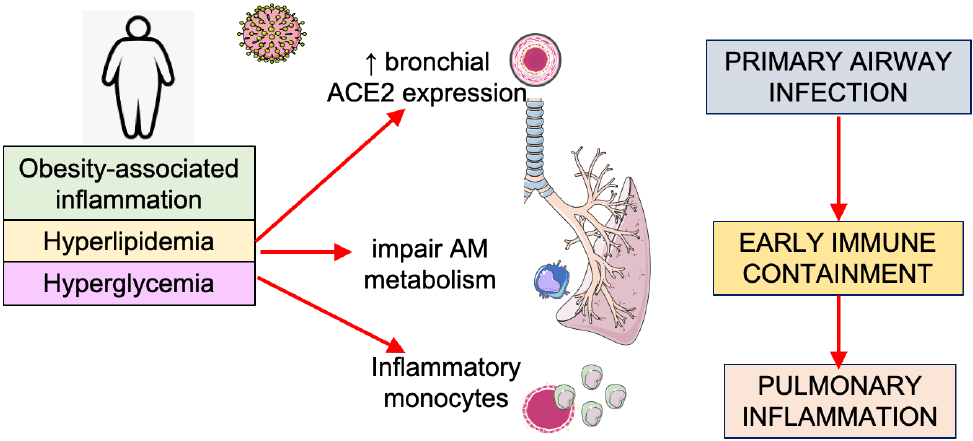
As COVID-19 continues to spread worldwide, severe disease and mortality have been observed in obese patients. We discuss how obesity and obesity-associated factors such as ‘meta-flammation’, dietary fat intake and paradoxical suppression of the innate immune response within the pulmonary compartment may be crucial determinants in the host response to a novel viral pathogen. Modulation of immune cell bioenergetics and metabolic potential plays a central role in the innate immune response to infection, and as we strive to combat this new global health threat, immunometabolism of the innate immune system warrants attention.
This study aimed to analyse the survival of patients admitted to Brazilian hospitals due to the COVID-19 and estimate prognostic factors. This is a retrospective, multicentre cohort study, based on data from 46 285 hospitalisations for COVID-19 in Brazil. Survival functions were calculated using the Kaplan–Meier's method. The log-rank test compared the survival functions for each variable and from that, hazard ratios (HRs) were calculated, and the proportional hazard model was used in Cox multiple regression. The smallest survival curves were the ones for patients at the age of 68 years or more, black/mixed race, illiterate, living in the countryside, dyspnoea, respiratory distress, influenza-like outbreak, O2 saturation <95%, X-ray change, length of stay in the intensive care unit (ICU), invasive ventilatory support, previous heart disease, pneumopathy, diabetes, Down's syndrome, neurological disease and kidney disease. Better survival was observed in the influenza-like outbreak and in an asthmatic patient. The multiple model for increased risk of death when they were admitted to the ICU HR 1.28, diabetes HR 1.17, neurological disease HR 1.34, kidney disease HR 1.11, heart disease HR 1.14, black or mixed race of HR 1.50, asthma HR 0.71 and pneumopathy HR 1.12. This reinforces the importance of socio-demographic and clinical factors as a prognosis for death.
D-dimer level on admission is a promising biomarker to predict mortality in patients with COVID-19. In this study, we reviewed the association between on-admission D-dimer levels and all-cause mortality risk in COVID-19 patients. Peer-reviewed studies and preprints reporting categorised D-dimer levels on admission and all-cause mortality until 24 May 2020 were searched for using the following keywords: ‘COVID-19’, ‘D-dimer’ and ‘Mortality’. A meta-analysis was performed to determine the pooled risk ratio (RR) for all-cause mortality. In total, 2911 COVID-19 patients from nine studies were included in this meta-analysis. Regardless of the different D-dimer cut-off values used, the pooled RR for all-cause mortality in patients with elevated vs. normal on-admission D-dimer level was 4.77 (95% confidence interval (CI) 3.02–7.54). Sensitivity analysis did not significantly affect the overall mortality risk. Analysis restricted to studies with 0.5 μg/ml as the cut-off value resulted in a pooled RR for mortality of 4.60 (95% CI 2.72–7.79). Subgroup analysis showed that the pooled all-cause mortality risk was higher in Chinese vs. non-Chinese studies (RR 5.87; 95% CI 2.67–12.89 and RR 3.35; 95% CI 1.66–6.73; P = 0.29). On-admission D-dimer levels showed a promising prognostic role in predicting all-cause mortality in COVID-19 patients, elevated D-dimer levels were associated with increased risk of mortality.
In the last decades, several European health systems have abandoned their vertically integrated health care in favour of some form of managed competition (MC), either in a centralised or decentralised format. However, during a pandemic, MC may put health systems under additional strain as they are designed to follow some form of ‘organisational self-interest’, and hence face reduced incentives for both provider coordination (e.g. temporary hospital close down, change in the case-mix), and information sharing. We illustrate our argument using evidence for the Covid-19 pandemic outbreak in Italy during March and April 2020, which calls for the development of ‘coordination mechanisms’ at times of a health emergency.