Contents
Article
Embedding of Dirichlet type spaces
 $\mathcal {D}^{p}_{p-1 }$ into tent spaces and Volterra operators
- Part of:
-
- Published online by Cambridge University Press:
- 08 September 2020, pp. 697-708
-
- Article
-
- You have access
- Export citation
-
In this paper, we study the boundedness and compactness of the inclusion mapping from Dirichlet type spaces
 $\mathcal {D}^{p}_{p-1 }$ to tent spaces. Meanwhile, the boundedness, compactness, and essential norm of Volterra integral operators from Dirichlet type spaces
 $\mathcal {D}^{p}_{p-1 }$ to general function spaces are also investigated.


Complete boundedness of multiple operator integrals
- Part of:
-
- Published online by Cambridge University Press:
- 27 July 2020, pp. 474-490
-
- Article
-
- You have access
- HTML
- Export citation
A Pólya–Vinogradov inequality for short character sums
- Part of:
-
- Published online by Cambridge University Press:
- 02 December 2020, pp. 906-910
-
- Article
-
- You have access
- Export citation
-
In this paper, we obtain a variation of the Pólya–Vinogradov inequality with the sum restricted to a certain height. Assume
 $\chi $ to be a primitive character modulo q,
 $ \epsilon>0$ and
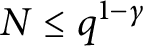 $N\le q^{1-\gamma }$, with
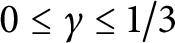 $0\le \gamma \le 1/3$. We prove that $$ \begin{align*} |\sum_{n=1}^N \chi(n) |\le c (\tfrac{1}{3} -\gamma+\epsilon )\sqrt{q}\log q \end{align*} $$with

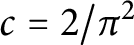 $c=2/\pi ^2$ if
 $\chi $ is even and
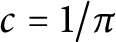 $c=1/\pi $ if
 $\chi $ is odd. The result is based on the work of Hildebrand and Kerr.


Finsler Warped Product Metrics with Relatively Isotropic Landsberg Curvature
- Part of:
-
- Published online by Cambridge University Press:
- 12 May 2020, pp. 182-191
-
- Article
-
- You have access
- Export citation
An estimate for the composition of rough singular integral operators
- Part of:
-
- Published online by Cambridge University Press:
- 07 December 2020, pp. 911-922
-
- Article
-
- You have access
- HTML
- Export citation
-
Let
 $\Omega $ be homogeneous of degree zero and have mean value zero on the unit sphere
 ${S}^{d-1}$,
 $T_{\Omega }$ be the convolution singular integral operator with kernel
 $\frac {\Omega (x)}{|x|^d}$. In this paper, we prove that if
 $\Omega \in L\log L(S^{d-1})$, and U is an operator which is bounded on
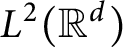 $L^2(\mathbb {R}^d)$ and satisfies the weak type endpoint estimate of
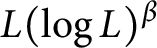 $L(\log L)^{\beta }$ type, then the composition operator
 $UT_{\Omega }$ satisfies a weak type endpoint estimate of
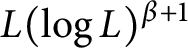 $L(\log L)^{\beta +1}$ type.


Homology supported in Lagrangian submanifolds in mirror quintic threefolds
- Part of:
-
- Published online by Cambridge University Press:
- 11 September 2020, pp. 709-724
-
- Article
-
- You have access
- Export citation
-
In this note, we study homology classes in the mirror quintic Calabi–Yau threefold that can be realized by special Lagrangian submanifolds. We have used Picard–Lefschetz theory to establish the monodromy action and to study the orbit of Lagrangian vanishing cycles. For many prime numbers
 $p,$ we can compute the orbit modulo p. We conjecture that the orbit in homology with coefficients in
 $\mathbb {Z}$ can be determined by these orbits with coefficients in
 $\mathbb {Z}_p$.


The Klein bottle group is not strongly verbally closed, though awfully close to being so
- Part of:
-
- Published online by Cambridge University Press:
- 03 August 2020, pp. 491-497
-
- Article
-
- You have access
- HTML
- Export citation
Möbius Randomness Law for Frobenius Traces of Ordinary Curves
- Part of:
-
- Published online by Cambridge University Press:
- 15 May 2020, pp. 192-203
-
- Article
-
- You have access
- Export citation
Front Cover (OFC, IFC) and matter
BCM volume 64 issue 3 Cover and Front matter
-
- Published online by Cambridge University Press:
- 17 September 2021, pp. f1-f2
-
- Article
-
- You have access
- Export citation
Article
A characterization of singular Schrödinger operators on the half-line
- Part of:
-
- Published online by Cambridge University Press:
- 07 December 2020, pp. 923-941
-
- Article
-
- You have access
- Export citation
-
We study a class of delta-like perturbations of the Laplacian on the half-line, characterized by Robin boundary conditions at the origin. Using the formalism of nonstandard analysis, we derive a simple connection with a suitable family of Schrödinger operators with potentials of very large (infinite) magnitude and very short (infinitesimal) range. As a consequence, we also derive a similar result for point interactions in the Euclidean space
 $\mathbb {R}^3$, in the case of radial potentials. Moreover, we discuss explicitly our results in the case of potentials that are linear in a neighborhood of the origin.

The Number of Non-cyclic Sylow Subgroups of the Multiplicative Group Modulo n
- Part of:
-
- Published online by Cambridge University Press:
- 08 June 2020, pp. 204-215
-
- Article
-
- You have access
- Export citation
-
For each positive integer n, let
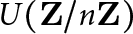
 $U(\mathbf {Z}/n\mathbf {Z})$ denote the group of units modulo n, which has order
 $\phi (n)$ (Euler’s function) and exponent
 $\lambda (n)$ (Carmichael’s function). The ratio
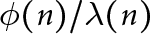 $\phi (n)/\lambda (n)$ is always an integer, and a prime p divides this ratio precisely when the (unique) Sylow p-subgroup of
 $U(\mathbf {Z}/n\mathbf {Z})$ is noncyclic. Write W(n) for the number of such primes p. Banks, Luca, and Shparlinski showed that for certain constants
 $C_1, C_2>0$, for all n from a sequence of asymptotic density 1. We sharpen their result by showing that W(n) has normal order
 $$ \begin{align*} C_1 \frac{\log\log{n}}{(\log\log\log{n})^2} \le W(n) \le C_2 \log\log{n} \end{align*} $$
 $\log \log {n}/\log \log \log {n}$.


Front Cover (OFC, IFC) and matter
BCM volume 64 issue 2 Cover and Front matter
-
- Published online by Cambridge University Press:
- 16 June 2021, pp. f1-f2
-
- Article
-
- You have access
- Export citation
Article
The Nef Cone of the Hilbert Scheme of Points on Rational Elliptic Surfaces and the Cone Conjecture
- Part of:
-
- Published online by Cambridge University Press:
- 08 June 2020, pp. 216-227
-
- Article
-
- You have access
- Export citation
Back Cover (OBC, IBC) and matter
BCM volume 64 issue 2 Cover and Back matter
-
- Published online by Cambridge University Press:
- 16 June 2021, pp. b1-b2
-
- Article
-
- You have access
- Export citation
Article
Tight frames and related geometric problems
- Part of:
-
- Published online by Cambridge University Press:
- 18 December 2020, pp. 942-963
-
- Article
-
- You have access
- HTML
- Export citation
-
A tight frame is the orthogonal projection of some orthonormal basis of
 $\mathbb {R}^n$ onto
 $\mathbb {R}^k.$ We show that a set of vectors is a tight frame if and only if the set of all cross products of these vectors is a tight frame. We reformulate a range of problems on the volume of projections (or sections) of regular polytopes in terms of tight frames and write a first-order necessary condition for local extrema of these problems. As applications, we prove new results for the problem of maximization of the volume of zonotopes.


Back Cover (OBC, IBC) and matter
BCM volume 64 issue 3 Cover and Back matter
-
- Published online by Cambridge University Press:
- 17 September 2021, pp. b1-b2
-
- Article
-
- You have access
- Export citation
Article
Inequalities on partial traces of positive semidefinite block matrices
- Part of:
-
- Published online by Cambridge University Press:
- 18 December 2020, pp. 964-969
-
- Article
-
- You have access
- Export citation
Euler characteristics and their congruences in the positive rank setting
- Part of:
-
- Published online by Cambridge University Press:
- 11 June 2020, pp. 228-245
-
- Article
-
- You have access
- Export citation
Front Cover (OFC, IFC) and matter
BCM volume 64 issue 1 Cover and Front matter
-
- Published online by Cambridge University Press:
- 12 April 2021, pp. f1-f2
-
- Article
-
- You have access
- Export citation
Article
On Moser’s regularization of the Kepler system: Positive and negative energies
- Part of:
-
- Published online by Cambridge University Press:
- 18 December 2020, pp. 970-983
-
- Article
-
- You have access
- HTML
- Export citation