Contents
Original Article
Generic chaos on dendrites
- Part of:
-
- Published online by Cambridge University Press:
- 19 March 2021, pp. 2108-2150
-
- Article
-
- You have access
- Export citation
-
We characterize dendrites D such that a continuous selfmap of D is generically chaotic (in the sense of Lasota) if and only if it is generically
 ${\varepsilon }$-chaotic for some
 ${\varepsilon }>0$. In other words, we characterize dendrites on which generic chaos of a continuous map can be described in terms of the behaviour of subdendrites with non-empty interiors under iterates of the map. A dendrite D belongs to this class if and only if it is completely regular, with all points of finite order (that is, if and only if D contains neither a copy of the Riemann dendrite nor a copy of the
 $\omega $-star).


Back Cover (OBC, IBC) and matter
ETS volume 42 issue 5 Cover and Back matter
-
- Published online by Cambridge University Press:
- 04 April 2022, pp. b1-b2
-
- Article
-
- You have access
- Export citation
Front Cover (OFC, IFC) and matter
ETS volume 42 issue 7 Cover and Front matter
-
- Published online by Cambridge University Press:
- 06 June 2022, pp. f1-f2
-
- Article
-
- You have access
- Export citation
Original Article
Markovian random iterations of homeomorphisms of the circle
- Part of:
-
- Published online by Cambridge University Press:
- 21 July 2021, pp. 2935-2956
-
- Article
-
- You have access
- HTML
- Export citation
-
In this paper we prove a local exponential synchronization for Markovian random iterations of homeomorphisms of the circle
 $S^{1}$, providing a new result on stochastic circle dynamics even for
 $C^1$-diffeomorphisms. This result is obtained by combining an invariance principle for stationary random iterations of homeomorphisms of the circle with a Krylov–Bogolyubov-type result for homogeneous Markov chains.


Back Cover (OBC, IBC) and matter
ETS volume 42 issue 4 Cover and Back matter
-
- Published online by Cambridge University Press:
- 07 March 2022, pp. b1-b2
-
- Article
-
- You have access
- Export citation
Original Article
Arithmeticity of hyperbolic
 $3$-manifolds containing infinitely many totally geodesic surfaces
- Part of:
-
- Published online by Cambridge University Press:
- 22 April 2021, pp. 1188-1219
-
- Article
-
- You have access
- Export citation
-
We prove that if a closed hyperbolic
 $3$-manifold M contains infinitely many totally geodesic surfaces, then M is arithmetic.


Back Cover (OBC, IBC) and matter
ETS volume 42 issue 11 Cover and Back matter
-
- Published online by Cambridge University Press:
- 06 October 2022, pp. b1-b2
-
- Article
-
- You have access
- Export citation
Original Article
A dichotomy for bounded displacement equivalence of Delone sets
- Part of:
-
- Published online by Cambridge University Press:
- 18 June 2021, pp. 2693-2710
-
- Article
-
- You have access
- Open access
- Export citation
-
We prove that in every compact space of Delone sets in
 ${\mathbb {R}}^d$, which is minimal with respect to the action by translations, either all Delone sets are uniformly spread or continuously many distinct bounded displacement equivalence classes are represented, none of which contains a lattice. The implied limits are taken with respect to the Chabauty–Fell topology, which is the natural topology on the space of closed subsets of
 ${\mathbb {R}}^d$. This topology coincides with the standard local topology in the finite local complexity setting, and it follows that the dichotomy holds for all minimal spaces of Delone sets associated with well-studied constructions such as cut-and-project sets and substitution tilings, whether or not finite local complexity is assumed.


Diffeomorphism cocycles over partially hyperbolic systems
- Part of:
-
- Published online by Cambridge University Press:
- 28 December 2020, pp. 263-286
-
- Article
-
- You have access
- Export citation
-
We consider Hölder continuous cocycles over an accessible partially hyperbolic system with values in the group of diffeomorphisms of a compact manifold
 $\mathcal {M}$. We obtain several results for this setting. If a cocycle is bounded in
 $C^{1+\gamma }$, we show that it has a continuous invariant family of
 $\gamma $-Hölder Riemannian metrics on
 $\mathcal {M}$. We establish continuity of a measurable conjugacy between two cocycles assuming bunching or existence of holonomies for both and pre-compactness in
 $C^0$ for one of them. We give conditions for existence of a continuous conjugacy between two cocycles in terms of their cycle weights. We also study the relation between the conjugacy and holonomies of the cocycles. Our results give arbitrarily small loss of regularity of the conjugacy along the fiber compared to that of the holonomies and of the cocycle.


Rigidity of joinings for some measure-preserving systems
- Part of:
-
- Published online by Cambridge University Press:
- 30 April 2021, pp. 665-690
-
- Article
-
- You have access
- Export citation
-
We introduce two properties: strong R-property and
 $C(q)$-property, describing a special way of divergence of nearby trajectories for an abstract measure-preserving system. We show that systems satisfying the strong R-property are disjoint (in the sense of Furstenberg) with systems satisfying the
 $C(q)$-property. Moreover, we show that if
 $u_t$ is a unipotent flow on
 $G/\Gamma $ with
 $\Gamma $ irreducible, then
 $u_t$ satisfies the
 $C(q)$-property provided that
 $u_t$ is not of the form
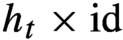 $h_t\times \operatorname {id}$, where
 $h_t$ is the classical horocycle flow. Finally, we show that the strong R-property holds for all (smooth) time changes of horocycle flows and non-trivial time changes of bounded-type Heisenberg nilflows.


Front Cover (OFC, IFC) and matter
ETS volume 42 issue 6 Cover and Front matter
-
- Published online by Cambridge University Press:
- 05 May 2022, pp. f1-f2
-
- Article
-
- You have access
- Export citation
Original Article
Rigidity properties for commuting automorphisms on tori and solenoids
- Part of:
-
- Published online by Cambridge University Press:
- 08 September 2021, pp. 691-736
-
- Article
-
- You have access
- Open access
- HTML
- Export citation
On arithmetic progressions in non-periodic self-affine tilings
- Part of:
-
- Published online by Cambridge University Press:
- 15 June 2021, pp. 2957-2989
-
- Article
-
- You have access
- Export citation
-
We study the repetition of patches in self-affine tilings in
 ${\mathbb {R}}^d$. In particular, we study the existence and non-existence of arithmetic progressions. We first show that an arithmetic condition of the expansion map for a self-affine tiling implies the non-existence of certain one-dimensional arithmetic progressions. Next, we show that the existence of full-rank infinite arithmetic progressions, pure discrete dynamical spectrum, and limit-periodicity are all equivalent for a certain class of self-affine tilings. We finish by giving a complete picture for the existence or non-existence of full-rank infinite arithmetic progressions in the self-similar tilings in
 ${\mathbb {R}}^d$.


Front Cover (OFC, IFC) and matter
ETS volume 42 issue 8 Cover and Front matter
-
- Published online by Cambridge University Press:
- 06 July 2022, pp. f1-f2
-
- Article
-
- You have access
- Export citation
Original Article
Counting closed geodesics in a compact rank-one locally CAT(0) space
- Part of:
-
- Published online by Cambridge University Press:
- 27 August 2021, pp. 1220-1251
-
- Article
-
- You have access
- HTML
- Export citation
-
Let X be a compact, geodesically complete, locally CAT(0) space such that the universal cover admits a rank-one axis. Assume X is not homothetic to a metric graph with integer edge lengths. Let
 $P_t$ be the number of parallel classes of oriented closed geodesics of length at most t; then
 $\lim \nolimits _{t \to \infty } P_t / ({e^{ht}}/{ht}) = 1$, where h is the entropy of the geodesic flow on the space
 $GX$ of parametrized unit-speed geodesics in X.


Strong submeasures and applications to non-compact dynamical systems
- Part of:
-
- Published online by Cambridge University Press:
- 14 December 2020, pp. 287-309
-
- Article
-
- You have access
- Open access
- Export citation
-
A strong submeasure on a compact metric space X is a sub-linear and bounded operator on the space of continuous functions on X. A strong submeasure is positive if it is non-decreasing. By the Hahn–Banach theorem, a positive strong submeasure is the supremum of a non-empty collection of measures whose masses are uniformly bounded from above. There are many natural examples of continuous maps of the form
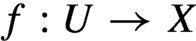 $f:U\rightarrow X$, where X is a compact metric space and
 $U\subset X$ is an open-dense subset, where f cannot extend to a reasonable function on X. We can mention cases such as transcendental maps of
 $\mathbb {C}$, meromorphic maps on compact complex varieties, or continuous self-maps
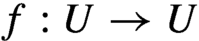 $f:U\rightarrow U$ of a dense open subset
 $U\subset X$ where X is a compact metric space. For the aforementioned mentioned the use of measures is not sufficient to establish the basic properties of ergodic theory, such as the existence of invariant measures or a reasonable definition of measure-theoretic entropy and topological entropy. In this paper we show that strong submeasures can be used to completely resolve the issue and establish these basic properties. In another paper we apply strong submeasures to the intersection of positive closed
 $(1,1)$ currents on compact Kähler manifolds.


Back Cover (OBC, IBC) and matter
ETS volume 42 issue 7 Cover and Back matter
-
- Published online by Cambridge University Press:
- 06 June 2022, pp. b1-b2
-
- Article
-
- You have access
- Export citation
Corrigendum
Absolutely continuous invariant measures for some piecewise hyperbolic affine maps – CORRIGENDUM
-
- Published online by Cambridge University Press:
- 19 July 2021, p. 2990
-
- Article
-
- You have access
- HTML
- Export citation
Original Article
Smooth, mixing transformations with loosely Bernoulli Cartesian square
- Part of:
-
- Published online by Cambridge University Press:
- 04 June 2021, pp. 1252-1283
-
- Article
-
- You have access
- Export citation
Back Cover (OBC, IBC) and matter
ETS volume 42 issue 6 Cover and Back matter
-
- Published online by Cambridge University Press:
- 05 May 2022, pp. b1-b2
-
- Article
-
- You have access
- Export citation