We partner with a secure submission system to handle manuscript submissions.
Please note:
You will need an account for the submission system, which is separate to your Cambridge Core account. For login and submission support, please visit the
submission and support pages.
Please review this journal's author instructions, particularly the
preparing your materials
page, before submitting your manuscript.
Click Proceed to submission system to continue to our partner's website.
To save this undefined to your undefined account, please select one or more formats and confirm that you agree to abide by our usage policies. If this is the first time you used this feature, you will be asked to authorise Cambridge Core to connect with your undefined account.
Find out more about saving content to .
To send this article to your Kindle, first ensure no-reply@cambridge.org is added to your Approved Personal Document E-mail List under your Personal Document Settings on the Manage Your Content and Devices page of your Amazon account. Then enter the ‘name’ part of your Kindle email address below. Find out more about sending to your Kindle.
Find out more about saving to your Kindle.
Note you can select to save to either the @free.kindle.com or @kindle.com variations. ‘@free.kindle.com’ emails are free but can only be saved to your device when it is connected to wi-fi. ‘@kindle.com’ emails can be delivered even when you are not connected to wi-fi, but note that service fees apply.
Insomnia is strongly associated with Major depressive disorders (MDD). There is strong evidence that it is one of the risk factor for suicide. Studies have shown the relationship of suicidal behavior in MDD patients with insomnia. However, it has not been evaluated in a large inpatient sample.
Objectives
To evaluate suicidality in MDD patients with insomnia compared to those without insomnia.
Methods
From the National Inpatient Sample (NIS 2006-2015) database using ICD-9 code, we obtained patients with the primary diagnosis of MDD and comorbid diagnosis of insomnia disorders (MDD+S). We compared it with MDD patients without insomnia disorders (MDD-S) by performing a 1:2 match for primary diagnosis code in the unweighted dataset. Suicidal ideation/attempt data were compared between the groups by multivariate logistic regression analysis.
Results
After the diagnostic code matching, 139061 patients were included in the MDD+S group and 276496 patients in the MDD- S group. MDD+S patients were older (47 years vs 45 years, p < 0.001) compared to the MDD-S group. Prevalence of Suicidal ideation/attempt was 56.0% in the MDD+S group and 42.0% in the MDD-S group (p < 0.001). After adjusting for age, sex, and race, MDD+S was associated with 1.8 times higher odds of suicidal behavior compared to the MDD-S group. (Odds ratio: 1.79, 95% confidence interval 1.68-1.91, p < 0.001).
Conclusions
Insomnia in MDD patients is significantly associated with the risk of suicide. It is important to be watchful for insomnia in MDD patients.
Sleep-related problems have been frequently reported in neurodevelopmental disorders, with special emphasis in Autism Spectrum Disorder (ASD) and Attention Deficit/Hyperactivity Disor-der (ADHD).
Objectives
To perform a meta-analysis (PROSPERO’s CRD42019132916) on sleep disturbances in adults with ASD and/or ADHD.
Methods
A total of 1126 studies and 66 references were identified by electronic and manual searches, respectively. Of these, 42 studies were included in the meta-analysis.
Results
showed that both disorders share a similar sleep-impaired profile with higher sleep onset latency, poorer sleep efficiency, greater number of awakenings during sleep, and a general lower self-perceived sleep quality compared with healthy controls. A higher proportion of N1 sleep was found in ASD participants, while a greater Periodic Limb Movements in Sleep is specific in ADHD adults.
Conclusions
Sleep is impaired by several sleep problems and disorders in both ASD and ADHD adults. More research is needed to develop more awareness in mental healthcare, and better treatment of this impairing comorbidity in ASD and ADHD
Opium tincture (OT) is widely used for opioid substitution treatment (OST) in Iran.
Objectives
To determine if OT is a safe and effective medication for OST.
Methods
Opium Trial was a multicenter, double‐blind, noninferiority randomized controlled trial, with 204 participants with opioid dependence in Iran. Participants were then randomized to OT or methadone arms with an allocation ratio of 1:1 and were followed for 12 weeks. The primary outcome was retention in treatment, compared between the two groups using both intention-To-Treat (ITT) and Per-Protocol (PP) analyses.
Results
A total of 70 participants (IT: 68.6%, PP: 69.3%) in methadone arm and 61 participants (ITT: 59.8%, PP: 60.4%) in OT arm remained in the treatment. The relative retention rate was 1.15 (0.97, 1.36) in both analyses in favour of methadone. A total of 46 out of 152 (30.3%) participants in OT arm and 83 out of 168 (49.4%) participants in methadone arm reported opioid use outside the treatment. The difference in these two proportions (OT - methadone) was 19%: (10%, 28%) in favour of OT. The proportion of patients with adverse events were not different between the two arms (P = 0.06). There was no serious AE in OT arm.
Conclusions
Opium tincture is a clinically effective and safe medication, but this study could not conclude if it was as equally effective as methadone in retaining participants in treatment, but it showed that OT was superior to methadone in reducing opioid use outside the treatment.
Substance use disorders (SUDs) are estimated to affect around 30 million people worldwide, and are characterized by repeated use of a substance that leads to clinically significant impairment or suffering, making it a serious health problem, with high associated costs.
Objectives
Understand and evaluate the impact of cannabis use on adherence to treatment in young patients with psychosis.
Methods
Narrative literature review by performing a search on MedLine for English-written articles. The query used was “(Cannabis) AND (Schizophrenia OR Psychosis) AND (Adherence)”.
Results
About 70 to 80% of young people with SUDs have at least one concomitant psychiatric disorder and cannabis is involved in approximately 50% of psychosis or schizophrenia of those cases, so there is a growing concern about the deleterious medical and psychiatric consequences of the increase and early initiation of consumption of this substance. It is estimated that about 26% of patients with psychotic conditions do not adhere to the treatment plan established by the psychiatrist; however, especially during the inaugural phases of psychotic disorders, rates of non-adherence to therapy are high (above 50%), and are said to be higher in younger patients.
Conclusions
The risk of relapse after a first psychotic episode is high. As the use of cannabis is a potentially preventable risk factor, interventions aimed at improving therapeutic adherence in psychotic conditions must specifically target the use of this substance, since reducing its consumption can lead to a more favorable course of the disease and at less expensive costs in addressing these pathologies.
One of the most recent topics in addictive disorders is videogame-use disorder which is continuously under research, especially in adolescents. The specific structure of digital games (immortality, infinity, etc.) can sensitize adolescents to the development of problematic use. The number of researches about problematic video game use has increased significantly during the last decade. In 2013, this problem was included among “Disorders requiring further research” in DSM-5, and it was also included in ICD-11 as a separate diagnostic category in 2019.
Objectives
We review studies investigating the association between the co-occurrence of ADHD and video game use in adolescents. We attempt to summarize new theoretical approaches to video game use disorder and the areas of present research.
Methods
We conducted a literature search in 4 databases (PubMed, Medline, Google Scholar, Web of Science) using keywords (ADHD, adolescents, video game use disorder, internet addiction, game addiction) over the past 5 years. Exclusion criteria were the following: publication date before 2014, adult population, or comorbidity beside ADHD.
Results
The comorbidity of video game use disorder and ADHD was frequent. Primarily cross-sectional studies examined the presence of hyperactivity, attention deficit, and impulsivity symptoms separately. The presence of attention deficit clearly showed an association with the development of video game use disorder.
Conclusions
Adolescents diagnosed with ADHD have a greater possibility of developing video game use disorder and/or problematic psychoactive substance users. More attention should be paid to this comorbidity in not only the diagnostic process, but also in the development of prevention programs.
A variety of psychological determinants, such as vulnerability to stress, low levels of psychological well-being and several comorbidities, have been hypothesized to play a role in the development, and maintenance of Internet Gaming Disorder (IGD). However, evidence has been insufficient to sustain an overarching model of the causal pathways leading to IGD.
Objectives
. This study aimed to depict a model of the causal links between vulnerability to stress, psychological well-being, and symptoms of common mental disorders (e.g., depression, generalized anxiety, phobic anxiety, obsessive-compulsive disorder, somatization, and hostility).
Methods
. A community-based sample of Portuguese gamers (N = 153; Mage = 21.92; 15.29% female) completed measures of IGD (IGDS9-SF), mental health (SCL-90-R), psychological well-being (EBEP), and vulnerability to stress (23QVS). A machine learning algorithm – Greedy Fast Causal Inference – was used to infer a model of the causal pathways linking those psychological determinants to IGD.
Results
. Hostility and psychological well-being were directly involved with a subgroup of IGD symptoms (i.e., gaming used as escape, tolerance, withdrawal, and loss of control). Stress vulnerability and symptoms of mental disorders were only indirectly implicated in the causal pathways leading to IGD.
Conclusions
. It is likely that several psychological factors implicated in the causal pathways leading to IGD, have not been yet identified. Future research should directly test specific models of the causal pathways involved in the development and maintenance of IGD symptoms.
There is little prospective data on the risk factors for later suicide in women who experience perinatal mental disorders, particularly beyond one-year postnatal.
Objectives
Among a cohort of women who were in contact with a mental healthcare provider during the perinatal period, to: (1) Describe sociodemographic and clinical characteristics of the women who died by suicide (2) Understand when, in relation to childbirth, most suicides tended to occur.
Methods
Data-linkage of de-identified service-user electronic healthcare records, national hospital episode statistics and mortality data generated a cohort of women in contact with a mental healthcare service provider in London, UK, perinatally. Using Natural Language Processing and structured field extraction, we identified clinical, socio-demographic characteristics, self-harm exposure, and suicide.
Results
Among 5204 women, clinical and demographic characteristics of women who did and did not die by suicide were similar apart from indicators of illness severity including perinatal sedative medication prescription, clinician-rated functional impairment and smoking, which were more common in women who died by suicide. Suicide deaths occurred most frequently in the second year post-delivery. The most common method of suicide ocurring wihtin two years was by violent means, whereas after two years postnatal, the most common method was non-violent.
Conclusions
Our findings support the extension of perinatal mental healthcare service provision to two years post-delivery.
Adolescent suicide poses a serious public health challenge. Several factors, such as early losses, discordant relationships, poverty, abuse and other life crises have previously been associated with the rise in adolescent suicides. However, a dearth of information exists regarding South African research on adolescent suicide.
Objectives
This study investigated the role of gender, race and psychosocial stressors and resources in attempted suicide among 1033 South African adolescents.
Methods
Using a cross-sectional research design, participants completed a biographical questionnaire and the Life Stressors and Social Resources Inventory, Youth Form. Logistic regression analysis was used to identify which stressors, resources and demographic variables, best predicted attempted suicide among the sample.
Results
The findings suggest that 12.5% (129) of the sample had previously attempted suicide. Being of mixed race (p ≤ .01) and female (p ≤ .01) significantly increased the likelihood of attempting suicide. Stressors associated with the increased likelihood of attempting suicide were Parents (p ≤ .05), Extended Family (p ≤ .01), Home and Money (p ≤ .05), and Negative Life Events (p ≤ .01). Resources associated with the reduced likelihood of attempting suicide were supportive relationships with Parents (p ≤ .01), with Boyfriend/Girlfriend (p ≤ .01) and Positive Life Events (p ≤ .01).
Conclusions
These findings highlight the importance of supportive relationships and stable home conditions for the well being of adolescents.
Suicide continues to be a significant cause of mortality in most countries worldwide, especially among youth. Documenting current trends and sources of variation in youth suicide rates is critical to inform prevention strategies.
Objectives
We aimed to 1. document suicide mortality trends among Italian youth from 1981 to 2016 2. describe age, sex, and urbanization specific suicide rates in this period, and 3. describe suicide methods and their change over time.
Methods
We relyed on official mortality data for the period 1981-2016 for adolescents and young adults (ages 10-25 years). We estimated standardized all-cause and suicide mortality rates per 100,000 individuals and used Joinpoint regression analysis to determine annual mortality trends and statistically significant changes in rate trends. Analyses were reported by sex, age group, urbanization level and suicide method.
Results
From 1981 to 2016, 1,752 suicides were identified among youth aged 10-17 (boys/girls ratio in 2016, 5.3) and 9,897 among youth aged 18-25 years (boys/girls ratio in 2016, 4.0). While the all-cause mortality rate decreased over time for both boys and girls, overall suicide rates remained stable for boys and showed a small decrease for girls. For boys, suicide was most common in rural than to metropolitan areas, while it was the opposite for girls. The most common method for boys was hanging, while for girls was fall.
Conclusions
Differently from other countries, youth suicides were stable (boys) or slightly declining (girls). We found differences according to the urban vs. rural areas. Factors influencing these trends and sex differences are crucial in delivering prevention strategies.
Although several authors have investigated the relationship between demoralization, insight, and suicide risk, the role of these factors in determining suicide risk in patients with psychiatric disorders is still unclear [Berardelli et al., 2019; Costanza et al., 2020].
Objectives
The main aim of this study was therefore to determine whether suicide risk was associated with better insight and worse demoralization in a sample of 100 adult psychiatric inpatients.
Methods
The study was performed on 100 psychiatric hospitalized adult patients consecutively enrolled between January 2019 and April 2020 at psychiatric units of Sant’Andrea Medical Center, Sapienza University of Rome. The Columbia Suicide Severity Rating Scale (C-SSRS) was used to assess suicide risk, Demoralization was assessed using the Demoralization Scale (DS) [Kissane et al., 2004] and for the assessment of insight we used the The Insight Scale (IS).
Results
Only age was significantly associated with higher suicide risk (χ2=9.07, p<0.01). The variable mood disorder was significantly associated with higher suicide risk (χ22=7.50, p<0.05). Non-suicidal self-harm behaviors in the last 3 months (χ2=5.89, p<0.05) and lifetime suicide attempts (χ2=21.80, p<0.001) were significantly associated with higher suicide risk. Only the insight-high dimension (χ2=8.01, p<0.01) and lifetime suicide attempts (χ2=12.33, p<0.001) were significantly associated with higher suicide risk.
Conclusions
Our results don’t confirm the role of demoralization in suicide risk. In our sample of patients, only high insigth of illness and other psychological variables are involved in suicide risk.
Non-suicidal self-injury (NSSI) has been proposed as diagnostic entity and was added in the section 3 of the DSM 5. However, little is known about the long-term course of the disorder: NSSI and suicide attempt (SA) often lie on a continuum of self-harm, but it’s still unclear if they represent two different nosografical entities. Both these groups are commonly enclosed in the term of Deliberate self-harm (DSH), also including self-harm with suicidal intent conditions.
Objectives
This study aims to explore differences between two clinical samples (NSSI and SA) to highlight the possible connection between these two categories, to better understand the risk of progression from NNSI into suicidal intent conditions.
Methods
102 inpatients with DSH (62 NNSI; 40 SA; age range: 12 to 18 years) were assessed by self-report questionnaires: the Deliberate Self-Harm Inventory (DSHI) and the Repetitive Non-suicidal Self-Injury Questionnaire (R-NSSI-Q) to explore the severity and repetitiveness of self-injurious behaviors and by the Beck Hopelessness Scale (BHS) and Multi-Attitude Suicide Tendency scale (MAST), as indirect measures of suicidal risk.
Results
Preliminary results showed that inpatients with NSSI (62) presented high scores of indirect suicide risk, similar to SA sample (40).
Conclusions
This result highlights the possibility to consider NSSI and SA in a continuum of psychopathology and that repetitive self-harm even in the absence of clear suicidal intentions represent a significant risk factor in the development of suicidality in adolescence.
In adolescents, both non-suicidal self-injuries (NSSI) and previous suicidal attempts (SA) represent significant risk factors for future suicide. Thus, the search for EEG markers of these forms of auto-aggressive behavior seem to be an actual task.
Objectives
The aim of the study was to reveal the differences of baseline EEG features in depressive female adolescents with auto-aggressive behavior such as NSSI or SA.
Methods
The study included 45 depressive female in-patients aged 16–25 years. 21 of them showed only NSSI (NSSI subgroup), 24 patients had a history of SA (SA subgroup). Subgroups did not differ in clinical and social-demographic parameters. Baseline EEG spectral power (SP) and its asymmetry were measured.
Results
SA subgroup had higher parietal-occipital alpha-2 (9-11 Hz) SP than NSSI subgroup. Its focus was located in the right hemisphere, and alpha-3 (11-13 Hz) SP was higher than alpha-1 (8-9 Hz). In contrary, in NSSI subgroup alpha-1 SP was higher than alpha-3; and foci of alpha-2 and alpha-3 SP were localized in the left hemisphere.
Conclusions
Spatial distribution and the ratio of EEG alpha frequency components SP in the SA subgroup reflect greater activation of brain cortex, especially of the left hemisphere that is more typical for EEG of individuals with increased risk of suicide. In NSSI subgroup, the right hemisphere is relatively more activated that is more typical for EEG in depression without SA. The study supported by RBRF grant No.20-013-00129a.
According to WHO statistics, 800,000 suicides occur annually, representing the second leading cause of death in people aged 15 to 29. The contributing factors for suicidal risk are multifactorial and multileveled.
Objectives
We aimed to analyze the predictive value of distinct sociodemographic, personality and symptomatology characteristics in predicting the presence of suicidal risk in patients hospitalized for the analyzed mood disorder.
Methods
A longitudinal retrospective case-control study was performed on medical data records of 90 patients admitted in the Timisoara Psychiatric Clinic during 2018 – 2020. Besides the parametric and non-parametric statistical analyses, logistic binary regression analyses were done.
Results
Patients with suicide risk tended to be younger (p = 0.039), without intimate partnership (p < 0.001), current smoker (p = 0.038) and to present psychotic symptoms at some moments during the psychiatric disorder. 51 (56.7%) of the total patients have presented different degrees of suicidal risk (from suicidal ideation to suicide attempt). Patients with suicide risk tended to be younger (p = 0.039), without intimate partnership (p < 0.001), current smoker (p = 0.038) and to present psychotic symptoms at some moments during the psychiatric disorder. Personality traits has not influenced suicidal risk. Presence of intimate partner (OR = 0.135; p < 0.001) and the presence of psychotic symptoms during recurrent depression (OR = 7.309; p = 0.004) have presented predictive value on suicide risk.
Conclusions
Psychiatrist practitioners should be aware of the clinical and sociodemographic characteristics that put recurrent depressive patients at risk of suicidal behaviors.
People with mental disorders who had same-sex experience (SSE) are at increased risk of self-injurious behavior probably due to the double stigma phenomenon, which severity varies in different societies. So far, there is a knowledge gap on factors associated with SSE in Russian psychiatric patients.
Objectives
We aimed to investigate variables associated with homosexual experience in Russian patients with non-psychotic mental disorders (NPMD) and suicidal ideation (SI).
Methods
In a case-control study (1:1.5): 92 female patients with NPMD and SI with lifetime SSE were compared with 138 patients without homosexual experience. All patients underwent a psychiatric examination, Self-Injurious Thoughts and Behaviors Interview (Nock MK, 2007) and semi-structured interview to assess demographic, clinical, and behavioral features. Mann-Whitney, Fishers exact test and Pearson’s chi-squared were used as statistical methods.
Results
Groups did not differ in education level, marital status, family history of suicidal behavior, traumatic events exposure and lifetime eating disorders (all:p>0.05). More patients with SSE had family history of non-suicidal self-injuries (NSSI), were dissatisfied with their parenting style, had a higher number of unprotected sexual contacts with unfamiliar persons, practiced group sex, had a history of sexual abuse, illicit drug use experience, were smokers, had piercing and severe body modifications. Lifetime history of suicide plan, attempts and NSSI were significantly more common in people with SSE (all:<0.05).
Conclusions
A number of suicide risk factors were found to be more prevalent in people with SSE. Homosexual experience in people with mental disorders is associated with an increased risk of NSSI, suicide plan development and suicide attempts.
Suicide is an intriguing act of the human being. The reasons behind the violation of an instinct for survival is far from being understood. Besides, the emergence of assisted dying is raising even more questions about the concept of rational suicide, defined as a well-thought-out decision to die by whom is mentally competent.
Objectives
Understand the concept of rational suicide, in parallel with suicide, by exploring the views on this debate over the years and elucidating the relationship with mental disorders, mental capacity and patient’s rights.
Methods
Literature review performed on PubMed and Google Scholar databases, using the keywords “rational suicide”, “assisted death”, “suicide”, “phenomenology”, “mental capacity” and “responsibility for life”.
Results
The theological condemnations of suicide – as sin or crime – were put aside with psychiatric development in the last century. Durkheim was the first important precursor of the contemporary view - suicide is a form of mental illness (psychosis or depression) not compatible with rational deliberation. With the increasingly open debate on assisted dying, this vision is being tested by cases of terminally ill patients subjected to experiences that many wouldn’t choose to tolerate. Moral right to self-determination and needless suffering are examples of arguments in favor of rational suicide.
Conclusions
The need for an open discussion about rational suicide is raising, specifically in relation to psychiatric disorders, mainly to resolve the conflict between the duty of care of psychiatrists and the autonomy of patients.
Borderline personality disorder (BPD) has been characterized by mood instability, impulsive behavior and eventual dissociative and psychotic symptoms. Around 70% of patients present repeated self-injury behavior which is associated with high risk of completed suicide.
Objectives
To investigate the effect of group psychotherapy on the annual incidence of self-harm behavior and suicide attempts in BPD.
Methods
We carried out a retrospective longitudinal study by selecting BPD patients who received group psychotherapy during 2016. Systems Training for Emotional Predictability and Problem Solving (STEPPS) or Mentalization-Based Treatment (MBT) psychotherapies were applied. Patients without any self-harm/suicidal attempt before the intervention, those with comorbid diagnosis and those who did not engage at least half of total sessions were excluded for final analyses. Number of self-harm events, suicide attempts and other clinical events were recorded and compared one-year before and one-year post-intervention. SPSS software version 21.0 (IBM) was used for statistical analyses. Nonparametric tests and Survival tests were performed.
Results
Eight women out of 35 fulfilled our inclusion criteria. After group psychotherapy, a significant reduction in the number of self-harm events and suicidal attempts was found (mean 1.9+/-1.4 vs 0.5+/-1.1; p=0.042). Survival tests revealed significant differences in the occurrence of suicidal attempts. We did not find significant differences in the other clinical events.
Conclusions
Our results show a clear effectiveness of group psychotherapy in reducing self-harm events and/or suicidal attempts in BPD patients. If these findings are confirmed in future studies including larger samples, group psychotherapy could be indicated for diminishing suicide risks in BPD.
Substance use disorder, depression and sexual minority are well documented risk factors for suicidal behaviour, far less is known about behavioural addictions.
Objectives
First, to explore associations between behavioural addictions (gaming, gambling, cybersex, internet, smartphone, work) at age 25 and the incidence and reoccurrence of suicide ideation (SID), suicide attempts (SAT), and suicide attempts among those with suicide ideation (SATID) at age 28. Second, to test whether these associations were impacted by adjusting for cannabis and alcohol use disorder, nicotine dependence, sexual orientation and depression.
Methods
Based on two waves of a prospective cohort study of 5,428 young Swiss men, nested models with and without adjustment for risk factors were used to regress SID, SAT and SATID on preceding behavioural addictions.
Results
Without adjustment, each of the behavioural addictions at age 25 significantly predicted the incidence of SID and SAT at age 28. Gambling and cybersex addiction furthermore predicted SATID. When adjusting for other risk factors, associations with behavioural addictions were reduced, whereas depression and cannabis use disorder were the most important and consistent predictors for the incidence and recurrence of SID, SAT and SATID.
Conclusions
Among young Swiss men, behavioural addictions are important predictors of SID and SAT, however a large part of their association is shared with depression and cannabis use disorder. Treatment for addictive behaviors, especially cannabis use can open the door to larger mental health screening and targeted intervention. Crisis intervention among men presenting addictive behaviours with or without substance may therefore be key to preventing suicidal behaviour.
Suicide is one of the major public health concerns worldwide, currently listed as the 15th most common cause of death. Mental illness stigma may contribute to suicidality and is associated with social isolation and low self-esteem among people with affective disorders.
Objectives
The aim of the present study is to assess, in a sample of people with affective disorders, whether high levels of internalized stigma are associated to suicidal thoughts and behaviours.
Methods
60 outpatients diagnosed with depression or bipolar disorder according to DSM-5 have been recruited. Suicidal behaviours and ideation were assessed through the Columbia Suicide Severity Rating Scale (C-SSRS); internalized stigma through the Internalized Stigma of Mental Illness (ISMI) scale. Socio-demographic characteristics have been collected through an ad hoc schedule.
Results
62.9% of the sample was female, with a mean age of 45.7 (±14) years. About half of the sample had a diagnosis of major depression (54.8%). Patients with suicidal ideation reported higher score at ISMI “alienation” subscale (p<0,05), compared to those without suicidal ideation. Patients with a previous history suicide attempts reported higher score at “alienation” and “social withdrawal” ISMI subscales (p<0,05). Moreover, “alienation” ISMI subscale significantly correlated with suicidal ideation and behaviours (p<0,01).
Conclusions
These results are in line with the available literature, highlighting that stigma and suicidality are strongly correlated. This underline the importance of interventions at addressing internalizing stigma, in particular to those with previous suicidal attempts and with an active suicidal ideation.
Since 2007, suicide rates increased in the Netherlands and the province of Noord-Brabant ranked second nationally with a 64% increase. 60% of people who died by suicide did not receive treatment at the time of their death. Gap analysis showed 1) lack of expertise to explore suicide risk in health care or community settings where persons at risk presented; 2) lack of swift access to specialist care addressing suicidality; 3) lack of oversight of the care process and 4) lack of follow up.
Objectives
We developed a regional suicide prevention systems intervention with chain partners at community, general health and mental health care level to address these gaps in Noord-Brabant, aiming at a 20% decrease in the number of suicides.
Methods
The project started October 2016 and lasted 4 years. The intervention has four pillars: 1) Online decision aid for health care professionals to assess suicidal risk and to communicate with chain partners; 2) swift access to care; 3) facilitation of care through the care chain by a dedicated nurse; and 4) 12 months follow up monitoring if the patient still receives appropriate care. We examined the effect of SUPREMOCOL on suicides in a pre-post design.
Results
During the implementation year of the intervention, suicides in Noord-Brabant dropped 17% whereas nationally they dropped 5%, and this effect was sustained after one year.
Conclusions
This suicide prevention systems intervention is effective in reducing suicide rates. Long-term follow-up and implementation is warranted.
Suicidal behavior has a great impact on world public health. The literature describes the possible existence of an association between neurobiological, clinical and cognitive factors in suicidal behavior.
Objectives
To determine the possible relationship between clinical variables (history of abuse/maltreatment in childhood), psychopathology (impulsivity traits) and cognitive (decision-making) with a history of suicide attempt and/or current suicidal idea in patients with major depressive disorder.
Methods
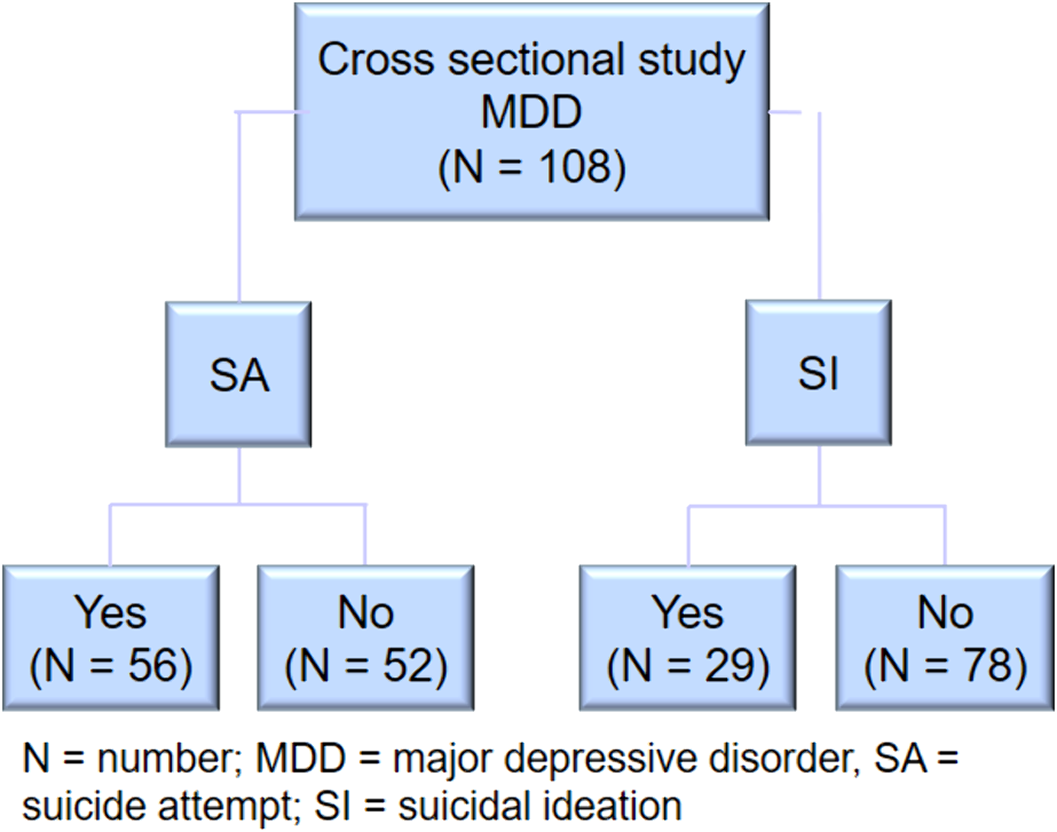
Cross-sectional study in a sample of adult patients with major depressive disorder in which two types of comparisons are made. In the first case, two groups were compared based on the presence or absence of history of suicide attempt. In the second case, two groups were compared based on the presence or absence of suicidal ideation in the same sample of patients. Finally, sociodemographic, clinical and cognitive variables were evaluated in that population sample.
Results
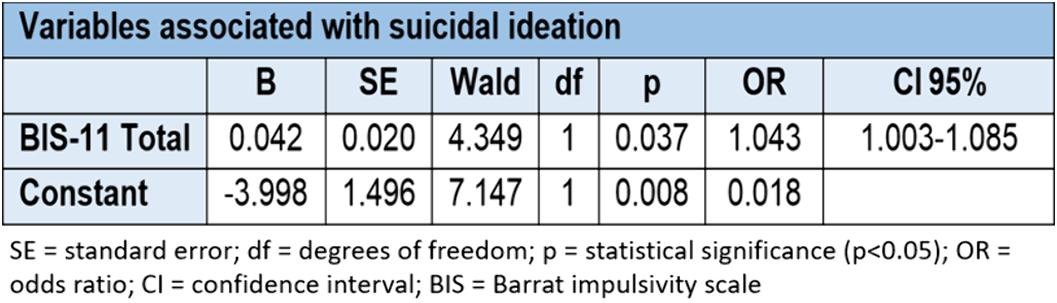
When the joint influence of sociodemographic, clinical and cognitive characteristics are present, it can be said that being single/divorced/separated, a history of sexual abuse in childhood and an alteration in decision-making, specifically a lower number of choices of deck D in the IGT test, are associated with a higher probability of a personal history of suicide attempt. While a higher score on the Barrat impulsivity scale is associated with a greater probability of presenting current suicidal ideation once the influence of sociodemographic, clinical and cognitive variables has been taken into account.
Conclusions
Different sociodemographic, clinical and cognitive factors are associated with the presence of a history of suicide attempt and/or current suicidal ideation.