We partner with a secure submission system to handle manuscript submissions.
Please note:
You will need an account for the submission system, which is separate to your Cambridge Core account. For login and submission support, please visit the
submission and support pages.
Please review this journal's author instructions, particularly the
preparing your materials
page, before submitting your manuscript.
Click Proceed to submission system to continue to our partner's website.
To save this undefined to your undefined account, please select one or more formats and confirm that you agree to abide by our usage policies. If this is the first time you used this feature, you will be asked to authorise Cambridge Core to connect with your undefined account.
Find out more about saving content to .
To send this article to your Kindle, first ensure no-reply@cambridge.org is added to your Approved Personal Document E-mail List under your Personal Document Settings on the Manage Your Content and Devices page of your Amazon account. Then enter the ‘name’ part of your Kindle email address below. Find out more about sending to your Kindle.
Find out more about saving to your Kindle.
Note you can select to save to either the @free.kindle.com or @kindle.com variations. ‘@free.kindle.com’ emails are free but can only be saved to your device when it is connected to wi-fi. ‘@kindle.com’ emails can be delivered even when you are not connected to wi-fi, but note that service fees apply.
Autism spectrum disorders (ASD), is a population that does not usually receive specific treatment.
Objectives
The main objective of the present study is to evaluate whether specific interventions within the TAVA program (transition program to adult life for patients with ADS), produce significant improvements in the quality of life of young adults with ASD.
Methods
This is a prospective randomized clinical study of patients with ASD (according to DSM-5 criteria) seen in outpatient of the Parc Tauli University Hospital in Sabadell (Barcelona) since September 2017. We compared the quality of life, functionality, caregiver burden, and comorbidity of patients in TAVA program (beneficiaries of group therapy and specific medical and psychosocial interventions), with that of control patients (treatment as usual), after 2 years of intervention.
Results
Our sample is composed of 12 patients with ASD. The average age is 18.4 years. 83% of the sample are men (n = 10). 5 of the patients belonged to TAVA and the other 7 were controls. Overall, TAVA patients presented improvement in the ZARIT and BAI scales compared to control patients. The control patients evolved less favorably in the AAA, SRS and RAAS levels compared to TAVA.
Conclusions
Specific interventions in adults with ASD, improve the caregiver’s feeling of overload and the patients anxiety, compared to the usual interventions. The lack of regulated interventions produces an unfavorable evolution of the core symptoms of autism. More studies are needed to specify efficient interventions to improve the quality of life of adults with ASD.
Cognitive test anxiety is acknowledged as intense anxiety that prevents the effective use of the previously learned knowledge during the exam and leads to a decrease in success. Mindfulness is indicated as the ability to bring one’s attention to experiences in the present moment in a non-judgmental way. Despite promising outcomes of mindfulness techniques in regulating stress levels, much uncertainty still exists about the specific associations between cognitive test anxiety and mindfulness subcategories.
Objectives
The aim of this study was to investigate the relationship between cognitive test anxiety and subcategories of mindfulness among university students which may help improving current mindfulness interventions that show promising results to tackle cognitive test anxiety.
Methods
One hundred-eighty-two university students were recruited for the study via online forms. Mindfulness was measured with Five Facet Mindfulness (FFMQ-S) and the cognitive test anxiety was assessed with Cognitive Test Anxiety Scale-Revised (CTAR).
Results
Total scores of CTAR-R has an association between subscales of FFMQ; act-aware and non-judge in a positive direction, whereas; observe and describe in a negative direction. In addition, according to our regression model, FFMQ subscales of describing to indicated lower levels of CTAR scores, whereas act aware and non-judge indicated higher levels of CTAR scores.
Conclusions
The findings of the study partially corroborated the previous results by offering inferences about the subcategories of mindfulness. Additionally, these findings suggest that current interventions may target specific subcategories of mindfulness to maximize the positive outcomes of the treatment.
Parents of children with an autism spectrum disorder (ASD) are at higher risk of suffering from mental health problems (MHP) than parents of children with other developmental disabilities. Research on the general population documented that MHP in parents contributes as a significant risk factor for maladjustment outcomes in their offspring, while parental anxiety disorders in particular have been associated with a higher prevalence of anxiety disorders in the offspring. However, evidence concerning possible associations between parent-offspring psychological problems in the case of ASD-families is scarce and inconsistent.This study forms a part of a larger PhD study and some preliminary findings have been partially discussed in previous work.
Objectives
To investigate any association between anxiety symptoms in neurotypical offspring (ASD-siblings) with parental MHP.
Methods
118 parent-child-dyads from ASD-families that fulfilled inclusion criteria participated in this study and answered a demographic questionnaire. Parents were administered the GHQ-28, while the children answered the STAIC-A-Trait. A hierarchical multiple regression was performed to test the hypothesis.
Results
Participating parents demonstrating poorer mental health, with 53 (44.9%) of them considered as suffering from psychological distress according to the score of GHQ-28. Furthermore, hierarchical regression showed that STAIC-(A-Trait) total score of ASD-siblings was associated with parental anxiety (std beta=0.292; p=0.29;model 1) and this association persisted after demographics entered the model (std beta=0.300; p=0.029; model 2).
Conclusions
This study shows a significant association between parental psychological distress and anxiety in the neurotypical offspring in ASD-families, highlighting the need to provide all members of ASD-families with the appropriate services.
The comorbidity between anxiety disorders (AD) and eating disorders (ED) has already been well discovered, and because of the link between disgust, food choice and rejection (which appear to be key factors of eating psychopathology), it can be suggested that these three aspects may be related. Accordingly, it can be hypothesized that individuals who express heightened levels of both disgust and eating concerns are at a higher risk to develop an AD. By contrast, disgust, as a negative emotion, influences ED symptoms through a greater level of anxiety.
Objectives
We aimed to investigate the psychopathological role of disgust and eating disorder symptoms in the development and maintenance of anxiety symptoms in patients with AD.
Methods
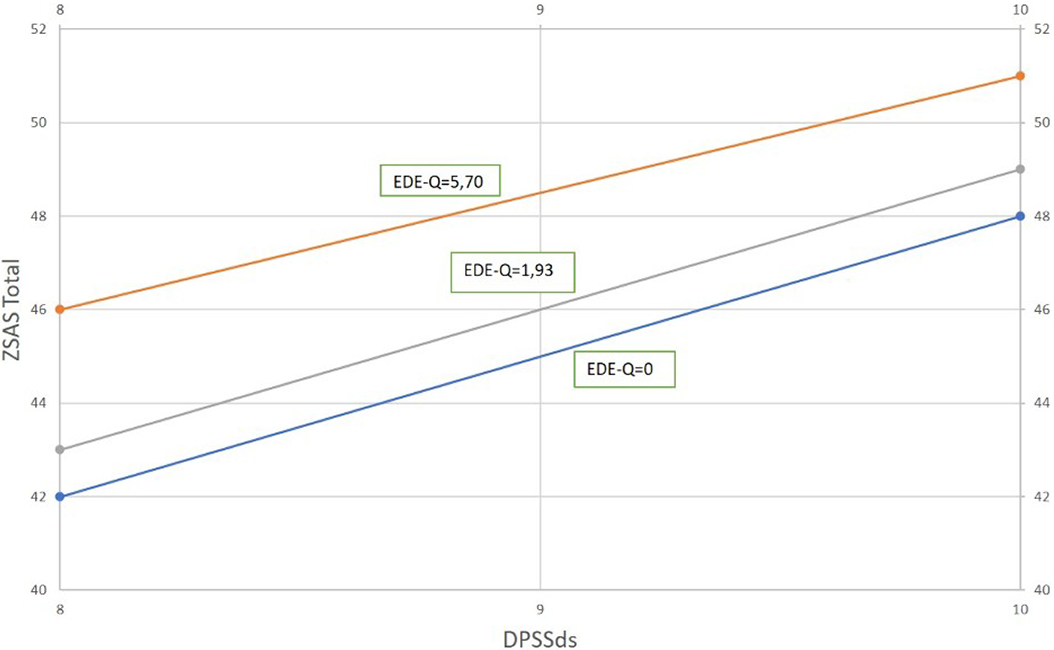
We enrolled 84 patients admitted in the Psychiatric Unit of Careggi with diagnosis of Anxiety Disorders. We administered them: Zung Anxiety Scale (ZSAS), Disgust Propensity and Sensibility Scale-revised (DPSS-r) and Eating Disorders Examination Questionnaire (EDE-Q).
Results
A multiple regression model having ZSAS total as dependent variable, and EDE-Q total and DPSS disgust sensitivity subscale as independent variables explained 29% of ZSAS total variance (R²=0.290). The effect of EDE-Q total was positive, significant (β=0.331, t=2.631, p=0.011) and explained 11.9% of ZSAS total variance (pr²=0.119). The effect of DPSS disgust sensitivity was positive, significant (β=0.326, t=2.595, p=0.012) and explained 11.6% of ZSAS total variance (pr²=0.116) (Fig.1).
Conclusions
Such preliminary data suggest a possible role of feelings of disgust and eating disorder symptoms in development and maintenance of anxiety symptoms in patients with AD, making them a potential target for psychotherapy.
There is a growing literature suggesting disgust plays a major role in religiosity. Asceticism is a personality trait characterized by abstinence from sensual pleasures, often for the purpose of pursuing spiritual goals. Since few studies suggested that higher disgust levels may lead to greater fear of sin, contamination disgust may serve as effective mechanisms for inflated scrupulosity.
Objectives
We aimed to investigate the role of contamination disgust on a specific religious belief in two clinical groups: eating disorders and anxiety disorders.
Methods
We enrolled 84 patients admitted in the Psychiatric Unit of Careggi with diagnosis of Anxiety Disorders (AD) and Eating Disorders (ED). We administered them: Disgust Scale Revised (DS-R) and Eating Disorders Inventory 2 (EDI-2)
Results
A t-test for independent samples between AD patients and ED patients showed no difference in DS-R contamination disgust subscale (t=1.437, p=0.153), while significantly higher EDI-2 asceticism scores were detected in ED patients (t=2.452, p=0.010). An ANCOVA model having EDI2 Asceticism subscale as dependent variable, and DS contamination disgust subscale, diagnosis, and interaction between contamination disgust and diagnosis was estimated. The overall model was significant (F(1,136)=4.854, p=0.003) and accounted for 9.7% of variance of EDI2 Asceticism subscale (R2=0.097). The effect of contamination disgust was positive and significant (β=0.302, t=2.781, p=0.006), and accounted for 5.4% of variance of EDI2 Asceticism (partial η2=0.054). No effect was detected for diagnosis (F(1,136)=0.012, p=0.912) or interaction between contamination disgust and diagnosis (F(1,136)=1.346, p=0.248).
Conclusions
Contamination disgust may have a trans-diagnostic effect on asceticism and may be a possible driver for specific religious behaviors.
Attention Deficit Hyperactivity Disorder (ADHD) is a common neurodevelopmental disorder characterized by inattention and/or hyperactivity-impulsivity resulting from the interaction of genetic and environmental risk factors. Family studies shows that persistent ADHD is very familial.
Objectives
We aim to review the literature on this condition and its heritability and describe the implications that a possible misdiagnosis can have during life.
Methods
Bibliography review was performed using the databases PubMed and Cochrane, using the following keywords: “ADHD”; “Adults”; “Heretability”; “Family” and “Rater effect”.
Results
Childhood ADHD persists into adolescence and adulthood substantially, identified in some studies, as going up to 78%. The prevalence of ADHD in children and adults is between 2.5% and 5% worldwide. Family studies have shown that children of adults with ADHD are at higher risk of having ADHD. Some large-scale twin studies of adult ADHD, used self-report assessments of ADHD symptoms and estimated the heritability of this condition to be between 30 to 40%, which differs from other studies that analyse parents and teachers responses and estimates heritability to be between 60 and 90%.
Conclusions
Since there is a direct influence of the evaluators in estimating the extent of ADHD heritability, future studies need to clarify and describe in detail all the related characteristics of the raters. Although ADHD is widely studied, there is still a lot to learn about its etiology. The diagnosis of ADHD is clinical and complex and must be considered both in childhood and adolescence and in adulthood, with special emphasis on the family antecedents.
Fear of evaluation and a negative view of the self are the key characteristics of social anxiety, which is one the most prevalent anxiety problem. Self-esteem refers to views of oneself, including individual’s personal feelings towards self, whereas self-compassion refers to caring attitude toward oneself. Both constructs are two distinct positive views of the self, and were found to be related to each other, well-being and good mental health. To date, however, little is known, how they interplay in people with predominantly negative view of themselves, that is in socially anxious individuals.
Objectives
The current research aims at evaluating how social anxiety interacts with self-esteem and self-compassion and to assess whether self-compassion, mediates the relationship between social anxiety and self-esteem.
Methods
In this research, 388 adult participants with elevated social anxiety level (LSAS score M = 81.47, SD = 21.20) were recruited via open calls posted on the Internet and completed measures of social anxiety, self-compassion, and self-esteem.
Results
In accordance with the view that individuals with social anxiety tend to have negative mental representation of the self, we found that both self-esteem and self-compassion correlated negatively with social anxiety, and positively with one another. More importantly, self-compassion partially mediates the relationship between self-esteem and social anxiety.
Conclusions
These findings suggest that self-compassion may play an important role in buffering against social anxiety and suggest that enhancing self-compassion might be beneficial for reducing symptoms of social anxiety
This systematic review estimates the pooled prevalence (PP) of anxiety disorders (ADD) among 5-to-18-year-old YP living in Europe, based on prevalence rates established in the last five years (LFY).
Objectives
Trends of prevalence rates across countries, gender and level of education were analysed. The random effects pooled prevalence rate (REPPR) for AD was calculated.
Methods
A search strategy was conducted on three databases. Studies were also identified from reference lists and grey literature. Eligible studies were evaluated for reliability, validity, bias, and the REPPR for AD was calculated.
Results
The European REPPR for AD is calculated at 7.9% (Figure 1). The REPPR for each anxiety disorder is shown in Figure 2.
Conclusions
Based on the results in this systematic review, AD are the most prevalent mental disorders among young people in Europe. Early diagnostic and intervention strategies for AD may improve the mental health and wellbeing among young people.
Previous research has suggested that offspring of parents with mental health problems, including depression and anxiety, are at an increased risk of developing anxiety disorders. Few studies have investigated this relationship in young adults.
Objectives
To investigate the risk of anxiety symptoms in young adult offspring of parents with mental health problems
Methods
We used data from the 1989-1991 cohort of the Western Australian Pregnancy (Raine) Study, which is a multi-generational birth cohort study following mothers and their offspring from pregnancy to 28 years of age. The Depression, Anxiety, and Stress Scale (DASS) was used to assess maternal anxiety and depression whereas a self-reported questionnaire was used to assess paternal emotional problems. Anxiety symptoms among offspring at age 20 were measured by using the short form of the Depression, Anxiety, and Stress Scale (DASS 21). A multivariable negative binomial regression model was used to quantify the associations.
Results
After adjustment, maternal anxiety [RR 1.60 (95% CI 1.11-2.32)] and paternal emotional problems [RR 1.32 (95%CI 1.03-1.68)] were associated with an increased risk of anxiety in offspring at age 20 years. Conversely, maternal depressive symptoms [RR 1.04 (95%CI 0.84-1.32)] were not associated with an increased risk of anxiety in offspring.
Conclusions
The present study suggests that maternal anxiety and paternal emotional problems were associated with an increased risk of anxiety in young adult offspring. However, maternal depressive symptoms were not associated with an increased risk of anxiety in the offspring. The findings suggest the potential for targeted screening and intervention of anxiety problems in the offspring.
Valproic Acid (VPA) is one of the most commonly used mood stabilizer drugs. Although uncommon, serious adverse effects have been reported. One particularly relevant side effect is the induced encephalopathy, usually secondary to Hyperammonemia. However, some descriptions have shown an altered mental state with normal serum levels of ammonia.
Objectives
We aim to present a case of VPA induced-encephalopathy without hyperammonemia and emphasize its suspicion when patients taking VPA present altered mental states.
Methods
We present a clinical case of VPA induced-encephalopathy without Hyperammonemia and a qualitative review of this topic using the Pubmed database.
Results
A 66-year-old woman, with an history of Major Depressive Disorder, previously medicated with Venlafaxine 75mg/day and Mirtazapine 30mg/day, was admitted in our acute psychiatric inpatient unit due to a first manic episode. During the stay, her antidepressants were interrupted, and she was started on VPA, then optimized to 750mg/day. After that, she presented an altered mental state with confusion and prostration. Analytical results were normal including normal ammonia levels and no imagiological abnormalities. Despite these results, we decided to stop VPA empirically. The patient clinical status resolved the day after.
Conclusions
Studies have shown that only a few patients have developed encephalopathy with normal serum levels of ammonia. Although the pathogenesis behind this remains unknown, a few mechanisms have been proposed. Therefore, it is important to remind that even without abnormal analytical status, VPA is a possible cause of encephalopathy. We also emphasize the need for further studies on the mechanisms behind this phenomenon.
Published evidence describes the appearance of manic episodes in patients who suffer localized brain lesions with no prior psychiatric history.
Objectives
A case report is presented alongside a review of the relevant literature regarding the relationship between Bipolar disorder and strokes.
Methods
We present the case of a 54-year-old man who, after suffering a pontine hemorrhage, developed a depressive mood for which he was treated with Sertraline 50 mg. The following month the patient developed hypomanic mood, disinhibition, insomnia and megalomaniac ideation. He was treated with Risperidone 2 mg and the antidepressant was withdrawn. The symptomology disappeared shortly after but a few months later he developed a major depressive disorder (inhibition, ideas of ruin and guilt, low mood, decreased intake and daily activities…). He was treated again with antidepressants (Citalopram 30mg) and lithium was introduced in the absence of a total response.
Results
Mania secondary to brain lesions has been observed in multiple studies, where an association is made mainly with lesions at the frontal, temporal, subcortical limbic brain areas and in lesions causing hypofunctionality on the right side. Most of the cases described occurred in male patients with no prior psychiatric record and with associated vascular risk.
Conclusions
It is important to carry out an exhaustive medical history to be able to identify the cases of secondary mania so as not to ignore the underlying neurological condition in the approach.
The bipolar disorder is characterized by instability mood. It normally happens in the middle-aged. In elderly patients with a first manic episode, you have to dismiss organic pathology.
Objectives
To present an elderly patient with a first manic episode
Methods
A descriptive study of a clinical case and literature review
Results
A 67-year-old man, married. Consulted Mental Health 5 years ago, about low mood after his early retirement. With no psychiatric treatment. Somatic antecedents: Acute myocardial infarction, hypertension and dyslipidemia. Came to the hospital accompanied by his son-in-law presenting rapid speech and thinking, bright clothing, risky behaviour, irritability, grandiosity deliration ideas and less sleep; being necessary a hospital admission. Blood and urine analysis: with no abnormalities. No toxics in the urine. Asenapine 20mg and Lorazepam 3mg were prescribed with clinical improvement. Brain CT: with no abnormalities. After that, Lithium 400mg per day was prescribed to avoid the induction of depression. Clinical judgement: manic episode. Bipolar disorder Type I
Conclusions
After dismissing somatic causes, the symptomatic treatment of a manic episode in older patients is on the same lines as the treatment for mania in young adults. 8-10% of psychiatric inpatients over age 55-60 years are diagnosed with bipolar disorder. Since there is an increase in the number of individuals living longer, an expected increase in the number of older adults who will be diagnosed with bipolar disorder. Older adults with bipolar disorder will increase in absolute numbers as well as the proportion of the general populations.
BipolarDisorders (BD) are regarded as a multidimensionaldiseaseinvolvingbothpsychological and physicaldeterminants. Althoughmood dimension andthymicinstability areconsidered as the « core » aspect of bipolardisorders, itis crucial to note thatsomaticproblemsfrequentlyoccur in BD,deeplyworsening the prognosis.
Objectives
Herewedescribea case of atwentyyearshistory of psychiatricimpairment, diagnosedlaterwithcardiac malformation.
Methods
Female patient H.G has been admitted for the first time to psychiatric department ‘A’ of Razi Hospital,treated for type 1 bipolar disorder since 2004 with poor therapeutic compliance. We reviewed the clinical and paraclinical data.
Results
The patient was hospitalized for a severe manic episode with psychotic features, without cardiac personal history. The patient was asymptomatic and physical examination showed no abnormalities. Following a routine electrocardiogram, an acute coronary syndrom was discovered (inverted T waves seen in V1 to V6). Cardiac troponins were not elevated. According to cardiology recommandations, ischemic heart disease could not be ruled out and extensive cardiovascular investigations were needed. Antipsychotics and mood stabilizors were contraindicated.Therefore, the manic episode could only be managed using benzodiazepines. Given contradictions between clinical, electrocardioagraphic and imaging findings,coronary angiography was necessary. Results showed no significant stenosis of coronary arteries and a myocardial bridging of the left anterior descending artery and we were able to put her on antipsychiotics and moodstabilizer, almost two months after her admission.
Conclusions
This case underlines the significant impact of somatic comorbidities in therapeutic management of bipolar disorders. Cardiovascular diseases in particular cause a delay in treatment initiation and an increase in patient length of hospital stay.
Bipolar disorder (BD) is frequently underdiagnosed and due to poor screening, the average time between onset of symptoms and diagnosis is more than 7-years (Mantere et al., 2004). Improper diagnosis has serious consequences in intervention (Ghaemi et al., 2001), and previous assessment instruments are now considered insufficient to detect intervention changes, and to provide a more functional and integrated view of BD.
Objectives
Our study aims to develop a new DSM-5 based Clinical Interview for Bipolar Disorder (CIBD), providing criteria to diagnose BD, but also the individual’s perceptions dealing with BD symptoms. This interview follows the same structure of CIPD (Martins et al., 2015), which has shown acceptability by the participants and experts.
Methods
CIBD was developed by a multidisciplinary team considering the DSM-5 criteria for Bipolar Disorders. There was a thorough research regarding assessment and evaluation of BD, and several suggestions from an international task force of specialist working with BD patients were considered, when writing the questions for the interview. A detailed description of CIBD development is presented. The authors of the interview have extended experience in the management and assessment of BD patients, and CIBD is now being assessed by a wider non-related panel, regarding pertinence and clarity.
Results
Preliminary assessment and qualitative feedback from participants that were interviewed is shown, with an overall positive feedback.
Conclusions
CIBD assesses both the diagnosis/presence of mood episodes (hypo/mania, and depressive) and symptoms’ psychosocial correlates. CIBD detects subtle changes caused by intervention adding a much needed recovery focused perspective.
Bipolar disorder is a serious psychiatric condition based on depressive, manic, and mixed phases. Bipolar disorder has been usually divided into type I (manic phases and depressive phases) and type II (hypomanic and depressive phases). Furthermore, subsequent classifications have been developed based on subtypes complexity.
Objectives
A case of a 52-year-old man is presented. The patient had suffered depressive symptoms and self-destructive ideation. He had sold his house to pay for drugs and prostitution, even though he was in quarantine for COVID-19. The patient had a history of depressive episodes with milder manic episodes which had been treated with antidepressants.
Methods
Analytical and imaging tests were performed without findings. Mood stabilizing treatment was started based on lithium salts. He became perplexed and suspicious of the medication. Auditory hallucinations appeared congruent with the mood and he began to think that his relatives were dead; the patient started to communicate via telephone with actors. A treatment based on olanzapine 30mg/d was started.
Results
The clinic was resolved with antipsychotic treatment. The diagnosis of Bipolar Disorder has been made in youth; however, some patients symptoms could be camouflaged and allow a functional life. Depressive episodes could present with psychotic symptoms and predispose more to suicide attempts than manic phases.
Conclusions
The early-stage diagnosis should play a key role on bipolar disorder control. More public and clinic efforts are needed to prevent non-easily distinguishable cases which could derived on serious social and health problems.
Treating pregnant women with bipolar disorder is among the most challenging clinical endeavors. Patients and clinicians are faced with difficult choices at every turn, and no approach is without risk. Many primary mood stabilizers have been associated with risk of congenital malformations. In the last 15 years, there has been an increase of antepartum use of atypical antipsychotic drugs, many of which could be viable alternatives to mood stabilizers. Electroconvulsive therapy has been recommended as a safe and efficacious treatment of bipolar depressive and manic episodes in pregnant women.
Objectives
This case presents a 24-year-old woman, with COVID-19 infection, that underwent an acute manic episode at her 20-weeks-pregnancy. The goal was to stabilize the patient by the use of electroconvulsive therapy.
Methods
The patient was admitted in isolation in the psychiatric ward. Treatment was started with olanzapine 20mg/d and lorazepam 4mg/d. The patient maintained psychotic agitation that required higher dosage, while on the second week of isolation the PCR test was negative. After six weeks of treatment severe manic symptoms continued and electroconvulsive therapy was started.
Results
She received 10 electroconvulsive therapy sessions. The patient showed a substantial clinical improvement after the seventh administration. She gave birth at 37 weeks, with no complications during labor (Apgar 9/10).
Conclusions
Electroconvulsive therapy has been shown as a suitable option for patients with severe psychiatric disorders in the pregnancy period, either medication resistant illness and psychotic agitation.
Bipolar disorder (BD) is a common and disabling condition. Gender differences are potentially important and can manifest in many ways.
Objectives
To determine the socio-demographic characteristics of women with BD, followed at the department of psychiatry of Gabes (southern of Tunisia).
Methods
A retrospective descriptive and analytical study was undertaken including all the patients having consulted for the first time in the department of psychiatry of Gabes, from January 1st, 2010 to December 31, 2016, for whom the diagnosis of a bipolar disorder was established according to the DSM-IV criteria. Sociodemographic and clinical data were assessed. Patients were divided into two groups according to gender. The collected data was compared between the two groups. The statisticalanalysiswasexecuted on the software SPSS (20thedition).
Results
We included 193 patients with BD (women = 103). The mean age of the women studied was 39.9 years. Women with BD had the following characteristics: married (55.3%), unemployed (65.1%), having an urban origin (75.7%), attending the primary or secondary school level (76.7%) and with an middle socioeconomic level (62.1%). Among the women studied, 9 (8.7%) were smokers, 2 (1.9%) consumed alcohol, and one (0.9%) used cannabis. Regarding the socio-demographic differences by gender, bipolar women were significantly less professionally active (p<10-3), less educated (p= 0.009), more frequently married, widowed or divorced (p <10-3) and having dependent children (p=0.008).
Conclusions
Our study made it possible to note the socio-demographic particularities of the woman followed for BD. A better knowledge of these particularities is the best guarantee of adequate care.
It is known that female reproductive events and hormonal treatments can impact the course of bipolar disorder (BD) in women, some of whom are more vulnerable to the development of mood instability under periods of hormonal fluctuation. The mechanisms involved are, however, largely unknown. The aim of this work is to review the impact of sexual hormones on the course of BD, regarding a clinical case.
Objectives
To explore the role of sexual hormones in BD.
Methods
Literature review using Medline database.
Results
This is a case of a 36-year-old woman with type 1 BD who develops a manic episode after starting oral contraception (OC). This episode remitted with suspension of the pill. Estrogen and progesterone are involved in various aspects of brain function, such as brain development, synaptic plasticity, and modulation of neurotransmitter systems. Studies indicate that there is a relationship between ovarian hormones and intracellular signaling systems involved in the pathophysiology of BD. However, research on OC use in patients with mood disorders is limited. Recent studies state that OC aren’t associated with a worse clinical course and don’t negatively influence BD, while other studies show there is a subgroup of bipolar women that improve with hormonal stability, while others get worse.
Conclusions
Further studies are needed to determine possible relationships between sexual hormones and BD, and it is essential to identify patients vulnerable to these risks by measuring baseline hormone levels, assessing hormone sensitivity through a history of mood changes during menstrual cycle and a history of previous mental health problems.
Akiskal proposed the bipolar spectrum concept with the aim of including those patients with atypical depressive presentations and mood temperaments. Also Koukopoulos accepted this proposal in those patients with poor response to antidepressants or highly recurrent course. Concretely bipolar disorder type IV was defined as clinical depression based on a lifelong hyperthymic temperament. Some years after DSM-III several experts in bipolar disorder continued in this work line even though DSM-IV and most recent DSM-V not considered to include this concept as a new diagnostic category.
Objectives
To present a theoretical and practical review about bipolar spectrum and its relationship with hyperthymic traits.
Methods
We carry out a literature review about bipolar spectrum, accompanied by the clinical description of one patient with major depressive disorder and hyperthymic traits base.
Results
45 years old female referred to our outpatient mental health service after episode of voluntary drug overdose. She presented long evolution depressive symptoms (sadness, apathy, anhedonia, anergy, irritability, anxiety, emotional lability, early awakening, social withdrawal, self-care neglect, hopelessness, cognitive failures, guilt feelings and death ideas) with onset in postpartum. She reported a previous depressive episode 9 years ago with good response to fluoxetine. Hyperthimic traits were described but no history of manic symptoms. An erratic evolution was observed with various antidepressant treatment and finally improved adding mood stabilizer.
Conclusions
We must propose to consider the diagnosis of bipolar spectrum in order to treat effectively patients with major depression dissorder and hyperthymic temperament in absence of manic symptoms.
The available literature indicates a possible association between metabolic syndrome (MS) which is highly prevalent among patients with bipolar disorder (BD), and functioning.
Objectives
We sought to compare differences in functional areas of patients with Bipolar Disorder Type 1 (BPD-1)with and without MS in euthymic period.
Methods
This study included 69 euthymic BPD-1 patients without MS and 46 age- and sex-matched BPD-1 patients with MS. All participants completed a sociodemographic form; took the Beck Anxiety Inventory (BAI), Beck Depression Inventory (BDI), Young Mania Rating Scale score, and Bipolar Disorder Functioning Questionnaire. MS was diagnosed according to the International Diabetes Federation (IDF) criteria.
Results
All of the functioning areas were significantly lower in the BPD-1 with MS group than in the without MS group (p < 0.05). Moreover age at onset of disease was significantly lower in BPD-1 group with MS than without MS (p < 0.05). Number of suicide attempts was significantly higher in BPD-1 group with MS than without MS (p < 0.05). Catatonic and melancholic depression were significantly more prevalent in the BPD-1 with MS than without MS (p < 0.05).
Conclusions
Our findings suggest that MS might have an effect on functioning in BD patients even in euthymic period.