Bullot & Reber (B&R) are certainly correct that knowledge of cultural context changes our perception of art, because such knowledge changes our understanding of virtually anything. But we reject their contention that such knowledge is indispensable, because detailed information about artist, patron, meaning, or context is limited or unavailable for most of the world's art. Although art historical knowledge may enhance an aesthetic experience, it is not a necessary condition. Indeed for the vast majority of perceivers, such knowledge is not, and has never been, an essential part of the aesthetic experience. To deny them “true” artistic understanding, or classify their aesthetic experience as “deficient,” is unacceptable for at least two reasons.
First, it is often impossible to reconstruct the agent behind an artwork, or the context in which it was produced. From the cave paintings of Lascaux to the cathedral of Notre Dame, the actual artisans, and the varied rationales behind their actions, remain unknown. The same is also true of traditional folk art and applied art, such as patchwork, pottery, mosaics, and so forth. The makers of these “low” arts often remain anonymous and their context of creation vague or unknown. Nonetheless, these “unregarded arts” are fully fledged manifestations of the human drive to create art and often elicit rich aesthetic experiences (Gombrich Reference Gombrich1979). The modern distinction between art and craft, and the Romantic conception of artistic expression as individual inspiration and creative novelty, is recent even in Western thought (Kristeller Reference Kristeller1952; Shiner Reference Shiner2001) and wholly inapplicable to many other cultures and times. Western representational artwork is unusual in its richly documented written history, but even in the Western canon, attention to authorship and interest in the author's intentions is a recent phenomenon. Hence, B&R's “psycho-historical framework” is inapplicable, even to much of the traditional Western canon, from Egypt to Greece, Rome, and medieval Europe. For the rest of the world's art, knowledge of and interest in such issues is very recent or nonexistent – or even antithetical to accepted artistic or religious principles (e.g., in Islam). From the Alhambra to Machu Picchu, “causal/historical information” is scant, but nonetheless such masterworks certainly deserve consideration in any future science of art appreciation.
Secondly, if the human aesthetic sense is deeply rooted in our species' biology – as we believe it is – then we must understand aesthetic appreciation in its native form, independent of education or secondary knowledge. A full command of one's native language does not require schooling or literacy, and both rich understanding and skillful production of music are possible without explicit knowledge of musical theory or music-reading ability. Thus, both modern linguistics and musicology have rejected elitist and prescriptivist views of language and music, and both fields today focus on the everyday speaker/listener (Honing Reference Honing2009; Yule Reference Yule2006). Equivalently, aesthetic science should take seriously the hypothesis that the aesthetic capacity is a fundamental human cognitive trait. Testing this hypothesis entails the firm rejection of any notion that “true” or “correct” understanding is limited to a select few, or to artworks for which rare ancillary knowledge is available. For most human artworks and traditions, both the creator(s) and the intended audiences lacked formal education or background in art history. Any framework placing such factors at center stage therefore provides an inadequate basis for a future science of aesthetics.
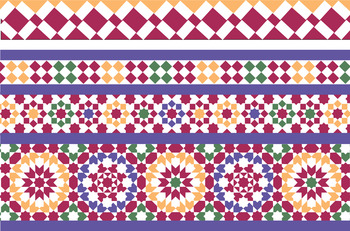
How to proceed? The founder of empirical aesthetics, Gustav Fechner, distinguished two perceptual components: direct and associative (Fechner Reference Fechner1871; Fechner Reference Fechner1876). Fechner restricted empirical aesthetics to the direct component, because of the experimental control it allows. Although it is interesting that “yellow” is associated with cowardice in English culture, but with wisdom and royalty in Chinese culture, we do not believe that such associations are of central importance for the scientific understanding of human perception and appreciation of color. A rich understanding of human color perception requires experimental analysis of color contrast, discrimination and memory (psychology), an understanding of color receptors, color blindness, and comparisons with other species (biology), and cross-cultural experiments like those of Berlin and Kay (Reference Berlin and Kay1969) (anthropology). Currently, our understanding of such “direct” factors in aesthetic science remains extremely limited. In its absence, worrying about edge cases like Warhol's Brillo Soap Pads Boxes, Duchamp's urinal, or Cage's 4′33" seems myopic at best (Fig. 1).
Figure 1.
An example of complex, beautiful nonrepresentational art, illustrated by Nadja Kavcik, based on an Islamic tiling, maker unknown.
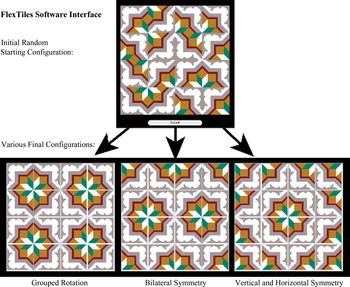
Fechner proposed three methods for studying aesthetics empirically: choice, production, and real use (Fechner Reference Fechner1876). Only the first has been widely adopted by psychologists, mostly in choice paradigms using simplified artificial stimuli. We concur with B&R that this practice, by itself, is inadequate. But a rich reservoir of human-generated patterns is available, produced in all human cultures to elicit an aesthetic response: nonrepresentational geometrical patterns (Fig. 2). Following Fechner, we argue that such patterns provide an ideal middle ground between representational “fine art” expressing a creative artistic vision, full of associative content, and the artificially simplified stimuli beloved of psychologists. Fechner singled out ornamental art as ideal for studying direct factors such as symmetry, complexity, structural ambiguity, and regularity, with little associative content. With modern software, such patterns provide full experimental control, but still elicit a bona fide aesthetic reaction. For example, we have recently applied Fechner's method of production to tilings using touchscreens, analyzing which structural variants humans spontaneously produce, and comparing them to the patterns participants prefer and to those found in reality (Fig. 2). Humans prefer to make, and perceive, patterns with a high level of symmetry and regularity (direct component). Creativity is also evident: participants often produced different pattern variants for the same tile array (Westphal-Fitch et al. Reference Westphal-Fitch, Huber, Gomez and Fitch2012).
Figure 2.
Schematic illustrating “FlexTiles” software. Participants are presented with a random matrix of tiles on a touch screen. Pressing the tiles rotates them, and participants are told simply to press until they are done. Participants typically create highly ordered, symmetrical patterns, despite no instructions to do so; three example outputs are shown. (from Westphal-Fitch et al. Reference Westphal-Fitch, Huber, Gomez and Fitch2012).
In conclusion, we share B&R's dislike of the “two cultures” divide in aesthetics and agree that progress in a science of aesthetics demands collaboration between psychologists, art historians, and artists. However, we believe that B&R's proposed framework risks unintentionally smuggling the covert elitism of traditional art history and philosophical aesthetics into a future science of art appreciation. Any framework placing historical and cultural information at the heart of aesthetic appreciation will be narrow and Eurocentric from the outset and incapable of addressing the truly deep questions of the human aesthetic capacity rigorously and empirically.





Bullot & Reber (B&R) are certainly correct that knowledge of cultural context changes our perception of art, because such knowledge changes our understanding of virtually anything. But we reject their contention that such knowledge is indispensable, because detailed information about artist, patron, meaning, or context is limited or unavailable for most of the world's art. Although art historical knowledge may enhance an aesthetic experience, it is not a necessary condition. Indeed for the vast majority of perceivers, such knowledge is not, and has never been, an essential part of the aesthetic experience. To deny them “true” artistic understanding, or classify their aesthetic experience as “deficient,” is unacceptable for at least two reasons.
First, it is often impossible to reconstruct the agent behind an artwork, or the context in which it was produced. From the cave paintings of Lascaux to the cathedral of Notre Dame, the actual artisans, and the varied rationales behind their actions, remain unknown. The same is also true of traditional folk art and applied art, such as patchwork, pottery, mosaics, and so forth. The makers of these “low” arts often remain anonymous and their context of creation vague or unknown. Nonetheless, these “unregarded arts” are fully fledged manifestations of the human drive to create art and often elicit rich aesthetic experiences (Gombrich Reference Gombrich1979). The modern distinction between art and craft, and the Romantic conception of artistic expression as individual inspiration and creative novelty, is recent even in Western thought (Kristeller Reference Kristeller1952; Shiner Reference Shiner2001) and wholly inapplicable to many other cultures and times. Western representational artwork is unusual in its richly documented written history, but even in the Western canon, attention to authorship and interest in the author's intentions is a recent phenomenon. Hence, B&R's “psycho-historical framework” is inapplicable, even to much of the traditional Western canon, from Egypt to Greece, Rome, and medieval Europe. For the rest of the world's art, knowledge of and interest in such issues is very recent or nonexistent – or even antithetical to accepted artistic or religious principles (e.g., in Islam). From the Alhambra to Machu Picchu, “causal/historical information” is scant, but nonetheless such masterworks certainly deserve consideration in any future science of art appreciation.
Secondly, if the human aesthetic sense is deeply rooted in our species' biology – as we believe it is – then we must understand aesthetic appreciation in its native form, independent of education or secondary knowledge. A full command of one's native language does not require schooling or literacy, and both rich understanding and skillful production of music are possible without explicit knowledge of musical theory or music-reading ability. Thus, both modern linguistics and musicology have rejected elitist and prescriptivist views of language and music, and both fields today focus on the everyday speaker/listener (Honing Reference Honing2009; Yule Reference Yule2006). Equivalently, aesthetic science should take seriously the hypothesis that the aesthetic capacity is a fundamental human cognitive trait. Testing this hypothesis entails the firm rejection of any notion that “true” or “correct” understanding is limited to a select few, or to artworks for which rare ancillary knowledge is available. For most human artworks and traditions, both the creator(s) and the intended audiences lacked formal education or background in art history. Any framework placing such factors at center stage therefore provides an inadequate basis for a future science of aesthetics.
How to proceed? The founder of empirical aesthetics, Gustav Fechner, distinguished two perceptual components: direct and associative (Fechner Reference Fechner1871; Fechner Reference Fechner1876). Fechner restricted empirical aesthetics to the direct component, because of the experimental control it allows. Although it is interesting that “yellow” is associated with cowardice in English culture, but with wisdom and royalty in Chinese culture, we do not believe that such associations are of central importance for the scientific understanding of human perception and appreciation of color. A rich understanding of human color perception requires experimental analysis of color contrast, discrimination and memory (psychology), an understanding of color receptors, color blindness, and comparisons with other species (biology), and cross-cultural experiments like those of Berlin and Kay (Reference Berlin and Kay1969) (anthropology). Currently, our understanding of such “direct” factors in aesthetic science remains extremely limited. In its absence, worrying about edge cases like Warhol's Brillo Soap Pads Boxes, Duchamp's urinal, or Cage's 4′33" seems myopic at best (Fig. 1).
An example of complex, beautiful nonrepresentational art, illustrated by Nadja Kavcik, based on an Islamic tiling, maker unknown.
Fechner proposed three methods for studying aesthetics empirically: choice, production, and real use (Fechner Reference Fechner1876). Only the first has been widely adopted by psychologists, mostly in choice paradigms using simplified artificial stimuli. We concur with B&R that this practice, by itself, is inadequate. But a rich reservoir of human-generated patterns is available, produced in all human cultures to elicit an aesthetic response: nonrepresentational geometrical patterns (Fig. 2). Following Fechner, we argue that such patterns provide an ideal middle ground between representational “fine art” expressing a creative artistic vision, full of associative content, and the artificially simplified stimuli beloved of psychologists. Fechner singled out ornamental art as ideal for studying direct factors such as symmetry, complexity, structural ambiguity, and regularity, with little associative content. With modern software, such patterns provide full experimental control, but still elicit a bona fide aesthetic reaction. For example, we have recently applied Fechner's method of production to tilings using touchscreens, analyzing which structural variants humans spontaneously produce, and comparing them to the patterns participants prefer and to those found in reality (Fig. 2). Humans prefer to make, and perceive, patterns with a high level of symmetry and regularity (direct component). Creativity is also evident: participants often produced different pattern variants for the same tile array (Westphal-Fitch et al. Reference Westphal-Fitch, Huber, Gomez and Fitch2012).
Schematic illustrating “FlexTiles” software. Participants are presented with a random matrix of tiles on a touch screen. Pressing the tiles rotates them, and participants are told simply to press until they are done. Participants typically create highly ordered, symmetrical patterns, despite no instructions to do so; three example outputs are shown. (from Westphal-Fitch et al. Reference Westphal-Fitch, Huber, Gomez and Fitch2012).
In conclusion, we share B&R's dislike of the “two cultures” divide in aesthetics and agree that progress in a science of aesthetics demands collaboration between psychologists, art historians, and artists. However, we believe that B&R's proposed framework risks unintentionally smuggling the covert elitism of traditional art history and philosophical aesthetics into a future science of art appreciation. Any framework placing historical and cultural information at the heart of aesthetic appreciation will be narrow and Eurocentric from the outset and incapable of addressing the truly deep questions of the human aesthetic capacity rigorously and empirically.