






No CrossRef data available.
Article contents
Social motivation in autism: Gaps and directions for measurement of a putative core construct
Published online by Cambridge University Press: 23 July 2019
Abstract
This commentary highlights the observation that social motivation is usually an imprecisely specified construct. We suggest four social motivation conceptualizations across levels of analysis and explore where the target article situates among these. We then offer theoretical and practical guidance for operationalization and measurement of social motivation to support more comprehensive future research on this complex construct in the autism literature.
Information
- Type
- Open Peer Commentary
- Information
- Copyright
- Copyright © Cambridge University Press 2019
References
Bayer, H. M. & Glimcher, P. W. (2005) Midbrain dopamine neurons encode a quantitative reward prediction error signal. Neuron 47(1):129–41. Available at: http://doi.org/10.1016/j.neuron.2005.05.020.Google Scholar
Benning, S. D. (2011) Postauricular and superior auricular reflex modulation during emotional pictures and sounds. Psychophysiology 48(3):410–14. Available at: http://doi.org/10.1021/nn300902w.Release.Google Scholar
Berridge, K. C. & Kringelbach, M. L. (2008) Affective neuroscience of pleasure: Reward in humans and animals. Psychopharmacology 199(3):457–80. Available at:http://doi.org/10.1007/s00213-008-1099-6.Google Scholar
Berridge, K. C. & Kringelbach, M. L. (2011) Building a neuroscience of pleasure and well-being. Psychology of Well-Being: Theory, Research and Practice 1(1):3. Available at: http://doi.org/10.1186/2211-1522-1-3.Google Scholar
Berridge, K. C. & Robinson, T. E. (2003) Parsing reward. Trends in Neurosciences 26(9):507–13. Available at: https://doi.org/10.1016/S0166-2236(03)00233-9.Google Scholar
Berridge, K. C., Robinson, T. E. & Aldridge, J. W. (2009) Dissecting components of reward: “Liking,” “wanting,” and learning. Current Opinion In Pharmacology 9(1):65–73. Available at: http://doi.org/10.1016/j.coph.2008.12.014.Google Scholar
Bottini, S. (2018) Social reward processing in individuals with autism spectrum disorder: A systematic review of the social motivation hypothesis. Research in Autism Spectrum Disorders 45:9–26. Available at: https://doi.org/10.1016/j.rasd.2017.10.001.Google Scholar
Castro, D. C. & Berridge, K. C. (2014) Opioid hedonic hotspot in nucleus accumbens shell: Mu, delta, and kappa maps for enhancement of sweetness “liking” and “wanting.” Journal of Neuroscience 34(12):4239–50. Available at: http://doi.org/10.1523/JNEUROSCI.4458-13.2014.Google Scholar
Chevallier, C., Kohls, G., Troiani, V., Brodkin, E. S. & Schultz, R. T. (2012b) The social motivation theory of autism. Changes 29(6):997–1003. http://doi.org/10.1016/j.biotechadv.2011.08.021.Secreted.Google Scholar
Clements, C. C., Zoltowski, A. R., Yankowitz, L. D., Yerys, B. E., Schultz, R. T. & Herrington, J. D. (2018) Evaluation of the social motivation hypothesis of autism: A systematic review and meta-analysis. JAMA Psychiatry 75(8):797–808. Available at: https://doi.org/10.1001/jamapsychiatry.2018.1100.Google Scholar
Constantino, J. N. (2012) Social Responsiveness Scale (2nd ed.). Western Psychological Services.Google Scholar
Dawson, G., Webb, S. J., Wijsman, E., Schellenberg, G., Estes, A., Munson, J. & Faja, S. (2005) Neurocognitive and electrophysiological evidence of altered face processing in parents of children with autism: Implications for a model of abnormal development of social brain circuitry in autism. Development and Psychopathology 17(3):679–97.Google Scholar
Dayan, P. & Berridge, K. C. (2014) Model-based and model-free Pavlovian reward learning: Revaluation, revision, and revelation. Cognitive, Affective and Behavioral Neuroscience 14(2):473–92. Available at: http://doi.org/10.3758/s13415-014-0277-8.Google Scholar
Dichter, G. S., Richey, J. A., Rittenberg, A. M., Sabatino, A. & Bodfish, J. W. (2012) Reward circuitry function in autism during face anticipation and outcomes. Journal of Autism and Developmental Disorders 42(2):147–60. Available at: http://doi.org/10.1007/s10803-011-1221-1.Google Scholar
Dichter, G. S., Smoski, M. J., Kampov-Polevoy, A. B., Gallop, R. & Garbutt, J. C. (2010) Unipolar depression does not moderate responses to the sweet taste test. Depression and Anxiety 27(9):859–63. Available at: http://doi.org/10.1002/da.20690.Unipolar.Google Scholar
Dichter, G. S., Tomarken, A. J. & Baucom, B. R. (2002) Startle modulation before, during and after exposure to emotional stimuli. International Journal of Psychophysiology 43(2):191–96. Available at: http://doi.org/10.1016/S0167-8760(01)00170-2.Google Scholar
Gillan, C. M., Papmeyer, M., Morein-Zamir, S., Sahakian, B. J., Fineberg, N. A., Robbins, T. W. & De Wit, S. (2011) Disruption in the balance between goal-directed behavior and habit learning in obsessive-compulsive disorder. American Journal of Psychiatry 168(7):718–26. Available at: http://doi.org/10.1176/appi.ajp.2011.10071062.Google Scholar
Graybiel, A. M. (2008) Habits, rituals, and the evaluative brain. Annual Review of Neuroscience 31(1):359–87. Available at: http://doi.org/10.1146/annurev.neuro.29.051605.112851.Google Scholar
Hackley, S. A., Muñoz, M. Á., Hebert, K., Valle-Inclán, F. & Vila, J. (2009) Reciprocal modulation of eye-blink and pinna-flexion components of startle during reward anticipation. Psychophysiology 46(6):1154–59. Available at: http://doi.org/10.1111/j.1469-8986.2009.00867.x.Google Scholar
Ikemoto, S. & Panksepp, J. (1999) The role of nucleus accumbens dopamine in motivated behavior: A unifying interpretation with special reference to reward-seeking. Brain Research Reviews 31(1):6–41. http://doi.org/10.1016/S0165-0173(99)00023-5.Google Scholar
Kim, B. W., Kennedy, D. N., Lehár, J., Lee, M. J., Blood, A. J., Lee, S., Perlis, R. H., Smoller, J. W., Morris, R., Fava, M., and Breiter, H. C. (2010) Recurrent, robust and scalable patterns underlie human approach and avoidance. PLOS ONE 5(5). Available at: http://doi.org/10.1371/journal.pone.0010613.Google Scholar
Knowlton, B. J. & Squire, L. R. (1994) The information acquired during artificial grammar learning. Journal of Experimental Psychology: Learning, Memory, and Cognition 20(1):79–91. Available at: http://www.ncbi.nlm.nih.gov/pubmed/8138790.Google Scholar
Kohls, G., Chevallier, C., Troiani, V. & Schultz, R. T. (2012) Social “wanting” dysfunction in autism: Neurobiological underpinnings and treatment implications. Journal of Neurodevelopmental Disorders 4:1–20. Available at: http://dx.doi.org/10.1186/1866-1955-4-10.Google Scholar
Kohls, G., Peltzer, J., Schulte-Rüther, M., Kamp-Becker, I., Remschmidt, H., Herpertz-Dahlmann, B. & Konrad, K. (2011) Atypical brain responses to reward cues in autism as revealed by event-related potentials. Journal of Autism and Developmental Disorders 41(11):1523–33. Available at: http://doi.org/10.1007/s10803-011-1177-1.Google Scholar
Liu, Y., Huang, H., McGinnis-Deweese, M., Keil, A. & Ding, M. (2012) Neural substrate of the late positive potential in emotional processing. Journal of Neuroscience 32(42):14563–72. Available at: http://doi.org/10.1523/JNEUROSCI.3109-12.2012.Google Scholar
Morgan, G. A., Wang, J., Barrett, K. C., Liao, H.-F., Wang, P.-J., Huang, S.-Y. & Jozsa, K. (2015) The Revised Dimensions of Mastery Questionnaire (DMQ 18). Colorado State University.Google Scholar
Rolls, E. T., Kringelbach, M. L. & De Araujo, I. E. T. (2003) Different representations of pleasant and unpleasant odours in the human brain. European Journal of Neuroscience 18(3):695–703. Available at: http://doi.org/10.1046/j.1460-9568.2003.02779.x.Google Scholar
Schultz, W. (1998) Predictive reward signal of dopamine neurons. Journal of Neurophysiology 80(1):1–27. Available at: http://doi.org/10.1152/jn.1998.80.1.1.Google Scholar
Schultz, W. (2000) Multiple reward signals in the brain. Nature Reviews Neuroscience 1(3):199–207. Available at: http://doi.org/10.1038/35044563.Google Scholar
Schultz, W., Dayan, P. & Montague, P. R. (1997) A neural substrate of prediction and reward [review]. Science 275(5306):1593–99.Google Scholar
Scott-Van Zeeland, A. A., Dapretto, M., Ghahremani, D. G., Poldrack, R. A., & Bookheimer, S. Y. (2010) Reward processing in autism. Autism Research 3(2):53–67. Available at: https://dx.doi.org/10.1002.aur.122.Google Scholar
Sepeta, L., Tsuchiya, N., Davies, M. S., Sigman, M., Bookheimer, S. Y. & Dapretto, M. (2012) Abnormal social reward processing in autism as indexed by pupillary responses to happy faces. Journal of Neurodevelopmental Disorders 4(17). Available at: http://doi.org/10.1007/BF02172225.Google Scholar
Small, D. M. (2010) Taste representation in the human insula. Brain Structure & Function 214(5–6):551–61. Available at: http://doi.org/10.1007/s00429-010-0266-9.Google Scholar
Smith, K. S. & Berridge, K. C. (2007) Opioid limbic circuit for reward: Interaction between hedonic hotspots of nucleus accumbens and ventral pallidum. Journal of Neuroscience 27(7):1594–1605. Available at: http://doi.org/10.1523/JNEUROSCI.4205-06.2007.Google Scholar
Smith, K. S. & Graybiel, A. M. (2014) Investigating habits: Strategies, technologies and models. Frontiers in Behavioral Neuroscience 8:39. Available at: http://doi.org/10.3389/fnbeh.2014.00039.Google Scholar
Stavropoulos, K. K. M. & Carver, L. J. (2014) Reward anticipation and processing of social versus nonsocial stimuli in children with and without autism spectrum disorders. Journal of Child Psychology and Psychiatry and Allied Disciplines 12:1398–1408. Available at: http://doi.org/10.1111/jcpp.12270.Google Scholar
Tindell, A. J., Smith, K. S., Peciña, S., Berridge, K. C. & Aldridge, J. W. (2006) Ventral pallidum firing codes hedonic reward: When a bad taste turns good. Journal of Neurophysiology 96(5):2399–2409. Available at: http://doi.org/10.1152/jn.00576.2006.Google Scholar
Treadway, M. T., Buckholtz, J. W., Schwartzman, A. N., Lambert, W. E. & Zald, D. H. (2009) Worth the “EEfRT”? The effort expenditure for rewards task as an objective measure of motivation and anhedonia. PLOS ONE 4(8):1–9. Available at: http://doi.org/10.1371/journal.pone.0006598.Google Scholar
Tricomi, E., Balleine, B. W. & O'Doherty, J. P. (2009) A specific role for posterior dorsolateral striatum in human habit learning. European Journal of Neuroscience 29(11):2225–32. Available at: http://doi.org/10.1111/j.1460-9568.2009.06796.x.Google Scholar
Watson, K. K., Werling, D. M., Zucker, N. L. & Platt, M. L. (2010) Altered social reward and attention in anorexia nervosa. Frontiers in Psychology 1(SEP). Available at: http://doi.org/10.3389/fpsyg.2010.00036.Google Scholar
Yin, H. H. & Knowlton, B. J. (2006) The role of the basal ganglia in habit formation. Nature Reviews Neuroscience 7(6):464–76. Available at: http://doi.org/10.1038/nrn1919.Google Scholar
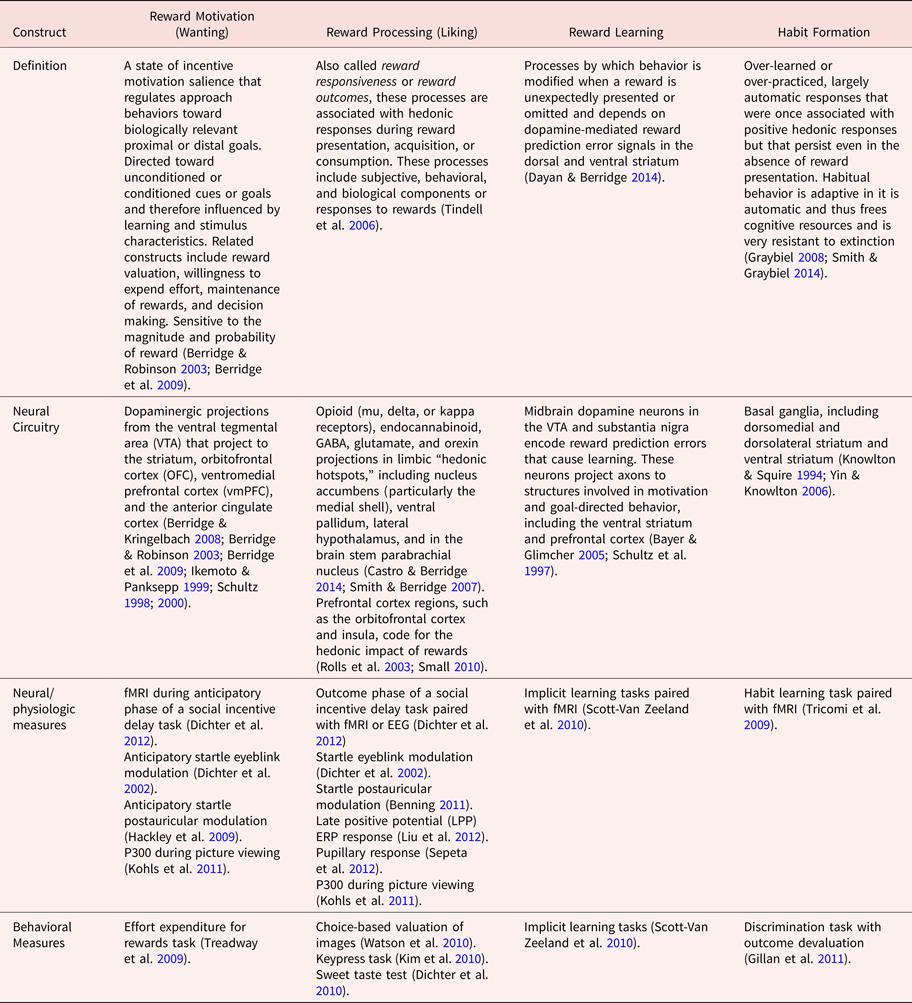
Table 1 Summary of the four putative components of social motivation across levels of analysis
Target article
Related commentaries (32)
Beyond autism: Challenging unexamined assumptions about social motivation in typical development
Compensation in autism is not consistent with social motivation theory
Social motivation in autism: Gaps and directions for measurement of a putative core construct
Jaswal & Akhtar (J&A) provide a novel and compelling argument to rethink presumptions about social motivation in youth with autism spectrum disorder (ASD) – that behaviors presumed to be indicative of reduced social motivation in ASD may reflect causes unrelated to motivational factors. For example, they suggest that self-regulation, rather than reduced social motivation, may influence averted eye contact. However, an alternative explanation bears consideration: that both in the target article and in the preexisting literature, social motivation is an imprecisely specified construct (Bottini Reference Bottini2018; Clements et al. Reference Clements, Zoltowski, Yankowitz, Yerys, Schultz and Herrington2018). That is, while social motivation models have proliferated, they have done so in the absence of clear definitions of constructs and specific (and falsifiable) measurement approaches.
J&A focus on social interest and use this interchangeably with the term social motivation. However, drawing from the broad motivation literature, it is clear that “social interest” is but one part of a larger construct of social motivation. Social motivation may be parsed into four components that have largely distinct neurobiological elements, namely, reward motivation (or “wanting”), which is comparable to the social interest term used by J&A, reward processing (or “liking”), reward learning, and habit formation (Berridge & Kringelbach Reference Berridge and Kringelbach2008; Reference Berridge and Kringelbach2011; Graybiel Reference Graybiel2008).
Reward motivation (wanting) is defined as a state of incentive motivation salience that regulates approach behaviors toward biologically relevant goals (Table 1; Berridge & Robinson Reference Berridge and Robinson2003; Berridge et al. Reference Berridge, Robinson and Aldridge2009). Reward motivation (wanting) also encompasses the willingness to expend effort to obtain rewards, and it is referred to as maintenance behavior in the social motivation literature (Chevallier et al. Reference Chevallier, Kohls, Troiani, Brodkin and Schultz2012b). Social wanting, therefore, may be observed in prosocial behaviors (social initiations, i.e., effort expended to maintain social relationships) and in the brain as heightened activity in reward-related mesocorticolimbic regions during the anticipation of social feedback. Reward processing/responsiveness (liking) is associated with the hedonic impact associated with reward acquisition (Tindell et al. Reference Tindell, Smith, Peciña, Berridge and Aldridge2006). Social liking includes subjective, behavioral, and biological components of responses to rewards such as self-reported social pleasure and heightened electrophysiological response to social feedback (e.g., reward positivity or late positive potential event-related potential [ERP]; Stavropoulos & Carver Reference Stavropoulos and Carver2014). Reward learning includes the processes by which behavior is modified when a reward is presented or omitted (Dayan & Berridge Reference Dayan and Berridge2014). Over time, social reward learning is observable behaviorally, for example, when an individual differentially attends to social partners who are friendly and avoids those who treat them poorly. Implicit learning tasks using socially relevant stimuli can elicit social reward learning in a laboratory setting (Scott-Van Zeeland et al. Reference Scott-Van Zeeland, Dapretto, Ghahremani, Poldrack and Bookheimer2010). Habit formation refers to over-learned, largely automatic responses that were once associated with positive hedonic responses but that persist even in the absence of reward presentation (Graybiel Reference Graybiel2008; Smith & Graybiel Reference Smith and Graybiel2014). There are many culturally specific social habits, such as waving or shaking hands when greeting someone, that require effort to learn, but once learned, are largely automatic overtures. The transition from effortful social learning to social habit formation is adaptive in that it frees cognitive resources for other tasks.
Summary of the four putative components of social motivation across levels of analysis
J&A suggest the predominant view is that social motivation differences are driven by a lack of social interest (wanting) in individuals with ASD. However, most ASD research does not specify any component as decisively representing social motivation. For instance, the seminal paper on social motivation in ASD (Dawson et al. Reference Dawson, Webb, Wijsman, Schellenberg, Estes, Munson and Faja2005) posits that an absence of preferential processing of social information may be indicative of a social motivation deficit, implicating both social wanting and liking. Other well-cited papers point to various aspects of reward processing and maintenance (e.g., Chevallier et al. Reference Chevallier, Kohls, Troiani, Brodkin and Schultz2012b; Kohls et al. Reference Kohls, Chevallier, Troiani and Schultz2012). Without consensus on the scope of the social motivation construct, J&A's claim of an extant (but differently expressed) desire for social connection among most individuals with ASD may be appropriate – but it may not impact the plausibility of the social motivation model.
To move the field forward, a number of theoretical and practical issues related to the operationalization and measurement of social motivation should be precisely specified. Presently, researchers often use broad self-report measures (such as the Dimensions of Mastery Questionnaire; Morgan et al. Reference Morgan, Wang, Barrett, Liao, Wang, Huang and Jozsa2015) or the Social Responsiveness Scale (2nd ed.; Constantino Reference Constantino2012) to measure social motivation. Though these measures are easy to administer, and they do not differentiate components of social motivation. Task-based paradigms that can be paired with EEG and/or fMRI are helpful in elucidating the neural correlates of social motivation. Although these measures may be more effective in differentiating components of social motivation, they have limited ecological validity. Thus, we suggest three improvements: First, the assessment of social motivation should be multimethod to investigate each of the four components, combining survey, behavioral, and neural measures. Second, assessment of social motivation should also be multi-informant, incorporating the insight of the individual with ASD as well as outside reporters (e.g., parents, teachers, and clinicians) to provide information about social motivation in different contexts. Third, when reporting results, researchers should specify which of the four components are being investigated to promote clarity and consistency.
We appreciate the novel approach J&A took to the reconceptualization of behaviors frequently assumed to stem from a lack of “social interest” in individuals with ASD. We agree that differences in the expression of social interest should not necessarily indicate a complete absence of social motivation. Their focus on social interest as a proxy for social motivation is indicative of the inconsistency in the field over how to define social motivation. Drawing from the broader motivation literature, we set out four components that may contribute to a larger social motivation construct. In doing so, we clarify that heightened social interest may coexist with attenuated levels of the other three social motivation components. Social motivation as a construct is complex and difficult to operationalize. To better understand the ways in which social motivation is expressed – and may or may not be impacted – in individuals with and without ASD, it is essential for the field to converge on specific definitions of components of this construct.