





No CrossRef data available.
Article contents
Social cognition: A crucial indicator of higher-order cognitive ability across the animal phyla
Published online by Cambridge University Press: 03 November 2025
Abstract
Social cognition (SC) constitutes a predominant aspect of complex cognition (CC) especially in non-human animals. Apart from bees, ants and birds, fish, particularly the teleost group, are considered as an emerging model organism to study vertebrate SC. The commentary deals with some of the CC traits of SC across different families of teleost fish that have been experimentally reported.
Information
- Type
- Open Peer Commentary
- Information
- Copyright
- © The Author(s), 2025. Published by Cambridge University Press
References
Bennett, M. S. (2023). A brief history of intelligence: Evolution, AI, and the five breakthroughs that made our brains. HarperCollins.Google Scholar
Clark, C. W., & Mangel, M. (1984). Foraging and flocking strategies: Information in an uncertain environment. The American Naturalist, 123(5), 626–641.CrossRefGoogle Scholar
Davis, C. M. (2017). Animal models for studying substance use disorder: Place and taste conditioning. In Michael Conn, P. (Ed.), Animal models for the study of human disease (2nd ed., pp. 556–584). Academic Press.CrossRefGoogle Scholar
Day, R. L., MacDonald, T., Brown, C., Laland, K. N., & Reader, S. M. (2001). Interactions between shoal size and conformity in guppy social foraging. Animal Behaviour, 62(5), 917–925.CrossRefGoogle Scholar
Desjardins, J. K., Stiver, K. A., Fitzpatrick, J. L., Milligan, N., Van Der Kraak, G. J., & Balshine, S. (2008). Sex and status in a cooperative breeding fish: Behavior and androgens. Behavioral Ecology and Sociobiology, 62, 785–794.CrossRefGoogle Scholar
Fischer, S., Ataalla, S., Gabrielidis, X., Rohdmann, B., Yazar, D., & Jungwirth, A. (2024). Comparative conflict resolution: Cooperative cichlids outperform less social species. Animal Behaviour, 208, 91–109.CrossRefGoogle Scholar
Franks, B., Gaffney, L. P., Graham, C., & Weary, D. M. (2023). Curiosity in zebrafish (Danio rerio)? Behavioral responses to 30 novel objects. Frontiers in Veterinary Science, 9, 1062420.CrossRefGoogle ScholarPubMed
Hasenjager, M. J. (2021). Cooperation among fishes. In Shackelford, T. K., & Weekes-Shackelford, V. A. (Eds.), Encyclopedia of evolutionary psychological science (pp. 1438–1445). Springer.CrossRefGoogle Scholar
Hintz, W. D., & Lonzarich, D. G. (2018). Maximizing foraging success: The roles of group size, predation risk, competition, and ontogeny. Ecosphere, 9(10), e02456.CrossRefGoogle Scholar
Klüver, J. (2009). Social cognitive complexity. In Meyers, R. (Ed.), Encyclopedia of complexity and systems science (pp. 8183–8198). Springer.CrossRefGoogle Scholar
Lai, N. H. Y., Mohd Zahir, I. A., Liew, A. K. Y., Ogawa, S., Parhar, I., & Soga, T. (2023). Teleosts as behaviour test models for social stress. Frontiers in Behavioral Neuroscience, 17, 1205175.CrossRefGoogle ScholarPubMed
Marques, J. C., Li, M., Schaak, D., Robson, D. N., & Li, J. M. (2020). Internal state dynamics shape brainwide activity and foraging behaviour. Nature, 577(7789), 239–243.CrossRefGoogle ScholarPubMed
Mayer, I., & Pšenička, M. (2024). Conservation of teleost fishes: Application of reproductive technologies. Theriogenology Wild, 4, 100078.CrossRefGoogle Scholar
Nunes, A. R., Carreira, L., Anbalagan, S., Blechman, J., Levkowitz, G., & Oliveira, R. F. (2020). Perceptual mechanisms of social affiliation in zebrafish. Scientific Reports, 10(1), 3642.CrossRefGoogle ScholarPubMed
Polverino, G., Abaid, N., Kopman, V., Macrì, S., &Porfiri, M. (2012). Zebrafish response to robotic fish: Preference experiments on isolated individuals and small shoals. Bioinspiration & biomimetics, 7(3), 036019.CrossRefGoogle ScholarPubMed
Sefc, K. M. (2011). Mating and parental care in Lake Tanganyika’s Cichlids. International Journal of Evolutionary Biology, 2011(1), 470875.CrossRefGoogle ScholarPubMed
Xie, Q., Wang, L., Yang, S., Hu, J., Li, W., Yang, W., … & Zhang, P. (2025). Collective behavior and upstream tactics of schooling fish in an obstacle environment. Environmental Biology of Fishes, 108(5):853–874.CrossRefGoogle Scholar
Zala, S. M., & Määttänen, I. (2013). Social learning of an associative foraging task in zebrafish. Naturwissenschaften, 100, 469–472.CrossRefGoogle ScholarPubMed
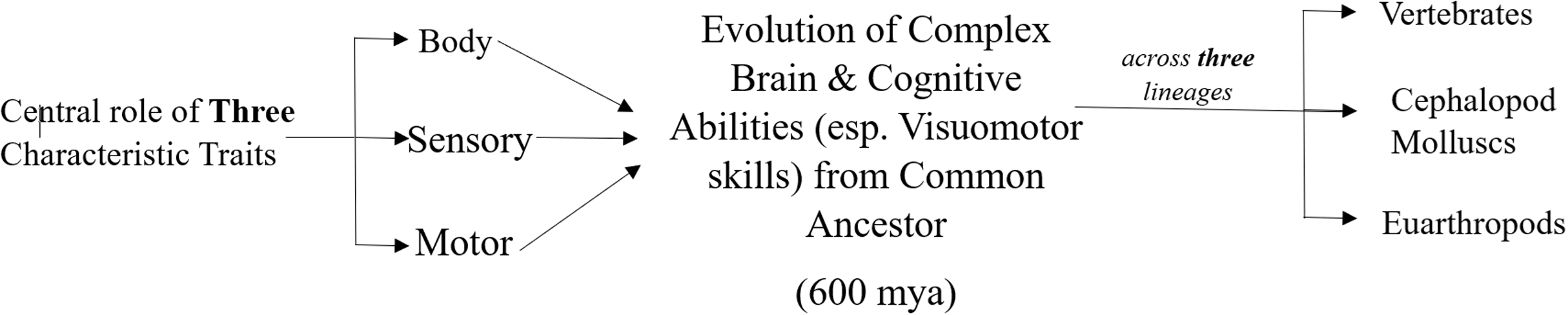
Figure 1. A graphical representation of Coombs and Trestman’s framework.

Figure 2. Characteristic social cognitive traits across popular insect and bird models.

Figure 3. Characteristic social cognitive traits across the teleost fish group.
Target article
Related commentaries (20)
Beyond the sea squirt’s brain: cognition as inseparable from sensory-motor action
Cognition in motion: Functional internal models as an evolutionary scaffold in cognitive control
Complex brains allow functioning in a complex environment by using information
Evolution of social “cognitive cell” adaptations in unicellular organisms with complex mating traits
From biological vision to artificial intelligence: The role of foundational predictive processing
On bodies, brains, and behaviour (and a little bit of magic)
 You have
Access
Social cognition (SC) is considered one of the most dynamic and crucial aspects of complex cognitive (CC) abilities, where the social and cognitive aspects constantly interact and mutually influence each other (Kluver, Reference Klüver and Meyers2009), and appears neglected in Coombs and Trestman’s framework (Figure 1). In the non-human animal kingdom, SC is primarily associated with memory related to mutual recognition, mating, dominance, and even overcoming potential predators. SC is considered to be the highest in animals that rely on collaborative behavior, where the same animal species cluster together and share the same natural resources (Bennett, Reference Bennett2023). Since the 19th century, birds and invertebrates are known to possess an SC spectrum similar to that of higher-order mammals, despite their different brain structure. Some striking SC paradigms studied across bees, ants and birds have been illustrated in Figure 2.
A graphical representation of Coombs and Trestman’s framework.
Characteristic social cognitive traits across popular insect and bird models.
It was during 20th century that fish emerged as a “suitable model organism” to study SC traits. Fish constitute more than half of all vertebrates (Mayer & Pšenička, Reference Mayer and Pšenička2024). In the recent past, fish have been extensively used in the laboratory to test general hypotheses about vertebrate SC and its evolution owing to their conserved brain structure, physiology and ability to perform complex decisions in a social context. Recent studies suggest that among the fish lineages, the teleost group of fish, the largest and most diverse vertebrate group, possesses the highest social and other CC abilities and may serve as an ideal model to study social cognition in the laboratory (Lai et al., Reference Lai, Mohd Zahir, Liew, Ogawa, Parhar and Soga2023). The first noteworthy collective behavior seen in fish was their tendency to reflexively follow each other’s movements and swim near one another (Xie et al., Reference Xie, Wang, Yang, Hu, Li, Yang and Zhang2025). It seems that social conditions (e.g., group living) appear to play key roles in the evolution of flexible behaviors, more complex brains and cognition. In fish, cooperative behavior has been observed in a variety of contexts – including group foraging, mating and cooperative breeding, anti-predatory and territorial behaviors – and is maintained by a number of evolutionary mechanisms (Hasenjager, Reference Hasenjager, Shackelford and Weekes-Shackelford2021). In the light of this, some unique and characteristic social behavioral traits across the teleost fish is discussed below (Figure 3).
Characteristic social cognitive traits across the teleost fish group.
In unpredictable habitats (varying quality), group foraging, an evolutionary strategy, allows individuals to optimize foraging success (Hintz & Lonzarich, Reference Hintz and Lonzarich2018) through sharing of information among group members (Clark & Mangel, Reference Clark and Mangel1984). Studies have shown that zebrafish (Danio rerio) and goldfish (Carassius auratus) prefer remaining in shoals that help them to forage, avoid predators, and swim more efficiently (Day et al., Reference Day, MacDonald, Brown, Laland and Reader2001). During complex social tasks like foraging, there exist two dynamic internal states of mind – the exploitation phase (when the individual selects the best option based on its existing knowledge) and the exploration phase (when the individual tries to explore new options that may lead to better outcomes in the future). In zebrafish, during the exploitation state, the animal tends to reduce locomotion and promotes hunting by exhibiting small, localized swimming, whereas, in the exploration state, the animal exhibits higher locomotion and suppresses hunting, generating long-range trajectories (longer swimming path) (Marques et al., Reference Marques, Li, Schaak, Robson and Li2020). The exploratory behavior, in response to novel environment or visual cues, increases when they are present in groups than when isolated (Franks et al., Reference Franks, Gaffney, Graham and Weary2023).
Another important SC trait is cooperative breeding, where the nonbreeding individuals (non-parental), or helpers, assist the breeding pairs and contribute to the care of young by performing behaviors collectively referred to as “allocare” (Desjardins et al., Reference Desjardins, Stiver, Fitzpatrick, Milligan, Van Der Kraak and Balshine2008). Studies have also reported that in some parenting species of Cichlids (African), the younger ones from a previous spawning batch may stay with their parents and help care for the new young. These helpers take part in cleaning the breeding hole, fanning eggs and larvae, and protecting the territory (Sefc, Reference Sefc2011).
Cooperative breeding influences some other CC traits like aggression. Studies using different varieties of Cichlids have shown that species which were grown in cooperatively breeding environment exhibit reduced aggression (de-escalation), improved conflict resolution and better tendency to share resources by establishing mutually tolerant relationships. However, species which were grown in pairs or isolation displayed prominent aggression and reluctance in sharing resources (Fischer et al., Reference Fischer, Ataalla, Gabrielidis, Rohdmann, Yazar and Jungwirth2024).
Another crucial aspect of SC is social learning, where learning is influenced by cues observing or interaction with other individuals (Zala & Määttänen, Reference Zala and Määttänen2013). In animals, observational learning is utilized in following the pattern of other individuals in terms of known behavior. Like, in fish, they do not learn swimming by following other fish, rather they try to alter their swimming paths based on that of the conspecifics (Bennett, Reference Bennett2023). Experiments on zebrafish have also shown that in conditioned place preference (CPP) test (increased preference to a certain place in presence of rewarding stimulus), presence of experienced and conditioned demonstrator fish (those exposed and familiar with the stimulus) increased the social learning ability of naive inexperienced fish (Davis, Reference Davis and Michael Conn2017; Zala & Määttänen, Reference Zala and Määttänen2013).
Apart from social learning, mutual recognition is another important paradigm for social animals because they must recognize the presence of conspecifics in the environment for successful social interaction. Conspecific recognition depends on two cues – body pattern and body motion. Zebrafish can distinguish their conspecifics by body color and striping pattern identification. They can even recognize the conspecific motion pattern (Nunes et al., Reference Nunes, Carreira, Anbalagan, Blechman, Levkowitz and Oliveira2020). A study using bio-mimetic robots has shown that zebrafish display a visible preference towards robots that exhibit motion in a manner similar to that of the conspecific than when the robot was kept static (Polverino et al., Reference Polverino, Abaid, Kopman, Macrì and Porfiri2012).
Overall, in fish, social cognition not only provides them protection from predator, enhances foraging, mate selection and group dynamics, but also enables them to adapt, cooperate and compete with complex social situations within or outside their community. As Coombs and Trestman conclude that their proposed framework is by no means a one-way road map for the evolution of cognition and can only be understood in terms of complicated evolutionary history, the trait of social cognition in the diverse lineages seemingly constitutes an important resource material to that study.
Acknowledgements
The authors acknowledge Late Prof. Ratan Lal Brahmachary, Late Prof. Kamales Bhaumik, Dr. Bijay Bal, Prof. Anuradha Bhat, Dr. Shankarashis Mukherjee and Dr. Shibsankar Roy for several helpful discussions related to the study of cognition in fish model at different points of time.
Financial support
The project has been funded by the Cognitive Science Research Initiative, Department of Science and Technology (DST), Govt. of India, award number DST/CSRI/2021/566.
Competing interests
The authors declare no conflicts of interest.