Refine search
Actions for selected content:
20 results
DIAMONDS AND DOMINOES: IMPOSSIBILITY RESULTS FOR ASSOCIATIVE MODAL LOGICS
- Part of
-
- Journal:
- The Journal of Symbolic Logic , First View
- Published online by Cambridge University Press:
- 15 October 2026, pp. 1-26
-
- Article
-
- You have access
- Open access
- HTML
- Export citation
-
We show that for any class of Boolean algebras with an associative operator, if it contains the complex algebra of $(\mathcal {P}(\mathbb {N}), \cup )$
 , its equational theory is undecidable. Equivalently, any associative normal modal logic valid over the frame $(\mathcal {P}(\mathbb {N}), \cup )$
 is undecidable. This settles a long-open question on the decidability of hyperboolean modal logic [16], and addresses several related problems.


KNOCKING DOWN BOXES: THE FMP FOR $\mathbf {K}\oplus \Box ^{m+k} p\to \Box ^m p$

- Part of
-
- Journal:
- The Journal of Symbolic Logic , First View
- Published online by Cambridge University Press:
- 18 September 2026, pp. 1-14
-
- Article
-
- You have access
- Open access
- HTML
- Export citation
-
It is a long-standing open problem whether modal logics of the form $\mathbf {K}\oplus \Box ^np\to \Box ^mp$
 for $n>m>1$
 have the finite model property (FMP). We solve this by showing that any modal logic axiomatized by formulas of the form $\Box ^np\to \Box ^mp$
 where $n>m>1$
 has the FMP.


RAMSEY THEORY AND BOUNDING IN ARITHMETIC
- Part of
-
- Journal:
- Bulletin of Symbolic Logic , First View
- Published online by Cambridge University Press:
- 16 July 2026, pp. 1-15
-
- Article
-
- You have access
- Open access
- HTML
- Export citation
-
We investigate the relationship between various versions of Ramsey’s theorem and bounding schemes in a model $\mathcal {N}$
 of a fragment of arithmetic $F$
 . Our primary objective is to recast and extend the seminal results of Hirst [15] (see Theorem 1) through the modern lens of Weihrauch reducibility. By extracting explicit Weihrauch reductions from classical proofs, we expose the uniform computational content underlying these combinatorial principles, yielding a deeper and more refined understanding of their reverse mathematical strength.
Our results, informally stated in our terminology and established inside $\mathcal {N}$
 , are as follows: The following are equivalent: $\mathrm {B}\Sigma ^0_2$
 , the statement that the finite union of finite c.e. sets is finite, and the Infinite Pigeonhole Principle (see Theorem 3). We also discuss the Weihrauch relations between these logically equivalent principles (see Section 4). The Infinite Pigeonhole Principle is Weihrauch reducible to $\mathrm {RT}^2_2$
 (see Theorem 4). There is also another principle logically equivalent to $\mathrm {B}\Sigma ^0_2$
 which is Weihrauch reducible to $\mathrm {SRT}^2_2$
 (see Theorem 5). We show that there is a principle which is equivalent to $\mathrm {B}\Sigma ^0_3$
 (see Theorem 6) and Weihrauch reducible to $\mathrm {SRT}^2_{<\infty }$
 (Theorem 7). We discuss some equivalences with $\mathrm {B}\Sigma ^0_{n}$
 (see Section 6.1) and end with a problem Weihrauch reducible to $\mathrm {RT}^{n+1}_{2}$
 (Section 6.2).
Since we work within the model $\mathcal {N}$
 , many standard definitions must be adjusted. Due to the expository nature of this article, these definitions are introduced throughout the text as needed. Reading the article from start to finish will provide a better understanding of the ideas involved than focusing only on individual theorems.


DECIDABILITY OF BEING A UNION-SPLITTING
- Part of
-
- Journal:
- The Journal of Symbolic Logic , First View
- Published online by Cambridge University Press:
- 10 February 2026, pp. 1-11
-
- Article
-
- You have access
- Open access
- HTML
- Export citation
-
Many logical properties are known to be undecidable for normal modal logics, with few exceptions such as the consistency and the coincidence with
 $\mathsf {K}$. This article shows that the property of being a union-splitting in
 $\mathop {\mathsf {NExt}}{\mathsf {K}}$, the lattice of normal modal logics, is decidable, thus answering Problem 2 in [F. Wolter and M. Zakharyaschev, 2007]. This is done by providing a semantic characterization of union-splittings in terms of finite modal algebras. Moreover, by clarifying the connection to union-splittings, we show that in
 $\mathop {\mathsf {NExt}}{\mathsf {K}}$, having a decidable axiomatization problem and being a (un)decidable formula are also decidable. The latter answers Problem 17.3 in [A. Chagrov and M. Zakharyaschev, 1997] for
 $\mathop {\mathsf {NExt}}{\mathsf {K}}$.1


A NEW DECISION METHOD FOR INTUITIONISTIC LOGIC BY 3-VALUED NON-DETERMINISTIC TRUTH-TABLES
- Part of
-
- Journal:
- The Journal of Symbolic Logic , First View
- Published online by Cambridge University Press:
- 17 December 2025, pp. 1-36
-
- Article
-
- You have access
- HTML
- Export citation
-
Kurt Gödel proved that it is not possible to characterize intuitionistic propositional logic (
 ${IPL}$) by means of finite and deterministic truth-tables. After extending the same result with respect to non-deterministic matrices (Nmatrices), we provide a semantical characterization of
 ${IPL}$ by means of a
 $3$-valued Nmatrix with a restricted set of valuations. This structure allows to define an algorithm to delete unsound rows from the non-deterministic truth-tables generated for each formula, which constitutes a new and very simple decision procedure for
 ${IPL}$. This method can be seen as truth-tables in a broader sense, and a way to overcome Gödel’s limiting result.


FINITE UNDECIDABILITY IN NIP FIELDS
- Part of
-
- Journal:
- The Journal of Symbolic Logic / Volume 90 / Issue 2 / June 2025
- Published online by Cambridge University Press:
- 04 October 2023, pp. 509-532
- Print publication:
- June 2025
-
- Article
-
- You have access
- Open access
- HTML
- Export citation
-
A field K in a ring language
 $\mathcal {L}$ is finitely undecidable if
 $\mbox {Cons}(T)$ is undecidable for every nonempty finite
 $T \subseteq {\mathtt{Th}}(K; \mathcal {L})$. We extend a construction of Ziegler and (among other results) use a first-order classification of Anscombe and Jahnke to prove every NIP henselian nontrivially valued field is finitely undecidable. We conclude (assuming the NIP Fields Conjecture) that every NIP field is finitely undecidable. This work is drawn from the author’s PhD thesis [48, Chapter 3].


DECIDABLE FRAGMENTS OF THE QUANTIFIED ARGUMENT CALCULUS
- Part of
-
- Journal:
- The Review of Symbolic Logic / Volume 17 / Issue 3 / September 2024
- Published online by Cambridge University Press:
- 29 September 2023, pp. 736-761
- Print publication:
- September 2024
-
- Article
-
- You have access
- Open access
- HTML
- Export citation
Decidability of the class of all the rings
 $\mathbb {Z}/m\mathbb {Z}$: A problem of Ax
- Part of
-
- Journal:
- Forum of Mathematics, Sigma / Volume 11 / 2023
- Published online by Cambridge University Press:
- 24 July 2023, e64
-
- Article
-
- You have access
- Open access
- HTML
- Export citation
-
We prove that the class of all the rings
 $\mathbb {Z}/m\mathbb {Z}$ for all
 $m>1$ is decidable. This gives a positive solution to a problem of Ax asked in his celebrated 1968 paper on the elementary theory of finite fields [1, Problem 5, p. 270]. In our proof, we reduce the problem to the decidability of the ring of adeles
 $\mathbb {A}_{\mathbb {Q}}$ of
 $\mathbb {Q}$.


The first-order theory of binary overlap-free words is decidable
- Part of
-
- Journal:
- Canadian Journal of Mathematics / Volume 76 / Issue 4 / August 2024
- Published online by Cambridge University Press:
- 26 May 2023, pp. 1144-1162
- Print publication:
- August 2024
-
- Article
-
- You have access
- Open access
- HTML
- Export citation
-
We show that the first-order logical theory of the binary overlap-free words (and, more generally, the
 $\alpha $-free words for rational
 $\alpha $,
 $2 < \alpha \leq 7/3$), is decidable. As a consequence, many results previously obtained about this class through tedious case-based proofs can now be proved “automatically,” using a decision procedure, and new claims can be proved or disproved simply by restating them as logical formulas.


AXIOMATIZABILITY OF PROPOSITIONALLY QUANTIFIED MODAL LOGICS ON RELATIONAL FRAMES
- Part of
-
- Journal:
- The Journal of Symbolic Logic / Volume 89 / Issue 2 / June 2024
- Published online by Cambridge University Press:
- 28 November 2022, pp. 758-793
- Print publication:
- June 2024
-
- Article
-
- You have access
- Open access
- HTML
- Export citation
-
Propositional modal logic over relational frames is naturally extended with propositional quantifiers by letting them range over arbitrary sets of worlds of the relevant frame. This is also known as second-order propositional modal logic. The propositionally quantified modal logic of a class of relational frames is often not axiomatizable, although there are known exceptions, most notably the case of frames validating the strong modal logic
 $\mathrm {S5}$. Here, we develop new general methods with which many of the open questions in this area can be answered. We illustrate the usefulness of these methods by applying them to a range of examples, which provide a detailed picture of which normal modal logics define classes of relational frames whose propositionally quantified modal logic is axiomatizable. We also apply these methods to establish new results in the multimodal case.

A CORRECTNESS PROOF FOR AL-BARAKĀT’S LOGICAL DIAGRAMS
- Part of
-
- Journal:
- The Review of Symbolic Logic / Volume 16 / Issue 2 / June 2023
- Published online by Cambridge University Press:
- 02 July 2021, pp. 369-384
- Print publication:
- June 2023
-
- Article
-
- You have access
- HTML
- Export citation
REDUCTION TECHNIQUES FOR PROVING DECIDABILITY IN LOGICS AND THEIR MEET–COMBINATION
- Part of
-
- Journal:
- Bulletin of Symbolic Logic / Volume 27 / Issue 1 / March 2021
- Published online by Cambridge University Press:
- 06 May 2021, pp. 39-66
- Print publication:
- March 2021
-
- Article
-
- You have access
- HTML
- Export citation
-
Satisfaction systems and reductions between them are presented as an appropriate context for analyzing the satisfiability and the validity problems. The notion of reduction is generalized in order to cope with the meet-combination of logics. Reductions between satisfaction systems induce reductions between the respective satisfiability problems and (under mild conditions) also between their validity problems. Sufficient conditions are provided for relating satisfiability problems to validity problems. Reflection results for decidability in the presence of reductions are established. The validity problem in the meet-combination is proved to be decidable whenever the validity problem for the components are decidable. Several examples are discussed, namely, involving modal and intuitionistic logics, as well as the meet-combination of
 $\textrm {K}$ modal logic and intuitionistic logic.

THE ADDITIVE GROUPS OF
 $\mathbb {Z}$ AND
 $\mathbb {Q}$ WITH PREDICATES FOR BEING SQUARE-FREE
- Part of
-
- Journal:
- The Journal of Symbolic Logic / Volume 86 / Issue 4 / December 2021
- Published online by Cambridge University Press:
- 05 October 2020, pp. 1324-1349
- Print publication:
- December 2021
-
- Article
-
- You have access
- HTML
- Export citation
-
We consider the structures
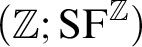 $(\mathbb {Z}; \mathrm {SF}^{\mathbb {Z}})$,
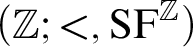 $(\mathbb {Z}; <, \mathrm {SF}^{\mathbb {Z}})$,
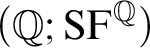 $(\mathbb {Q}; \mathrm {SF}^{\mathbb {Q}})$, and
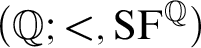 $(\mathbb {Q}; <, \mathrm {SF}^{\mathbb {Q}})$ where
 $\mathbb {Z}$ is the additive group of integers,
 $\mathrm {SF}^{\mathbb {Z}}$ is the set of
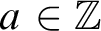 $a \in \mathbb {Z}$ such that
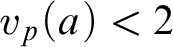 $v_{p}(a) < 2$ for every prime p and corresponding p-adic valuation
 $v_{p}$,
 $\mathbb {Q}$ and
 $\mathrm {SF}^{\mathbb {Q}}$ are defined likewise for rational numbers, and
 $<$ denotes the natural ordering on each of these domains. We prove that the second structure is model-theoretically wild while the other three structures are model-theoretically tame. Moreover, all these results can be seen as examples where number-theoretic randomness yields model-theoretic consequences.


ON THE INVARIANCE OF GÖDEL’S SECOND THEOREM WITH REGARD TO NUMBERINGS
- Part of
-
- Journal:
- The Review of Symbolic Logic / Volume 14 / Issue 1 / March 2021
- Published online by Cambridge University Press:
- 22 July 2020, pp. 51-84
- Print publication:
- March 2021
-
- Article
-
- You have access
- Open access
- HTML
- Export citation
HOW MUCH PROPOSITIONAL LOGIC SUFFICES FOR ROSSER’S ESSENTIAL UNDECIDABILITY THEOREM?
- Part of
-
- Journal:
- The Review of Symbolic Logic / Volume 15 / Issue 2 / June 2022
- Published online by Cambridge University Press:
- 29 June 2020, pp. 487-504
- Print publication:
- June 2022
-
- Article
-
- You have access
- Export citation
COMPLETE ADDITIVITY AND MODAL INCOMPLETENESS
-
- Journal:
- The Review of Symbolic Logic / Volume 12 / Issue 3 / September 2019
- Published online by Cambridge University Press:
- 04 July 2019, pp. 487-535
- Print publication:
- September 2019
-
- Article
-
- You have access
- Export citation
-
In this article, we tell a story about incompleteness in modal logic. The story weaves together an article of van Benthem (1979), “Syntactic aspects of modal incompleteness theorems,” and a longstanding open question: whether every normal modal logic can be characterized by a class of completely additive modal algebras, or as we call them,
 ${\cal V}$-baos. Using a first-order reformulation of the property of complete additivity, we prove that the modal logic that starred in van Benthem’s article resolves the open question in the negative. In addition, for the case of bimodal logic, we show that there is a naturally occurring logic that is incomplete with respect to
 ${\cal V}$-baos, namely the provability logic
 $GLB$ (Japaridze, 1988; Boolos, 1993). We also show that even logics that are unsound with respect to such algebras do not have to be more complex than the classical propositional calculus. On the other hand, we observe that it is undecidable whether a syntactically defined logic is
 ${\cal V}$-complete. After these results, we generalize the Blok Dichotomy (Blok, 1978) to degrees of
 ${\cal V}$-incompleteness. In the end, we return to van Benthem’s theme of syntactic aspects of modal incompleteness.


ANOTHER LOOK AT THE SECOND INCOMPLETENESS THEOREM
-
- Journal:
- The Review of Symbolic Logic / Volume 13 / Issue 2 / June 2020
- Published online by Cambridge University Press:
- 10 June 2019, pp. 269-295
- Print publication:
- June 2020
-
- Article
-
- You have access
- Export citation
DECIDABILITY OF THE THEORY OF MODULES OVER PRÜFER DOMAINS WITH INFINITE RESIDUE FIELDS
-
- Journal:
- The Journal of Symbolic Logic / Volume 83 / Issue 4 / December 2018
- Published online by Cambridge University Press:
- 21 December 2018, pp. 1391-1412
- Print publication:
- December 2018
-
- Article
-
- You have access
- Export citation
DECIDABILITY AND CLASSIFICATION OF THE THEORY OF INTEGERS WITH PRIMES
-
- Journal:
- The Journal of Symbolic Logic / Volume 82 / Issue 3 / September 2017
- Published online by Cambridge University Press:
- 08 September 2017, pp. 1041-1050
- Print publication:
- September 2017
-
- Article
-
- You have access
- Export citation
On the decidability of the real field with a generic power function
-
- Journal:
- The Journal of Symbolic Logic / Volume 76 / Issue 4 / December 2011
- Published online by Cambridge University Press:
- 12 March 2014, pp. 1418-1428
- Print publication:
- December 2011
-
- Article
- Export citation
