Refine search
Actions for selected content:
60 results
Deformations of Primitive Enriques Varieties
- Part of
-
- Journal:
- Forum of Mathematics, Sigma / Volume 14 / 2026
- Published online by Cambridge University Press:
- 17 September 2026, e126
-
- Article
-
- You have access
- Open access
- HTML
- Export citation
SYMPLECTIC DETERMINANT LAWS AND INVARIANT THEORY
- Part of
-
- Journal:
- Journal of the Institute of Mathematics of Jussieu / Volume 25 / Issue 5 / September 2026
- Published online by Cambridge University Press:
- 31 July 2026, pp. 2853-2918
- Print publication:
- September 2026
-
- Article
-
- You have access
- Open access
- HTML
- Export citation
-
We introduce the notion of symplectic determinant laws in analogy to Chenevier’s definition of determinant laws. Symplectic determinant laws are a way to define pseudorepresentations for symplectic representations of algebras with involution over arbitrary $\mathbb Z[\tfrac {1}{2}]$
 -algebras. We prove that this notion satisfies the properties expected from a good theory of pseudorepresentations, and we compare it to V. Lafforgue’s $\operatorname {Sp}_{2d}$
 -pseudocharacters. In the process, we compute generators of the invariant algebras $A[M_{2d}^m]^{\operatorname {Sp}_{2d}}$
 and $A[G^m]^G$
 when $G \in \{\operatorname {Sp}_{2d}, \mathrm O_d, \operatorname {GSp}_{2d} and\ \operatorname {GO}_d\}$
 over an arbitrary commutative ring A, generalising results of Zubkov.


Sheaf stable pairs, Quot-schemes, and birational geometry
- Part of
-
- Journal:
- Nagoya Mathematical Journal / Volume 261 / 2026
- Published online by Cambridge University Press:
- 22 July 2026, e39
-
- Article
-
- You have access
- Open access
- HTML
- Export citation
Wall-crossing for K-moduli spaces of certain families of weighted projective hypersurfaces
- Part of
-
- Journal:
- Forum of Mathematics, Sigma / Volume 14 / 2026
- Published online by Cambridge University Press:
- 20 May 2026, e79
-
- Article
-
- You have access
- Open access
- HTML
- Export citation
-
We describe the K-moduli spaces of weighted hypersurfaces of degree
 $2(n+3)$ in
 $\mathbb {P}(1,2,n+2,n+3)$. We show that the K-polystable limits of these weighted hypersurfaces are also weighted hypersurfaces of the same degree in the same weighted projective space. This is achieved by an explicit study of the wall crossing for K-moduli spaces
 $M_w$ of certain log Fano pairs with coefficient w whose double cover gives the weighted hypersurface. Moreover, we show that the wall crossing of
 $M_w$ coincides with variation of GIT except at the last K-moduli wall which gives a divisorial contraction. Our K-moduli spaces provide new birational models for some natural loci in the moduli space of marked hyperelliptic curves.


Polymatroids and moduli of points in flags
- Part of
-
- Journal:
- Forum of Mathematics, Sigma / Volume 14 / 2026
- Published online by Cambridge University Press:
- 14 May 2026, e77
-
- Article
-
- You have access
- Open access
- HTML
- Export citation
K-moduli of Fano threefolds in family
 3.10
- Part of
-
- Article
-
- You have access
- Open access
- HTML
- Export citation
-
We find all K-polystable limits of smooth Fano threefolds in family
 3.10.
 3.10
 3.10.
K-stability of Thaddeus’ moduli of stable bundle pairs on genus two curves
- Part of
-
- Journal:
- Forum of Mathematics, Sigma / Volume 14 / 2026
- Published online by Cambridge University Press:
- 27 February 2026, e33
-
- Article
-
- You have access
- Open access
- HTML
- Export citation
-
The moduli space of bundle stable pairs
 $\overline {M}_C(2,\Lambda )$ on a smooth projective curve C, introduced by Thaddeus, is a smooth Fano variety of Picard rank two. Focusing on the genus two case, we show that its K-moduli space is isomorphic to a GIT moduli of lines in quartic del Pezzo threefolds. Additionally, we construct a natural forgetful morphism from the K-moduli of
 $\overline {M}_C(2,\Lambda )$ to that of the moduli spaces of stable vector bundles
 $\overline {N}_C(2,\Lambda )$. In particular, Thaddeus’ moduli spaces for genus two curves are all K-stable.


Irregular threefolds with numerically trivial canonical divisor
- Part of
-
- Journal:
- Nagoya Mathematical Journal / Volume 261 / 2026
- Published online by Cambridge University Press:
- 21 January 2026, e12
-
- Article
-
- You have access
- Open access
- HTML
- Export citation
2-Gorenstein stable surfaces with
 $K_X^2 = 1$ and
 $\chi (X) = 3$
- Part of
-
- Journal:
- Forum of Mathematics, Sigma / Volume 14 / 2026
- Published online by Cambridge University Press:
- 15 January 2026, e9
-
- Article
-
- You have access
- Open access
- HTML
- Export citation
-
The compactification
 $\overline {\mathfrak M}_{1,3}$ of the Gieseker moduli space of surfaces of general type with
 $K_X^2 =1 $ and
 $\chi (X)=3$ in the moduli space of stable surfaces parametrises the so-called stable I-surfaces.
We classify all such surfaces which are 2-Gorenstein into four types using a mix of algebraic and geometric techniques. We find a new divisor in the closure of the Gieseker component and a new irreducible component of the moduli space.


The KSBA moduli space of stable log Calabi–Yau surfaces
- Part of
-
- Journal:
- Forum of Mathematics, Pi / Volume 13 / 2025
- Published online by Cambridge University Press:
- 08 October 2025, e22
-
- Article
-
- You have access
- Open access
- HTML
- Export citation
Foldable fans, cscK surfaces and local K-moduli
- Part of
-
- Article
-
- You have access
- Open access
- HTML
- Export citation
Minimal Kinematics on
 $\mathcal{M}_{0,n}$
- Part of
-
- Article
-
- You have access
- Open access
- HTML
- Export citation
-
Minimal kinematics identifies likelihood degenerations where the critical points are given by rational formulas. These rest on the Horn uniformization of Kapranov–Huh. We characterize all choices of minimal kinematics on the moduli space
 $\mathcal{M}_{0,n}$. These choices are motivated by the CHY model in physics and they are represented combinatorially by 2-trees. We compute 2-tree amplitudes, and we explore extensions to non-planar on-shell diagrams, here identified with the hypertrees of Castravet–Tevelev.


Mirror symmetry for log Calabi–Yau surfaces II
- Part of
-
- Journal:
- Compositio Mathematica / Volume 161 / Issue 8 / August 2025
- Published online by Cambridge University Press:
- 22 October 2025, pp. 2025-2090
- Print publication:
- August 2025
-
- Article
-
- You have access
- HTML
- Export citation
-
We show that the ring of regular functions of every smooth affine log Calabi–Yau surface with maximal boundary has a vector space basis parametrized by its set of integer tropical points and a
 $\mathbb {C}$-algebra structure with structure coefficients given by the geometric construction of Keel and Yu [The Frobenius structure theorem for affine log Calabi–Yau varieties containing a torus, Ann. Math. 198 (2023), 419–536]. To prove this result, we first give a canonical compactification of the mirror family associated with a pair
 $(Y,D)$ constructed by Gross, Hacking and Keel [Mirror symmetry for log Calabi–Yau surfaces I, Publ. Math. Inst. Hautes Ètudes Sci. 122 (2015), 65168] where
 $Y$ is a smooth projective rational surface,
 $D$ is an anti-canonical cycle of rational curves, and
 $Y\setminus D$ is the minimal resolution of an affine surface with, at worst, du Val singularities. Then, we compute periods for the compactified family using techniques from Ruddat and Siebert [Period integrals from wall structures via tropical cycles, canonical oordinates in mirror symmetry and analyticity of toric degenerations, Publ. Math. Inst. Hautes Ètudes Sci. 132 (2020), 1–82] and use this to give a modular interpretation of the compactified mirror family.


Upper bounds on the genus of hyperelliptic Albanese fibrations
- Part of
-
- Journal:
- Forum of Mathematics, Sigma / Volume 13 / 2025
- Published online by Cambridge University Press:
- 02 May 2025, e84
-
- Article
-
- You have access
- Open access
- HTML
- Export citation
-
Let S be a minimal irregular surface of general type, whose Albanese map induces a hyperelliptic fibration
 $f:\,S \to B$ of genus g. We prove a quadratic upper bound on the genus g (i.e.,
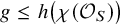 $g\leq h\big (\chi (\mathcal {O}_S)\big )$, where h is a quadratic function). We also construct examples showing that the quadratic upper bounds cannot be improved to linear ones. In the special case when
 $p_g(S)=q(S)=1$, we show that
 $g\leq 14$.


The birational geometry of moduli of cubic surfaces and cubic surfaces with a line
- Part of
-
- Article
-
- You have access
- Open access
- HTML
- Export citation
SOME RESULTS ON THE TOPOLOGY OF ALGEBRAIC SURFACES
- Part of
-
- Journal:
- Nagoya Mathematical Journal / Volume 258 / June 2025
- Published online by Cambridge University Press:
- 17 February 2025, pp. 376-397
-
- Article
-
- You have access
- HTML
- Export citation
-
In this article, we discuss the topology of varieties over
 $\mathbb {C}$, viz., their homology and homotopy groups. We show that the fundamental group of a quasi-projective variety has negative deficiency under a certain hypothesis on its second homology and therefore a large class of groups cannot arise as fundamental groups of varieties. For a smooth projective surface admitting a fibration over a curve, we give a detailed analysis of the homology and homotopy groups of their universal cover via a case-by-case analysis, depending on the nature of the singular fibers. For smooth, projective surfaces whose universal cover is holomorphically convex (conjecturally always true), we show that the second and third homotopy groups are free abelian, often of infinite rank.

Double EPW sextics associated with Gushel–Mukai surfaces
- Part of
-
- Journal:
- Proceedings of the Royal Society of Edinburgh. Section A: Mathematics / Volume 156 / Issue 5 / October 2026
- Published online by Cambridge University Press:
- 23 December 2024, pp. 2336-2357
- Print publication:
- October 2026
-
- Article
-
- You have access
- HTML
- Export citation
-
Works by O’Grady allow to associate with a two-dimensional Gushel–Mukai (GM) variety, which is a K3 surface, a double Eisenbud–Popescu–Walter (EPW) sextic. We characterize the
 $K3$ surfaces whose associated double EPW sextic is smooth. As a consequence, we are able to produce symplectic actions on some families of smooth double EPW sextics which are hyper-Kähler manifolds.
We also provide bounds for the automorphism group of GM varieties in dimension 2 and higher.

KSB stability is automatic in codimension
 $\boldsymbol{\geq 3}$
- Part of
-
- Article
-
- You have access
- Open access
- HTML
- Export citation
-
KSB stability holds at codimension
 $1$ points trivially, and it is quite well understood at codimension
 $2$ points because we have a complete classification of
 $2$-dimensional slc singularities. We show that it is automatic in codimension
 $3$.


Compactifications of moduli of del Pezzo surfaces via line arrangement and K-stability
- Part of
-
- Journal:
- Canadian Journal of Mathematics / Volume 76 / Issue 6 / December 2024
- Published online by Cambridge University Press:
- 13 November 2023, pp. 2115-2135
- Print publication:
- December 2024
-
- Article
-
- You have access
- HTML
- Export citation
-
In this paper, we study compactifications of the moduli of smooth del Pezzo surfaces using K-stability and the line arrangement. We construct K-moduli of log del Pezzo pairs with sum of lines as boundary divisors, and prove that for
 $d=2,3,4$, these K-moduli of pairs are isomorphic to the K-moduli spaces of del Pezzo surfaces. For
 $d=1$, we prove that they are different by exhibiting some walls.


Nonemptiness of severi varieties on enriques surfaces
- Part of
-
- Journal:
- Forum of Mathematics, Sigma / Volume 11 / 2023
- Published online by Cambridge University Press:
- 19 June 2023, e52
-
- Article
-
- You have access
- Open access
- HTML
- Export citation
-
Let
 $(S,L)$ be a general polarised Enriques surface, with L not numerically 2-divisible. We prove the existence of regular components of all Severi varieties of irreducible nodal curves in the linear system
 $|L|$, that is, for any number of nodes
 $\delta =0, \ldots , p_a(L)-1$. This solves a classical open problem and gives a positive answer to a recent conjecture of Pandharipande–Schmitt, under the additional condition of non-2-divisibility.


