Refine search
Actions for selected content:
57 results
Hausdorff dimension of self-similar measures and sets with common fixed-point structure
- Part of
-
- Journal:
- Ergodic Theory and Dynamical Systems , First View
- Published online by Cambridge University Press:
- 23 September 2026, pp. 1-34
-
- Article
-
- You have access
- HTML
- Export citation
Trace and observability inequalities for Laplace eigenfunctions on the torus
- Part of
-
- Journal:
- Forum of Mathematics, Sigma / Volume 14 / 2026
- Published online by Cambridge University Press:
- 06 April 2026, e47
-
- Article
-
- You have access
- Open access
- HTML
- Export citation
-
We investigate trace and observability inequalities for Laplace eigenfunctions on the d-dimensional torus
 $\mathbb {T}^d$, with respect to arbitrary Borel measures
 $\mu $. Specifically, we characterize the measures
 $\mu $ for which the inequalities
 $$ \begin{align*} \int |u|^2 \mathop{}\!\mathrm{d}\mu \lesssim \int |u|^2 \mathop{}\!\mathrm{d} x \quad \text{(trace)}, \qquad \int |u|^2 \mathop{}\!\mathrm{d}\mu \gtrsim \int |u|^2 \mathop{}\!\mathrm{d} x \quad \text{(observability)} \end{align*} $$
hold uniformly for all eigenfunctions u of the Laplacian. Sufficient conditions are derived based on the integrability and regularity of
 $\mu $, while necessary conditions are formulated in terms of the dimension of the support of the measure. These results generalize classical theorems of Zygmund and Bourgain–Rudnick to higher dimensions. Applications include results in the spirit of Cantor–Lebesgue theorems, constraints on quantum limits, and control theory for the Schrödinger equation. Our approach combines several tools: the cluster structure of lattice points on spheres; decoupling estimates; and the construction of eigenfunctions exhibiting strong concentration or vanishing behavior, tailored respectively to the trace and observability inequalities.


Ahlfors regularity of Patterson–Sullivan measures of Anosov groups and applications
- Part of
-
- Journal:
- Compositio Mathematica / Volume 162 / Issue 4 / April 2026
- Published online by Cambridge University Press:
- 10 July 2026, pp. 743-791
- Print publication:
- April 2026
-
- Article
-
- You have access
- Open access
- HTML
- Export citation
-
For all Zarski dense Anosov subgroups of a semisimple real algebraic group, we prove that their limit sets are Ahlfors regular for intrinsic conformal premetrics. As a consequence, we obtain that a Patterson–Sullivan measure is Ahlfors regular (and hence equal to the Hausdorff measure) if and only if the associated linear form is symmetric. We also discuss several applications, including analyticity of (p,q)-Hausdorff dimensions on the Teichmüller spaces, new upper bounds on the growth indicator, and
 $L^2$-spectral properties of associated locally symmetric manifolds.

Triangles in the plane and arithmetic progressions in thick compact subsets of
 $\mathbb {R}^d$
- Part of
-
- Journal:
- Canadian Journal of Mathematics / Volume 78 / Issue 3 / June 2026
- Published online by Cambridge University Press:
- 23 January 2026, pp. 946-986
- Print publication:
- June 2026
-
- Article
-
- You have access
- Open access
- HTML
- Export citation
-
This article focuses on the occurrence of 3-point configurations in subsets of
 $\mathbb {R}^d$ of sufficient thickness. We prove that a compact set
 $A\subset \mathbb {R}^d$ contains a similar copy of any linear
 $3$-point configuration (such as a
 $3$-point arithmetic progression) provided that A satisfies a mild Yavicoli-thickness condition and an r-uniformity condition for
 $d\geq 2$; or, when
 $d=1$, the result holds provided that the Newhouse thickness of A is at least
 $1$. Moreover, we prove that compact sets
 $A\subset \mathbb {R}^2$ contain the vertices of an equilateral triangle (and more generally, the vertices of a similar copy of any given triangle) provided A satisfies a mild Yavicoli-thickness condition and an r-uniformity condition. Further,
 $C\times C$ contains the vertices of an equilateral triangle (and more generally the vertices of a similar copy of any given 3-point configuration) provided the Newhouse thickness of C is at least
 $1$. These are among the first results in the literature to give explicit criteria for the occurrence of 3-point configurations in the plane.


The
 $\beta $-transformation with a hole at
 $0$: the general case
- Part of
-
- Journal:
- Ergodic Theory and Dynamical Systems / Volume 46 / Issue 3 / March 2026
- Published online by Cambridge University Press:
- 04 December 2025, pp. 633-659
- Print publication:
- March 2026
-
- Article
-
- You have access
- Open access
- HTML
- Export citation
-
Given
 $\beta>1$, let
 $T_\beta $ be the
 $\beta $-transformation on the unit circle
 $[0,1)$, defined by
 $T_\beta (x)=\beta x-\lfloor \beta x\rfloor $. For each
 $t\in [0,1)$, let
 $K_\beta (t)$ be the survivor set consisting of all
 $x\in [0,1)$ whose orbit
 $\{T^n_\beta (x): n\ge 0\}$ never enters the interval
 $[0,t)$. Kalle et al [Ergod. Th. & Dynam. Sys. 40(9) (2020), 2482–2514] considered the case
 $\beta \in (1,2]$. They studied the set-valued bifurcation set
 $\mathscr {E}_\beta :=\{t\in [0,1): K_\beta (t')\ne K_\beta (t)~\text { for all } t'>t\}$ and proved that the Hausdorff dimension function
 $t\mapsto \dim _H K_\beta (t)$ is a non-increasing Devil’s staircase. In a previous paper [Ergod. Th. & Dynam. Sys. 43(6) (2023), 1785–1828], we determined, for all
 $\beta \in (1,2]$, the critical value
 $\tau (\beta ):=\min \{t>0: \eta _\beta (t)=0\}$. The purpose of the present article is to extend these results to all
 $\beta>1$. In addition to calculating
 $\tau (\beta )$, we show that: (i) the function
 $\tau : \beta \mapsto \tau (\beta )$ is left-continuous on
 $(1,\infty )$ with right-hand limits everywhere, but has countably infinitely many discontinuities; (ii)
 $\tau $ has no downward jumps; and (iii) there exists an open set
 $O\subset (1,\infty )$, whose complement
 $(1,\infty )\setminus O$ has zero Hausdorff dimension, such that
 $\tau $ is real-analytic, strictly convex, and strictly decreasing on each connected component of O. We also prove several topological properties of the bifurcation set
 $\mathscr {E}_\beta $. The key to extending the results from
 $\beta \in (1,2]$ to all
 $\beta>1$ is an appropriate generalization of the Farey words that are used to parameterize the connected components of the set O. Some of the original proofs from the above-mentioned papers are simplified.


On the Assouad spectrum of Hölder and Sobolev graphs
- Part of
-
- Journal:
- Mathematical Proceedings of the Cambridge Philosophical Society / Volume 180 / Issue 1 / January 2026
- Published online by Cambridge University Press:
- 01 September 2025, pp. 105-131
- Print publication:
- January 2026
-
- Article
-
- You have access
- Open access
- HTML
- Export citation
-
We provide upper bounds for the Assouad spectrum
 $\dim_A^\theta(\mathrm{Gr}({\kern2pt}f))$ of the graph of a real-valued Hölder or Sobolev function f defined on an interval
 $I \subset \mathbb{R}$. We demonstrate via examples that all of our bounds are sharp. In the setting of Hölder graphs, we further provide a geometric algorithm which takes as input the graph of an
 $\alpha$-Hölder continuous function satisfying a matching lower oscillation condition with exponent
 $\alpha$ and returns the graph of a new
 $\alpha$-Hölder continuous function for which the Assouad
 $\theta$-spectrum realizes the stated upper bound for all
 $\theta\in (0,1)$. Examples of functions to which this algorithm applies include the continuous nowhere differentiable functions of Weierstrass and Takagi.


DIMENSIONAL APPROXIMATION OF AN INHOMOGENEOUS ATTRACTOR WITHOUT ANY SEPARATION CONDITION
- Part of
-
- Journal:
- Bulletin of the Australian Mathematical Society / Volume 112 / Issue 3 / December 2025
- Published online by Cambridge University Press:
- 23 June 2025, pp. 515-527
- Print publication:
- December 2025
-
- Article
-
- You have access
- HTML
- Export citation
Restricted projections to lines in
 $\mathbb{R}^{n+1}$
- Part of
-
- Journal:
- Mathematical Proceedings of the Cambridge Philosophical Society / Volume 179 / Issue 1 / July 2025
- Published online by Cambridge University Press:
- 15 May 2025, pp. 105-143
- Print publication:
- July 2025
-
- Article
-
- You have access
- HTML
- Export citation
-
We prove the following restricted projection theorem. Let
 $n\ge 3$ and
 $\Sigma \subset S^{n}$ be an
 $(n-1)$-dimensional
 $C^2$ manifold such that
 $\Sigma$ has sectional curvature
 $\gt1$. Let
 $Z \subset \mathbb{R}^{n+1}$ be analytic and let
 $0 \lt s \lt \min\{\dim Z, 1\}$. Then In particular, for almost every
 \begin{equation*} \dim \{z \in \Sigma\; :\; \dim (Z \cdot z) \lt s\} \le (n-2)+s = (n-1) + (s-1) \lt n-1.\end{equation*}
 $z \in \Sigma$,
 $\dim (Z \cdot z) = \min\{\dim Z, 1\}$.
The core idea, originated from Käenmäki–Orponen–Venieri, is to transfer the restricted projection problem to the study of the dimension lower bound of Furstenberg sets of cinematic family contained in
 $C^2([0,1]^{n-1})$. This cinematic family of functions with multivariables are extensions of those of one variable by Pramanik–Yang–Zahl and Sogge. Since the Furstenberg sets of cinematic family contain the affine Furstenberg sets as a special case, the dimension lower bound of Furstenberg sets improves the one by Héra, Héra–Keleti–Máthé and Dąbrowski–Orponen–Villa.
Moreover, our method to show the restricted projection theorem can also give a new proof for the Mattila projection theorem in
 $\mathbb{R}^n$ with
 $n \ge 3$.


Fractional Brownian motion with deterministic drift: how critical is drift regularity in hitting probabilities
- Part of
-
- Journal:
- Mathematical Proceedings of the Cambridge Philosophical Society / Volume 178 / Issue 1 / January 2025
- Published online by Cambridge University Press:
- 20 February 2025, pp. 103-132
- Print publication:
- January 2025
-
- Article
-
- You have access
- HTML
- Export citation
-
Let
 $B^{H}$ be a d-dimensional fractional Brownian motion with Hurst index
 $H\in(0,1)$,
 $f\,:\,[0,1]\longrightarrow\mathbb{R}^{d}$ a Borel function, and
 $E\subset[0,1]$,
 $F\subset\mathbb{R}^{d}$ are given Borel sets. The focus of this paper is on hitting probabilities of the non-centered Gaussian process
 $B^{H}+f$. It aims to highlight how each component f, E and F is involved in determining the upper and lower bounds of
 $\mathbb{P}\{(B^H+f)(E)\cap F\neq \emptyset \}$. When F is a singleton and f is a general measurable drift, some new estimates are obtained for the last probability by means of suitable Hausdorff measure and capacity of the graph
 $Gr_E(f)$. As application we deal with the issue of polarity of points for
 $(B^H+f)\vert_E$ (the restriction of
 $B^H+f$ to the subset
 $E\subset (0,\infty)$).


Exact dimension functions of the prime continued fraction Cantor set
- Part of
-
- Journal:
- Ergodic Theory and Dynamical Systems / Volume 45 / Issue 6 / June 2025
- Published online by Cambridge University Press:
- 14 November 2024, pp. 1757-1776
- Print publication:
- June 2025
-
- Article
-
- You have access
- Open access
- HTML
- Export citation
-
We study the exact Hausdorff and packing dimensions of the prime Cantor set,
 $\Lambda _P$, which comprises the irrationals whose continued fraction entries are prime numbers. We prove that the Hausdorff measure of the prime Cantor set cannot be finite and positive with respect to any sufficiently regular dimension function, thus negatively answering a question of Mauldin and Urbański (1999) and Mauldin (2013) for this class of dimension functions. By contrast, under a reasonable number-theoretic conjecture we prove that the packing measure of the conformal measure on the prime Cantor set is in fact positive and finite with respect to the dimension function
 $\psi (r) = r^\delta \log ^{-2\delta }\log (1/r)$, where
 $\delta $ is the dimension (conformal, Hausdorff, and packing) of the prime Cantor set.


On a class of self-similar sets which contain finitely many common points
- Part of
-
- Journal:
- Proceedings of the Royal Society of Edinburgh. Section A: Mathematics / Volume 156 / Issue 2 / April 2026
- Published online by Cambridge University Press:
- 30 May 2024, pp. 543-564
- Print publication:
- April 2026
-
- Article
-
- You have access
- HTML
- Export citation
-
For $\lambda \in (0,\,1/2]$
 let $K_\lambda \subset \mathbb {R}$
 be a self-similar set generated by the iterated function system $\{\lambda x,\, \lambda x+1-\lambda \}$
 . Given $x\in (0,\,1/2)$
 , let $\Lambda (x)$
 be the set of $\lambda \in (0,\,1/2]$
 such that $x\in K_\lambda$
 . In this paper we show that $\Lambda (x)$
 is a topological Cantor set having zero Lebesgue measure and full Hausdorff dimension. Furthermore, we show that for any $y_1,\,\ldots,\, y_p\in (0,\,1/2)$
 there exists a full Hausdorff dimensional set of $\lambda \in (0,\,1/2]$
 such that $y_1,\,\ldots,\, y_p \in K_\lambda$
 .


On a self-embedding problem for self-similar sets
- Part of
-
- Journal:
- Ergodic Theory and Dynamical Systems / Volume 44 / Issue 10 / October 2024
- Published online by Cambridge University Press:
- 14 February 2024, pp. 3002-3011
- Print publication:
- October 2024
-
- Article
-
- You have access
- Open access
- HTML
- Export citation
-
Let
 $K\subset {\mathbb {R}}^d$ be a self-similar set generated by an iterated function system
 $\{\varphi _i\}_{i=1}^m$ satisfying the strong separation condition and let f be a contracting similitude with
 $f(K)\subseteq K$. We show that
 $f(K)$ is relatively open in K if all
 $\varphi _i$ share a common contraction ratio and orthogonal part. We also provide a counterexample when the orthogonal parts are allowed to vary. This partially answers a question of Elekes, Keleti and Máthé [Ergod. Th. & Dynam. Sys. 30 (2010), 399–440]. As a byproduct of our argument, when
 $d=1$ and K admits two homogeneous generating iterated function systems satisfying the strong separation condition but with contraction ratios of opposite signs, we show that K is symmetric. This partially answers a question of Feng and Wang [Adv. Math. 222 (2009), 1964–1981].


An elementary proof that the Rauzy gasket is fractal
- Part of
-
- Journal:
- Ergodic Theory and Dynamical Systems / Volume 44 / Issue 7 / July 2024
- Published online by Cambridge University Press:
- 25 September 2023, pp. 1913-1922
- Print publication:
- July 2024
-
- Article
-
- You have access
- HTML
- Export citation
On the dimension of planar self-affine sets with non-invertible maps
- Part of
-
- Journal:
- Proceedings of the Royal Society of Edinburgh. Section A: Mathematics / Volume 155 / Issue 1 / February 2025
- Published online by Cambridge University Press:
- 07 September 2023, pp. 242-257
- Print publication:
- February 2025
-
- Article
-
- You have access
- HTML
- Export citation
Projection theorems for linear-fractional families of projections
- Part of
-
- Journal:
- Mathematical Proceedings of the Cambridge Philosophical Society / Volume 175 / Issue 3 / November 2023
- Published online by Cambridge University Press:
- 08 August 2023, pp. 625-647
- Print publication:
- November 2023
-
- Article
-
- You have access
- Open access
- HTML
- Export citation
-
Marstrand’s theorem states that applying a generic rotation to a planar set A before projecting it orthogonally to the x-axis almost surely gives an image with the maximal possible dimension
 $\min(1, \dim A)$. We first prove, using the transversality theory of Peres–Schlag locally, that the same result holds when applying a generic complex linear-fractional transformation in
 $PSL(2,\mathbb{C})$ or a generic real linear-fractional transformation in
 $PGL(3,\mathbb{R})$. We next show that, under some necessary technical assumptions, transversality locally holds for restricted families of projections corresponding to one-dimensional subgroups of
 $PSL(2,\mathbb{C})$ or
 $PGL(3,\mathbb{R})$. Third, we demonstrate, in any dimension, local transversality and resulting projection statements for the families of closest-point projections to totally-geodesic subspaces of hyperbolic and spherical geometries.


Hausdorff dimension of multidimensional multiplicative subshifts
- Part of
-
- Journal:
- Ergodic Theory and Dynamical Systems / Volume 44 / Issue 5 / May 2024
- Published online by Cambridge University Press:
- 19 July 2023, pp. 1239-1268
- Print publication:
- May 2024
-
- Article
-
- You have access
- HTML
- Export citation
-
The purpose of this study is two-fold. First, the Hausdorff dimension formula of the multidimensional multiplicative subshift (MMS) in
 $\mathbb {N}^d$ is presented. This extends the earlier work of Kenyon et al [Hausdorff dimension for fractals invariant under multiplicative integers. Ergod. Th. & Dynam. Sys. 32(5) (2012), 1567–1584] from
 $\mathbb {N}$ to
 $\mathbb {N}^d$. In addition, the preceding work of the Minkowski dimension of the MMS in
 $\mathbb {N}^d$ is applied to show that their Hausdorff dimension is strictly less than the Minkowski dimension. Second, the same technique allows us to investigate the multifractal analysis of multiple ergodic average in
 $\mathbb {N}^d$. Precisely, we extend the result of Fan et al, [Multifractal analysis of some multiple ergodic averages. Adv. Math. 295 (2016), 271–333] of the multifractal analysis of multiple ergodic average from
 $\mathbb {N}$ to
 $\mathbb {N}^d$.


Multifractal analysis of sums of random pulses
- Part of
-
- Journal:
- Mathematical Proceedings of the Cambridge Philosophical Society / Volume 175 / Issue 3 / November 2023
- Published online by Cambridge University Press:
- 22 June 2023, pp. 569-593
- Print publication:
- November 2023
-
- Article
-
- You have access
- HTML
- Export citation
On sets with unit Hausdorff density in homogeneous groups
- Part of
-
- Journal:
- Forum of Mathematics, Sigma / Volume 11 / 2023
- Published online by Cambridge University Press:
- 04 May 2023, e36
-
- Article
-
- You have access
- Open access
- HTML
- Export citation
-
It is a longstanding conjecture that given a subset E of a metric space, if E has unit
 $\mathscr {H}^{\alpha }\llcorner E$-density almost everywhere, then E is an
 $\alpha $-rectifiable set. We prove this conjecture under the assumption that the ambient metric space is a homogeneous group with a smooth-box norm.


JARNÍK TYPE THEOREMS ON MANIFOLDS
- Part of
-
- Journal:
- Bulletin of the Australian Mathematical Society / Volume 108 / Issue 3 / December 2023
- Published online by Cambridge University Press:
- 25 April 2023, pp. 391-405
- Print publication:
- December 2023
-
- Article
-
- You have access
- Open access
- HTML
- Export citation
-
Let
 $\psi $ be a decreasing function. We prove zero-infinity Hausdorff measure criteria for the set of dual
 $\psi $-approximable points and for the set of inhomogeneous multiplicative
 $\psi $-approximable points on nondegenerate planar curves. Our results extend theorems of Huang [‘Hausdorff theory of dual approximation on planar curves’, J. reine angew. Math. 740 (2018), 63–76] and Beresnevich and Velani [‘A note on three problems in metric Diophantine approximation’, in: Recent Trends in Ergodic Theory and Dynamical Systems, Contemporary Mathematics, 631 (American Mathematical Society, Providence, RI, 2015), 211–229] from s-Hausdorff measure, where
 $s\in \mathbb R$, to the more general g-Hausdorff measure, where g is a suitable class of dimension functions.


A NONSPECTRAL PROBLEM FOR PLANAR MORAN–SIERPINSKI MEASURES
- Part of
-
- Journal:
- Bulletin of the Australian Mathematical Society / Volume 108 / Issue 2 / October 2023
- Published online by Cambridge University Press:
- 11 January 2023, pp. 308-319
- Print publication:
- October 2023
-
- Article
-
- You have access
- HTML
- Export citation
-
Let
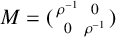 $M=(\begin {smallmatrix}\rho ^{-1} & 0 \\0 & \rho ^{-1} \\\end {smallmatrix})$ be an expanding real matrix with
 $0<\rho <1$, and let
 ${\mathcal D}_n=\{(\begin {smallmatrix} 0\\ 0 \end {smallmatrix}),(\begin {smallmatrix} \sigma _n\\ 0 \end {smallmatrix}),(\begin {smallmatrix} 0\\ \gamma _n \end {smallmatrix})\}$ be digit sets with
 $\sigma _n,\gamma _n\in \{-1,1\}$ for each
 $n\ge 1$. Then the infinite convolution
 $$ \begin{align*}\mu_{M,\{{\mathcal D}_n\}}=\delta_{M^{-1}{\mathcal D}_1}\ast\delta_{M^{-2}{\mathcal D}_2}\ast\cdots\end{align*} $$
is called a Moran–Sierpinski measure. We give a necessary and sufficient condition for
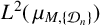 $L^2(\,\mu _{M,\{{\mathcal D}_n\}})$ to admit an infinite orthogonal set of exponential functions. Furthermore, we give the exact cardinality of orthogonal exponential functions in
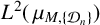 $L^2(\,\mu _{M,\{{\mathcal D}_n\}})$ when
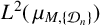 $L^2(\,\mu _{M,\{{\mathcal D}_n\}})$ does not admit any infinite orthogonal set of exponential functions based on whether
 $\rho $ is a trinomial number or not.


