Refine search
Actions for selected content:
37 results
A generalization of the conjugate Hardy $H^2$
 spaces
- Part of
-
- Journal:
- Nagoya Mathematical Journal / Volume 261 / 2026
- Published online by Cambridge University Press:
- 03 August 2026, e40
-
- Article
-
- You have access
- Open access
- HTML
- Export citation
-
In this article,we consider a generalization of the conjugate Hardy $H^2$
 spaces and give some properties of the minimal norm of the generalization and some relations between the norm of the generalization and the minimal $L^2$
 integrals. As applications, we give some monotonicity results for the conjugate Hardy $H^2$
 kernels and the Bergman kernels on planar regions, and some relations between the conjugate Hardy $H^2$
 kernels and the Bergman kernels on planar regions.


Recovering Hardy spaces from optimal domains of integration operators
- Part of
-
- Journal:
- Canadian Mathematical Bulletin , First View
- Published online by Cambridge University Press:
- 22 July 2026, pp. 1-16
-
- Article
-
- You have access
- Open access
- HTML
- Export citation
-
We study the optimal domains for bounded Volterra integration operators $T_g$
 between Hardy spaces $H^p$
 and $H^q$
 of the unit ball. It is shown that the optimal domain of a bounded $T_g:H^p\to H^q$
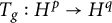 always strictly contains $H^p$
 . Moreover, the intersection of the optimal domains is equal to $H^p$
 if $p\geq q$
 , whereas if $p<q$
 , we show that this intersection is a genuinely larger tent space of holomorphic functions. In the unit disk, this problem was recently solved for $p=q$
 by Bellavita, Daskalogiannis, Nikolaidis, and Stylogiannis.


BURKHOLDER’S EXIT-TIME CONDITION VIA PROPER MAPS: SMIRNOV REGULARITY, HARDY–ORLICZ CRITERIA AND TORSION-TYPE PROBLEMS
- Part of
-
- Journal:
- Bulletin of the Australian Mathematical Society / Volume 114 / Issue 2 / October 2026
- Published online by Cambridge University Press:
- 20 May 2026, pp. 370-379
- Print publication:
- October 2026
-
- Article
-
- You have access
- Open access
- HTML
- Export citation
-
Let $(Z_{t})_{t \geq 0}$
 be a planar Brownian motion running in some domain W and denote by $\tau _{W}$
 the exit time of $Z_{t}$
 from W. To establish the finiteness of $\mathbf {E}(\sup _{0\leq t\leq \tau _{W}}|Z_{t}|^{p})$
 from the finiteness of $\mathbf {E}(|Z_{\tau _{W}}|^{p})$
 for some $p>0$
 , Burkholder [‘Exit times of Brownian motion, harmonic majorization, and Hardy spaces’, Adv. Math. 26(2) (1977), 182–205] imposed an additional condition on the exit time $\tau _{W}$
 , namely the finiteness of $\mathbf {E}(\log (\tau _{W}))$
 . Such a condition is typically difficult to verify, since the law of the exit time is often delicate. In this paper, we revisit Burkholder’s condition and propose an alternative viewpoint. Our approach is purely analytic, weaker and formulated in terms of proper analytic maps rather than exit times themselves. This provides a more flexible framework for further applications.


Metric projections, zeros of optimal polynomial approximants, and some extremal problems in Hardy spaces
- Part of
-
- Journal:
- Canadian Journal of Mathematics , First View
- Published online by Cambridge University Press:
- 16 February 2026, pp. 1-21
-
- Article
-
- You have access
- HTML
- Export citation
-
The well-known proof of Beurling’s Theorem in the Hardy space
 $H^2$, which describes all shift-invariant subspaces, rests on calculating the orthogonal projection of the unit constant function onto the subspace in question. Extensions to other Hardy spaces
 $H^p$ for
 $0 < p < \infty $ are usually obtained by reduction to the
 $H^2$ case via inner–outer factorization of
 $H^p$ functions. In this article, we instead explicitly calculate the metric projection of the unit constant function onto a shift-invariant subspace of the Hardy space
 $H^p$ when
 $1<p<\infty $. This problem is equivalent to finding the best approximation in
 $H^p$ of the conjugate of an inner function. In
 $H^2$, this approximation is always a constant, but in
 $H^p$, when
 $p\neq 2$, this approximation turns out to be zero or a non-constant outer function. Further, we determine the exact distance between the unit constant and any shift-invariant subspace and propose some open problems. Our results use the notion of Birkhoff–James orthogonality and Pythagorean inequalities, along with an associated dual extremal problem, which leads to some interesting inequalities. Further consequences shed light on the lattice of shift-invariant subspaces of
 $H^p$, as well as the behavior of the zeros of optimal polynomial approximants in
 $H^p$.


On Dirichlet spaces with zero sets containing all Blaschke sequences
- Part of
-
- Journal:
- Canadian Mathematical Bulletin / Volume 69 / Issue 3 / September 2026
- Published online by Cambridge University Press:
- 14 January 2026, pp. 1035-1042
- Print publication:
- September 2026
-
- Article
-
- You have access
- HTML
- Export citation
-
We consider the family of infinite positive Borel measures $\mu $
 in the unit disc, with finite degree of contact at the unit circle, and the set $E_{\mu }$
 of points in the unit circle for which every neighborhood contains infinite mass of $\mu $
 . Assuming that $E_{\mu }$
 is a Carleson set, we show that all Blaschke sequences are zero sets for the corresponding Dirichlet space $D_{\mu }$
 .


Note on real and imaginary parts of harmonic quasiregular mappings
- Part of
-
- Journal:
- Canadian Mathematical Bulletin / Volume 69 / Issue 2 / June 2026
- Published online by Cambridge University Press:
- 25 September 2025, pp. 405-413
- Print publication:
- June 2026
-
- Article
-
- You have access
- Open access
- HTML
- Export citation
-
If
 $f=u+iv$ is analytic in the unit disk
 ${\mathbb D}$, it is known that the integral means
 $M_p(r,u)$ and
 $M_p(r,v)$ have the same order of growth. This is false if f is a (complex-valued) harmonic function. However, we prove that the same principle holds if we assume, in addition, that f is K-quasiregular in
 ${\mathbb D}$. The case
 $0<p<1$ is particularly interesting, and is an extension of the recent Riesz-type theorems for harmonic quasiregular mappings by several authors. Further, we proceed to show that the real and imaginary parts of a harmonic quasiregular mapping have the same degree of smoothness on the boundary.


Continuity and realization of multiplicative maps between RKHS and their cyclicity preserving properties
- Part of
-
- Journal:
- Canadian Mathematical Bulletin / Volume 69 / Issue 2 / June 2026
- Published online by Cambridge University Press:
- 08 September 2025, pp. 522-535
- Print publication:
- June 2026
-
- Article
-
- You have access
- HTML
- Export citation
-
Motivated by the study of multiplicative linear functionals in reproducing kernel Hilbert space (RKHS) with normalized complete Pick kernel, we define and study the multiplicative linear map between two RKHS. We identify the conditions under which such maps are continuous. Additionally, we prove that any unital cyclicity-preserving linear map is multiplicative. Conversely, we also characterize when a multiplicative linear map is unital cyclicity preserving. These results serve as a generalization of the Gleason–Kahane–Żelazko theorem to the setting of multiplicative maps between two RKHS. We present the composition operator as a natural class of examples of multiplicative linear maps on an RKHS. We also prove that every continuous multiplicative linear operator can be realized as a composition operator on various analytic Hilbert spaces over the unit disc
 $\mathbb {D}.$

Isometric dilation and Sarason’s commutant lifting theorem in several variables
- Part of
-
- Journal:
- Canadian Journal of Mathematics / Volume 78 / Issue 4 / August 2026
- Published online by Cambridge University Press:
- 25 February 2025, pp. 1047-1079
- Print publication:
- August 2026
-
- Article
-
- You have access
- HTML
- Export citation
-
The article deals with isometric dilation and commutant lifting for a class of n-tuples $(n\ge 3)$
 of commuting contractions. We show that operator tuples in the class dilate to tuples of commuting isometries of BCL type. As a consequence of such an explicit dilation, we show that their von Neumann inequality holds on a one-dimensional variety of the closed unit polydisc. On the basis of such a dilation, we prove a commutant lifting theorem of Sarason’s type by establishing that every commutant can be lifted to the dilation space in a commuting and norm-preserving manner. This further leads us to find yet another class of n-tuples $(n\ge 3)$
 of commuting contractions each of which possesses isometric dilation.


Cyclicity of the shift operator through Bezout identities
- Part of
-
- Journal:
- Canadian Mathematical Bulletin / Volume 68 / Issue 3 / September 2025
- Published online by Cambridge University Press:
- 28 January 2025, pp. 684-708
- Print publication:
- September 2025
-
- Article
-
- You have access
- HTML
- Export citation
-
In this paper, we study the cyclicity of the shift operator
 $S$ acting on a Banach space
 $\mathcal {X}$ of analytic functions on the open unit disc
 $\mathbb {D}$. We develop a general framework where a method based on a corona theorem can be used to show that if
 $f,g\in \mathcal {X}$ satisfy
 $|g(z)|\leq |f(z)|$, for every
 $z\in \mathbb {D}$, and if g is cyclic, then f is cyclic. We also give sufficient conditions for cyclicity in this context. This enable us to recapture some recent results obtained in de Branges–Rovnayk spaces, in Besov–Dirichlet spaces and in weighted Dirichlet type spaces.


Nearly invariant Brangesian subspaces
- Part of
-
- Journal:
- Canadian Mathematical Bulletin / Volume 68 / Issue 1 / March 2025
- Published online by Cambridge University Press:
- 07 January 2025, pp. 318-337
- Print publication:
- March 2025
-
- Article
-
- You have access
- HTML
- Export citation
-
This article describes Hilbert spaces contractively contained in certain reproducing kernel Hilbert spaces of analytic functions on the open unit disc which are nearly invariant under division by an inner function. We extend Hitt’s theorem on nearly invariant subspaces of the backward shift operator on
 $H^2(\mathbb {D})$ as well as its many generalizations to the setting of de Branges spaces.

Hilbert matrix operator acting between conformally invariant spaces
- Part of
-
- Journal:
- Canadian Mathematical Bulletin / Volume 68 / Issue 2 / June 2025
- Published online by Cambridge University Press:
- 12 December 2024, pp. 550-567
- Print publication:
- June 2025
-
- Article
-
- You have access
- Open access
- HTML
- Export citation
-
In this article, we study the action of the the Hilbert matrix operator
 $H$ from the space of bounded analytic functions into conformally invariant Banach spaces. In particular, we describe the norm of
 $H$ from
 $H^\infty $ into
 $\text {BMOA}$ and we characterize the positive Borel measures
 $\mu $ such that
 $H$ is bounded from
 $H^\infty $ into the conformally invariant Dirichlet space
 $M(D_\mu )$. For particular measures
 $\mu $, we also provide the norm of
 $H$ from
 $H^\infty $ into
 $M(D_\mu )$.


Phase retrieval on circles and lines
- Part of
-
- Journal:
- Canadian Mathematical Bulletin / Volume 67 / Issue 4 / December 2024
- Published online by Cambridge University Press:
- 10 May 2024, pp. 927-935
- Print publication:
- December 2024
-
- Article
-
- You have access
- HTML
- Export citation
-
Let f and g be analytic functions on the open unit disk
 ${\mathbb D}$ such that
 $|f|=|g|$ on a set A. We give an alternative proof of the result of Perez that there exists c in the unit circle
 ${\mathbb T}$ such that
 $f=cg$ when A is the union of two lines in
 ${\mathbb D}$ intersecting at an angle that is an irrational multiple of
 $\pi $, and from this, deduce a sequential generalization of the result. Similarly, the same conclusion is valid when f and g are in the Nevanlinna class and A is the union of the unit circle and an interior circle, tangential or not. We also provide sequential versions of this result and analyze the case
 $A=r{\mathbb T}$. Finally, we examine the most general situation when there is equality on two distinct circles in the disk, proving a result or counterexample for each possible configuration.


Inhomogeneous Poisson processes in the disk and interpolation
- Part of
-
- Journal:
- Proceedings of the Edinburgh Mathematical Society / Volume 67 / Issue 3 / August 2024
- Published online by Cambridge University Press:
- 30 April 2024, pp. 749-777
-
- Article
-
- You have access
- Open access
- HTML
- Export citation
Integral mean estimates for univalent and locally univalent harmonic mappings
- Part of
-
- Journal:
- Canadian Mathematical Bulletin / Volume 67 / Issue 3 / September 2024
- Published online by Cambridge University Press:
- 15 January 2024, pp. 655-669
- Print publication:
- September 2024
-
- Article
-
- You have access
- HTML
- Export citation
-
We verify a long-standing conjecture on the membership of univalent harmonic mappings in the Hardy space, whenever the functions have a “nice” analytic part. We also produce a coefficient estimate for these functions, which is in a sense best possible. The problem is then explored in a new direction, without the additional hypothesis. Interestingly, our ideas extend to certain classes of locally univalent harmonic mappings. Finally, we prove a Baernstein-type extremal result for the function
 $\log (h'+cg')$, when
 $f=h+\overline {g}$ is a close-to-convex harmonic function, and c is a constant. This leads to a sharp coefficient inequality for these functions.


Commutants and complex symmetry of finite Blaschke product multiplication operator in
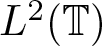 $L^2(\mathbb{T})$
- Part of
-
- Journal:
- Proceedings of the Edinburgh Mathematical Society / Volume 67 / Issue 1 / February 2024
- Published online by Cambridge University Press:
- 11 January 2024, pp. 261-286
-
- Article
-
- You have access
- HTML
- Export citation
-
Consider the multiplication operator MB in
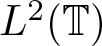 $L^2(\mathbb{T})$, where the symbol B is a finite Blaschke product. In this article, we characterize the commutant of MB in
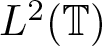 $L^2(\mathbb{T})$. As an application of this characterization result, we explicitly determine the class of conjugations commuting with
 $M_{z^2}$ or making
 $M_{z^2}$ complex symmetric by introducing a new class of conjugations in
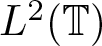 $L^2(\mathbb{T})$. Moreover, we analyse their properties while keeping the whole Hardy space, model space and Beurling-type subspaces invariant. Furthermore, we extended our study concerning conjugations in the case of finite Blaschke products.


Symmetric and antisymmetric tensor products for the function-theoretic operator theorist
- Part of
-
- Journal:
- Canadian Journal of Mathematics / Volume 77 / Issue 1 / February 2025
- Published online by Cambridge University Press:
- 22 December 2023, pp. 324-346
- Print publication:
- February 2025
-
- Article
-
- You have access
- Open access
- HTML
- Export citation
Sub-Bergman Hilbert spaces on the unit disk III
- Part of
-
- Journal:
- Canadian Journal of Mathematics / Volume 76 / Issue 5 / October 2024
- Published online by Cambridge University Press:
- 22 August 2023, pp. 1520-1537
- Print publication:
- October 2024
-
- Article
-
- You have access
- HTML
- Export citation
-
For a bounded analytic function
 $\varphi $ on the unit disk
 $\mathbb {D}$ with
 $\|\varphi \|_\infty \le 1$, we consider the defect operators
 $D_\varphi $ and
 $D_{\overline \varphi }$ of the Toeplitz operators
 $T_{\overline \varphi }$ and
 $T_\varphi $, respectively, on the weighted Bergman space
 $A^2_\alpha $. The ranges of
 $D_\varphi $ and
 $D_{\overline \varphi }$, written as
 $H(\varphi )$ and
 $H(\overline \varphi )$ and equipped with appropriate inner products, are called sub-Bergman spaces.
We prove the following three results in the paper: for
 $-1<\alpha \le 0$, the space
 $H(\varphi )$ has a complete Nevanlinna–Pick kernel if and only if
 $\varphi $ is a Möbius map; for
 $\alpha>-1$, we have
 $H(\varphi )=H(\overline \varphi )=A^2_{\alpha -1}$ if and only if the defect operators
 $D_\varphi $ and
 $D_{\overline \varphi }$ are compact; and for
 $\alpha>-1$, we have
 $D^2_\varphi (A^2_\alpha )= D^2_{\overline \varphi }(A^2_\alpha )=A^2_{\alpha -2}$ if and only if
 $\varphi $ is a finite Blaschke product. In some sense, our restrictions on
 $\alpha $ here are best possible.


Schatten class composition operators on the Hardy space
- Part of
-
- Journal:
- Proceedings of the Royal Society of Edinburgh. Section A: Mathematics / Volume 154 / Issue 5 / October 2024
- Published online by Cambridge University Press:
- 24 July 2023, pp. 1364-1377
- Print publication:
- October 2024
-
- Article
-
- You have access
- HTML
- Export citation
-
Suppose $2< p<\infty$
 and $\varphi$
 is a holomorphic self-map of the open unit disk $\mathbb {D}$
 . We show the following assertions:
(1) If $\varphi$
 has bounded valence and0.1\begin{equation} \int_{\mathbb{D}} \left(\frac{1-|z|^2}{1-|\varphi(z)|^2}\right)^{p/2}\frac{\mathrm{d} A(z)}{(1-|z|^2)^2}<\infty, \end{equation}then $C_{\varphi }$

 is in the Schatten $p$
 -class of the Hardy space $H^2$
 .
(2) There exists a holomorphic self-map $\varphi$
 (which is, of course, not of bounded valence) such that the inequality (0.1) holds and $C_{\varphi }: H^2\to H^2$
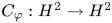 does not belong to the Schatten $p$
 -class.


General Toeplitz kernels and
 $(X,Y)$-invariance
- Part of
-
- Journal:
- Canadian Journal of Mathematics / Volume 76 / Issue 2 / April 2024
- Published online by Cambridge University Press:
- 27 March 2023, pp. 680-706
- Print publication:
- April 2024
-
- Article
-
- You have access
- HTML
- Export citation
-
Motivated by the near invariance of model spaces for the backward shift, we introduce a general notion of
 $(X,Y)$-invariant operators. The relations between this class of operators and the near invariance properties of their kernels are studied. Those lead to orthogonal decompositions for the kernels, which generalize well-known orthogonal decompositions of model spaces. Necessary and sufficient conditions for those kernels to be nearly X-invariant are established. This general approach can be applied to a wide class of operators defined as compressions of multiplication operators, in particular to Toeplitz operators and truncated Toeplitz operators, to study the invariance properties of their kernels (general Toeplitz kernels).


Polynomial null solutions to bosonic Laplacians, bosonic Bergman and Hardy spaces
- Part of
-
- Journal:
- Proceedings of the Edinburgh Mathematical Society / Volume 65 / Issue 4 / November 2022
- Published online by Cambridge University Press:
- 13 October 2022, pp. 958-989
-
- Article
-
- You have access
- Open access
- HTML
- Export citation
