Refine search
Actions for selected content:
70 results
Uniform weighted averages and a conjecture of Bergelson, Moreira, and Richter
- Part of
-
- Journal:
- Ergodic Theory and Dynamical Systems / Volume 46 / Issue 11 / November 2026
- Published online by Cambridge University Press:
- 20 July 2026, pp. 2864-2886
- Print publication:
- November 2026
-
- Article
-
- You have access
- Open access
- HTML
- Export citation
-
We confirm a conjecture posed by Bergelson, Moreira, and Richter, and in particular show that for every probability-measure-preserving system $(X,\mathscr {B},\mu ,T)$
 , every $k\in \mathbb {N}$
 , every set $A\in \mathscr {B}$
 with $\mu (A)>0$
 , and every tempered function f, $ \lim _{N\to \infty }({1}/{N}) \sum _{n=1}^N\mu (A\cap T^{-\lfloor {f(n)\rfloor }}A\cap T^{-\lfloor {f(n+1)\rfloor }}A\cap \cdots \cap T^{-\lfloor {f(n+k)\rfloor }}A)>0. $
 This is achieved by establishing conditions on an increasing function $W:\mathbb {N}\rightarrow (0,\infty )$
 such that if $(x_n)_{n\in \mathbb {N}}$
 is a bounded sequence in a Banach space with $ \lim _{W(N)-W(M)\to \infty }({1}/({W(N)-W(M)})) \sum _{n=M}^N (W(n)-W(n-1))x_n =L $
 then the limit of Cesàro averages of $(x_n)_{n\in \mathbb {N}}$
 , $\lim _{N\to \infty }({1}/{N})\sum _{n=1}^Nx_n$
 , is also equal to L. Furthermore, the methods we develop can be used to sharpen some of the combinatorial results obtained by Bergelson, Moreira, and Richter. For example, if E is a set of positive upper density, then for any $k\in \mathbb {N}$
 , any $\varepsilon>0$
 , and all sufficiently large $N\in \mathbb {N}$
 there is an $a\in \mathbb {N}$
 and an $n\in [N-N^{1/2+\varepsilon },N]$
 such that $\{a,a+\lfloor n^{3/2} \rfloor ,a+\lfloor (n+1)^{3/2}\rfloor ,\ldots ,a +\lfloor (n+k)^{3/2}\rfloor \}\subseteq E.$



The pointwise ergodic theorem on finitely additive spaces
- Part of
-
- Journal:
- Ergodic Theory and Dynamical Systems / Volume 46 / Issue 12 / December 2026
- Published online by Cambridge University Press:
- 10 July 2026, pp. 3123-3140
- Print publication:
- December 2026
-
- Article
-
- You have access
- Open access
- HTML
- Export citation
Cantor spectrum for multidimensional quasi-periodic Schrödinger operators
- Part of
-
- Journal:
- Forum of Mathematics, Sigma / Volume 14 / 2026
- Published online by Cambridge University Press:
- 15 June 2026, e90
-
- Article
-
- You have access
- Open access
- HTML
- Export citation
Square functions and variational estimates for Ritt operators on $L^1$

- Part of
-
- Journal:
- Ergodic Theory and Dynamical Systems / Volume 46 / Issue 8 / August 2026
- Published online by Cambridge University Press:
- 17 April 2026, pp. 1994-2017
- Print publication:
- August 2026
-
- Article
-
- You have access
- Open access
- HTML
- Export citation
-
A power-bounded operator T satisfying $\sup _n n\lVert T^n-T^{n+1}\rVert <\infty $
 is a Ritt operator. For such operators, we study the generalized square function $Q_{\alpha ,s,r}^Tf=(\sum _n n^{\alpha } |T^n(I-T)^rf|^s)^{1/s}$
 . It is known that when T is a positive contraction and a Ritt operator on $L^p$
 , $1<p<\infty $
 , then for any integer $r\ge 1$
 , the square function $Q_{2r-1,2,r}^Tf$
 defines a bounded operator [17] on $L^p$
 . In this work, we extend the theory to the endpoint case $p=1$
 . We show that if T is a Ritt operator on $L^1$
 , then the generalized square function $Q_{\alpha ,s,r}^Tf $
 is bounded on $L^1$
 whenever $\alpha +1<sr$
 . In the particular setting where T is a convolution operator of the form $T_{\mu }=\sum _k \mu (k) U^kf$
 , with $\mu $
 a probability measure on $\mathbb Z$
 and U the composition operator induced by an invertible measure-preserving transformation, we provide sufficient conditions on $\mu $
 under which $Q_{2r-1,2,r}^{T_{\mu }}f$
 is of weak type $(1,1)$
 , for $r>0$
 . We also establish bounds for variational and oscillation norms, $\lVert n^{\beta } T^n(1-T)^r\rVert _{v(s)}$
 and $\lVert n^{\beta } T^n(1-T)^r\rVert _{o(s)}$
 , for Ritt operators, highlighting endpoint behavior.


Analyticity of the Lyapunov exponents of random products of matrices
- Part of
-
- Journal:
- Ergodic Theory and Dynamical Systems / Volume 46 / Issue 7 / July 2026
- Published online by Cambridge University Press:
- 05 March 2026, pp. 1653-1679
- Print publication:
- July 2026
-
- Article
-
- You have access
- HTML
- Export citation
Multiplicative Jensen’s formula and quantitative global theory of one-frequency Schrödinger operators
- Part of
-
- Journal:
- Forum of Mathematics, Pi / Volume 14 / 2026
- Published online by Cambridge University Press:
- 09 January 2026, e1
-
- Article
-
- You have access
- Open access
- HTML
- Export citation
On ergodicity and transience for a class of level-dependent GI/M/1-type Markov chains
- Part of
-
- Journal:
- Journal of Applied Probability / Volume 62 / Issue 4 / December 2025
- Published online by Cambridge University Press:
- 21 November 2025, pp. 1301-1317
- Print publication:
- December 2025
-
- Article
-
- You have access
- HTML
- Export citation
Some ergodic theorems involving Omega function and their applications
- Part of
-
- Journal:
- Ergodic Theory and Dynamical Systems / Volume 46 / Issue 4 / April 2026
- Published online by Cambridge University Press:
- 17 November 2025, pp. 1086-1105
- Print publication:
- April 2026
-
- Article
-
- You have access
- HTML
- Export citation
-
In this paper, we build some ergodic theorems involving the function
 $\Omega $, where
 $\Omega (n)$ denotes the number of prime factors of a natural number n counted with multiplicities. As a combinatorial application, it is shown that for any
 $k\in \mathbb {N}$ and every
 $A\subset \mathbb {N}$ with positive upper Banach density, there are
 $a,d\in \mathbb {N}$ such that
 $a,a+d,\ldots, a+kd,a+\Omega(d)\in A.$


 $\overline {d}$-continuity for countable state shifts
- Part of
-
- Journal:
- Ergodic Theory and Dynamical Systems / Volume 46 / Issue 2 / February 2026
- Published online by Cambridge University Press:
- 03 October 2025, pp. 466-489
- Print publication:
- February 2026
-
- Article
-
- You have access
- HTML
- Export citation
-
For full shifts on finite alphabets, Coelho and Quas [Criteria for
 $\overline {d}$-continuity. Trans. Amer. Math. Soc. 350(8) (1998), 3257–3268] showed that the map that sends a Hölder continuous potential
 $\phi $ to its equilibrium state
 $\mu _\phi $ is
 $\overline {d}$-continuous. We extend this result to the setting of full shifts on countable (infinite) alphabets. As part of the proof, we show that the map that sends a strongly positive recurrent potential to its normalization is continuous for potentials on mixing countable state Markov shifts.


Pointwise convergence of bilinear polynomial averages over the primes
- Part of
-
- Journal:
- Ergodic Theory and Dynamical Systems / Volume 45 / Issue 12 / December 2025
- Published online by Cambridge University Press:
- 01 September 2025, pp. 3760-3799
- Print publication:
- December 2025
-
- Article
-
- You have access
- Open access
- HTML
- Export citation
-
We show that on a
 $\sigma $-finite measure-preserving system
 $X = (X,\nu , T)$, the non-conventional ergodic averages converge pointwise almost everywhere for
 $$ \begin{align*} \mathbb{E}_{n \in [N]} \Lambda(n) f(T^n x) g(T^{P(n)} x) \end{align*} $$
 $f \in L^{p_1}(X)$,
 $g \in L^{p_2}(X)$ and
 $1/p_1 + 1/p_2 \leq 1$, where P is a polynomial with integer coefficients of degree at least
 $2$. This had previously been established with the von Mangoldt weight
 $\Lambda $ replaced by the constant weight
 $1$ by the first and third authors with Mirek, and by the Möbius weight
 $\mu $ by the fourth author. The proof is based on combining tools from both of these papers, together with several Gowers norm and polynomial averaging operator estimates on approximants to the von Mangoldt function of ‘Cramér’ and ‘Heath-Brown’ type.


Non-leading eigenvalues of the Perron–Frobenius operators for beta-maps
- Part of
-
- Journal:
- Ergodic Theory and Dynamical Systems / Volume 46 / Issue 1 / January 2026
- Published online by Cambridge University Press:
- 29 August 2025, pp. 291-319
- Print publication:
- January 2026
-
- Article
-
- You have access
- HTML
- Export citation
-
We consider the Perron–Frobenius operator defined on the space of functions of bounded variation for the beta-map
 $\tau _\beta (x)=\beta x$ (mod
 $1$) for
 $\beta \in (1,\infty )$, and investigate its isolated eigenvalues except
 $1$, called non-leading eigenvalues in this paper. We show that the set of
 $\beta $ such that the corresponding Perron–Frobenius operator has at least one non-leading eigenvalue is open and dense in
 $(1,\infty )$. Furthermore, we establish the Hölder continuity of each non-leading eigenvalue as a function of
 $\beta $ and show in particular that it is continuous but non-differentiable, whose analogue was conjectured by Flatto, Lagarias and Poonen in [The zeta function of the beta transformation. Ergod. Th. & Dynam. Sys. 14 (1994), 237–266]. In addition, for an eigenfunctional of the Perron–Frobenius operator corresponding to an isolated eigenvalue, we give an explicit formula for the value of the functional applied to the indicator function of every interval. As its application, we provide three results related to non-leading eigenvalues, one of which states that an eigenfunctional corresponding to a non-leading eigenvalue cannot be expressed by any complex measure on the interval, which is in contrast to the case of the leading eigenvalue
 $1$.


A Kakutani–Rokhlin decomposition for conditionally ergodic process in the measure-free setting of vector lattices
- Part of
-
- Journal:
- Ergodic Theory and Dynamical Systems / Volume 45 / Issue 12 / December 2025
- Published online by Cambridge University Press:
- 05 August 2025, pp. 3600-3618
- Print publication:
- December 2025
-
- Article
-
- You have access
- Open access
- HTML
- Export citation
Hereditarily frequently hypercyclic operators and disjoint frequent hypercyclicity
- Part of
-
- Journal:
- Ergodic Theory and Dynamical Systems / Volume 45 / Issue 10 / October 2025
- Published online by Cambridge University Press:
- 16 April 2025, pp. 3021-3072
- Print publication:
- October 2025
-
- Article
-
- You have access
- HTML
- Export citation
-
We introduce and study the notion of hereditary frequent hypercyclicity, which is a reinforcement of the well-known concept of frequent hypercyclicity. This notion is useful for the study of the dynamical properties of direct sums of operators; in particular, a basic observation is that the direct sum of a hereditarily frequently hypercyclic operator with any frequently hypercyclic operator is frequently hypercyclic. Among other results, we show that operators satisfying the frequent hypercyclicity criterion are hereditarily frequently hypercyclic, as well as a large class of operators whose unimodular eigenvectors are spanning with respect to the Lebesgue measure. However, we exhibit two frequently hypercyclic weighted shifts
 $B_w,B_{w'}$ on
 $c_0(\mathbb {Z}_+)$ whose direct sum
 ${B_w\oplus B_{w'}}$ is not
 $\mathcal {U}$-frequently hypercyclic (so that neither of them is hereditarily frequently hypercyclic), and we construct a C-type operator on
 $\ell _p(\mathbb {Z}_+)$,
 $1\le p<\infty $, which is frequently hypercyclic but not hereditarily frequently hypercyclic. We also solve several problems concerning disjoint frequent hypercyclicity: we show that for every
 $N\in \mathbb {N}$, any disjoint frequently hypercyclic N-tuple of operators
 $(T_1,\ldots ,T_N)$ can be extended to a disjoint frequently hypercyclic
 $(N+1)$-tuple
 $(T_1,\ldots ,T_N, T_{N+1})$ as soon as the underlying space supports a hereditarily frequently hypercyclic operator; we construct a disjoint frequently hypercyclic pair which is not densely disjoint hypercyclic; and we show that the pair
 $(D,\tau _a)$ is disjoint frequently hypercyclic, where D is the derivation operator acting on the space of entire functions and
 $\tau _a$ is the operator of translation by
 $a\in \mathbb {C}\setminus \{ 0\}$. Part of our results are in fact obtained in the general setting of Furstenberg families.


Two dynamical approaches to the notion of exponential separation for random systems of delay differential equations
- Part of
-
- Journal:
- Proceedings of the Royal Society of Edinburgh. Section A: Mathematics , First View
- Published online by Cambridge University Press:
- 24 February 2025, pp. 1-39
-
- Article
-
- You have access
- Open access
- HTML
- Export citation
-
This paper deals with the exponential separation of type II, an important concept for random systems of differential equations with delay, introduced in Mierczyński et al. [18]. Two different approaches to its existence are presented. The state space X will be a separable ordered Banach space with
 $\dim X\geq 2$, dual space
 $X^{*}$, and positive cone
 $X^+$ normal and reproducing. In both cases, appropriate cooperativity and irreducibility conditions are assumed to provide a family of generalized Floquet subspaces. If in addition
 $X^*$ is also separable, one obtains an exponential separation of type II. When this is not the case, but there is an Oseledets decomposition for the continuous semiflow, the same result holds. Detailed examples are given for all the situations, including also a case where the cone is not normal.


Joining properties of automorphisms disjoint with all ergodic systems
- Part of
-
- Journal:
- Ergodic Theory and Dynamical Systems / Volume 45 / Issue 7 / July 2025
- Published online by Cambridge University Press:
- 27 December 2024, pp. 1998-2022
- Print publication:
- July 2025
-
- Article
-
- You have access
- Open access
- HTML
- Export citation
-
We study the class
 $\operatorname {Erg}^\perp $ of automorphisms which are disjoint with all ergodic systems. We prove that the identities are the only multipliers of
 $\operatorname {Erg}^\perp ,$ that is, each automorphism whose every joining with an element of
 $\operatorname {Erg}^{\perp }$ yields a system which is again an element of
 $\operatorname {Erg}^{\perp }$, must be an identity. Despite this fact, we show that
 $\operatorname {Erg}^\perp $ is closed by taking Cartesian products. Finally, we prove that there are non-identity elements in
 $\operatorname {Erg}^\perp $ whose self-joinings always yield elements in
 $\operatorname {Erg}^\perp $. This shows that there are non-trivial characteristic classes included in
 $\operatorname {Erg}^\perp $.


Simplices in large sets and directional expansion in ergodic actions
- Part of
-
- Journal:
- Forum of Mathematics, Sigma / Volume 12 / 2024
- Published online by Cambridge University Press:
- 10 December 2024, e121
-
- Article
-
- You have access
- Open access
- HTML
- Export citation
-
In this paper, we study ergodic
 $\mathbb {Z}^r$-actions and investigate expansion properties along cyclic subgroups. We show that under some spectral conditions, there are always directions which expand significantly a given measurable set with positive measure. Among other things, we use this result to prove that the set of volumes of all r-simplices with vertices in a set with positive upper density must contain an infinite arithmetic progression, thus showing a discrete density analogue of a classical result by Graham.

QUASI-ERGODICITY OF COMPACT STRONG FELLER SEMIGROUPS ON
 $L^2$
- Part of
-
- Journal:
- Journal of the Institute of Mathematics of Jussieu / Volume 24 / Issue 2 / March 2025
- Published online by Cambridge University Press:
- 14 November 2024, pp. 541-584
- Print publication:
- March 2025
-
- Article
-
- You have access
- Open access
- HTML
- Export citation
-
We study the quasi-ergodicity of compact strong Feller semigroups
 $U_t$,
 $t> 0$, on
 $L^2(M,\mu )$; we assume that M is a locally compact Polish space equipped with a locally finite Borel measue
 $\mu $. The operators
 $U_t$ are ultracontractive and positivity preserving, but not necessarily self-adjoint or normal. We are mainly interested in those cases where the measure
 $\mu $ is infinite and the semigroup is not intrinsically ultracontractive. We relate quasi-ergodicity on
 $L^p(M,\mu )$ and uniqueness of the quasi-stationary measure with the finiteness of the heat content of the semigroup (for large values of t) and with the progressive uniform ground state domination property. The latter property is equivalent to a variant of quasi-ergodicity which progressively propagates in space as
 $t \uparrow \infty $; the propagation rate is determined by the decay of
 . We discuss several applications and illustrate our results with examples. This includes a complete description of quasi-ergodicity for a large class of semigroups corresponding to non-local Schrödinger operators with confining potentials.


 . We discuss several applications and illustrate our results with examples. This includes a complete description of quasi-ergodicity for a large class of semigroups corresponding to non-local Schrödinger operators with confining potentials.
On the speed of convergence in the ergodic theorem for shift operators
- Part of
-
- Journal:
- Canadian Journal of Mathematics / Volume 77 / Issue 6 / December 2025
- Published online by Cambridge University Press:
- 04 November 2024, pp. 1919-1937
- Print publication:
- December 2025
-
- Article
-
- You have access
- Open access
- HTML
- Export citation
-
Given a probability space
 $(X,\mu )$, a square integrable function f on such space and a (unilateral or bilateral) shift operator T, we prove under suitable assumptions that the ergodic means
 $N^{-1}\sum _{n=0}^{N-1} T^nf$ converge pointwise almost everywhere to zero with a speed of convergence which, up to a small logarithmic transgression, is essentially of the order of
 $N^{-1/2}$. We also provide a few applications of our results, especially in the case of shifts associated with toral endomorphisms.


Uniform syndeticity in multiple recurrence
- Part of
-
- Journal:
- Ergodic Theory and Dynamical Systems / Volume 45 / Issue 2 / February 2025
- Published online by Cambridge University Press:
- 28 May 2024, pp. 504-525
- Print publication:
- February 2025
-
- Article
-
- You have access
- Open access
- HTML
- Export citation
-
The main theorem of this paper establishes a uniform syndeticity result concerning the multiple recurrence of measure-preserving actions on probability spaces. More precisely, for any integers
 $d,l\geq 1$ and any
 $\varepsilon> 0$, we prove the existence of
 $\delta>0$ and
 $K\geq 1$ (dependent only on d, l, and
 $\varepsilon $) such that the following holds: Consider a solvable group
 $\Gamma $ of derived length l, a probability space
 $(X, \mu )$, and d pairwise commuting measure-preserving
 $\Gamma $-actions
 $T_1, \ldots , T_d$ on
 $(X, \mu )$. Let E be a measurable set in X with
 $\mu (E) \geq \varepsilon $. Then, K many (left) translates of cover
 $$ \begin{align*} \big\{\gamma\in\Gamma\colon \mu(T_1^{\gamma^{-1}}(E)\cap T_2^{\gamma^{-1}} \circ T^{\gamma^{-1}}_1(E)\cap \cdots \cap T^{\gamma^{-1}}_d\circ T^{\gamma^{-1}}_{d-1}\circ \cdots \circ T^{\gamma^{-1}}_1(E))\geq \delta \big\} \end{align*} $$
 $\Gamma $. This result extends and refines uniformity results by Furstenberg and Katznelson. As a combinatorial application, we obtain the following uniformity result. For any integers
 $d,l\geq 1$ and any
 $\varepsilon> 0$, there are
 $\delta>0$ and
 $K\geq 1$ (dependent only on d, l, and
 $\varepsilon $) such that for all finite solvable groups G of derived length l and any subset
 $E\subset G^d$ with
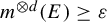 $m^{\otimes d}(E)\geq \varepsilon $ (where m is the uniform measure on G), we have that K-many (left) translates of cover G. The proof of our main result is a consequence of an ultralimit version of Austin’s amenable ergodic Szeméredi theorem.
 $$ \begin{align*} \{g\in G\colon &m^{\otimes d}(\{(a_1,\ldots,a_n)\in G^d\colon \\ & (a_1,\ldots,a_n),(ga_1,a_2,\ldots,a_n),\ldots,(ga_1,ga_2,\ldots, ga_n)\in E\})\geq \delta \} \end{align*} $$


Co-spectral radius for countable equivalence relations
- Part of
-
- Journal:
- Ergodic Theory and Dynamical Systems / Volume 44 / Issue 12 / December 2024
- Published online by Cambridge University Press:
- 10 May 2024, pp. 3385-3427
- Print publication:
- December 2024
-
- Article
-
- You have access
- Open access
- HTML
- Export citation
-
We define the co-spectral radius of inclusions
 ${\mathcal S}\leq {\mathcal R}$ of discrete, probability- measure-preserving equivalence relations as the sampling exponent of a generating random walk on the ambient relation. The co-spectral radius is analogous to the spectral radius for random walks on
 $G/H$ for inclusion
 $H\leq G$ of groups. For the proof, we develop a more general version of the 2–3 method we used in another work on the growth of unimodular random rooted trees. We use this method to show that the walk growth exists for an arbitrary unimodular random rooted graph of bounded degree. We also investigate how the co-spectral radius behaves for hyperfinite relations, and discuss new critical exponents for percolation that can be defined using the co-spectral radius.


