Refine search
Actions for selected content:
64 results
There is an equivalence relation whose von Neumann algebra is not Connes embeddable
- Part of
-
- Journal:
- Compositio Mathematica / Volume 162 / Issue 8 / August 2026
- Published online by Cambridge University Press:
- 30 September 2026, pp. 1851-1868
- Print publication:
- August 2026
-
- Article
-
- You have access
- Open access
- HTML
- Export citation
-
The landmark quantum complexity result MIP
 $^*$
 $=$ RE has been used to prove the existence of a non-Connes-embeddable tracial von Neumann algebra. Recently, similar ideas have been used to give a negative solution to the Aldous–Lyons conjecture: there is a non-co-sofic invariant random subgroup (IRS) on any non-abelian free group. We define a notion of hyperlinearity for an IRS and show that there is a non-co-hyperlinear IRS on any non-abelian free group. As a corollary, we prove that there is a relation whose von Neumann algebra is not Connes embeddable. We do this by significantly simplifying the reduction of Aldous–Lyons to non-local games, removing the need for subgroup tests entirely.


THE MODEL THEORY OF METRIC LATTICES: PSEUDOFINITE PARTITION LATTICES
- Part of
-
- Journal:
- The Journal of Symbolic Logic , First View
- Published online by Cambridge University Press:
- 30 July 2026, pp. 1-59
-
- Article
-
- You have access
- Open access
- HTML
- Export citation
Ultraproducts of crossed product C*algebras
- Part of
-
- Journal:
- Canadian Mathematical Bulletin , First View
- Published online by Cambridge University Press:
- 26 May 2026, pp. 1-10
-
- Article
-
- You have access
- HTML
- Export citation
-
We study the relationship between the ultraproduct of a crossed product C*algebra ${(\mathcal {A}\rtimes _{r}G)^{\omega }}$
 and the crossed product of an ultraproduct C*algebra $\mathcal {A}^{\omega }\rtimes _{r}G$
 for a fixed free ultrafilter $\omega $
 on $\mathbb {N}$
 . For a general locally compact amenable group G, we show that $\mathcal {A}^{\omega }_{\alpha }\rtimes _{r}G$
 embeds into $(\mathcal {A}\rtimes _{r}G)^{\omega }$
 . This problem was first introduced by Reiji Tomatsu in the framework of von Neumann algebras in Tomatsu (2017, Illinois J. Math., 61, 275–286).


Fixed-point permanence under actions by finite quantum groups
- Part of
-
- Journal:
- Canadian Mathematical Bulletin , First View
- Published online by Cambridge University Press:
- 16 January 2026, pp. 1-9
-
- Article
-
- You have access
- Open access
- HTML
- Export citation
-
Given an action by a finite quantum group
 $\mathbb {G}$ on a von Neumann algebra M, we prove that a number of familiar
 $W^*$ properties are equivalent for M and the fixed-point algebra
 $M^{\mathbb {G}}$ (i.e., hold or not simultaneously for the two algebras); these include being hyperfinite, atomic, diffuse, and of type I,
 $II$, or
 $III$. Moreover, in all cases, the canonical central projections of M and
 $M^{\mathbb {G}}$ cutting out the summand with the respective property coincide. The result generalizes its classical-
 $\mathbb {G}$ analog due to Jones–Takesaki.


Von Neumann orbit equivalence
- Part of
-
- Journal:
- Canadian Journal of Mathematics , First View
- Published online by Cambridge University Press:
- 12 December 2025, pp. 1-21
-
- Article
-
- You have access
- Open access
- HTML
- Export citation
-
We generalize the notion of orbit equivalence to the non-commutative setting by introducing a new equivalence relation on groups, which we call von Neumann orbit equivalence (vNOE). We prove the stability of this equivalence relation under taking free products and graph products of groups. To achieve this, we introduce vNOE of tracial von Neumann algebras, show that two countable discrete groups
 $\Gamma $ and
 $\Lambda $ are vNOE if and only if the corresponding group von Neumann algebras
 $L\Gamma $ and
 $L\Lambda $ are vNOE, and that vNOE of tracial von Neumann algebras is stable under taking free products and graph products of tracial von Neumann algebras.


Combinatorial properties of MAD families
- Part of
-
- Journal:
- Canadian Journal of Mathematics , First View
- Published online by Cambridge University Press:
- 03 December 2025, pp. 1-69
-
- Article
-
- You have access
- HTML
- Export citation
-
We study some strong combinatorial properties of
MAD families. An ideal $\mathcal {I}$ is Shelah–Steprāns if for every set
 $X\subseteq \left [ \omega \right ] ^{<\omega }$, there is an element of
 $\mathcal {I}$ that either intersects every set in X or contains infinitely many members of it. We prove that a Borel ideal is Shelah–Steprāns if and only if it is Katětov above the ideal
fin  $\times $
fin , and that Shelah–SteprānsMAD families have strong indestructibility properties (in particular, they are both Cohen and random indestructible). We also consider some other strong combinatorial properties ofMAD families. It is proved that it is consistent to have $\operatorname {\mathrm {non}}(\mathcal {M}) = {\aleph }_{1}$ and no Shelah–Steprāns families of size
 ${\aleph }_{1}$. We develop a general machinery for producing models of set theory with
 $\operatorname {\mathrm {non}}(\mathcal {M}) = {\aleph }_{1}$ in order to prove this result.


Trace spaces of full free product
 $C^*$-algebras
- Part of
-
- Journal:
- Compositio Mathematica / Volume 161 / Issue 11 / November 2025
- Published online by Cambridge University Press:
- 07 January 2026, pp. 2947-2989
- Print publication:
- November 2025
-
- Article
-
- You have access
- Open access
- HTML
- Export citation
-
We study the space of traces associated with arbitrary full free products of unital, separable
 $C^*$-algebras. We show that, unless certain basic obstructions (which we fully characterize) occur, the space of traces always results in the same object: the Poulsen simplex, that is, the unique infinite-dimensional metrizable Choquet simplex whose extreme points are dense. Moreover, we show that whenever such a trace space is the Poulsen simplex, the extreme points are dense in the Wasserstein topology. Concretely for the case of groups, we find that, unless the trivial character is isolated in the space of characters, the space of traces of any free product of non-trivial countable groups is the Poulsen simplex. Our main technical contribution is a new perturbation result for pairs of von Neumann subalgebras
 $(M_{1},M_{2})$ of a tracial von Neumann algebra M, providing necessary conditions under which
 $M_{1}$ and a small unitary perturbation of
 $M_{2}$ generate a II
 $_{1}$ factor.


PROPERTY (T) AND STRONG 1-BOUNDEDNESS FOR VON NEUMANN ALGEBRAS
- Part of
-
- Journal:
- Journal of the Institute of Mathematics of Jussieu / Volume 25 / Issue 6 / November 2026
- Published online by Cambridge University Press:
- 01 September 2025, pp. 2999-3032
- Print publication:
- November 2026
-
- Article
-
- You have access
- HTML
- Export citation
Semigroups of self-similar actions and higher rank Baumslag–Solitar semigroups
- Part of
-
- Journal:
- Proceedings of the Royal Society of Edinburgh. Section A: Mathematics , First View
- Published online by Cambridge University Press:
- 18 August 2025, pp. 1-30
-
- Article
-
- You have access
- Open access
- HTML
- Export citation
-
In this paper, we initiate the study of higher rank Baumslag–Solitar (BS) semigroups and their related C*-algebras. We focus on two rather interesting classes—one is related to products of odometers and the other is related to Furstenberg’s
 $\times p, \times q$ conjecture. For the former class, whose C*-algebras are studied in [32], we here characterize the factoriality of the associated von Neumann algebras and further determine their types; for the latter, we obtain their canonical Cartan subalgebras. In the rank 1 case, we study a more general setting that encompasses (single-vertex) generalized BS semigroups. One of our main tools in this paper is from self-similar higher rank graphs and their C*-algebras.

QUANTUM EXPANDERS AND QUANTIFIER REDUCTION FOR TRACIAL VON NEUMANN ALGEBRAS
- Part of
-
- Journal:
- The Journal of Symbolic Logic / Volume 91 / Issue 2 / June 2026
- Published online by Cambridge University Press:
- 04 July 2025, pp. 776-812
- Print publication:
- June 2026
-
- Article
-
- You have access
- Open access
- HTML
- Export citation
-
We provide a complete characterization of theories of tracial von Neumann algebras that admit quantifier elimination. We also show that the theory of a separable tracial von Neumann algebra
 $\mathcal {M}$ is never model complete if its direct integral decomposition contains
 $\mathrm {II}_1$ factors
 $\mathcal {N}$ such that
 $M_2(\mathcal {N})$ embeds into an ultrapower of
 $\mathcal {N}$. The proof in the case of
 $\mathrm {II}_1$ factors uses an explicit construction based on random matrices and quantum expanders.


Elementary equivalence and disintegration of tracial von Neumann algebras
- Part of
-
- Journal:
- Forum of Mathematics, Sigma / Volume 13 / 2025
- Published online by Cambridge University Press:
- 02 July 2025, e105
-
- Article
-
- You have access
- Open access
- HTML
- Export citation
RELATIVE POSITION BETWEEN A PAIR OF SPIN MODEL SUBFACTORS
- Part of
-
- Journal:
- Journal of the Australian Mathematical Society / Volume 119 / Issue 1 / August 2025
- Published online by Cambridge University Press:
- 10 March 2025, pp. 1-38
-
- Article
-
- You have access
- HTML
- Export citation
-
Jones [‘Two subfactors and the algebraic decomposition of bimodules over
 $II_1$ factors’, Acta Math. Vietnam 33(3) (2008), 209–218] proposed the study of ‘two subfactors’ of a
 $II_1$ factor as a quantization of two closed subspaces in a Hilbert space. Motivated by this, we initiate a systematic study of a special class of two subfactors, namely a pair of spin model subfactors. We characterize which pairs of distinct complex Hadamard matrices in
 $M_n(\mathbb {C})$ give rise to distinct spin model subfactors. Then, a detailed investigation is carried out for
 $n=2$, where the spin model subfactors correspond to
 $\mathbb {Z}_2$-actions on the hyperfinite type
 $II_1$ factor R. We observe that the intersection of the pair of spin model subfactors in this case is a nonirreducible vertex model subfactor and we characterize it as a diagonal subfactor. A few key invariants for the pair of spin model subfactors are computed to understand their relative positions.


Products of commutators in matrix rings
- Part of
-
- Journal:
- Canadian Mathematical Bulletin / Volume 68 / Issue 2 / June 2025
- Published online by Cambridge University Press:
- 14 January 2025, pp. 512-529
- Print publication:
- June 2025
-
- Article
-
- You have access
- Open access
- HTML
- Export citation
-
Let R be a ring and let
 $n\ge 2$. We discuss the question of whether every element in the matrix ring
 $M_n(R)$ is a product of (additive) commutators
 $[x,y]=xy-yx$, for
 $x,y\in M_n(R)$. An example showing that this does not always hold, even when R is commutative, is provided. If, however, R has Bass stable rank one, then under various additional conditions every element in
 $M_n(R)$ is a product of three commutators. Further, if R is a division ring with infinite center, then every element in
 $M_n(R)$ is a product of two commutators. If R is a field and
 $a\in M_n(R)$, then every element in
 $M_n(R)$ is a sum of elements of the form
 $[a,x][a,y]$ with
 $x,y\in M_n(R)$ if and only if the degree of the minimal polynomial of a is greater than
 $2$.


Isometric dilations for representations of product systems
- Part of
-
- Journal:
- Proceedings of the Royal Society of Edinburgh. Section A: Mathematics / Volume 156 / Issue 5 / October 2026
- Published online by Cambridge University Press:
- 28 November 2024, pp. 1901-1942
- Print publication:
- October 2026
-
- Article
-
- You have access
- Open access
- HTML
- Export citation
-
We discuss representations of product systems (of
 $W^*$-correspondences) over the semigroup
 $\mathbb{Z}^n_+$ and show that, under certain pureness and Szegö positivity conditions, a completely contractive representation can be dilated to an isometric representation. For
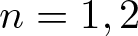 $n=1,2$ this is known to hold in general (without assuming the conditions), but for
 $n\geq 3$, it does not hold in general (as is known for the special case of isometric dilations of a tuple of commuting contractions). Restricting to the case of tuples of commuting contractions, our result reduces to a result of Barik, Das, Haria, and Sarkar (Isometric dilations and von Neumann inequality for a class of tuples in the polydisc. Trans. Amer. Math. Soc. 372 (2019), 1429–1450). Our dilation is explicitly constructed, and we present some applications.


RIGIDITY FOR VON NEUMANN ALGEBRAS OF GRAPH PRODUCT GROUPS II. SUPERRIGIDITY RESULTS
- Part of
-
- Journal:
- Journal of the Institute of Mathematics of Jussieu / Volume 24 / Issue 1 / January 2025
- Published online by Cambridge University Press:
- 25 November 2024, pp. 117-156
- Print publication:
- January 2025
-
- Article
-
- You have access
- HTML
- Export citation
-
In [CDD22], we investigated the structure of
 $\ast $-isomorphisms between von Neumann algebras
 $L(\Gamma )$ associated with graph product groups
 $\Gamma $ of flower-shaped graphs and property (T) wreath-like product vertex groups, as in [CIOS21]. In this follow-up, we continue the structural study of these algebras by establishing that these graph product groups
 $\Gamma $ are entirely recognizable from the category of all von Neumann algebras arising from an arbitrary nontrivial graph product group with infinite vertex groups. A sharper
 $C^*$-algebraic version of this statement is also obtained. In the process of proving these results, we also extend the main
 $W^*$-superrigidity result from [CIOS21] to direct products of property (T) wreath-like product groups.


Asymptotic freeness in tracial ultraproducts
- Part of
-
- Journal:
- Forum of Mathematics, Sigma / Volume 12 / 2024
- Published online by Cambridge University Press:
- 28 October 2024, e88
-
- Article
-
- You have access
- Open access
- HTML
- Export citation
-
We prove novel asymptotic freeness results in tracial ultraproduct von Neumann algebras. In particular, we show that whenever
 $M = M_1 \ast M_2$ is a tracial free product von Neumann algebra and
 $u_1 \in \mathscr U(M_1)$,
 $u_2 \in \mathscr U(M_2)$ are Haar unitaries, the relative commutants
 $\{u_1\}' \cap M^{\mathcal U}$ and
 $\{u_2\}' \cap M^{\mathcal U}$ are freely independent in the ultraproduct
 $M^{\mathcal U}$. Our proof relies on Mei–Ricard’s results [MR16] regarding
 $\operatorname {L}^p$-boundedness (for all
 $1 < p < +\infty $) of certain Fourier multipliers in tracial amalgamated free products von Neumann algebras. We derive two applications. Firstly, we obtain a general absorption result in tracial amalgamated free products that recovers several previous maximal amenability/Gamma absorption results. Secondly, we prove a new lifting theorem which we combine with our asymptotic freeness results and Chifan–Ioana–Kunnawalkam Elayavalli’s recent construction [CIKE22] to provide the first example of a
 $\mathrm {II_1}$ factor that does not have property Gamma and is not elementary equivalent to any free product of diffuse tracial von Neumann algebras.


Haagerup and Størmer's conjecture on pointwise inner automorphisms
- Part of
-
- Journal:
- Compositio Mathematica / Volume 160 / Issue 10 / October 2024
- Published online by Cambridge University Press:
- 04 November 2024, pp. 2480-2495
- Print publication:
- October 2024
-
- Article
-
- You have access
- HTML
- Export citation
-
In 1988, Haagerup and Størmer conjectured that every pointwise inner automorphism of a type
 ${\rm III_1}$ factor is a composition of an inner and a modular automorphism. We study this conjecture and prove that every type
 ${\rm III_1}$ factor with trivial bicentralizer indeed satisfies this condition. In particular, this shows that Haagerup and Størmer's conjecture holds in full generality if Connes’ bicentralizer problem has an affirmative answer. Our proof is based on Popa's intertwining theory and Marrakchi's recent work on relative bicentralizers.


Corrigendum: Von Neumann algebras and extensions of inverse semigroups
- Part of
-
- Journal:
- Proceedings of the Edinburgh Mathematical Society / Volume 66 / Issue 3 / August 2023
- Published online by Cambridge University Press:
- 22 August 2023, pp. 919-922
-
- Article
-
- You have access
- HTML
- Export citation
Measure equivalence rigidity via s-malleable deformations
- Part of
-
- Journal:
- Compositio Mathematica / Volume 159 / Issue 10 / October 2023
- Published online by Cambridge University Press:
- 14 August 2023, pp. 2023-2050
- Print publication:
- October 2023
-
- Article
-
- You have access
- HTML
- Export citation
-
We single out a large class of groups
 ${\rm {\boldsymbol {\mathscr {M}}}}$ for which the following unique prime factorization result holds: if
 $\Gamma _1,\ldots,\Gamma _n\in {\rm {\boldsymbol {\mathscr {M}}}}$ and
 $\Gamma _1\times \cdots \times \Gamma _n$ is measure equivalent to a product
 $\Lambda _1\times \cdots \times \Lambda _m$ of infinite icc groups, then
 $n \ge m$, and if
 $n = m$, then, after permutation of the indices,
 $\Gamma _i$ is measure equivalent to
 $\Lambda _i$, for all
 $1\leq i\leq n$. This provides an analogue of Monod and Shalom's theorem [Orbit equivalence rigidity and bounded cohomology, Ann. of Math. 164 (2006), 825–878] for groups that belong to
 ${\rm {\boldsymbol {\mathscr {M}}}}$. Class
 ${\rm {\boldsymbol {\mathscr {M}}}}$ is constructed using groups whose von Neumann algebras admit an s-malleable deformation in the sense of Sorin Popa and it contains all icc non-amenable groups
 $\Gamma$ for which either (i)
 $\Gamma$ is an arbitrary wreath product group with amenable base or (ii)
 $\Gamma$ admits an unbounded 1-cocycle into its left regular representation. Consequently, we derive several orbit equivalence rigidity results for actions of product groups that belong to
 ${\rm {\boldsymbol {\mathscr {M}}}}$. Finally, for groups
 $\Gamma$ satisfying condition (ii), we show that all embeddings of group von Neumann algebras of non-amenable inner amenable groups into
 $L(\Gamma )$ are ‘rigid’. In particular, we provide an alternative solution to a question of Popa that was recently answered by Ding, Kunnawalkam Elayavalli, and Peterson [Properly Proximal von Neumann Algebras, Preprint (2022), arXiv:2204.00517].


Poisson boundaries of II1 factors
- Part of
-
- Journal:
- Compositio Mathematica / Volume 158 / Issue 8 / August 2022
- Published online by Cambridge University Press:
- 04 October 2022, pp. 1746-1776
- Print publication:
- August 2022
-
- Article
-
- You have access
- Open access
- HTML
- Export citation
-
We introduce Poisson boundaries of II
 $_1$ factors with respect to density operators that give the traces. The Poisson boundary is a von Neumann algebra that contains the II
 $_1$ factor and is a particular example of the boundary of a unital completely positive map as introduced by Izumi. Studying the inclusion of the II
 $_1$ factor into its boundary, we develop a number of notions, such as double ergodicity and entropy, that can be seen as natural analogues of results regarding the Poisson boundaries introduced by Furstenberg. We use the techniques developed to answer a problem of Popa by showing that all finite factors satisfy his MV property. We also extend a result of Nevo by showing that property (T) factors give rise to an entropy gap.


