Refine search
Actions for selected content:
31 results
ON THE INTERPLAY BETWEEN INVERSE SCATTERING FOR ASYMPTOTICALLY HYPERBOLIC MANIFOLDS AND THE CALDERÓN PROBLEM FOR THE CONFORMAL LAPLACIAN
- Part of
-
- Journal:
- Bulletin of the Australian Mathematical Society , First View
- Published online by Cambridge University Press:
- 14 July 2026, pp. 1-11
-
- Article
-
- You have access
- HTML
- Export citation
-
We use the relation obtained by Guillarmou and Guillopé [‘The determinant of the Dirichlet-to-Neumann map for surfaces with boundary’, Int. Math. Res. Not. IMRN 2007(22) (2007), Article no. rnm099] and Chang and González [‘Fractional Laplacian in conformal geometry’, Adv. Math. 226(2) (2011), 1410–1432], between the generalised eigenvalue problem for asymptotically hyperbolic (AH) manifolds and the conformal Laplacian, to obtain a new inverse scattering result: on an AH manifold of dimension $n+1$
 with constant scalar curvature $-n(n+1)$
 , the scattering matrix at energy $(n+1)/2$
 determines the jet of the metric on the boundary, up to a diffeomorphism and conformal factor.


A note on the Maxwell’s eigenvalues on thin sets
- Part of
-
- Journal:
- Proceedings of the Royal Society of Edinburgh. Section A: Mathematics , First View
- Published online by Cambridge University Press:
- 31 March 2026, pp. 1-27
-
- Article
-
- You have access
- Open access
- HTML
- Export citation
-
We analyse the Maxwell’s spectrum on thin tubular neighbourhoods of embedded surfaces of
 $\mathbb R^3$. We show that the Maxwell’s eigenvalues converge to the Laplacian eigenvalues of the surface as the thin parameter tends to zero. To achieve this, we reformulate the problem in terms of the spectrum of the Hodge Laplacian with relative conditions acting on co-closed differential
 $1$-forms. The result leads to new examples of domains where the Faber–Krahn inequality for Maxwell’s eigenvalues fails, examples of domains with any number of arbitrarily small eigenvalues, and underlines the failure of spectral stability under singular perturbations changing the topology of the domain. Additionally, we explicitly produce Maxwell’s eigenfunctions on product domains with the product metric, extending previous constructions valid in the Euclidean case.


TOPOLOGY OF THE DIRAC EQUATION ON SPECTRALLY LARGE THREE-MANIFOLDS
- Part of
-
- Journal:
- Journal of the Institute of Mathematics of Jussieu / Volume 25 / Issue 3 / May 2026
- Published online by Cambridge University Press:
- 30 March 2026, pp. 1487-1515
- Print publication:
- May 2026
-
- Article
-
- You have access
- Open access
- HTML
- Export citation
-
A closed Riemannian three-manifold
 $(Y,g)$ equipped with a torsion spin
 $^c$ structure determines a family of Dirac operators
 $\{D_B\}$ parametrized by a
 $b_1(Y)$-dimensional torus
 $\mathbb {T}_Y$. In this paper, we develop techniques to study how the topology of the locus
 $\mathsf {K}\subset \mathbb {T}_Y$ corresponding to operators with non-trivial kernel (the three-dimensional analogue of the theta divisor of a Riemann surface) depends on the geometry of the metric. As a concrete example of our methods, we show that for any metric on the three-torus
 $Y=T^3$ for which the spectral gap
 $\lambda _1^*$ on coexact
 $1$-forms is large, after a small perturbation of the family, the locus
 $\mathsf {K}$ is a two-sphere.
While the result only involves linear operators, its proof relies on the non-linear analysis of the Seiberg-Witten equations. It follows from a more general understanding of transversality in the context of the monopole Floer homology of a torsion spin
 $^c$ three-manifold
 $(Y,\mathfrak {s})$ with a large
 $\lambda _1^*$. When
 $b_1>0$, this gives rise to a very rich setup and we discuss a framework to describe explicitly in certain situations the Floer homology groups of
 $(Y,\mathfrak {s})$ in terms of the topology of the family of Dirac operators
 $\{D_B\}$.


Competition of small targets in planar domains: from Dirichlet to Robin and Steklov boundary condition
- Part of
-
- Journal:
- European Journal of Applied Mathematics / Volume 37 / Issue 5 / October 2026
- Published online by Cambridge University Press:
- 12 January 2026, pp. 1244-1291
-
- Article
-
- You have access
- Open access
- HTML
- Export citation
Sharp bounds for higher Steklov–Dirichlet eigenvalues on domains with spherical holes
- Part of
-
- Journal:
- Canadian Mathematical Bulletin / Volume 69 / Issue 3 / September 2026
- Published online by Cambridge University Press:
- 01 December 2025, pp. 877-896
- Print publication:
- September 2026
-
- Article
-
- You have access
- HTML
- Export citation
-
We consider a mixed Steklov–Dirichlet eigenvalue problem on a smooth bounded domain having a spherical hole. In this article, we take Dirichlet condition on the boundary of the spherical hole and Steklov condition on the other boundary component/s. Under certain symmetry assumptions on multiconnected domains in $\mathbb {R}^{n}$
 having a spherical hole, we obtain isoperimetric inequalities for the k-th Steklov–Dirichlet eigenvalues for each $k \in \{2, 3, \dots , n+1\}$
 . We provide examples to emphasise the fact that the symmetry assumptions, on the family of domains considered, are crucial. We also extend Theorem 3.1 of “Gavitone et al. (2023), An isoperimetric inequality for the first Steklov–Dirichlet Laplacian eigenvalue of convex sets with a spherical hole, Pacific Journal of Mathematics, 320(2): 241–259” not only from Euclidean domains to domains in space forms but also from convex domains to star-shaped domains. In particular, we obtain sharp lower and upper bounds for the first Steklov–Dirichlet eigenvalue on the family of all bounded star-shaped domains on the hemisphere as well as on the hyperbolic space.

On integral rigidity in Seiberg–Witten theory
- Part of
-
- Journal:
- Forum of Mathematics, Sigma / Volume 13 / 2025
- Published online by Cambridge University Press:
- 07 November 2025, e184
-
- Article
-
- You have access
- Open access
- HTML
- Export citation
-
We introduce a framework to prove integral rigidity results for the Seiberg–Witten invariants of a closed
 $4$-manifold X containing a nonseparating hypersurface Y satisfying suitable (chain-level) Floer theoretic conditions. As a concrete application, we show that if X has the homology of a four-torus, and it contains a nonseparating three-torus, then the sum of all Seiberg–Witten invariants of X is determined in purely cohomological terms.
Our results can be interpreted as
 $(3+1)$-dimensional versions of Donaldson’s TQFT approach to the formula of Meng–Taubes, and build upon a subtle interplay between irreducible solutions to the Seiberg–Witten equations on X and reducible ones on Y and its complement. Along the way, we provide a concrete description of the associated graded map (for a suitable filtration) of the map on
 $\overline {\mathit {HM}}_*$ induced by a negative-definite cobordism between three-manifolds, which might be of independent interest.


Constructing surfaces with first Steklov eigenvalue of arbitrarily large multiplicity
- Part of
-
- Journal:
- Canadian Mathematical Bulletin / Volume 69 / Issue 2 / June 2026
- Published online by Cambridge University Press:
- 06 October 2025, pp. 572-586
- Print publication:
- June 2026
-
- Article
-
- You have access
- Open access
- HTML
- Export citation
-
We construct surfaces with arbitrarily large multiplicity for their first nonzero Steklov eigenvalue. The proof is based on a technique by Burger and Colbois originally used to prove a similar result for the Laplacian spectrum. We start by constructing surfaces
 $S_p$ with a specific subgroup of isometry
 $G_p:= \mathbb {Z}_p \rtimes \mathbb {Z}_p^*$ for each prime p. We do so by gluing surfaces with boundary following the structure of the Cayley graph of
 $G_p$. We then exploit the properties of
 $G_p$ and
 $S_p$ in order to show that an irreducible representation of high degree (depending on p) acts on the eigenspace of functions associated with
 $\sigma _1(S_p)$, leading to the desired result.


Explicit spectral gap for Hecke congruence covers of arithmetic Schottky surfaces
- Part of
-
- Journal:
- Glasgow Mathematical Journal / Volume 68 / Issue 2 / May 2026
- Published online by Cambridge University Press:
- 26 September 2025, pp. 345-385
-
- Article
-
- You have access
- HTML
- Export citation
-
Let
 $\Gamma$ be a Schottky subgroup of
 $\mathrm{SL}_2(\mathbb{Z})$ and let
 $X=\Gamma \backslash {\mathbb{H}}^2$ be the associated hyperbolic surface. We consider the family of Hecke congruence coverings of
 $X$, which we denote as usual by
 $ X_0(q) = \Gamma _0(q)\backslash {\mathbb{H}}^2$. Conditional on the Lindelöf Hypothesis for quadratic L-functions, we establish a uniform and explicit spectral gap for the Laplacian on
 $ X_0(q)$ for “almost” all prime levels
 $q$. Assuming the generalized Riemann hypothesis for quadratic
 $L$-functions, we obtain an even larger spectral gap.


Theta functions, fourth moments of eigenforms, and the sup-norm problem I
- Part of
-
- Journal:
- Compositio Mathematica / Volume 160 / Issue 12 / December 2024
- Published online by Cambridge University Press:
- 03 April 2025, pp. 2916-2969
- Print publication:
- December 2024
-
- Article
-
- You have access
- HTML
- Export citation
-
We give sharp point-wise bounds in the weight-aspect on fourth moments of modular forms on arithmetic hyperbolic surfaces associated to Eichler orders. Thereby, we strengthen a result of Xia and extend it to co-compact lattices. We realize this fourth moment by constructing a holomorphic theta kernel on
 $\mathbf {G} \times \mathbf {G} \times \mathbf {SL}_{2}$, for
 $\mathbf {G}$ an indefinite inner form of
 $\mathbf {SL}_2$ over
 $\mathbb {Q}$, based on the Bergman kernel, and considering its
 $L^2$-norm in the Weil variable. The constructed theta kernel further gives rise to new elementary theta series for integral quadratic forms of signature
 $(2,2)$.


A universal inequality for Neumann eigenvalues of the Laplacian on a convex domain in Euclidean space
- Part of
-
- Journal:
- Canadian Mathematical Bulletin / Volume 67 / Issue 1 / March 2024
- Published online by Cambridge University Press:
- 19 September 2023, pp. 222-226
- Print publication:
- March 2024
-
- Article
-
- You have access
- HTML
- Export citation
EXTRACTING FEATURES FROM EIGENFUNCTIONS: HIGHER CHEEGER CONSTANTS AND SPARSE EIGENBASIS APPROXIMATION
- Part of
-
- Journal:
- Bulletin of the Australian Mathematical Society / Volume 108 / Issue 3 / December 2023
- Published online by Cambridge University Press:
- 22 August 2023, pp. 511-512
- Print publication:
- December 2023
-
- Article
-
- You have access
- HTML
- Export citation
SMALL-SCALE EQUIDISTRIBUTION OF RANDOM WAVES GENERATED BY AN UNFAIR COIN FLIP
- Part of
-
- Journal:
- Journal of the Australian Mathematical Society / Volume 114 / Issue 2 / April 2023
- Published online by Cambridge University Press:
- 29 November 2021, pp. 222-252
-
- Article
-
- You have access
- HTML
- Export citation
-
In this paper we study the small-scale equidistribution property of random waves whose coefficients are determined by an unfair coin. That is, the coefficients take value
 $+1$ with probability p and
 $-1$ with probability
 $1-p$. Random waves whose coefficients are associated with a fair coin are known to equidistribute down to the wavelength scale. We obtain explicit requirements on the deviation from the fair (
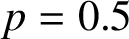 $p=0.5$) coin to retain equidistribution.


Inverse problems and rigidity questions in billiard dynamics
- Part of
-
- Journal:
- Ergodic Theory and Dynamical Systems / Volume 42 / Issue 3 / March 2022
- Published online by Cambridge University Press:
- 31 May 2021, pp. 1023-1056
- Print publication:
- March 2022
-
- Article
-
- You have access
- Export citation
On the first eigenvalue of the Laplace operator for compact spacelike submanifolds in Lorentz–Minkowski spacetime 𝕃m
- Part of
-
- Journal:
- Proceedings of the Royal Society of Edinburgh. Section A: Mathematics / Volume 152 / Issue 2 / April 2022
- Published online by Cambridge University Press:
- 11 February 2021, pp. 311-330
- Print publication:
- April 2022
-
- Article
-
- You have access
- Export citation
ON NONUNIQUENESS FOR THE ANISOTROPIC CALDERÓN PROBLEM WITH PARTIAL DATA
- Part of
-
- Journal:
- Forum of Mathematics, Sigma / Volume 8 / 2020
- Published online by Cambridge University Press:
- 28 January 2020, e7
-
- Article
-
- You have access
- Open access
- Export citation
-
We show that there is nonuniqueness for the Calderón problem with partial data for Riemannian metrics with Hölder continuous coefficients in dimension greater than or equal to three. We provide simple counterexamples in the case of cylindrical Riemannian manifolds with boundary having two ends. The coefficients of these metrics are smooth in the interior of the manifold and are only Hölder continuous of order
 $\unicode[STIX]{x1D70C}<1$ at the end where the measurements are made. More precisely, we construct a toroidal ring
 $(M,g)$ and we show that there exist in the conformal class of
 $g$ an infinite number of Riemannian metrics
 $\tilde{g}=c^{4}g$ such that their corresponding partial Dirichlet-to-Neumann maps at one end coincide. The corresponding smooth conformal factors are harmonic with respect to the metric
 $g$ and do not satisfy the unique continuation principle.


The Steklov Problem on Differential Forms
- Part of
-
- Journal:
- Canadian Journal of Mathematics / Volume 71 / Issue 2 / April 2019
- Published online by Cambridge University Press:
- 07 January 2019, pp. 417-435
- Print publication:
- April 2019
-
- Article
-
- You have access
- Export citation
-
In this paper we study spectral properties of the Dirichlet-to-Neumann map on differential forms obtained by a slight modification of the definition due to Belishev and Sharafutdinov. The resulting operator
 $\unicode[STIX]{x039B}$ is shown to be self-adjoint on the subspace of coclosed forms and to have purely discrete spectrum there. We investigate properties of eigenvalues of
 $\unicode[STIX]{x039B}$ and prove a Hersch–Payne–Schiffer type inequality relating products of those eigenvalues to eigenvalues of the Hodge Laplacian on the boundary. Moreover, non-trivial eigenvalues of
 $\unicode[STIX]{x039B}$ are always at least as large as eigenvalues of the Dirichlet-to-Neumann map defined by Raulot and Savo. Finally, we remark that a particular case of
 $p$-forms on the boundary of a
 $2p+2$-dimensional manifold shares many important properties with the classical Steklov eigenvalue problem on surfaces.


SPECTRAL ANALYSIS OF MORSE–SMALE FLOWS I: CONSTRUCTION OF THE ANISOTROPIC SPACES
- Part of
-
- Journal:
- Journal of the Institute of Mathematics of Jussieu / Volume 19 / Issue 5 / September 2020
- Published online by Cambridge University Press:
- 13 November 2018, pp. 1409-1465
- Print publication:
- September 2020
-
- Article
-
- You have access
- Export citation
DYNAMIC ISOPERIMETRY ON GRAPHS AND WEIGHTED RIEMANNIAN MANIFOLDS
- Part of
-
- Journal:
- Bulletin of the Australian Mathematical Society / Volume 98 / Issue 3 / December 2018
- Published online by Cambridge University Press:
- 15 August 2018, pp. 514-515
- Print publication:
- December 2018
-
- Article
-
- You have access
- Export citation
EPSTEIN ZETA-FUNCTIONS, SUBCONVEXITY, AND THE PURITY CONJECTURE
- Part of
-
- Journal:
- Journal of the Institute of Mathematics of Jussieu / Volume 19 / Issue 2 / March 2020
- Published online by Cambridge University Press:
- 02 April 2018, pp. 581-596
- Print publication:
- March 2020
-
- Article
-
- You have access
- Export citation
-
Subconvexity bounds on the critical line are proved for general Epstein zeta-functions of
 $k$-ary quadratic forms. This is related to sup-norm bounds for unitary Eisenstein series on
 $\text{GL}(k)$ associated with the maximal parabolic of type
 $(k-1,1)$, and the exact sup-norm exponent is determined to be
 $(k-2)/8$ for
 $k\geqslant 4$. In particular, if
 $k$ is odd, this exponent is not in
 $\frac{1}{4}\mathbb{Z}$, which is relevant in the context of Sarnak’s purity conjecture and shows that it can in general not directly be generalized to Eisenstein series.


REDUCTION OF DIMENSION AS A CONSEQUENCE OF NORM-RESOLVENT CONVERGENCE AND APPLICATIONS
- Part of
-
- Journal:
- Mathematika / Volume 64 / Issue 2 / 2018
- Published online by Cambridge University Press:
- 03 April 2018, pp. 406-429
- Print publication:
- 2018
-
- Article
-
- You have access
- HTML
- Export citation
