To save content items to your account,
please confirm that you agree to abide by our usage policies.
If this is the first time you use this feature, you will be asked to authorise Cambridge Core to connect with your account.
Find out more about saving content to .
To save content items to your Kindle, first ensure no-reply@cambridge.org
is added to your Approved Personal Document E-mail List under your Personal Document Settings
on the Manage Your Content and Devices page of your Amazon account. Then enter the ‘name’ part
of your Kindle email address below.
Find out more about saving to your Kindle.
Note you can select to save to either the @free.kindle.com or @kindle.com variations.
‘@free.kindle.com’ emails are free but can only be saved to your device when it is connected to wi-fi.
‘@kindle.com’ emails can be delivered even when you are not connected to wi-fi, but note that service fees apply.
This chapter traces how archaeology in the early and mid twentieth century began to uncover the patterns of early medieval emporia, and how scholars struggled to come to terms with them in the face of contemporary theoretical constructs. Understanding of these sites was often impeded by the imposition models of thought that had been created to make sense of the industrialization process of the nineteenth century and the societies that had subsequently emerged in Europe and North America. I examine how modern concepts of states, urbanism, and markets have shaped research, and the problems this has created. I argue that the approaches that have been adopted thus far remain too entrenched in models of thought that were created to make sense of modern societies.
Nomads were a frequent fixture in the ancient landscapes of Northeast Africa and the Nile basin. Maligned by ancient riverine cultures and ignored by many historians, the nomads of ancient Egypt and Nubia comprise diverse groups of people for whom the desert was their home and herding was a way of life. This Element traces the lives of different ancient nomadic groups across Egypt and Sudan, from the Medjay to the Libyans, from Blemmyes to Saracens. Sketching out approaches from texts and archaeology, this synthesis explores issues related to nomads' mobility, social organisation and their complex relationship with urban states. This Element demonstrates that a holistic picture of ancient Northeast Africa and the states of Egypt and Nubia requires a proper appraisal of nomads and their society.
It was long believed that the lack of available food in tropical forests was a limiting factor for the development of human cultures in the Amazon. Recently, a very different picture has emerged in which, on the eve of European invasion, the Amazon basin was home to thriving indigenous societies with highly sophisticated foodways that ultimately co-created the region's much-coveted biodiversity. In this Element, the authors bring together recent data and discussion points on the archaeology of food, alongside testimonies from Forest Peoples, that help us think about culinary traditions, biodiversity, and food sovereignty since the human colonization of the Amazon 12,000 years ago until the present-day climate emergency.
Chapter 2 asks how archaeology can illuminate epic traditions about heroes and places. Using case studies such as Mycenae, Tiryns, Troy, Pylos, Iklaina, Sparta, Phthia, and Ithaca, it explores what material evidence can and cannot confirm. The chapter emphasizes monuments and landscapes as anchors of cultural memory, shaping how communities remembered a heroic past.
Chapter 10 draws the book’s themes together by returning to the problem of how the past persists. It reflects on the endurance of trauma, the struggle to reintegrate after catastrophe, and the ways communities rebuild meaning from ruins. Bringing archaeology and epic memory into a single perspective, it argues that Homer remains powerful because the poems preserve recognizably human experiences across time.
Although the benefits of open research are widely recognized by archaeologists, the field lags behind existing guidelines in its adoption of open data, methods, and outputs. We investigate this disciplinary paradox through semi-structured interviews with 28 archaeologists in academic roles. Our interviews examined the impact of definitions and attitudes, perceived costs and risks of open data, data diversity, and research evaluations and resources. Our findings show that even though archaeologists acknowledge the benefits of openness for scholarship, they are also aware of the time, money, and labor costs incurred by making data and outputs open and are concerned about the risks of data scooping and research misinterpretation. The diversity of archaeological data—particularly the absence of widely adopted standardization systems—was likewise perceived as an impediment to openness. Finally, archaeologists highlighted research evaluation systems, job security, and resource variability as affecting their ability to engage in open research practices.
The Introduction sets out the central question that this book aims to tackle: when, why, and how did we evolve the peculiar and paradoxical inclination for both war and peace that characterises our species? The book argues that the inclination for both intergroup coalitionary killing and peaceful cooperation have deep roots and that they co-evolved through a gradual, incremental trajectory over millions of years. This co-evolution unfolded in a mosaic-like pattern, with distinct but interacting components emerging at different moments and becoming integrated over evolutionary time.
This chapter outlines the cross-species comparative method used to investigate the evolutionary origins of war and peace. It explains how comparing humans with other species – particularly chimpanzees and bonobos – can help identify whether intergroup lethal conflict and peaceful cooperation are ancestral traits inherited from a last common ancestor or evolutionary innovations in the hominin lineage. It also introduces archaeological and ethnographic methods to infer intergroup behaviours in prehistory. By combining approaches from evolutionary biology, archaeology, and ethnography, this chapter establishes an interdisciplinary toolkit for assessing when war and peace first emerged.
When, why, and how did we, humans, develop our distinctive and paradoxical inclinations for both war and peace? This groundbreaking book investigates that central question by drawing on cutting-edge research and an unprecedented range of evidence from thirteen disciplines: biology, primatology, comparative ethology, behavioural ecology, anthropology, archaeology, criminology, social psychology, linguistics, demography, genetics, neuroscience, and climatology. The book shows how the capacities for both war and peace co-evolved gradually over millions of years through a mosaic-like pattern, with distinct but interacting components emerging at different moments and becoming integrated over evolutionary time. This deep-rooted trajectory has been shaped by feedback loops among biological, cultural, and environmental forces. With its expansive temporal horizon, cross-species comparisons, and empirical richness, this book offers a sweeping new account – and an indispensable resource – for anyone interested in the origins of the Janus-faced inclination for both war and peace in the human species.
This Element explores how waste and food leftovers were transformed into evidence of the natural and human past, valuable collector's items, and museum specimens. In the nineteenth century, rubbish pits became repositories of new sources for studying the non-written past. This Element connect the history of nineteenth-century waste with prehistoric archaeology, the reutilization of refuse and the excavation of ancient rubbish dumps. Waste and trash are not trans-historic categories. Here, "waste" refers to a broad range of results of human activity: from deliberately constructed rubbish tips for unwanted items, to less organized discards in lake dwellings and peat bogs, and large-scale management of urban waste that reshaped landscapes. Recycling did not begin in the nineteenth century, but new considerations about reuse and the growing scale of waste disposal provided paleontologists and archaeologists with fresh lines of enquiry and a framework for addressing the problem of modern extinctions.
The British solicitor Edwin Freshfield was a wealthy collector with a passion for Byzantine antiquities. Among the Byzantine capitals that he acquired from the 1870s onwards are three originally from the church of St John in Ephesos. By examining the means by which these objects were acquired, this article sheds light on Freshfield’s interest in Asia Minor. Unpublished archival material suggests his pioneering role in the archaeological rediscovery of the church of St John, which scholarship on Late Antiquity and Byzantium has so far entirely forgotten. In the context of the British interest in the eastern Mediterranean, Freshfield’s activity illustrates how economic and collecting impulses were not exclusive motives. His collection mirrors his religious identity and his desire to connect the Anglican Church to the origins of the Christian faith, through the ‘preservation’ of the Byzantine past.
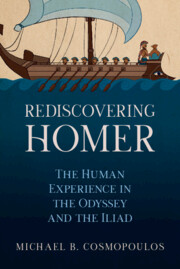
A timeless tale of a heroic character's journey through life, Homer's Odyssey has captured the imagination of readers from antiquity to the present day. Michael Cosmopoulos approaches this epic, together with the Iliad, not as remote works of literature, but as a living record of human experience shaped by war, loss, memory, and survival. He offers a poignant exploration of the aspects and consequences of war as captured in the Odyssey, including trauma, leadership and politics, human relations, religion and fate, and the struggle to return home and rebuild after upheaval. Cosmopoulos also situates both the Iliad and the Odyssey within the social conditions and the material realities of Greek society during the Aegean Bronze Age. Based on decades of archaeological field work and study of classical antiquity, and written in an accessible style, his book powerfully demonstrates how the poetry of ancient Greece preserves collective memory across the generations – and why these poems still speak to modern readers.
For millennia, Indigenous fisher-hunter-gatherer populations across the globe have navigated the complexities and sensitivities of estuarine ecosystems, leaving robust archaeological and ecological records of long-term, adaptive histories anchored by complex political, economic, and social forms. Regarding the broad, interdisciplinary literature of hunter-gatherer studies, archaeologists in particular have begun to address the undertheorized category of overtly sedentary hunter-gatherer communities and the ways that these societies were able to grow and persist sustainably. This research builds on recent studies investigating the long-term impacts of humans in estuarine environments, contributing a critical, small-scale perspective that expands and complements more recent regional approaches. In doing so, this study presents the largest analysis via the archaeological record of oyster resource management practices at a single Native American village yet to be conducted to evaluate community-scale sustainability among sedentary fisher-hunter-gatherers. More specifically, it investigates the growth of one of the largest Ancestral Muskogean towns to have existed along the Atlantic coast—on Ossabaw Island, Georgia—and the ways that people managed shellfisheries in the face of growing demographic pressures on both local ecologies and social, political, and economic institutions. Leveraging absolute chronologies and a shellfish morphometric dataset from two dozen domestic middens, sustainable resource management practices are evaluated across a single community’s history.
Photographs of a previously unpublished Maya vase, smuggled out of Belize in 1979, reside in the Image Collections and Fieldwork Archives at Dumbarton Oaks in Washington, DC. This vase, alongside dozens of others that I cataloged in the Dumbarton Oaks archives, is an example of the so-called “Holmul Dancer theme” in Maya ceramics. Re-examining this tradition in light of the new information from the vase, and from other recent discoveries, reveals how ceramic artists of the early ninth century used the dancing maize god as an allegory for the political landscape they witnessed rapidly changing around them. The vase also provides a case study in the potentially salubrious outcomes of archival and provenance research on looted materials. Should the vessel ever re-emerge, this research provides supporting evidence necessary to repatriate it to Belize.
This work presents a macroregional review of all known geochemical groups and natural obsidian deposits in Argentinian and Chilean Patagonia. After reviewing archaeological and geological antecedents, we compiled information about the geochemical groups, their locations, and the most outstanding characteristics of the obsidian deposits in this area. We found 30 geochemical groups and more than 50 obsidian deposits in Patagonian territory; most were already known from archaeological studies, but eight had been identified only in geological reports and had not been archaeologically discussed. Nine deposits are still geochemically unknown. We observed significant variations in the locations of the deposits and the distribution of the geochemical types and recommend that geoarchaeological-based programs be developed to enhance the scope of our findings.
This chapter introduces new ways to make arguments visible, audible, or tangible in the digital humanities, from sound studies to multimodal argumentation to mapping, archaeological reconstructions, and generative art.
Since 2015, Danish school children have been able to explore science and research in their free time. Behind this initiative stands the Copenhagen-based NGO Videnskabsklubben (English: Science Club), which facilitates science programs running for seven weeks on an annual basis. What began as a series of clubs focused on the natural sciences has, as of 2024, expanded to include the humanities, with the launch of a nationwide archaeology program for pupils in the fourth and fifth grades (ages 10–12). The archaeology program was developed by archaeologists at the Centre for Urban Network Evolutions at Aarhus University. This article introduces the archaeology program as a best practice example of educational outreach. It also introduces the concept of Videnskabsklubben and examines the specific challenges and opportunities of integrating archaeology into a classroom setting. By this it hopefully inspires archaeologists and educators alike to initiate research-based activities within the humanities for school children.
Trading emporia emerged in Northern Europe in the Early Middle Ages and were the first coin-based markets and urban settlements in this region. In this study, Søren Michael Sindbæk proposes a new account of the origins of these trading centres by tracing their role in hosting strangers. Sindbæk proposes that 'weak' social ties are a widely overlooked middle ground in pre-modern societies that bridge the gap between 'strong' family ties and formal institutions. By adapting cultural norms, networks, and institutions, it was possible to combine a high level of trust within an open form of society. Emporia developed when the ancient conventions of hosting and guest-friendship became insufficient to accommodate the growing connections between peoples brought together through seafaring. Sindbæk demonstrates that the history of emporia is closely linked to the expansion of maritime trade, colonization, piracy, and warfare – the basis for what we know today as the Viking Age.
This chapter illustrates and interprets the transformation of Segesta. More than any other Indigenous settlement in Sicily, this site was rapidly transformed in the span of about a century from a small community into a true polis, equal to its colonial Greek counterparts. The focus is on two of the three sacred areas of Segesta dating to Archaic and Classical periods, namely the sanctuary extra moenia of Contrada Mango and the sacred area of the North Acropolis, where a dialectic between Indigenous traditions and colonial innovation played out.