To save content items to your account,
please confirm that you agree to abide by our usage policies.
If this is the first time you use this feature, you will be asked to authorise Cambridge Core to connect with your account.
Find out more about saving content to .
To save content items to your Kindle, first ensure no-reply@cambridge.org
is added to your Approved Personal Document E-mail List under your Personal Document Settings
on the Manage Your Content and Devices page of your Amazon account. Then enter the ‘name’ part
of your Kindle email address below.
Find out more about saving to your Kindle.
Note you can select to save to either the @free.kindle.com or @kindle.com variations.
‘@free.kindle.com’ emails are free but can only be saved to your device when it is connected to wi-fi.
‘@kindle.com’ emails can be delivered even when you are not connected to wi-fi, but note that service fees apply.
David Frayman, London School of Economics and Political Science,Christian Krekel, London School of Economics and Political Science,Richard Layard, London School of Economics and Political Science,Sara MacLennan, London School of Economics and Political Science,Isaac Parkes, London School of Economics and Political Science
This chapter is an overview of the whole book and its findings. First, we note the shortcomings of traditional cost benefit analysis (CBA) – that it has no way to value things that just happen to us, like losing a job, being sick or being robbed. We then show how non-monetary outcomes can be valued using the new science of wellbeing.
Wellbeing is measured by life satisfaction (0–10), which is shown to be a reliable and valid measure (with good ability to predict mortality). So, to measure the benefits of a policy, we measure its non-pecuniary effects in terms of life satisfaction. We then convert the change in life satisfaction into the equivalent amount of money (that would produce that change in life satisfaction). For each policy, we then compute the ratio of benefits to net cost. This is the method now used by the UK Treasury.
David Frayman, London School of Economics and Political Science,Christian Krekel, London School of Economics and Political Science,Richard Layard, London School of Economics and Political Science,Sara MacLennan, London School of Economics and Political Science,Isaac Parkes, London School of Economics and Political Science
This chapter defends the approach outlined in the introduction, arguing that it is the only rational basis for decision-making.
We aim to maximise the wellbeing of the people, given the size of the budget. The rational approach is therefore to calculate the BCR of all possible policies and select those with the highest BCR. Benefits are to be measured by life satisfaction. These are then monetised by dividing them by the marginal utility of income (of the person with average income). In calculating total Wellbeing-Years (WELLBYs), we discount future changes at 1.5 per cent per annum, while for costs, we discount at the discount rate for money of 3.5 per cent per annum.
We encourage policymakers to take into account the initial wellbeing of those whose wellbeing is affected. This is done by showing the average wellbeing of the gainers from the policy (and their number) as well as the losers. New policies should also be sought in particular to help those who are suffering. In the UK, the causes of misery (in terms of share of variance explained) are in order: mental illness, physical illness, loneliness, bad work, unemployment and poverty.
Children with CHD may experience psychosocial difficulties, while their parents may face caregiving demands. Within the family system, children’s life satisfaction and parental burnout may be interconnected, as children’s psychosocial well-being and parents’ experiences of the parenting role may be associated with the functioning and well-being of the family as a whole. However, the relationship between children’s life satisfaction and parental burnout remains unclear. This study aimed to assess life satisfaction in children with CHD and examine its relationship with parental burnout.
Methods:
This descriptive correlational cross-sectional study included 234 children with CHD aged 8–13 years and one parent attending a paediatric cardiology outpatient clinic in İstanbul, Türkiye, during November 2023–February 2024. Children’s life satisfaction and parental burnout were assessed using the Satisfaction with Life Scale adapted for Children and Parental Burnout Assessment. Pearson correlation analysis examined their relationship, and differences according to sociodemographic and clinical characteristics were assessed using independent samples t-tests and one-way analysis of variance.
Results:
Mean Satisfaction with Life Scale adapted for Children and mean Parental Burnout Assessment scores were 17.32 ± 1.75 and 17.43 ± 6.19, respectively. Neither life satisfaction nor parental burnout differed according to examined child, parent, or family characteristics (all p > 0.05). No association was found between life satisfaction and parental burnout (r = −0.087, p = 0.185), and life satisfaction was not significantly correlated with any Parental Burnout Assessment subscale.
Conclusions:
Children’s life satisfaction was not significantly associated with parental burnout in this sample of children with CHD. Further research should examine individual, family, and disease-related factors associated with life satisfaction and parental well-being.
Evidence on the relationship between internet addiction (IA) and life satisfaction (LS) among university students remains limited, and underlying mechanisms are poorly understood. This study examined whether depression and anxiety mediate the relationship between IA and LS among 1,320 Indian university students (958 males, 362 females). Participants completed the Internet Addiction Test-Short Form (IAT-12), Patient Health Questionnaire-9 (PHQ-9), Generalized Anxiety Disorder-7 (GAD-7), and Satisfaction with Life Scale (SWLS). Data were analyzed using SPSS v27 and PROCESS Macro.Clinically significant depression and anxiety were reported by 19.1% and 19.0% of participants, respectively, while 22.6% reported low life satisfaction. IA was positively associated with depression and anxiety and negatively associated with LS. Both depression and anxiety significantly mediated the IA-LS relationship, with depression exerting a stronger effect. Parallel mediation analyses confirmed independent effects of both mediators, while serial mediation analyses identified sequential pathways linking IA, depression, anxiety, and LS.Psychological distress accounted for a substantial proportion of the association between problematic internet use and lower life satisfaction. Findings highlight the importance of integrated university mental health strategies that promote digital well-being, facilitate early identification of psychological distress, and provide accessible psychosocial support.
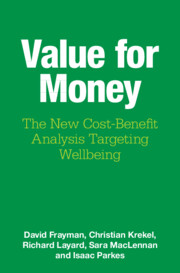
Governments spend billions on our behalf. But how should this money be spent? The purpose should be to increase the wellbeing of the people. So the best policies are those which produce the most wellbeing per pound spent. The new science of wellbeing now enables us to make these calculations. The authors of this book, led by Richard Layard, do just that across a whole range of government policies. And the results call for radical changes in priorities. This path-breaking book opens up a new approach to policy-making. It combines traditional economics with the new psychology of happiness. By valuing non-monetary outcomes it does what politicians have always wanted. Its methods have already been adopted by the UK Treasury and are relevant worldwide. If followed, they would produce a happier world. When people ask where do we go 'beyond GDP', this is the answer.
The social investment turn across Europe has strengthened the portent of in-kind service provision alongside traditional compensatory transfers. Service expansion has particularly alleviated family and old-age care responsibilities for both caregivers of immediate and extended family members. This article examines the policy complementarities between family and old-age care services and income protection buffers by testing whether easing life-course transitions, first through income security and then by capacitating welfare services, leads to higher life satisfaction. Linear regression results based on the European Social Survey (2002–2020), combined with social policy data from the OECD and Eurostat, demonstrate positive subjective well-being returns to higher in-kind social spending on families and old age when income compensation sufficiently safeguards against poverty. Therefore, income protection is vital for social investment services to be able to nurture effective capacitation at the individual level.
Physical activity and team sport participation in adolescence are associated with positive health outcomes, stronger social skills, and improved mental health. However, negative health consequences are frequently associated with contact/collision sports like football. The objective of this study was to examine any change in health-related quality of life (HRQoL) and pediatric well-being among adolescent males after participating in a single season of football.
Method:
A cross-sectional study design was utilized in a high school football setting. Participants included Black/African American adolescent male football players (n = 83) from five schools within rural Alabama. Pediatric HRQoL and well-being measures were administered at preseason and postseason, including Life Satisfaction, Emotional Support, Psychological Stress, Physical Stress, Depressive Symptoms, Sleep Disturbance, and Peer Relationships. Based on normative data, participants’ scores were classified as within normal limits (WNL) (T-score = 40–60) or clinically reduced (T-score < 40) or elevated (T-score > 60) depending on orientation of each questionnaire. Each outcome from pre-to-postseason evaluation was compared using a within-persons t-test.
Results:
Most participants (69.9–84.3%) had HRQoL/well-being scores WNL and scores remained unchanged at postseason evaluations. However, on average, physical (p = 0.035, d = 0.24) and psychological stress (p = 0.014, d = 0.28) showed small, but significant increases from pre-to-postseason.
Conclusions:
Modest increases in physical and psychological stress were found from preseason to postseason. Both football and non-football-related stressors could have contributed to this change. Other HRQoL/well-being scores generally showed no change. Though the health risks associated with contact/collision sports deserve attention, current findings suggest a season of football may not be associated with adverse changes in HRQoL/well-being.
In high-income countries, fertility is increasingly postponed into ages when fecundity declines, elevating the risk of unmet reproductive goals. In this context, how individuals perceive their own and their partner’s reproductive potential may carry important implications for well-being and relationship stability, long before clinical infertility is diagnosed. Drawing on 13 waves of longitudinal data from the German Family Panel (pairfam), this study uses individual fixed-effects models to examine how within-person changes in perceived fecundity – both one’s own and one’s partner’s – are related to life satisfaction, relationship satisfaction, and union dissolution. By capturing both individual and partner assessments, this approach emphasizes the couple as the key unit of reproductive experience. Declines in both own and partner’s perceived fecundity are associated with lower life and relationship satisfaction. However, perceptions of a partner’s fecundity exert a stronger influence on relationship outcomes than self-perceptions. In particular, decreases in partner-perceived fecundity increase the risk of separation, a pattern not observed for changes in one’s own fecundity. These associations do not vary significantly by gender but are moderated by parental status and age, with effects being weaker among parents and older individuals. By integrating both self- and partner assessments of fecundity, this study advances a dyadic, life course perspective on fertility. It shows that subjective reproductive potential functions as a relational stressor with meaningful consequences for emotional well-being and relationship trajectories.
This chapter gives voice to the quiet crises and invisible transitions we rarely talk about – but that shape our lives in profound ways. Drawing from hundreds of Life Design workshops, we uncover five silent truths that often emerge only in private: the tension between passion and stability in choosing a portfolio career; the identity shifts of retirement; the hidden toll of social media on self-worth and clarity; the quiet yearning for deeper life satisfaction; and the common challenge of feeling “too busy” to act. Rather than offering quick fixes, this chapter helps name what has long remained unnamed – because design begins with awareness. It explores the concept of a portfolio career as a flexible, resilient path for those with multiple interests. It unpacks the emotional complexity of retirement, reframes social media’s subtle influence, and offers tools for microprototyping and strengths-based action. Through reflection prompts and Life Design methods, readers are empowered to turn silent doubts into starting points for change – toward a more meaningful, authentic life.
Unemployment benefits can cushion negative consequences of job loss on subjective well-being by providing both income support and assistance in job search. However, their capacity to mitigate effect of unemployment varies by benefit type. We focus on differences between Germany’s unemployment insurance benefit and basic income support. As expected, findings of fixed effects models on transitions from employment to unemployment demonstrate that a loss in life satisfaction is imminent, but more pronounced among recipients of basic income support. Mediation analysis shows that the increase in material deprivation explains a greater proportion of the reduction in life satisfaction than the loss of household income, both for recipients of basic income support and unemployment insurance benefits. The most significant domains of material deprivation are restrictions on the financial security of the household, such as not being able to save or handle unexpected expenses, and fewer means for social activities.
This study examines how multiple dimensions of socio-emotional well-being relate to cognitive functioning in older adults, and whether the associations vary by cognitive status, depression, and socio-demographic factors.
Methods:
Data from the Harmonized Cognitive Assessment Protocol of the Survey of Health, Ageing and Retirement in Europe (n = 2,650; mean age = 76; 54.5% females) were used to test associations between life satisfaction, meaning in life, social connectedness, and loneliness with global, domain-specific cognitive performance, and informant-rated cognitive decline.
Results:
Linear mixed models, with individuals nested within five countries, found that higher life satisfaction, meaning in life, and social connectedness were associated with better cognitive outcomes, whereas greater loneliness was associated with worse performance and greater informant-rated decline. The largest effect sizes were observed for meaning in life (median β = .10) and loneliness (median β = −.09) across cognitive measures. The associations generally remained significant adjusting for well-known clinical (e.g., diabetes), behavioral (e.g., physical inactivity), and psychological (depressive symptomatology) risk factors for dementia. Moderation and sensitivity analyses suggested that associations with global cognition hinged on the inclusion of participants classified with cognitive impairment, while some domain-specific associations (e.g., loneliness and episodic memory) were observed only in individuals without cognitive impairment. Overall, evidence for moderation by cognitive status, depression and age was limited, and no moderation was observed for sex or education.
Conclusions:
The results underscore the importance of socio-emotional well-being in cognitive aging and highlight the need for longitudinal research to clarify mechanistic pathways and inform targeted interventions.
Life satisfaction, a core component of subjective well-being, has not been comprehensively explored among urban slum populations. This study aimed to psychometrically assess the Satisfaction with Life Scale (SWLS) and examine socio-demographic correlates of life satisfaction among adults in Gorakhpur, India.
Methods:
A cross-sectional study was conducted among 406 participants (52.5% male, 47.5% female) selected through multistage random sampling across eight urban slums in Gorakhpur. Eligible individuals were aged 18 years or above and residents of the selected slum areas. Data were collected using a pre-validated version of the SWLS and a structured socio-demographic questionnaire, administered via the EpiCollect5 through face-to-face interviews. Descriptive and comparative analyses were used to assess group differences across socio-demographic variables.
Results:
The SWLS showed good internal consistency (α = 0.842) and satisfactory inter-item correlations (r = 0.375–0.654, p < 0.01). Males reported significantly higher life satisfaction than females, particularly among married and cohabiting individuals (27.30 vs. 23.75, p = 0.001) and non-vegetarian consumers (27.28 vs. 24.25, p < 0.001). Participants from joint families showed higher satisfaction than those in nuclear households (26.79 vs. 20.29, p = 0.011). Women aged 56-65 had the lowest satisfaction scores (14.50 ± 0.71), with half reporting neutrality or dissatisfaction.
Conclusion:
The findings highlight the importance of gender, family structure and dietary habits as key socio-cultural correlates of life satisfaction in urban slum communities. The presence of moderate satisfaction levels despite material hardship highlights the need for context-sensitive well-being frameworks and community-informed interventions in similar low-resource settings.
China’s rapid economic development exerts significant political effects. Modernization theory posits, with an optimistic outlook, that sustained economic growth will foster increasing public demands for political liberalization and democratization. Empirical findings presented in this chapter reveal that a majority of Chinese citizens report heightened satisfaction with their civil liberties and political rights following improvements in their overall well-being. Specifically, life satisfaction in the economic sphere demonstrates a positive spillover effect on satisfaction with civic and political rights. Furthermore, life satisfaction across economic, social, and individual dimensions positively influences the political realm, resulting in inflated satisfaction regarding limited civil and political rights.
In The Political Economy of Human Happiness: How Voters’ Choices Determine the Quality of Life, Benjamin Radcliff considers a wide variety of data from North America and Europe and argues that, on balance, welfare state policies make people happier. In short, there is a positive correlation and a causal relationship between happiness and welfare state provisions. This is an important conclusion for anyone interested in public policy and debates about the size of government. In their reviews, Larry M. Bartels and William A. Galston take issue with Radcliff’s thesis. They challenge the relationships that Radcliff suggests exist between specific policies and happiness. Bartels challenges the way Radcliff uses his statistics to support his thesis about the relationship between happiness and specific policies as well as our ability to make generalisations from the data. Galson’s objections to Radcliff’s analysis and argument is more conceptual, and, among other things, he challenges the connection Radcliff seeks to establish between happiness and the satisfaction of human needs.
Previous scholarship has shown evidence of a positive relationship between volunteering and improved measures of mental and physical wellbeing. It has also been suggested that volunteering may help individuals navigate transitions between different life stages by encouraging them to become more involved in their communities, thereby building new social connections and improving networks of social support. Using Waves 2 and 3 of panel data from the Midlife in the United States Survey, we examined whether volunteering can buffer against the negative effects of low self-esteem on correlates of psychosocial wellbeing in adults from mid- to later-life. Results indicated that participation in volunteering mitigates the negative effects of adults’ low self-esteem on their sense of belonging and life satisfaction. In particular, we determined the adverse effect of negative self-esteem at time T1 on our wellbeing measures (belonging to the community and life satisfaction) at T2 above and beyond the effects of the same measures at T1 and the covariates. Furthermore, we found positive evidence for the moderating influence of volunteering on the relationship between negative self-esteem and both measures of wellbeing, although the effect was stronger for life satisfaction than for belonging. These conclusions suggest that volunteering acts as a buffer for ageing adults, with possible public health implications.
This article analyzes the role of three antecedents of life satisfaction (LS) among healthcare volunteers in Malaysia. The antecedents are: personality traits, motives to volunteer, and spiritual capital. This study has empirically tested the impact of individual dimensions of personality traits, motives, and spiritual capital along with their inter-relationships in explaining the LS. The volunteers of St. John Ambulance participated in this study. The model has been tested using structural equation modeling and it has been found that the three constructs have an explanatory power of 53 %. The main results are: (1) neuroticism, value motives, protective motives, personal well-being, and spirituality have a direct impact on LS and (2) enhancement motives, social motives, and religiosity have an indirect impact on LS. These results can provide insights to researchers and managers regarding profiling the right volunteers, providing the necessary infrastructure, and providing proper training to the volunteers.
Aging in the twenty-first century presents a multifaceted global challenge, demanding subtle understanding for effective solutions. Shifting from merely extending life expectancy, active aging seeks to enrich the quality of later life, aiming to boost the well-being and life satisfaction of older individuals. As demographic and familial structures evolve, the involvement of non-governmental organizations (NGOs) in aging affairs emerges as a pivotal force within civil society. These NGOs, operating across diverse countries and regions, undertake a spectrum of activities. Such activities bring considerable benefits to both physical and mental health of older individuals. Through a meticulous review of 31 studies from Web of Science (WOS) and Scopus databases, this study delves into the multifaceted roles of NGOs in promoting active aging. It uncovers three primary contributions: care services, lifelong learning, and volunteer engagement. Furthermore, this research critically examines the status and challenges faced by NGOs in advancing active aging principles, probing their impact on the life satisfaction of older adults. By elucidating these insights, this study offers collaborative pathways for future social policy enhancements in aging.
This paper investigates the effect of volunteering on quality of life (QoL) in 50+ populations across European countries and Israel. We analyzed data from the Survey of Health, Aging and Retirement in Europe (SHARE). Using the Kendall tau-b correlation coefficients, we show that the extent of effect volunteering has on quality of life is nonlinearly related to the prevalence of volunteering in a given country. The relationship follows an inverted-U-shaped curve. In countries where volunteering is the most popular (Denmark, Switzerland, and Belgium) and in countries with the lowest rates (Poland, Greece, the Czech Republic, and Spain), the correlation between volunteering and one’s quality of life is low. The correlation is high in countries with medium levels of volunteering (Austria, Italy, and Israel). Moreover, volunteering affects more internal than external domains of QoL. These new insights extend the discussion started by Haski-Leventhal (Voluntas Int J Volunt Nonprofit Organ 20:388–404, 2009). Our study is correlational, and we do not claim causality.
We examine the impact of volunteering and charitable donations on subjective wellbeing. We further consider if the model of the volunteering work (formal vs. informal) and the geographical location of the charity organisation (local vs. international) people donate to has any impact on subjective wellbeing. Using UK’s Community Life Survey data, we find that volunteering and engagement in charity are positively associated with subjective wellbeing, measured by individual life satisfaction. We show that while there is a positive effect of volunteering and charity on life satisfaction, the level of utility gained depends on the type of charity or volunteering organisation engaged with (i.e. local or international). Specifically, donating to local (neighbourhood) charities as opposed to international/national charities is associated with higher wellbeing. Similarly, engaging in informal volunteering, compared to formal volunteering, is associated with higher wellbeing. To explain our results, we use the construal-level theory of psychological distance, which suggests that people think more concretely of actions and objects that they find spatially and socially close.