To save content items to your account,
please confirm that you agree to abide by our usage policies.
If this is the first time you use this feature, you will be asked to authorise Cambridge Core to connect with your account.
Find out more about saving content to .
To save content items to your Kindle, first ensure no-reply@cambridge.org
is added to your Approved Personal Document E-mail List under your Personal Document Settings
on the Manage Your Content and Devices page of your Amazon account. Then enter the ‘name’ part
of your Kindle email address below.
Find out more about saving to your Kindle.
Note you can select to save to either the @free.kindle.com or @kindle.com variations.
‘@free.kindle.com’ emails are free but can only be saved to your device when it is connected to wi-fi.
‘@kindle.com’ emails can be delivered even when you are not connected to wi-fi, but note that service fees apply.
English is an important part of the linguistic repertoire of Pakistanis and is used in government, top level judiciary, higher education, business, and the internet. In this Element, we cover brief history, attitudes, a feature description, and uses of English on the internet by Pakistanis. The study of attitudes shows that Pakistanis mostly look outwards for standards and norms. The analysis of various features at phonological, orthographic, lexical, and grammatical levels shows that Pakistani English has distinct features that can be categorised in three ways: contact-induced features (e.g. reduplication), the result of conservativism in the variety (e.g. which vs that relatives), and influenced by American and British English (e.g. spellings). English is also frequently used on platforms like Facebook, Twitter, and Instagram. We conclude that English in Pakistan is well-established and stabilised with evolutionary characteristics of 'nativisation' on Schneider's Dynamic Model.
Sugar-sweetened beverage (SSB) consumption is increasing across South Asia, alongside a growing burden of diet-related non-communicable diseases. Although countries in the region have introduced measures including taxation, nutrition labelling and restrictions in institutional settings, policies remain fragmented and implementation is uneven. Drawing on lessons from tobacco control, we propose Surveil, Protect, Offer, Warn, Enforce, and Raise (S-POWER) as an implementation framework to strengthen SSB regulation in South Asia. S-POWER brings together six complementary policy domains: surveillance of consumption and policy impact; protection of children from unhealthy food environments; provision of healthier alternatives; front-of-pack nutrition labelling; restrictions on marketing and promotion and health-oriented taxation. Rather than proposing new policy instruments, the framework seeks to connect existing evidence-based measures within a coherent regulatory approach. S-POWER may provide a practical basis for strengthening policy implementation in South Asia and other settings facing similar nutrition transitions and commercial pressures.
This article revisits the debate on the relationship between capitalism and abolition from the perspective of South Asia. It argues that bringing the antislavery debate into conversation with the extensive literature on caste opens up new comparative possibilities. Commercial slavery in the early modern Indian Ocean world is now well established, but global histories of slavery have rarely inspired global histories of antislavery. The dominant interpretation of abolition in South Asia remains focused on the contingent requirements of colonial governance. Through an analysis of legal conflicts over the status of slavery in the eastern Indian province of Bengal in the 1820s and 1830s, I argue that this approach obscures the ethical-political significance of abolition in a context shaped by caste and agrarian slavery. The emancipatory potential of abolition, however, was undermined by a colonial state committed to revenue extraction and social order, as well as by the global capitalist context of counter-revolution. By situating the colonial archive within this wider historical conjuncture, the essay shows how both the possibilities and limits of abolition emerged from the contradictions of liberalism and global capitalism. It thereby puts the South Asian case in conversation with broader histories of revolution and counter-revolution.
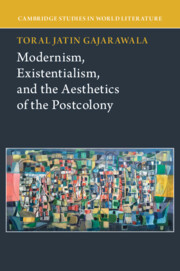
The Introduction establishes the stranger as a figure, and estrangement as a method, as key paradigms for understanding postcolonial modernism in South Asia. After the powerful groundswell of decolonization, the early post-Independence moment is characterized by a sense of disillusion, indifference, disaffection, and a growing chasm between self and other. It is during this moment of self-reckoning that a generation of intellectuals became interested in existential philosophy in all of its forms. Drawing from the multivalent figure of the ajnabi (outsider, the foreigner, the refugee, and the stranger), as well as the various indigenous etiologies of estrangement, the chapter argues for a new way of understanding the “postcolonial,” beyond nation, nationalism, and national culture. For playwrights, poets, and artists in this moment, estrangement becomes a powerful aesthetic and philosophical resource; to see something “in a strange light” offers the potential for a new aesthetic vision. Via the comments of writers, artists, and critics like Sadequain and Girish Karnad, who describe the search for a new aesthetic form, and theories of modernism in the subcontinent, this chapter offers a context for reading via postcolonial literature in light of its new existential challenge and its mystical visions.
How did writers reimagine self and nation in the postcolonial moment? After the brutalities of partition and the triumph of Independence, decolonization in South Asia unfolded in a dramatic sense of disillusion and alienation. In this transnational study, Toral Gajarawala explores the cultural afterlife of decolonization in India, Pakistan and Bangladesh and its profound moment of existential reckoning. In new genres and forms, artists registered a growing sense of estrangement from nation and nationalism, and crafted a new aesthetic landscape. This book reconsiders modernism in the subcontinent, charting the unlikely affiliations and aesthetic experiments it generated. Each chapter discusses a distinct artistic experiment- Hindi novels set in snow and ice, and a Pakistani painter's Paris moment; the existential novel of Bengal, and absurdist plays on famine and extinction- in light of key philosophical concepts of the moment: askesis, responsibility, commitment. The result is an illuminating microanalysis of the 1960s that reshapes our understanding of postcolonial aesthetics.
Unhealthy food consumption is rising in rural South Asia, yet food environments in the region remain understudied. To address this gap, we characterised rural food environments and assessed how food affordability, accessibility, availability and desirability are associated with dietary patterns and quality in Bangladesh, India and Nepal. We used household (n 9711) and market (n 1646) data from the Transforming Agrifood Systems in South Asia (TAFSSA) survey conducted in five rural districts in 2023: Nalanda (India), Surkhet and Banke (Nepal) and Rangpur and Rajshahi (Bangladesh). Participants included adult women, men and adolescents. Primary outcomes included weekly consumption of twenty-five food items and Global Diet Quality Scores (GDQS): GDQS plus (0–32) and GDQS minus (0–17). Predictors included proximity to markets, food prices, vendor density, food availability and exposure to advertising or nutrition messaging. Multivariate regressions were used to assess associations and were adjusted for sociodemographic and household characteristics. Diets in these settings were characterised by low healthy food intake (GDQS plus scores ranged from 6·6 to 7·7) and high unhealthy food intake (GDQS minus scores from 9·3 to 11·7). Ultra-processed food vendors were present in > 80 % of villages. Snacking was the strongest predictor of both higher healthy (+1·11 GDQS plus) and unhealthy (−0·67 GDQS minus) food intake (P < 0·001), indicating that snacking increases overall dietary intake. Key predictors of suboptimal diets include low affordability of nutritious foods, alongside the widespread availability and desirability of inexpensive ultra-processed products. These findings highlight structural and behavioural drivers of rural dietary transitions and provide evidence to guide food system interventions aimed at improving nutrition in underserved populations.
Twin studies provide a powerful framework to identify genetic and environmental influences on health and development, particularly during infancy, childhood, and adolescence. Although twin research has expanded globally, evidence from South Asia remains limited and poorly characterized. This systematic review aimed to synthesize health research involving infant, child, and adolescent twins conducted in South Asia and to identify methodological patterns and research gaps relevant to future twin research in the region. A systematic review was conducted according to a registered protocol (PROSPERO: CRD42018105704) using the PICOS framework. Multiple international and regional databases were searched from inception to September 2025. Studies recruiting twins aged 0–19 years within the South Asian Association for Regional Cooperation (SAARC) countries were included. Study selection, data extraction, and quality appraisal were conducted independently, with study quality assessed using Joanna Briggs Institute critical appraisal tools. Results were synthesized narratively due to heterogeneity across study designs and outcomes. Eighteen studies were included from 1245 identified records. Most studies focused on twin pregnancy and neonatal outcomes (61%), followed by dentistry, ocular health, and gut microbiota. Twin pregnancies were consistently associated with increased risks of low birth weight, preterm birth, and perinatal morbidity and mortality. A limited number of studies applied classical twin designs to investigate genetic and environmental contributions. Twin research involving infants, children, and adolescents in South Asia remains limited in scope and methodological depth. Strengthening twin registries, methodological standardization, and collaborations is essential to advance genetically informative research and enhance the global representativeness of twin studies.
Thes chapter argues that both Britons and South Asians made use of instruments such as treaties and a broader world of diplomatic paperwork to construct a framework for interstate legality in the eighteenth century. South Asian efforts to make and remake arrangements with British traders and government agencies constituted a source of inter-imperial legal forms. Inter-imperial treaties were not blunt instruments of European imperialism, but legal documents co-produced by South Asian bureaucrats. By emphasising the activism and political thought of South Asian actors in their pursuit of a new inter-imperial order, this chapter rethinks the focus on European actors as the architects of international law. Of course, multilingual and multipolar claim making did not impose a stable legal order in South Asia. Treaties were regularly abrogated and renegotiated. Nevertheless, such efforts to negotiate relationships among states and enshrine them punctuated and shaped the upheavals of the eighteenth century as well as the explosion of new projects of state building. Inter-imperial lawmaking emerged as a vital site for politics in the eighteenth century.
This chapter situates sovereignty at the heart of the relationship between international law and empire. I examine the ways in which the concept was defined to exclude non-European peoples while remaining alert to the complexities posed to such exclusionary definitions by the variety of polities that existed during the heyday of European imperialism. Colonial South Asia, with its melange of political units, provides an excellent illustration of this complicated relationship. I explore the diverse articulations of sovereignty in this region along two axes: temporal and categorical. At least three sets of constituents – British officials, rulers and bureaucrats of semi-sovereign entities such as princely states, and anticolonial nationalists in British India – used the language of sovereignty to debate and resolve political problems. I trace their definitions over time. By examining these actors and their legal arguments, we can understand how sovereignty in colonial South Asia transitioned from notions of layered sovereignty to more territorial forms, although pluralist ideas continue to have long afterlives in postcolonial South Asia.
Mohenjo-daro was a major city of the Indus Civilisation (c. 2600–1900 BC), with excavations revealing evidence for public infrastructure, civic amenities and hundreds of residences. Archaeologists traditionally assume that urbanism is accompanied by economic stratification, but, at Mohenjo-daro, qualitative evidence of inequality is absent. Drawing on early excavation data, the authors here calculate Gini coefficients of residence area, providing a quantitative proxy of economic inequality. Their results indicate that Gini coefficients, and thus inequality, declined over time, coinciding with increased prosperity and the development of the city’s street plan, indicating that governance likely helped limit economic inequality.
Can a leader’s use of social media in an external crisis increase domestic nationalist mobilization? In this research note I leverage an original writing simulation on serving national security elites in Pakistan to demonstrate that the vocabulary that leaders employ is endogenous to their messaging platform, with crisis messages composed for Twitter/X communicating greater levels of affective content than similar content composed for official communiqués. I then randomize elite-curated content across an online sample of Pakistani social media users to show that bundling escalatory intent with affective platform-specific vocabulary reduced respondent sensitivity to crisis details, increased public jingoism, and slightly increased domestic willingness to engage in street protest. I discuss the strategic implications of these findings for leaders who, conscious of the mobilizing risks of social media, may wish to avoid tying their hands in a crisis.
Indian banyan trees, with their complex network of secondary trunks, support entire ecosystems and are often favored for large rural gatherings due to their vast canopy. However, dating these heritage trees in South Asia has traditionally relied on written records and local lore, resulting in imprecise age estimates that limit our understanding of their historical significance. This study establishes a precise minimum age for a monumental banyan tree located on the Indian Tobacco Company campus, founded in 1901 CE in Munger, Bihar, India. According to local lore, the tree has long been a gathering place for both rulers and commoners. Radiocarbon dating of the pith from an exposed secondary trunk and a primary branch of the Munger Banyan were 276 ± 36 and 652 ± 37 years BP, respectively, indicating when each sample of wood stopped exchanging carbon with the atmosphere. These findings suggest a minimum radiocarbon age of ca. 700 years, making it the oldest accurately dated Ficus benghalensis in the world. The study refines radiocarbon dating approaches for tropical hardwoods by emphasizing precise pith targeting, a method rarely applied due to indistinct growth-ring boundaries. By integrating advanced calibration techniques, the study enhances chronological accuracy and improves understanding of the longevity and significance of heritage trees and tropical forest ecosystems.
South Asia has a unique geographical profile, with the mighty Himalayas in the north and a long coastline in the south along its eastern and western borders. In the past few decades, with human population growth, and increasing urbanisation and industrialisation, the climate has been a casualty, with an adverse impact on physical health and well-being and on mental health. There have been certain initiatives on the part of local governments in the form of action plans on climate change, but the effects of these initiatives are yet to be seen. Research from South Asia on the impact of climate change on mental health is still at preliminary level.
People with severe mental illness (SMI) die 10–20 years earlier than the general population, largely due to non-communicable diseases (NCDs) such as hypertension and diabetes and risk factors such as hypercholesterolaemia. This cross-sectional study gathered data from people with SMI from three national mental health institutions in South Asia. Data was collected based on the WHO Stepwise approach to NCD risk factor surveillance and the prevalence of screening, diagnosis and treatment for diabetes, hypertension, and hypercholesterolaemia was assessed. Logistic regression models assessed the associations of sociodemographic characteristics with NCD screening. Three thousand nine hundred and eighty nine participants were recruited. Screening prevalence varied by country and disease, with hypertension being the most commonly screened NCD (Bangladesh = 52.5% [50.0–55.1], India = 43.1% [40.3–45.9], Pakistan = 60.9% [58.2–63.5]), and cholesterol was the least common (Bangladesh = 4.1% [3.2–5.2], India = 14.8% [12.9–17.0], Pakistan = 9.6% [8.1–11.3]). Characteristics such as BMI, age and education level were positively associated with screening, and females were more likely to be screened than males. There are low levels of screening for NCDs among individuals with SMI accessing tertiary institutions in South Asia, with significant sociodemographic disparities. Standardised screening protocols tailored to South Asian populations could mitigate the increased risk of NCDs in this population.
The chapter analyzes folk music and performance practices in a contemporary Indian and South Asian context. It covers the meaning and deployment of the term ‘folk’, its wider implications relating to caste, class, and taste, as well as its status in existing practices and scholarship. Whereas colonialists saw folk song as part of the enterprise to understand indigenous minds to better control and administer them, nationalists viewed it as a great resource to reconstruct the nation. After India’s independence, the state along with its middle class tried to institutionalize and appropriate folk song to cater to their tastes, however, it remained largely outside of their control and continues to maintain local and communitarian connections. Adopting a decolonial perspective, this chapter also addresses local hierarchies based on caste and cultural dispossession. Finally, it views folk song and music both as part of everyday life as well as a critique of everyday life that opens up an emancipatory discourse for the future.
Colonial Caregivers offers a compelling cultural and social history of ayahs (nannies/maids), by exploring domestic intimacy and exploitation in colonial South Asia. Working for British imperial families from the mid-1700s to the mid-1900s, South Asian ayahs, as Chakraborty shows, not only provided domestic labor, but also provided important moral labor for the British Empire. The desexualized racialized ayah archetype upheld British imperial whiteness and sexual purity, and later Indian elite 'upper' caste domestic modernity. Chakraborty argues that the pervasive cultural sentimentalization of the ayah morally legitimized British colonialism, while obscuring the vulnerabilities of caregivers in real-life. Using an archive of petitions and letters from ayahs, fairytales they told to British children, court cases, and vernacular sources, Chakraborty foregrounds the precarious lives, voices, and perspectives of these women. By placing care labor at the center of colonial history, the book decolonizes the history of South Asia and the British Empire.
This study aimed to analyse the patterns, trends, genomic characteristics, and key determinants of dengue virus (DENV) infections and associated deaths in South Asia from 2000 to 2023. We collected data from the World Health Organization dengue surveillance dashboard and the health ministries of respective countries, and publicly available data from eight South Asian (SA) countries. Descriptive measures, data visualization techniques, and time series analysis were used to identify key patterns and trends of DENV. A time-scaled phylogenetic analysis was carried out to explore the genomic epidemiology and evolution of DENV. A generalized linear model (GLM) was fitted to identify climatic, demographic, and socioeconomic factors. Between 2000 and 2023, SA countries showed a sharp increase in dengue cases and deaths, contributing to 6.5% of cases and 11.07% of deaths caused by DENV globally. The total cases in the region are projected to grow by approximately 40%, and total deaths by 61% by 2033. The predominant genotypes were DENV2/II, DENV3/I, and DENV3/III. GLM underscores climatic, demographic, and socioeconomic factors associated with DENV infection and deaths. The findings urge intensified public health measures emphasising the need for comprehensive interventions, including vector control, climate adaptation, and strengthened healthcare systems to de-escalate the situation.
The media has a major influence on public opinions and legitimacy for NGOs, which can have a serious impact on the effectiveness of NGOs’ programs. However, media biases often affect the framing of media objects. For instance, western countries are often portrayed negatively by the media of the Muslims countries. This anti-western bias is less prevalent in English-language media when compared to the local languages newspapers as the English-language media generally target the elites who often hold less anti-western opinions than the general population. As NGOs are usually considered a western construct in the Muslim world, I test whether the media’s sensitivity to its consumers’ sentiments extends to the coverage of NGOs by comparing English and local language (Urdu) newspapers in Pakistan. I confirm that Urdu newspapers portray NGOs more negatively than English-language newspapers and are more likely to question NGOs’ effectiveness and accountability.
The success (or failure) of ‘borrowed’ or ‘transplanted’ laws is largely attributed to the extent of compatibility between them and the contexts of their host countries. This paper draws upon legal philosophy, legal transplant, and new institutional economics literature to argue that while compatibility is both relevant and important, legitimacy is equally – if not more –critical for shaping the extent, quality and direction of enforcement of legal transplants in their adoptive contexts. This is especially true for the more technical economic transplants that are often considered to be context independent. To establish this argument, the paper explores the concept of legitimacy and its relevance for legal transplants; why it may be mistaken for compatibility; and why it is distinct from it. It also compares the Indian, Pakistani and Bangladeshi experience of transplanting modern competition laws to demonstrate how the legitimacy quotient of these economic transplants has impacted their subsequent enforcement.