Refine search
Actions for selected content:
30 results
Spectral theory for periodic self-adjoint Dirac operators and inverse scattering transform for the defocusing non-linear Schrödinger equation with periodic boundary conditions
-
- Journal:
- Journal of Nonlinear Waves / Volume 2 / 2026
- Published online by Cambridge University Press:
- 16 October 2026, e22
-
- Article
-
- You have access
- Open access
- HTML
- Export citation
MODEL THEORY OF HILBERT SPACES EXPANDED BY NORMAL OPERATORS
- Part of
-
- Journal:
- Bulletin of Symbolic Logic , First View
- Published online by Cambridge University Press:
- 16 October 2026, pp. 1-36
-
- Article
-
- You have access
- Open access
- HTML
- Export citation
-
We study expansions of Hilbert spaces with a bounded normal operator T. We axiomatize this theory in a natural language and identify all of its completions. We prove the definability of the adjoint $T^*$
 and prove quantifier elimination for every completion after adding $T^*$
 to the language. We identify types with measures on the spectrum of the operator and show that the logic topology on the type space corresponds to the weak*-topology on the space of measures. We also give a precise formula for the metric on the space of $1$
 -types. We prove all completions are stable and characterize the stability spectrum of the theory in terms of the spectrum of the operator. We also show all completions, regardless of their spectrum, are $\omega $
 -stable up to perturbations.


Coexistence of mixing and rigid behaviors in ergodic theory
- Part of
-
- Journal:
- Ergodic Theory and Dynamical Systems , First View
- Published online by Cambridge University Press:
- 14 September 2026, pp. 1-38
-
- Article
-
- You have access
- Open access
- HTML
- Export citation
-
In this paper, we introduce and explore the notion of rigidity group, associated with a collection of finitely many sequences, and show that this concept has many, somewhat surprising characterizations of algebraic, spectral, and unitary nature. Furthermore, we demonstrate that these characterizations can be employed to obtain various results in the theory of generic Lebesgue-preserving automorphisms of $[0,1]$
 , IP-ergodic theory, multiple recurrence, additive combinatorics, and spectral theory. As a consequence of one of our results, we show that given $(b_1,\ldots , b_\ell )\in \mathbb {N}^\ell $
 , there is no orthogonal vector $(a_1,\ldots ,a_\ell )\in \mathbb {Z}^\ell $
 with some $|a_j|=1$
 if and only if there is an increasing sequence of natural numbers $(n_k)_{k\in \mathbb {N}}$
 with the property that for each $F\subseteq \{1,\ldots ,\ell \}$
 , there is a $\mu $
 -preserving transformation $T_F:[0,1]\rightarrow [0,1]$
 ($\mu $
 denotes the Lebesgue measure) such that for any measurable $A,B\subseteq [0,1]$
 , $$ \begin{align*}\lim_{k\rightarrow\infty}\mu(A\cap T_F^{-b_jn_k}B)=\begin{cases} \mu(A\cap B)\quad& \text{if }j\in F,\\ \mu(A)\mu(B)\quad& \text{if }j\not\in F. \end{cases}\end{align*} $$

We remark that this result has a natural extension to a wide class of families of sequences.


Spectra of Discrete Structures
-
- Published online:
- 21 May 2026
- Print publication:
- 14 May 2026
-
- Book
-
- You have access
- Open access
- Export citation
6 - Lovász Extensions
- from Part II - Eigenvalues and Eigenfunctions on Simplicial Complexes and Hypergraphs
-
- Book:
- Spectra of Discrete Structures
- Published online:
- 21 May 2026
- Print publication:
- 14 May 2026, pp 181-204
-
- Chapter
-
- You have access
- Open access
- Export citation
Incidence geometry and polynomial expansion over finite fields
- Part of
-
- Journal:
- Proceedings of the Royal Society of Edinburgh. Section A: Mathematics , First View
- Published online by Cambridge University Press:
- 23 February 2026, pp. 1-12
-
- Article
-
- You have access
- Open access
- HTML
- Export citation
TRACE FORMULAS IN NONCOMMUTATIVE GEOMETRY
- Part of
-
- Journal:
- Bulletin of the Australian Mathematical Society / Volume 113 / Issue 1 / February 2026
- Published online by Cambridge University Press:
- 28 November 2025, pp. 175-176
- Print publication:
- February 2026
-
- Article
-
- You have access
- HTML
- Export citation
Generalized Airy operators
- Part of
-
- Journal:
- Proceedings of the Royal Society of Edinburgh. Section A: Mathematics , First View
- Published online by Cambridge University Press:
- 01 August 2025, pp. 1-31
-
- Article
-
- You have access
- HTML
- Export citation
-
We study the behaviour of the norm of the resolvent for non-self-adjoint operators of the form
 $A := -\partial_x + W(x)$, with
 $W(x) \ge 0$, defined in
 ${L^2}({\mathbb{R}})$. We provide a sharp estimate for the norm of its resolvent operator,
 $\| (A - \lambda)^{-1} \|$, as the spectral parameter diverges
 $(\lambda \to +\infty)$. Furthermore, we describe the C0-semigroup generated by −A and determine its norm. Finally, we discuss the applications of the results to the asymptotic description of pseudospectra of Schrödinger and damped wave operators, and also the optimality of abstract resolvent bounds based on Carleman-type estimates.


EVENTUAL POSITIVITY AND ASYMPTOTIC BEHAVIOUR FOR HIGHER-ORDER EVOLUTION EQUATIONS
- Part of
-
- Journal:
- Bulletin of the Australian Mathematical Society / Volume 109 / Issue 1 / February 2024
- Published online by Cambridge University Press:
- 26 October 2023, pp. 165-167
- Print publication:
- February 2024
-
- Article
-
- You have access
- HTML
- Export citation
A non-periodic indefinite variational problem in ℝN with critical exponent
- Part of
-
- Journal:
- Proceedings of the Edinburgh Mathematical Society / Volume 66 / Issue 2 / May 2023
- Published online by Cambridge University Press:
- 26 June 2023, pp. 579-612
-
- Article
-
- You have access
- HTML
- Export citation
-
We consider the non-linear Schrödinger equation(Pμ)
in \begin{equation*}\begin{array}{lc}-\Delta u + V(x) u = \mu f(u) + |u|^{2^*-2}u, &\end{array}\end{equation*}
 $\mathbb{R}^N$,
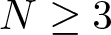 $N\geq3$, where V changes sign and
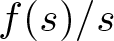 $f(s)/s$, s ≠ 0, is bounded, with V non-periodic in x. The existence of a solution is established employing spectral theory, a general linking theorem due to [12] and interaction between translated solutions of the problem at infinity with some qualitative properties of them.

On the spectral theory of groups of automorphisms of S-adic nilmanifolds
- Part of
-
- Journal:
- Ergodic Theory and Dynamical Systems / Volume 44 / Issue 3 / March 2024
- Published online by Cambridge University Press:
- 29 May 2023, pp. 705-726
- Print publication:
- March 2024
-
- Article
-
- You have access
- Open access
- HTML
- Export citation
-
Let
 $S=\{p_1, \ldots , p_r,\infty \}$ for prime integers
 $p_1, \ldots , p_r.$ Let X be an S-adic compact nilmanifold, equipped with the unique translation-invariant probability measure
 $\mu .$ We characterize the countable groups
 $\Gamma $ of automorphisms of X for which the Koopman representation
 $\kappa $ on
 $L^2(X,\mu )$ has a spectral gap. More specifically, let Y be the maximal quotient solenoid of X (thus, Y is a finite-dimensional, connected, compact abelian group). We show that
 $\kappa $ does not have a spectral gap if and only if there exists a
 $\Gamma $-invariant proper subsolenoid of Y on which
 $\Gamma $ acts as a virtually abelian group,


Spectra of infinite graphs via freeness with amalgamation
- Part of
-
- Journal:
- Canadian Journal of Mathematics / Volume 75 / Issue 5 / October 2023
- Published online by Cambridge University Press:
- 03 October 2022, pp. 1633-1684
- Print publication:
- October 2023
-
- Article
-
- You have access
- HTML
- Export citation
A deep look into the dagum family of isotropic covariance functions
- Part of
-
- Journal:
- Journal of Applied Probability / Volume 59 / Issue 4 / December 2022
- Published online by Cambridge University Press:
- 18 August 2022, pp. 1026-1041
- Print publication:
- December 2022
-
- Article
-
- You have access
- HTML
- Export citation
-
The Dagum family of isotropic covariance functions has two parameters that allow for decoupling of the fractal dimension and the Hurst effect for Gaussian random fields that are stationary and isotropic over Euclidean spaces. Sufficient conditions that allow for positive definiteness in
 $\mathbb{R}^d$ of the Dagum family have been proposed on the basis of the fact that the Dagum family allows for complete monotonicity under some parameter restrictions. The spectral properties of the Dagum family have been inspected to a very limited extent only, and this paper gives insight into this direction. Specifically, we study finite and asymptotic properties of the isotropic spectral density (intended as the Hankel transform) of the Dagum model. Also, we establish some closed-form expressions for the Dagum spectral density in terms of the Fox–Wright functions. Finally, we provide asymptotic properties for such a class of spectral densities.

Singular boundary conditions for Sturm–Liouville operators via perturbation theory
- Part of
-
- Journal:
- Canadian Journal of Mathematics / Volume 75 / Issue 4 / August 2023
- Published online by Cambridge University Press:
- 23 June 2022, pp. 1110-1146
- Print publication:
- August 2023
-
- Article
-
- You have access
- HTML
- Export citation
-
We show that all self-adjoint extensions of semibounded Sturm–Liouville operators with limit-circle endpoint(s) can be obtained via an additive singular form-bounded self-adjoint perturbation of rank equal to the deficiency indices, say
 $d\in \{1,2\}$. This characterization generalizes the well-known analog for semibounded Sturm–Liouville operators with regular endpoints. Explicitly, every self-adjoint extension of the minimal operator can be written as where
 $$ \begin{align*} \boldsymbol{A}_{ {}_{\scriptstyle \Theta}}=\boldsymbol{A}_0+\mathbf{B}\Theta\mathbf{B}^*, \end{align*} $$
 $\boldsymbol {A}_0$ is a distinguished self-adjoint extension and
 $\Theta $ is a self-adjoint linear relation in
 $\mathbb {C}^d$. The perturbation is singular in the sense that it does not belong to the underlying Hilbert space but is form-bounded with respect to
 $\boldsymbol {A}_0$, i.e., it belongs to
 $\mathcal {H}_{-1}(\boldsymbol {A}_0)$, with possible “infinite coupling.” A boundary triple and compatible boundary pair for the symmetric operator are constructed to ensure that the perturbation is well defined and self-adjoint extensions are in a one-to-one correspondence with self-adjoint relations
 $\Theta $.
The merging of boundary triples with perturbation theory provides a more holistic view of the operator’s matrix-valued spectral measures: identifying not just the location of the spectrum, but also certain directional information.
As an example, self-adjoint extensions of the classical Jacobi differential equation (which has two limit-circle endpoints) are obtained, and their spectra are analyzed with tools both from the theory of boundary triples and perturbation theory.


Undecidability of the Spectral Gap
- Part of
-
- Journal:
- Forum of Mathematics, Pi / Volume 10 / 2022
- Published online by Cambridge University Press:
- 10 June 2022, e14
-
- Article
-
- You have access
- Open access
- HTML
- Export citation
Spectral alignment of correlated Gaussian matrices
- Part of
-
- Journal:
- Advances in Applied Probability / Volume 54 / Issue 1 / March 2022
- Published online by Cambridge University Press:
- 28 January 2022, pp. 279-310
- Print publication:
- March 2022
-
- Article
-
- You have access
- HTML
- Export citation
-
In this paper we analyze a simple spectral method (EIG1) for the problem of matrix alignment, consisting in aligning their leading eigenvectors: given two matrices A and B, we compute two corresponding leading eigenvectors
 $v_1$ and
 $v'_{\!\!1}$. The algorithm returns the permutation
 $\hat{\pi}$ such that the rank of coordinate
 $\hat{\pi}(i)$ in
 $v_1$ and that of coordinate i in
 $v'_{\!\!1}$ (up to the sign of
 $v'_{\!\!1}$) are the same.
We consider a model of weighted graphs where the adjacency matrix A belongs to the Gaussian orthogonal ensemble of size
 $N \times N$, and B is a noisy version of A where all nodes have been relabeled according to some planted permutation
 $\pi$; that is,
 $B= \Pi^T (A+\sigma H) \Pi $, where
 $\Pi$ is the permutation matrix associated with
 $\pi$ and H is an independent copy of A. We show the following zero–one law: with high probability, under the condition
 $\sigma N^{7/6+\epsilon} \to 0$ for some
 $\epsilon>0$, EIG1 recovers all but a vanishing part of the underlying permutation
 $\pi$, whereas if
 $\sigma N^{7/6-\epsilon} \to \infty$, this method cannot recover more than o(N) correct matches.
This result gives an understanding of the simplest and fastest spectral method for matrix alignment (or complete weighted graph alignment), and involves proof methods and techniques which could be of independent interest.


Self-adjoint extensions of bipartite Hamiltonians
- Part of
-
- Journal:
- Proceedings of the Edinburgh Mathematical Society / Volume 64 / Issue 3 / August 2021
- Published online by Cambridge University Press:
- 22 June 2021, pp. 433-447
-
- Article
-
- You have access
- HTML
- Export citation
-
We compute the deficiency spaces of operators of the form $H_A{\hat {\otimes }} I + I{\hat {\otimes }} H_B$
 , for symmetric $H_A$
 and self-adjoint $H_B$
 . This enables us to construct self-adjoint extensions (if they exist) by means of von Neumann's theory. The structure of the deficiency spaces for this case was asserted already in Ibort et al. [Boundary dynamics driven entanglement, J. Phys. A: Math. Theor. 47(38) (2014) 385301], but only proven under the restriction of $H_B$
 having discrete, non-degenerate spectrum.


3 - Applications of Spectral Theory to Special Functions
-
-
- Book:
- Lectures on Orthogonal Polynomials and Special Functions
- Published online:
- 07 October 2020
- Print publication:
- 15 October 2020, pp 131-212
-
- Chapter
- Export citation
Spectral projections correlation structure for short-to-long range dependent processes
- Part of
-
- Journal:
- European Journal of Applied Mathematics / Volume 32 / Issue 1 / February 2021
- Published online by Cambridge University Press:
- 31 January 2020, pp. 1-31
-
- Article
-
- You have access
- Export citation
-
Let X = (Xt)t≥0 be a stochastic process issued from
 $x \in \mathbb{R}$ that admits a marginal stationary measure v, i.e. vPt f = vf for all t ≥ 0, where
 $\textbf{P}_t\,f(x)= \mathbb{E}_x[f(\textbf{X}_t)]$. In this paper, we introduce the (resp. biorthogonal) spectral projections correlation functions which are expressed in terms of projections.” Also, update first published online date, if available. into the eigenspaces of Pt (resp. and of its adjoint in the weighted Hilbert space L2 (v)). We obtain closed-form expressions involving eigenvalues, the condition number and/or the angle between the projections in the following different situations: when X = X with X = (Xt)t ≥ 0 being a Markov process, X is the subordination of X in the sense of Bochner, and X is a non-Markovian process which is obtained by time-changing X with an inverse of a subordinator. It turns out that these spectral projections correlation functions have different expressions with respect to these classes of processes which enables to identify substantial and deep properties about their dynamics. This interesting fact can be used to design original statistical tests to make inferences, for example, about the path properties of the process (presence of jumps), distance from symmetry (self-adjoint or non-self-adjoint) and short-to-long-range dependence. To reveal the usefulness of our results, we apply them to a class of non-self-adjoint Markov semigroups studied in Patie and Savov (to appear, Mem. Amer. Math. Soc., 179p), and then time-change by subordinators and their inverses.

PACKING SUBORDINACY WITH APPLICATION TO SPECTRAL CONTINUITY
- Part of
-
- Journal:
- Journal of the Australian Mathematical Society / Volume 108 / Issue 2 / April 2020
- Published online by Cambridge University Press:
- 13 June 2019, pp. 226-244
-
- Article
-
- You have access
- Export citation
-
By using methods of subordinacy theory, we study packing continuity properties of spectral measures of discrete one-dimensional Schrödinger operators acting on the whole line. Then we apply these methods to Sturmian operators with rotation numbers of quasibounded density to show that they have purely
 $\unicode[STIX]{x1D6FC}$-packing continuous spectrum. A dimensional stability result is also mentioned.

