The edited volumes in the Cambridge Handbooks in Psychology series offer distinct and fresh perspectives on the most important topics in psychological science.
To save content items to your account,
please confirm that you agree to abide by our usage policies.
If this is the first time you use this feature, you will be asked to authorise Cambridge Core to connect with your account.
Find out more about saving content to .
To save content items to your Kindle, first ensure no-reply@cambridge.org
is added to your Approved Personal Document E-mail List under your Personal Document Settings
on the Manage Your Content and Devices page of your Amazon account. Then enter the ‘name’ part
of your Kindle email address below.
Find out more about saving to your Kindle.
Note you can select to save to either the @free.kindle.com or @kindle.com variations.
‘@free.kindle.com’ emails are free but can only be saved to your device when it is connected to wi-fi.
‘@kindle.com’ emails can be delivered even when you are not connected to wi-fi, but note that service fees apply.
This comprehensive handbook provides community psychology approaches to addressing the key issues that impact individuals and their communities worldwide. Featuring international, interdisciplinary perspectives from leading experts, the handbook tackles critical contemporary challenges. These include climate change, immigration, educational access, healthcare, social media, wellness, community empowerment, discrimination, mental health, and many more. The chapters offer case study examples to present practical applications and to review relevant implications within diverse contexts. Throughout, the handbook considers how community psychology plays out around the world: What approaches are being used in different countries? How does political context influence the development and extension of community psychology? And what can nations learn from each other as they examine successful community psychology-based interventions? This is essential reading for researchers, students, practitioners, and policy makers involved with community well-being.
In the decade since the publication of the first edition of The Cambridge Handbook of Forensic Psychology, the field has expanded into areas such as social work and education, while maintaining the interest of criminal justice researchers and policy makers. This new edition provides cutting-edge and comprehensive coverage of the key theoretical perspectives, assessment methods, and interventions in forensic psychology. The chapters address substantive topics such as acquisitive crime, domestic violence, mass murder, and sexual violence, while also exploring emerging areas of research such as the expansion of cybercrime, particularly child sexual exploitation, as well as aspects of terrorism and radicalisation. Reflecting the global reach of forensic psychology and its wide range of perspectives, the international team of contributors emphasise diversity and cross-reference between adults, adolescents, and children to deliver a contemporary picture of the discipline.
Digital and online learning is more prevalent than ever, making multimedia learning a primary objective for many instructors. The Cambridge Handbook of Multimedia Learning examines cutting-edge research to guide creative teaching methods in online classrooms and training. Recognized as the field's major reference work, this research-based handbook helps define and shape this area of study. This third edition provides the latest progress report from the world's leading multimedia researchers, with forty-six chapters on how to help people learn from words and pictures, particularly in computer-based environments. The chapters demonstrate what works best and establishes optimized practices. It systematically examines well-researched principles of effective multimedia instruction and pinpoints exactly why certain practices succeed by isolating the boundary conditions. The volume is founded upon research findings in learning theory, giving it an informed perspective in explaining precisely how effective teaching practices achieve their goals or fail to engage.
This handbook focuses on the development and nurturance of creativity across the lifespan, from early childhood to adolescence, adulthood, and later life. It answers the question: how can we help individuals turn their creative potential into achievement? Each chapter examines various contexts in which creativity exists, including school, workplace, community spaces, and family life. It covers various modalities for fostering creativity such as play, storytelling, explicit training procedures, shifting of attitudes about creative capacity, and many others. The authors review research findings across disciplines, encompassing the work of psychologists, educators, neuroscientists, and creators themselves, to describe the best practices for fostering creativity at each stage of development.
While 'identity' is a key concept in psychology and the social sciences, researchers have used and understood this concept in diverse and often contradictory ways. The Cambridge Handbook of Identity presents the lively, multidisciplinary field of identity research as working around three central themes: (i) difference and sameness between people; (ii) people's agency in the world; and (iii) how identities can change or remain stable over time. The chapters in this collection explore approaches behind these themes, followed by a close look at their methodological implications, while examples from a number of applied domains demonstrate how identity research follows concrete analytical procedures. Featuring an international team of contributors who enrich psychological research with historical, cultural, and political perspectives, the handbook also explores contemporary issues of identity politics, diversity, intersectionality, and inclusion. It is an essential resource for all scholars and students working on identity theory and research.
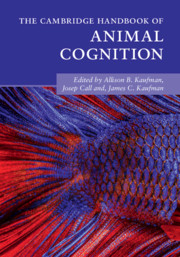
This handbook lays out the science behind how animals think, remember, create, calculate, and remember. It provides concise overviews on major areas of study such as animal communication and language, memory and recall, social cognition, social learning and teaching, numerical and quantitative abilities, as well as innovation and problem solving. The chapters also explore more nuanced topics in greater detail, showing how the research was conducted and how it can be used for further study. The authors range from academics working in renowned university departments to those from research institutions and practitioners in zoos. The volume encompasses a wide variety of species, ensuring the breadth of the field is explored.
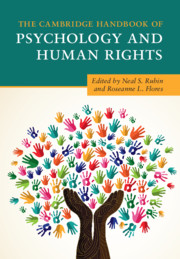
Written by psychologists, historians, and lawyers, this handbook demonstrates the central role psychological science plays in addressing some of the world's most pressing problems. Over 100 experts from around the world work together to supply an integrated history of human rights and psychological science using a rights and strengths-based perspective. It highlights what psychologists have done to promote human rights and what continues to be done at the United Nations. With emerging visions for the future uses of psychological theory, education, evidence-based research, and best practices, the chapters offer advice on how to advance the 2030 Global Agenda on Sustainable Development. Challenging the view that human rights are best understood through a political lens, this scholarly collection of essays shows how psychological science may hold the key to nurturing humanitarian values and respect for human dignity.
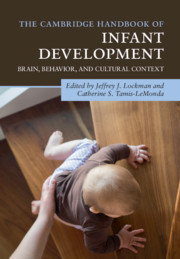
This multidisciplinary volume features many of the world's leading experts of infant development, who synthesize their research on infant learning and behaviour, while integrating perspectives across neuroscience, socio-cultural context, and policy. It offers an unparalleled overview of infant development across foundational areas such as prenatal development, brain development, epigenetics, physical growth, nutrition, cognition, language, attachment, and risk. The chapters present theoretical and empirical depth and rigor across specific domains of development, while highlighting reciprocal connections among brain, behavior, and social-cultural context. The handbook simultaneously educates, enriches, and encourages. It educates through detailed reviews of innovative methods and empirical foundations and enriches by considering the contexts of brain, culture, and policy. This cutting-edge volume establishes an agenda for future research and policy, and highlights research findings and application for advanced students, researchers, practitioners, and policy-makers with interests in understanding and promoting infant development.
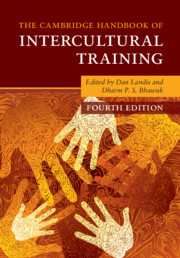
With the number of international migrants globally reaching an estimated 272 million (United Nations report, September 2019), the need for intercultural training is stronger than ever. Since its first edition, this handbook has evaluated the methodologies and suggested the best practice to develop effective programs aimed at facilitating cross-cultural dialogue and boosting the economic developments of the countries mostly affected by migration. This handbook builds and expands on the previous editions by presenting the rational and scientific foundations of intercultural training and focuses on unique approaches, theories, and areas of the world. In doing so, it gives students, managers, and other professionals undertaking international assignments a theoretical foundation and practical suggestions for improving intercultural training programs.
Research on personality psychology is making important contributions to psychological science and applied psychology. This second edition of The Cambridge Handbook of Personality Psychology offers a one-stop resource for scientific personality psychology. It summarizes cutting-edge personality research in all its forms, including genetics, psychometrics, social-cognitive psychology, and real-world expressions, with informative and lively chapters that also highlight some areas of controversy. The team of renowned international authors, led by two esteemed editors, ensures a wide range of theoretical perspectives. Each research area is discussed in terms of scientific foundations, main theories and findings, and future directions for research. The handbook also features advances in technology, such as molecular genetics and functional neuroimaging, as well as contemporary statistical approaches. An invaluable aid to understanding the central role played by personality in psychology, it will appeal to students, researchers, and practitioners in psychology, behavioral neuroscience, and the social sciences.
Practice books are often simple 'how to' lists or straightforward 'recipes' and the practitioner still does not know why the activity is related to the outcome they seek. In essence, they lose how the specifics of the practice are related to the theory of change or the theory of how the problem developed in the first place. This leads to practitioners potentially removing crucial elements of best practice procedures when making modifications to tackle new or different problems in an unfamiliar context. By understanding the theoretical underpinnings, practitioners can better plan for adjustments because they know how the outcomes they seek are informed by the theory. Engagingly written and perfect for day-to-day use, this book translates state-of-the-art research and interdisciplinary theory into practical recommendations for those working with children and adolescents.
There is a growing knowledge base in understanding the differences and similarities between women and men, as well as the diversities among women and sexualities. Although genetic and biological characteristics define human beings conventionally as women and men, their experiences are contextualized in multiple dimensions in terms of gender, sexuality, class, age, ethnicity, and other social dimensions. Beyond the biological and genetic basis of gender differences, gender intersects with culture and other social locations which affect the socialization and development of women across their life span. This handbook provides a comprehensive and up-to-date resource to understand the intersectionality of gender differences, to dispel myths, and to examine gender-relevant as well as culturally relevant implications and appropriate interventions. Featuring a truly international mix of contributors, and incorporating cross-cultural research and comparative perspectives, this handbook will inform mainstream psychology of the international literature on the psychology of women and gender.
Written by leaders in the addictions field, 100 authors from six countries, this handbook is a thoroughly comprehensive resource. Philosophical and legal issues are addressed, while conceptual underpinnings are provided through explanations of appetitive motivation, incentive sensitization, reward deficiency, and behavioral economics theories. Major clinical and research methods are clearly mapped out (e.g. MRI, behavioral economics, interview assessments, and qualitative approaches), outlining their strengths and weaknesses, giving the reader the tools needed to guide their research and practice aims. The etiology of addiction at various levels of analysis is discussed, including neurobiology, cognition, groups, culture, and environment, which simultaneously lays out the foundations and high-level discourse to serve both novice and expert researchers and clinicians. Importantly, the volume explores the prevention and treatment of such addictions as alcohol, tobacco, novel drugs, food, gambling, sex, work, shopping, the internet, and several seldom-investigated behaviors (e.g. love, tanning, or exercise).
Social problems in many domains, including health, education, social relationships, and the workplace, have their origins in human behavior. The documented links between behavior and social problems have compelled governments and organizations to prioritize and mobilize efforts to develop effective, evidence-based means to promote adaptive behavior change. In recognition of this impetus, The Handbook of Behavior Change provides comprehensive coverage of contemporary theory, research, and practice on behavior change. It summarizes current evidence-based approaches to behavior change in chapters authored by leading theorists, researchers, and practitioners from multiple disciplines, including psychology, sociology, behavioral science, economics, philosophy, and implementation science. It is the go-to resource for researchers, students, practitioners, and policy makers looking for current knowledge on behavior change and guidance on how to develop effective interventions to change behavior.
Are you struggling to improve a hostile or uncomfortable environment at work, or interested in how such tension can arise? Experts in organizational psychology, management science, social psychology, and communication science show you how to implement interventions and programs to manage workplace emotion. The connection between workplace affect and relevant challenges in our society, such as diversity and technological changes, is undeniable; thus learning to harness that knowledge can revolutionize your performance in tackling workday issues. Applying major theoretical perspectives and research methodologies, this book outlines the concepts of display rules, emotional labor, work motivation, well-being, and discrete emotions. Understanding these ideas will show you how affect can promote team effectiveness, leadership, and conflict resolution. If you require a foundation for understanding workplace affect or a springboard into deeper, more interdisciplinary research, this book presents an integrative approach that is indispensable.
Decades of research have demonstrated that normal aging is accompanied by cognitive change. Much of this change has been conceptualized as a decline in function. However, age-related changes are not universal, and decrements in older adult performance may be moderated by experience, genetics, and environmental factors. Cognitive aging research to date has also largely emphasized biological changes in the brain, with less evaluation of the range of external contributors to behavioral manifestations of age-related decrements in performance. This handbook provides a comprehensive overview of cutting-edge cognitive aging research through the lens of a life course perspective that takes into account both behavioral and neural changes. Focusing on the fundamental principles that characterize a life course approach - genetics, early life experiences, motivation, emotion, social contexts, and lifestyle interventions - this handbook is an essential resource for researchers in cognition, aging, and gerontology.
The human imagination manifests in countless different forms. We imagine the possible and the impossible. How do we do this so effortlessly? Why did the capacity for imagination evolve and manifest with undeniably manifold complexity uniquely in human beings? This handbook reflects on such questions by collecting perspectives on imagination from leading experts. It showcases a rich and detailed analysis on how the imagination is understood across several disciplines of study, including anthropology, archaeology, medicine, neuroscience, psychology, philosophy, and the arts. An integrated theoretical-empirical-applied picture of the field is presented, which stands to inform researchers, students, and practitioners about the issues of relevance across the board when considering the imagination. With each chapter, the nature of human imagination is examined – what it entails, how it evolved, and why it singularly defines us as a species.
This handbook provides an overview of the research on the changing nature of work and workers by marshalling interdisciplinary research to summarize the empirical evidence and provide documentation of what has actually changed. Connections are explored between the changing nature of work and macro-level trends in technological change, income inequality, global labor markets, labor unions, organizational forms, and skill polarization, among others. This edited volume also reviews evidence for changes in workers, including generational change (or lack thereof), that has accumulated across domains. Based on documented changes in work and worker behavior, the handbook derives implications for a range of management functions, such as selection, performance management, leadership, workplace ethics, and employee well-being. This evaluation of the extent of changes and their impact gives guidance on what best practices should be put in place to harness these developments to achieve success.
This book integrates philosophy of science, data acquisition methods, and statistical modeling techniques to present readers with a forward-thinking perspective on clinical science. It reviews modern research practices in clinical psychology that support the goals of psychological science, study designs that promote good research, and quantitative methods that can test specific scientific questions. It covers new themes in research including intensive longitudinal designs, neurobiology, developmental psychopathology, and advanced computational methods such as machine learning. Core chapters examine significant statistical topics, for example missing data, causality, meta-analysis, latent variable analysis, and dyadic data analysis. A balanced overview of observational and experimental designs is also supplied, including preclinical research and intervention science. This is a foundational resource that supports the methodological training of the current and future generations of clinical psychological scientists.
The transformative wave of Darwinian insight continues to expand throughout the human sciences. While still centered on evolution-focused fields such as evolutionary psychology, ethology, and human behavioral ecology, this insight has also influenced cognitive science, neuroscience, feminist discourse, sociocultural anthropology, media studies, and clinical psychology. This handbook's goal is to amplify the wave by bringing together world-leading experts to provide a comprehensive and up-to-date overview of evolution-oriented and influenced fields. While evolutionary psychology remains at the core of the collection, it also covers the history, current standing, debates, and future directions of the panoply of fields entering the Darwinian fold. As such, The Cambridge Handbook of Evolutionary Perspectives on Human Behavior is a valuable reference not just for evolutionary psychologists but also for scholars and students from many fields who wish to see how the evolutionary perspective is relevant to their own work.