The edited volumes in the Cambridge Handbooks in Psychology series offer distinct and fresh perspectives on the most important topics in psychological science.
To save content items to your account,
please confirm that you agree to abide by our usage policies.
If this is the first time you use this feature, you will be asked to authorise Cambridge Core to connect with your account.
Find out more about saving content to .
To save content items to your Kindle, first ensure no-reply@cambridge.org
is added to your Approved Personal Document E-mail List under your Personal Document Settings
on the Manage Your Content and Devices page of your Amazon account. Then enter the ‘name’ part
of your Kindle email address below.
Find out more about saving to your Kindle.
Note you can select to save to either the @free.kindle.com or @kindle.com variations.
‘@free.kindle.com’ emails are free but can only be saved to your device when it is connected to wi-fi.
‘@kindle.com’ emails can be delivered even when you are not connected to wi-fi, but note that service fees apply.
This first volume to analyze the science of meetings offers a unique perspective on an integral part of contemporary work life. More than just a tool for improving individual and organizational effectiveness and well-being, meetings provide a window into the very essence of organizations and employees' experiences with the organization. The average employee attends at least three meetings per week and managers spend the majority of their time in meetings. Meetings can raise individuals, teams, and organizations to tremendous levels of achievement. However, they can also undermine effectiveness and well-being. The Cambridge Handbook of Meeting Science assembles leading authors in industrial and organizational psychology, management, marketing, organizational behavior, anthropology, sociology, and communication to explore the meeting itself, including pre-meeting activities and post-meeting activities. It provides a comprehensive overview of research in the field and will serve as an invaluable starting point for scholars who seek to understand and improve meetings.
The Cambridge Handbook of Applied Perception Research covers core areas of research in perception with an emphasis on its application to real-world environments. Topics include multisensory processing of information, time perception, sustained attention, and signal detection, as well as pedagogical issues surrounding the training of applied perception researchers. In addition to familiar topics, such as perceptual learning, the Handbook focuses on emerging areas of importance, such as human-robot coordination, haptic interfaces, and issues facing societies in the twenty-first century (such as terrorism and threat detection, medical errors, and the broader implications of automation). Organized into sections representing major areas of theoretical and practical importance for the application of perception psychology to human performance and the design and operation of human-technology interdependence, it also addresses the challenges to basic research, including the problem of quantifying information, defining cognitive resources, and theoretical advances in the nature of attention and perceptual processes.
A social representations approach offers an empirical utility for addressing myriad social concerns such as social order, ecological sustainability, national identity, racism, religious communities, the public understanding of science, health and social marketing. The core aspects of social representations theory have been debated over many years and some still remain widely misunderstood. This Handbook provides an overview of these core aspects and brings together theoretical strands and developments in the theory, some of which have become pillars in the social sciences in their own right. Academics and students in the social sciences working with concepts and methods such as social identity, discursive psychology, positioning theory, semiotics, attitudes, risk perception and social values will find this an invaluable resource.
The psychology of aesthetics and the arts is dedicated to the study of our experiences of the visual arts, music, literature, film, performances, architecture and design; our experiences of beauty and ugliness; our preferences and dislikes; and our everyday perceptions of things in our world. The Cambridge Handbook of the Psychology of Aesthetics and the Arts is a foundational volume presenting an overview of the key concepts and theories of the discipline where readers can learn about the questions that are being asked and become acquainted with the perspectives and methodologies used to address them. The psychology of aesthetics and the arts is one of the oldest areas of psychology but it is also one of the fastest growing and most exciting areas. This is a comprehensive and authoritative handbook featuring essays from some of the most respected scholars in the field.
The interdisciplinary field of the learning sciences encompasses educational psychology, cognitive science, computer science, and anthropology, among other disciplines. The Cambridge Handbook of the Learning Sciences is the definitive introduction to this innovative approach to teaching, learning, and educational technology. This dramatically revised second edition incorporates the latest research in the field, includes twenty new chapters on emerging areas of interest, and features contributors who reflect the increasingly international nature of the learning sciences. The authors address the best ways to design educational software, prepare effective teachers, organize classrooms, and use the internet to enhance student learning. They illustrate the importance of creating productive learning environments both inside and outside school, including after-school clubs, libraries, museums, and online learning environments. Accessible and engaging, the Handbook has proven to be an essential resource for graduate students, researchers, teachers, administrators, consultants, educational technology designers, and policy makers on a global scale.
The field of cultural-historical psychology originated in the work of Lev Vygotsky and the Vygotsky Circle in the Soviet Union more than eighty years ago, and has now established a powerful research tradition in Russia and the West. The Cambridge Handbook of Cultural-Historical Psychology is the first volume to systematically present cultural-historical psychology as an integrative/holistic developmental science of mind, brain, and culture. Its main focus is the inseparable unity of the historically evolving human mind, brain, and culture, and the ways to understand it. The contributors are major international experts in the field, and include authors of major works on Lev Vygotsky, direct collaborators and associates of Alexander Luria, and renowned neurologist Oliver Sacks. The Handbook will be of interest to students and scholars in the fields of psychology, education, humanities and neuroscience.
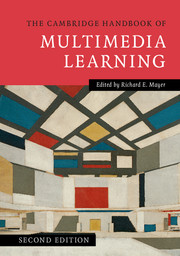
In recent years, multimedia learning, or learning from words and images, has developed into a coherent discipline with a significant research base. The Cambridge Handbook of Multimedia Learning is unique in offering a comprehensive, up-to-date analysis of research and theory in the field, with a focus on computer-based learning. Since the first edition appeared in 2005, it has shaped the field and become the primary reference work for multimedia learning. Multimedia environments, including online presentations, e-courses, interactive lessons, simulation games, slideshows, and even textbooks, play a crucial role in education. This revised second edition incorporates the latest developments in multimedia learning and contains new chapters on topics such as drawing, video, feedback, working memory, learner control, and intelligent tutoring systems. It examines research-based principles to determine the most effective methods of multimedia instruction and considers research findings in the context of cognitive theory to explain how these methods work.
Our ability to speak, write, understand speech and read is critical to our ability to function in today's society. As such, psycholinguistics, or the study of how humans learn and use language, is a central topic in cognitive science. This comprehensive handbook is a collection of chapters written not by practitioners in the field, who can summarize the work going on around them, but by trailblazers from a wide array of subfields, who have been shaping the field of psycholinguistics over the last decade. Some topics discussed include how children learn language, how average adults understand and produce language, how language is represented in the brain, how brain-damaged individuals perform in terms of their language abilities and computer-based models of language and meaning. This is required reading for advanced researchers, graduate students and upper-level undergraduates who are interested in the recent developments and the future of psycholinguistics.
Families, communities and societies influence children's learning and development in many ways. This is the first handbook devoted to the understanding of the nature of environments in child development. Utilizing Urie Bronfenbrenner's idea of embedded environments, this volume looks at environments from the immediate environment of the family (including fathers, siblings, grandparents and day-care personnel) to the larger environment including schools, neighborhoods, geographic regions, countries and cultures. Understanding these embedded environments and the ways in which they interact is necessary to understand development.
The Cambridge Handbook of Personal Relationships serves as a benchmark of the current state of scholarship in this dynamic field synthesizing the extant theoretical and empirical literature, tracing its historical roots, and making recommendations for future directions. The volume addresses a broad range of established and emerging topics including: theoretical and methodological issues that influence the study of personal relationships; research and theory on relationship development, the nature and functions of personal relationships across the lifespan; individual differences and their influences on relationships; relationship processes such as cognition, emotion, and communication; relational qualities such as satisfaction and commitment; environmental influences on personal relationships; and maintenance and repair of relationships. The authors are experts from a variety of disciplines including several subfields of psychology, communication, family studies and sociology who have made major contributions to the understanding of relationships.
This book was the first handbook where the world's foremost 'experts on expertise' reviewed our scientific knowledge on expertise and expert performance and how experts may differ from non-experts in terms of their development, training, reasoning, knowledge, social support, and innate talent. Methods are described for the study of experts' knowledge and their performance of representative tasks from their domain of expertise. The development of expertise is also studied by retrospective interviews and the daily lives of experts are studied with diaries. In 15 major domains of expertise, the leading researchers summarize our knowledge on the structure and acquisition of expert skill and knowledge and discuss future prospects. General issues that cut across most domains are reviewed in chapters on various aspects of expertise such as general and practical intelligence, differences in brain activity, self-regulated learning, deliberate practice, aging, knowledge management, and creativity.
In the last decade, the field of multimedia learning emerged as a coherent discipline with an accumulated research base that had never been synthesized and organized in a handbook. The Cambridge Handbook of Multimedia Learning, first published in 2005, constituted the world's first handbook devoted to comprehensive coverage of research and theory in the field of multimedia learning. Multimedia learning is defined as learning from words (e.g., spoken or printed text) and pictures (e.g. illustrations, photos, maps, graphs, animation, or video). The focus of this handbook is on how people learn from words and pictures in computer-based environments. Multimedia environments include online instructional presentations, interactive lessons, e-courses, simulation games, virtual reality, and computer-supported in-class presentations. The Cambridge Handbook of Multimedia Learning seeks to establish what works (that is, to ground research in cognitive theory), and to consider when and where it works (that is, to explore the implications of research for practice).
Personality psychology is a rapidly maturing science making important advances on both conceptual and methodological fronts. The Cambridge Handbook of Personality Psychology offers a one-stop source for the most up-to-date scientific personality psychology. It provides a summary of cutting-edge personality research in all its forms, from DNA to political influences on its development, expression, pathology and applications. The chapters are informative, lively, stimulating and, sometimes, controversial and the team of international authors, led by two esteemed editors, ensures a truly wide range of theoretical perspectives. Each research area is discussed in terms of scientific foundations, main theories and findings, and future directions for research. With useful descriptions of technological approaches (for example, molecular genetics and functional neuroimaging) the Handbook is an invaluable aid to understanding the central role played by personality in psychology and will appeal to students of occupational, health, clinical, cognitive and forensic psychology.
Psychologists have been observing and interpreting economic behaviour for at least fifty years, and the last decade, in particular, has seen an escalated interest in the interface between psychology and economics. The Cambridge Handbook of Psychology and Economic Behaviour is a valuable reference resource dedicated to improving our understanding of the economic mind and economic behaviour. Employing empirical methods – including laboratory experiments, field experiments, observations, questionnaires and interviews – the Handbook covers aspects of theory and method, financial and consumer behaviour, the environment and biological perspectives. With contributions from distinguished scholars from a variety of countries and backgrounds, the Handbook is an important step forward in the improvement of communications between the disciplines of psychology and economics. It will appeal to academic researchers and graduates in economic psychology and behavioural economics.
Since its inception some fifty years ago, cognitive science has seen a number of sea changes. Perhaps the best known is the development of connectionist models of cognition as an alternative to classical, symbol-based approaches. A more recent - and increasingly influential - trend is that of dynamical-systems-based, ecologically oriented models of the mind. Researchers suggest that a full understanding of the mind will require systematic study of the dynamics of interaction between mind, body, and world. Some argue that this new orientation calls for a revolutionary new metaphysics of mind, according to which mental states and processes, and even persons, literally extend into the environment. This book is a guide to this movement in cognitive science. Each chapter tackles either a specific area of empirical research or specific sector of the conceptual foundation underlying this research.
This volume provides the most comprehensive and up-to-date compendium of theory and research in the field of human intelligence. Each of the 42 chapters is written by world-renowned experts in their respective fields, and collectively, they cover the full range of topics of contemporary interest in the study of intelligence. The handbook is divided into nine parts: Part I covers intelligence and its measurement; Part II deals with the development of intelligence; Part III discusses intelligence and group differences; Part IV concerns the biology of intelligence; Part V is about intelligence and information processing; Part VI discusses different kinds of intelligence; Part VII covers intelligence and society; Part VIII concerns intelligence in relation to allied constructs; and Part IX is the concluding chapter, which reflects on where the field is currently and where it still needs to go.
This book is a definitive reference source for the growing, increasingly more important, and interdisciplinary field of computational cognitive modeling, that is, computational psychology. It combines breadth of coverage with definitive statements by leading scientists in this field. Research in computational cognitive modeling explores the essence of cognition and various cognitive functionalities through developing detailed, process-based understanding by specifying computational mechanisms, structures, and processes. Given the complexity of the human mind and its manifestation in behavioral flexibility, process-based computational models may be necessary to explicate and elucidate the intricate details of the mind. The key to understanding cognitive processes is often in fine details. Computational models provide algorithmic specificity: detailed, exactly specified, and carefully thought-out steps, arranged in precise yet flexible sequences. These models provide both conceptual clarity and precision at the same time. This book substantiates this approach through overviews and many examples.
The Cambridge Handbook of Consciousness is the first of its kind in the field, and its appearance marks a unique time in the history of intellectual inquiry on the topic. After decades during which consciousness was considered beyond the scope of legitimate scientific investigation, consciousness re-emerged as a popular focus of research towards the end of the last century, and it has remained so for nearly 20 years. There are now so many different lines of investigation on consciousness that the time has come when the field may finally benefit from a book that pulls them together and, by juxtaposing them, provides a comprehensive survey of this exciting field. An authoritative desk reference, which will also be suitable as an advanced textbook.
The ability to navigate across town, comprehend an animated display of the functioning of the human heart, view complex multivariate data on a company's website, or to read an architectural blueprint and form a three-dimensional mental picture of a house are all tasks involving visuospatial thinking. The field of visuospatial thinking is a relatively diverse interdisciplinary research enterprise. An understanding of visuospatial thinking, and in particular, how people represent and process visual and spatial information, is relevant not only to cognitive psychology but also education, geography, architecture, medicine, design computer science/artificial intelligence, semiotics and animal cognition. The goal of this book, first published in 2005, is to present a broad overview of research on visuospatial thinking that can be used by researchers as well as students interested in this topic in both basic research and applied/naturalistic contexts.
A comprehensive collection of essays in multidisciplinary metaphor scholarship that has been written in response to the growing interest among scholars and students from a variety of disciplines such as linguistics, philosophy, anthropology, music and psychology. These essays explore the significance of metaphor in language, thought, culture and artistic expression. There are five main themes of the book: the roots of metaphor, metaphor understanding, metaphor in language and culture, metaphor in reasoning and feeling, and metaphor in non-verbal expression. Contributors come from a variety of academic disciplines, including psychology, linguistics, philosophy, cognitive science, literature, education, music, and law.