The edited volumes in the Cambridge Handbooks in Psychology series offer distinct and fresh perspectives on the most important topics in psychological science.
To save content items to your account,
please confirm that you agree to abide by our usage policies.
If this is the first time you use this feature, you will be asked to authorise Cambridge Core to connect with your account.
Find out more about saving content to .
To save content items to your Kindle, first ensure no-reply@cambridge.org
is added to your Approved Personal Document E-mail List under your Personal Document Settings
on the Manage Your Content and Devices page of your Amazon account. Then enter the ‘name’ part
of your Kindle email address below.
Find out more about saving to your Kindle.
Note you can select to save to either the @free.kindle.com or @kindle.com variations.
‘@free.kindle.com’ emails are free but can only be saved to your device when it is connected to wi-fi.
‘@kindle.com’ emails can be delivered even when you are not connected to wi-fi, but note that service fees apply.
This Handbook provides a compendium of research methods that are essential for studying interaction and communication across the behavioral sciences. Focusing on coding of verbal and nonverbal behavior and interaction, the Handbook is organized into five parts. Part I provides an introduction and historic overview of the field. Part II presents areas in which interaction analysis is used, such as relationship research, group research, and nonverbal research. Part III focuses on development, validation, and concrete application of interaction coding schemes. Part IV presents relevant data analysis methods and statistics. Part V contains systematic descriptions of established and novel coding schemes, which allows quick comparison across instruments. Researchers can apply this methodology to their own interaction data and learn how to evaluate and select coding schemes and conduct interaction analysis. This is an essential reference for all who study communication in teams and groups.
Sociocultural psychology is a discipline located at the crossroads between the natural and social sciences and the humanities. This international overview of the field provides an antireductionist and comprehensive account of how experience and behaviour arise from human action with cultural materials in social practices. The outcome is a vision of the dynamics of sociocultural and personal life in which time and developmental constructive transformations are crucial. This second edition provides expanded coverage of how particular cultural artefacts and social practices shape experience and behaviour in the realms of art and aesthetics, economics, history, religion and politics. Special attention is also paid to the development of identity, the self and personhood throughout the lifespan, while retaining the emphasis on experience and development as key features of sociocultural psychology.
With the field of personal relationships having grown dramatically in the past quarter century, The Cambridge Handbook of Personal Relationships, Second Edition serves as a benchmark of the current state of scholarship, synthesizing the extant theoretical and empirical literature, tracing its historical roots, and making recommendations for future directions. Written by internationally known experts from key disciplines, the Handbook addresses both fundamental questions and cutting-edge concerns. This second edition has been thoroughly updated to reflect recent developments in analytical techniques, shifts in theoretical emphases, and an increased attention to social processes. New chapters include the Neuroscience of Salutary Close Relationships; Self-Disclosure in Relationships; Acceptance, Rejection, and the Quest for Relational Value; Relationships and Physical Health; Personal Relationships and Technology in the Digital Age; and Promoting Healthy Relationships. This compendium of state-of-the-art research and theory on personal relationships will be of great value to researchers, graduate students, and practitioners.
In this updated and expanded edition of The Cambridge Handbook of Expertise and Expert Performance, some of the world's foremost experts on expertise share their scientific knowledge of expertise and expert performance and show how experts may differ from non-experts in terms of development, training, reasoning, knowledge, and social support. The book reviews innovative methods for measuring experts' knowledge and performance in relevant tasks. Sixteen major domains of expertise are covered, including sports, music, medicine, business, writing, and drawing, with leading researchers summarizing their knowledge about the structure and acquisition of expert skills and knowledge, and discussing future prospects. General issues that cut across most domains are reviewed in chapters on various aspects of expertise, such as general and practical intelligence, differences in brain activity, self-regulated learning, deliberate practice, aging, knowledge management, and creativity.
The Cambridge Handbook of the Global Work-Family Interface is a response to growing interest in understanding how people manage their work and family lives across the globe. Given global and regional differences in cultural values, economies, and policies and practices, research on work-family management is not always easily transportable to different contexts. Researchers have begun to acknowledge this, conducting research in various national settings, but the literature lacks a comprehensive source that aims to synthesize the state of knowledge, theoretical progression, and identification of the most compelling future research ideas within field. The Cambridge Handbook of the Global Work-Family Interface aims to fill this gap by providing a single source where readers can find not only information about the general state of global work-family research, but also comprehensive reviews of region-specific research. It will be of value to researchers, graduate students, and practitioners of applied and organizational psychology, management, and family studies.
The Cambridge Handbook of Applied Psychological Ethics is a valuable resource for psychologists and graduate students hoping to further develop their ethical decision making beyond more introductory ethics texts. The book offers real-world ethical vignettes and considerations. Chapters cover a wide range of practice settings, populations, and topics, and are written by scholars in these settings. Chapters focus on the application of ethics to the ethical dilemmas in which mental health and other psychology professionals sometimes find themselves. Each chapter introduces a setting and gives readers a brief understanding of some of the potential ethical issues at hand, before delving deeper into the multiple ethical issues that must be addressed and the ethical principles and standards involved. No other book on the market captures the breadth of ethical issues found in daily practice and focuses entirely on applied ethics in psychology.
There has recently been an escalated interest in the interface between psychology and economics. The Cambridge Handbook of Psychology and Economic Behaviour is a valuable reference dedicated to improving our understanding of the economic mind and economic behaviour. Employing empirical methods - including laboratory and field experiments, observations, questionnaires and interviews - the Handbook provides comprehensive coverage of theory and method, financial and consumer behaviour, the environment and biological perspectives. This second edition also includes new chapters on topics such as neuroeconomics, unemployment, debt, behavioural public finance, and cutting-edge work on fuzzy trace theory and robots, cyborgs and consumption. With distinguished contributors from a variety of countries and theoretical backgrounds, the Handbook is an important step forward in the improvement of communications between the disciplines of psychology and economics that will appeal to academic researchers and graduates in economic psychology and behavioral economics.
Historically, the brain bases of creativity have been of great interest to scholars and the public alike. However, recent technological innovations in the neurosciences, coupled with theoretical and methodological advances in creativity assessment, have enabled humans to gain unprecedented insights into the contributions of the brain to creative thought. This unique volume brings together contributions by the very best scholars to offer a comprehensive overview of cutting edge research on this important and fascinating topic. The chapters discuss creativity's relationship with intelligence, motivation, psychopathology and pharmacology, as well as the contributions of general psychological processes to creativity, such as attention, memory, imagination, and language. This book also includes specific and novel approaches to understanding creativity involving musicians, polymaths, animal models, and psychedelic experiences. The chapters are meant to give the reader a solid grasp of the diversity of approaches currently at play in this active and rapidly growing field of inquiry.
With comprehensive coverage of topics related to learning, training, and development, this volume is a must-have resource for industrial and organizational (I/O) psychologists, human resource (HR) scholars, and adult education specialists. Brown provides a forward-looking exploration of the current research on workplace training, employee development, and organizational learning from the primary point of view of industrial organizational psychology. Each chapter discusses current practices, recent research, and, importantly, the gaps between the two. In analyzing these aspects of the topic, the chapter authors both present the valuable knowledge available and show the opportunities for further study and practice.
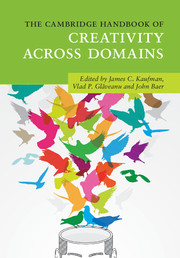
Creativity is of rising interest to scholars and laypeople alike. Creativity in the arts, however, is very different from creativity in science, business, sports, cooking, or teaching. This book brings together top experts in the field from around the world to discuss creativity across many different domains. Each chapter includes clear definitions, intriguing research, potential measures, and suggestions for development or future directions. After a broad discussion of creativity across different domains, subsequent chapters look deeper into those individual domains (traditional arts, sciences, business, newer domains, and everyday life) to explore how creativity varies when expressed in different ways. Ultimately, the book offers a future-looking perspective integrating the different variations of creativity across domains.
As individual subjects, creativity and personality have been the focus of much research and many publications. This Cambridge Handbook is the first to bring together these two topics and explores how personality and behavior affects creativity. Contributors from around the globe present cutting-edge research about how personality traits and motives make creative behavior more likely. Many aspects of personality and behavior are examined in the chapters, including genius, emotions, psychopathology, entrepreneurship, and multiculturalism, to analyse the impact of these on creativity. The Cambridge Handbook of Creativity and Personality Research will be the definitive resource for researchers, students and academics who study psychology, personality, and creativity.
With contributions from leading experts across disciplinary fields, this book explores best practices from the field's most notable researchers, as well as important historically based and politically focused challenges to a field whose impact has reached an important crossroads. The comprehensive and powerfully critical analysis considers the history of community engagement and service learning, best teaching practices and pedagogies, engagement across disciplines, and current research and policies - and contemplates the future of the field. The book will not only inform faculty, staff, and students on ways to improve their work, but also suggest a bigger social and political focus for programs intended to seriously establish democracy and social justice in their communities and campuses.
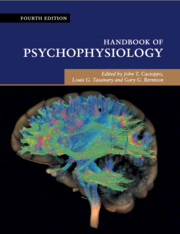
The Handbook of Psychophysiology has been the authoritative resource for more than a quarter of a century. Since the third edition was published a decade ago, the field of psychophysiological science has seen significant advances, both in traditional measures such as electroencephalography, event-related brain potentials, and cardiovascular assessments, and in novel approaches and methods in behavioural epigenetics, neuroimaging, psychoneuroimmunology, psychoneuroendocrinology, neuropsychology, behavioural genetics, connectivity analyses, and non-contact sensors. At the same time, a thoroughgoing interdisciplinary focus has emerged as essential to scientific progress. Emphasizing the need for multiple measures, careful experimental design, and logical inference, the fourth edition of the Handbook provides updated and expanded coverage of approaches, methods, and analyses in the field. With state-of-the-art reviews of research in topical areas such as stress, emotion, development, language, psychopathology, and behavioural medicine, the Handbook remains the essential reference for students and scientists in the behavioural, cognitive, and biological sciences.
The Cambridge Handbook of International Prevention Science offers a comprehensive global overview on prevention science with the most up-to-date research from around the world. Over 100 scholars from 27 different countries (including Australia, Bhutan, Botswana, India, Israel, Mexico, Singapore, South Korea, Spain and Thailand) contributed to this volume, which covers a wide range of topics important to prevention science. It includes major sections on the foundations of prevention as well as examples of new initiatives in the field, detailing current prevention efforts across the five continents. A unique and innovative volume, The Cambridge Handbook of International Prevention Science is a valuable resource for established scholars, early professionals, students, practitioners and policy-makers.
The field of mathematical psychology began in the 1950s and includes both psychological theorizing, in which mathematics plays a key role, and applied mathematics, motivated by substantive problems in psychology. Central to its success was the publication of the first Handbook of Mathematical Psychology in the 1960s. The psychological sciences have since expanded to include new areas of research, and significant advances have been made in both traditional psychological domains and in the applications of the computational sciences to psychology. Upholding the rigor of the first title in this field to be published, the New Handbook of Mathematical Psychology reflects the current state of the field by exploring the mathematical and computational foundations of new developments over the last half-century. This first volume focuses on select mathematical ideas, theories, and modeling approaches to form a foundational treatment of mathematical psychology.
The Cambridge Handbook of the Psychology of Prejudice aims to answer the questions: why is prejudice so persistent? How does it affect people exposed to it? And what can we do about it? Providing a comprehensive examination of prejudice from its evolutionary beginnings and environmental influences through to its manifestations and consequences, this Handbook is an essential resource for scholars and students who are passionate about understanding prejudice, social change, collective action, and prejudice reduction. Featuring cutting-edge research from top scholars in the field, the chapters provide an overview of psychological models of prejudice; investigate prejudice in specific domains such as race, religion, gender, and appearance; and develop explicit, evidence-based strategies for disrupting the processes that produce and maintain prejudice. This Handbook challenges researchers and readers to move beyond their comfort zone, and sets the agenda for future avenues of research, policy, and intervention.
The Cambridge Handbook of Age and Ageing, first published in 2005, is a guide to the body of knowledge, theory, policy and practice relevant to age researchers and gerontologists around the world. It contains almost 80 original chapters, commissioned and written by the world's leading gerontologists from 16 countries and 5 continents. The broad focus of the book is on the behavioural and social sciences but it also includes important contributions from the biological and medical sciences. It provides comprehensive, accessible and authoritative accounts of all the key topics in the field ranging from theories of ageing, to demography, physical aspects of ageing, mental processes and ageing, nursing and health care for older people, the social context of ageing, cross cultural perspectives, relationships, quality of life, gender, and financial and policy provision. This handbook will be a must-have resource for all researchers, students and professionals with an interest in age and ageing.
Research and practice in the field of acculturation psychology is continually on the rise. Featuring contributions from over fifty leading experts in the field, this Handbook compiles and systemizes the current state of the art by exploring the broad international scope of acculturation. The collection introduces readers to the concepts and issues; examines various acculturating groups (immigrants, ethnic minorities, indigenous peoples, expatriates, tourists, refugees and asylum seekers); highlights the global contexts for acculturation in a variety of societies; and focuses on acculturation of a number of special groups, such as young people, the workplace, and outcomes for health and well-being. This comprehensive new edition addresses major world changes over the last decade, including the increase in global migration, religious clashes, and social networking, and provides updated theories and models so that beginners and advanced readers can keep abreast of new developments in the study of acculturation.
We perceive color everywhere and on everything that we encounter in daily life. Color science has progressed to the point where a great deal is known about the mechanics, evolution, and development of color vision, but less is known about the relation between color vision and psychology. However, color psychology is now a burgeoning, exciting area and this Handbook provides comprehensive coverage of emerging theory and research. Top scholars in the field provide rigorous overviews of work on color categorization, color symbolism and association, color preference, reciprocal relations between color perception and psychological functioning, and variations and deficiencies in color perception. The Handbook of Color Psychology seeks to facilitate cross-fertilization among researchers, both within and across disciplines and areas of research, and is an essential resource for anyone interested in color psychology in both theoretical and applied areas of study.
Why do consumers make the purchases they do, and which ones make them truly happy? Why are consumers willing to spend huge sums of money to appear high status? This Handbook addresses these key questions and many more. It provides a comprehensive overview of consumer psychology, examining cutting-edge research at the individual, interpersonal, and societal levels. Leading scholars summarize past and current findings, and consider future lines of inquiry to deepen our understanding of the psychology behind consumers' decision making, their interactions with other consumers, and the effects of societal factors on consumption. The Cambridge Handbook of Consumer Psychology will act as a valuable guide for faculty as well as graduate and undergraduate students in psychology, marketing, management, sociology, and anthropology.