The University of Rochester Press launched the Eastman Studies in Music series in May 1994 with the publication of its first title - a revised edition in hardback and paperback of <i>The Poetic Debussy: A Collection of His Song Texts and Selected Letters</i>, by Margaret G. Cobb. With over one hundred fifty titles in print and more new titles scheduled for publication in the coming year, Eastman Studies in Music is a well-established endeavor committed to publishing quality titles in music scholarship.
To save content items to your account,
please confirm that you agree to abide by our usage policies.
If this is the first time you use this feature, you will be asked to authorise Cambridge Core to connect with your account.
Find out more about saving content to .
To save content items to your Kindle, first ensure no-reply@cambridge.org
is added to your Approved Personal Document E-mail List under your Personal Document Settings
on the Manage Your Content and Devices page of your Amazon account. Then enter the ‘name’ part
of your Kindle email address below.
Find out more about saving to your Kindle.
Note you can select to save to either the @free.kindle.com or @kindle.com variations.
‘@free.kindle.com’ emails are free but can only be saved to your device when it is connected to wi-fi.
‘@kindle.com’ emails can be delivered even when you are not connected to wi-fi, but note that service fees apply.
An insightful and engaging biography of Czech composer Bedřich Smetana, originally written in the 1940s and meticulously reconstructed and updated for twenty-first-century readers.
Czech-Jewish lawyer and music historian Jan Löwenbach (1880 - 1972) wrote this biography of nineteenth-century Czech composer Bedřich Smetana (1824 - 1884) while living in New York in the 1940s, after fleeing the Nazi occupation of his homeland. Intended to highlight Czech cultural achievements and promote national independence, the book remained unpublished following the 1948 Communist coup in Czechoslovakia. Unlike later English-language biographies of Smetana, Löwenbach's work explicitly engages major early twentieth-century Czech scholarship on the composer and offers a uniquely informed perspective. As a "native informant," Löwenbach dispels long-standing nationalistic myths, while providing insightful commentary on Smetana's complete oeuvre, an engaging narrative of his life, and a thoughtful account of the broader social and cultural context. This edition, based on several Czech and English typescripts preserved at San Diego State University, presents a meticulous reconstruction and new translation of Löwenbach's text. With added references to recent scholarship, it stands as both an essential primary document and a rich resource for anyone interested in Czech music - scholars and general readers alike.
Hector Berlioz combined writing music with lively and informed music criticism. This collection of articles, engagingly translated by Roger Nichols, covers the middle years of his critical career.
PRESTO MUSIC BOOK OF THE MONTH JUNE 2025
Berlioz's music criticism from 1837 to 1850 covers a period druing which he composed some of his finest works, and travelled abroad to perform them before appreciative audiences in Germany, Russia, and England. Roger Nichols has chosen and translated extracts from fifty-eight articles of particular interest, with commentary and notes identifying people mentioned. Berlioz scholars Peter Bloom and Julian Rushton provide an informative introduction and a comprehensive editorial apparatus.
In the selected articles Berlioz discusses Paris performances of early and modern music, including new operas and revivals, and concerts at the Paris Conservatoire. He comments freely but with understanding on conductors, singers and instrumentalists. The essays demonstrate the composer's concern with innovation in the design of musical instruments and assess the quality of performing venues. Berlioz writes on the musical life of London, France, and Germany, most entertainingly about the inauguration of statues of Beethoven and Rossini. The selection is framed by major articles on "Imitation in Music" and on Gluck's opera Alceste.
Offers a historical context in which to understand how Brahms's three most intensely political and nationalistic works interact with questions of German patriotism, liberalism and nationalism.
Johannes Brahms rarely composed music that engaged the national-political issues of the day. Three of his works, though, do precisely this: the Fünf Lieder für Männerchor; the Triumphlied for eight-part chorus and orchestra; and the Fest- und Gedenksprüche for eight-part chorus a cappella. In Brahms Patriotic and Political, David Brodbeck challenges notions that Brahms's political music evinces embarrassing anticipations of later Prussian militarism and German chauvinism. Instead, he provides a thick historical context in which to read these works and offers a more nuanced understanding of the intersections of Brahms's music and questions of German patriotism, liberalism, and nationalism than has been customary in the field of historical musicology.
In particular, Brodbeck relates the Männerchor-Lieder to the debate over how and in what form a German nation-state might be achieved; he relates the Triumphlied to the euphoria but also the solemnity that attended the foundation of the German Reich; and he relates the Fest- und Gedenksprüche to the necessary work of instilling in the diverse German people a genuine sense of national belonging. At the same time, he traces Brahms's changing attitude toward Otto von Bismarck, the "Blacksmith of the Reich," whom he originally loathed but, in time, came to venerate.
Brahms Patriotic and Political will appeal to readers with interests in both nineteenth-century German music and Central European history.
Investigates the composition and reception of works by key Romantics such as Beethoven, Schubert, Brahms, Wagner and the Schumanns with attention to the role of sexual desire in the composers' lives and music.
Scholars have for several decades been devoting increasing attention to aspects of sexuality and desire in the music of the Austro-German Romantics. Undertaking a close analysis of the sources, the four chapters of this book show how our assumptions about what those composers desired are often in fact contingent on what we, their commentators, have wanted them to desire over the course of reception history. Beethoven's Fidelio and Schubert's Winterreise tend to be regarded as a hymn to freedom, on the one hand, and an interior monologue of an alienated lover, on the other, though in neither case does such a view correspond to what the composer intended. In contrast, Richard Wagner dismissed his own opera The Ban on Love as a youthful indiscretion extolling the "free love" of the Young German movement; but he was reinterpreting an early work to align it with his later aesthetic.
The final chapter examines the chronology of the friendship of Robert and Clara Schumann and Johannes Brahms in order to discern the likely truths about their triangular relationship before and after Robert Schumann's incarceration in a mental asylum. By adhering to the sources and placing them in the social, linguistic, and geographical contexts of their time, author Chris Walton grants all these protagonists a greater agency of desire than has hitherto been the case.
Original historical and analytical research into the Israeli music scene, treating important composers as well as broader issues such as Jewish-Arab encounters, Holocaust memorialization and post-October 7th soundscapes.
Does a nation's music reflect its distinctive, definable spirit and aspirations? As this wide-ranging volume demonstrates, Israel's pluralistic musical scene offers a unique crucible in which to study transcultural processes and encounters. Through the nineteen essays by established and younger scholars and musicians, what emerges is a vivid picture of a dynamic musical culture balancing regional and global tendencies.
The essays touch on a wide range of classical and popular musics. Micro-histories of individual composers highlight Arnold Schoenberg's relationship to Israel, Josef Tal's and Mordecai Seter's Israeli modernism, the neglected genius of Verdina Shlonsky, and the postmodernism of Mark Kopytman and Oded Zehavi. Broader surveys address musical responses to Jewish and Arab traditions, Holocaust memorialization, satirical cabaret, prog rock, nationalistic "folk" songs, and the soundscape of a country at war since October 7, 2023.
Further insight is offered in chapters devoted to composers' perspectives, including Palestinian Arab creativity, composing in a time of war, and the inspiration of the Bible. For the scholar, performer, and music lover interested in exploring new repertoire, as well as for students of Jewish and Middle Eastern culture, the volume provides an authoritative and thought-provoking account of Israeli music in its varied guises, enhancing appreciation of the aesthetic quality and significance of a still-evolving, thriving musical culture.
A detailed exploration of the works for winds by Gustav Holst, the renowned composer of The Planets, aided by musical analysis and rich historical documentation.
Gustav Holst (1874 - 1934) was an English composer and music educator whose work spanned four decades. Though he remains most widely known for his orchestral suite The Planets, his works for band or wind ensemble are also performed frequently, yet have rarely been studied in such systematic detail. They vary widely in genre (from chamber music to military and brass-band works) and in form (from sonata cycle to suite to symphonic poem).
As author Jon Mitchell shows, Holst's works for winds give plentiful evidence of the many influences on him, both musical (including Wagnerian romanticism, English folk song, and Baroque polyphony) and nonmusical (e.g., Sanskrit literature, William Morris, and Walt Whitman). The book gives careful attention to these influences and to the evolution of the works through analysis of sketches and full manuscript scores.
Holst and the Winds makes use of a wide array of primary sources, including Holst's personal papers, written correspondence, programs, and periodical reviews. Music educators, performers, conductors, and anybody who loves Holst's music will enjoy the insights provided herein.
A long-needed reassessment of the musical culture of fifteenth-century Bohemia, liberating it from nineteenth- and twentieth-century nationalist agendas and reassessing its position in European music history.
What was musical culture like in a country in fifteenth-century Central Europe where theologians tried to restore the values of the early church--including through musical practices--only to be branded "heretical"?
Bohemian theologians tried to return to Christianity's "roots" by promoting frequent bread-and-wine communion for all (including children) and by encouraging lay participation in worship through translations into the vernacular. Unlike in many other European lands, monophonic chant and sacred songs were primarily used (though some advanced contemporary polyphonic settings circulated as well). These religious and musical developments formed part of the seedbed that would develop more fully during the European Reformation through the work of Martin Luther and others.
Music in Fifteenth-Century Bohemia: Between Reform and Identity Building contains essays on liturgy, song, and the influence of the Hussite movement. The book resists both nationalistically tinged narratives and the marginalization that has long resulted from an emphasis on the disparities between Czech and Western European musical traditions. One chapter demonstrates how a fifteenth-century song was employed in the revival of Czech culture in the nineteenth century.
Taken as a whole, the essays in this important collection illustrate the distinctive and often effective ways in which fifteenth-century Czech culture dealt with the dichotomy between religious reform and cultural identity.
A detailed investigation, based on extensive study of press reports and early recordings, of the popular Hungarian bands in Vienna who influenced Brahms and other composers.
It has long been recognized that Viennese composers, especially Brahms, were profoundly influenced by Hungarian "Gypsy bands." Furthermore, the style hongrois repertory and style in which these bands specialized has been identified as important in its own right. The bands themselves, however, are generally relegated to the status of being part of an unknowable oral tradition, of which nothing remains apart from some highly exoticized literary hyperbole.
Jon Banks's pathbreaking Hungarian "Gypsy-Band" Music in Vienna, 1850-1914 redresses this imbalance by presenting a detailed account of these "other" musicians and their interactions with the mainstream of Western classical music. To do so, it analyzes thousands of advertisements, news reports, and anecdotes in the Viennese press relating to "Gypsy bands" (whose members were often but not always Romani) and builds a detailed picture of who the musicians were, where they played, and how the conditions of their employment affected their lives and their music-making. The press notices are collated with evidence from contemporaneous Hungarian sources as well as an analysis of the hundreds of recordings that these bands made in the first decade of the twentieth century.
In undertaking this first systematic examination of these different kinds of materials, Jon Banks's book provides a reanimation of some extraordinary personalities and careers in the light of their own achievements as well as their influence on others.
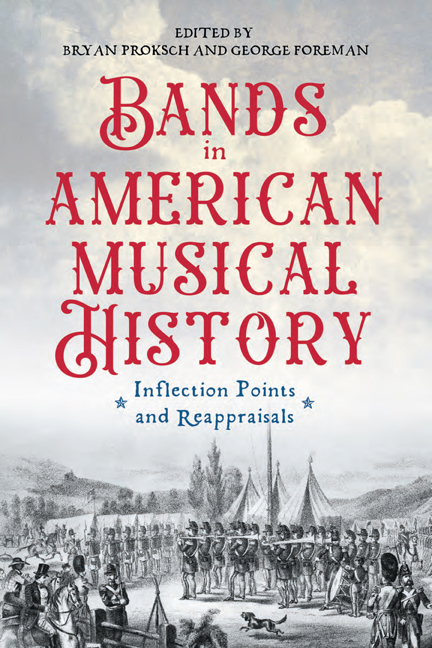
Essays on the history of bands in America from circa 1820 to 1930, offering new insights on a major sphere of music making that brought diverse repertories to wide audiences.
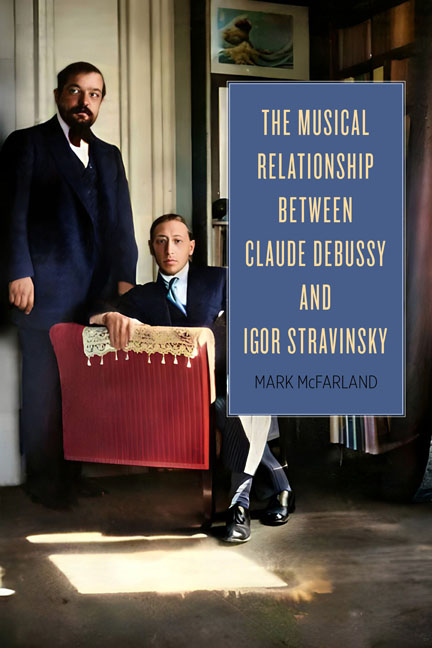
Stravinsky's influence on Debussy in 1910-13 is demonstrated here in the many modernistic features of such works as the Preludes Book II, 'Khamma', 'Jeux'.
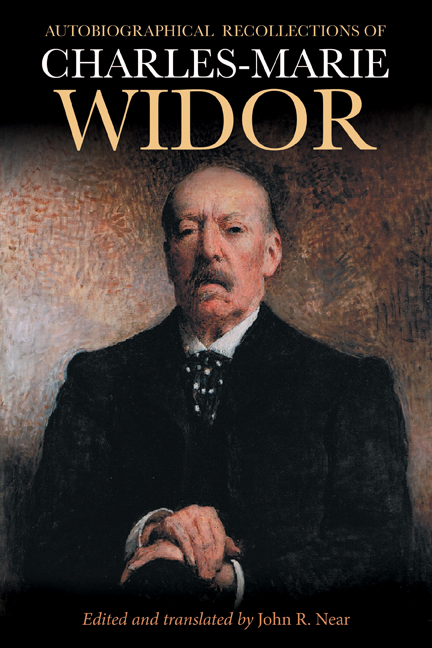
The last of the Romantics, Widor narrated his recollections in 1936, bringing to life his diverse experiences from the time of Louis Philippe to the cusp of World War II.
A ground-breaking study of the musical and literary priorities, professional practices and creative interactions that shaped one of the most adventurous artforms of the Belle Époque.
This long-awaited study explores the creation of NBC-TV's landmark 1952-53 WWII documentary series, with particular attention to its evocative Rodgers-Bennett score.
The first feminist analysis of some of the most performed works in the American-opera canon, emphasizing the voices and perspectives of the sopranos who brought these operas to life.
A curated collection of Enlightenment operas, paintings, and literary works that were all marked by the 'Telemacomania' scandal, a furious cultural frenzy with dangerous political stakes.
Scholars explore from many fresh angles the interweavings of two of the richest strands of human culture - music and esotericism - with examples from the medieval period to the modern age.
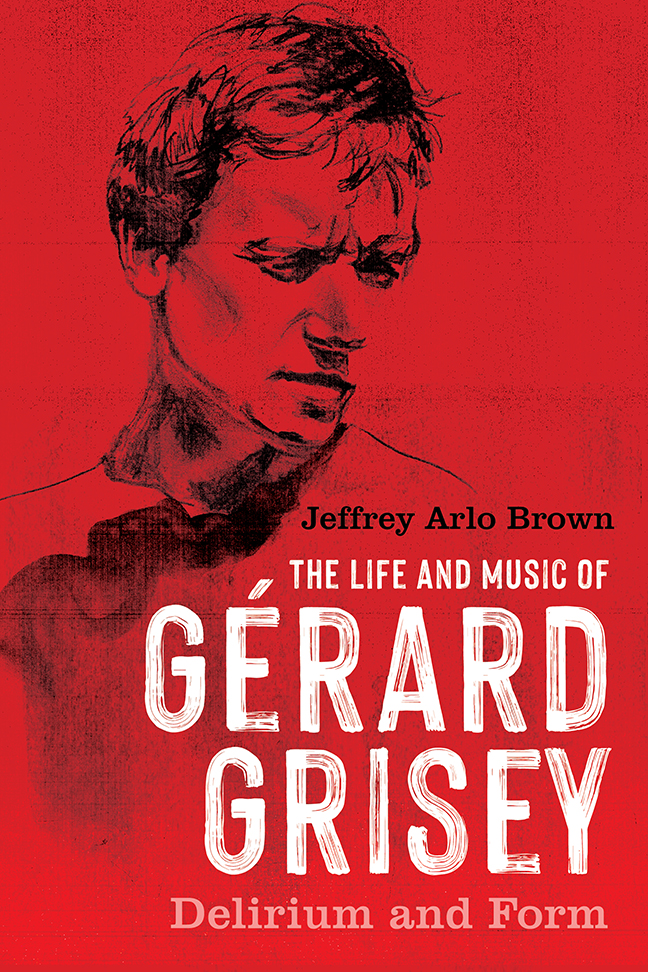
The first biography of the composer Gérard Grisey shows how the artist's sensuality and rigor came together to form the musical genre known as spectralism.